Happy Life

Auto-translated
hedon
I played it almost twice last fall and wanted to write a detailed review, but I don't feel like it anymore.
In short, it's a "boomer" shooter, 12/10 – the weapons are quite good and reasonably balanced, despite being in a fantasy setting; surprisingly, it has a well-developed and engaging story that isn't presented in a stale or boring way; the huge, well-designed levels are great to explore; the atmosphere and music are excellent; there's some non-linearity; and even a separate difficulty level where the standard weapon arsenal is replaced with an alternative, mostly melee-based one – which seems like overkill.
The only downsides are a couple of short moments throughout the game, and the fact that from the second half of the game, the levels become cyclopean in scale, which means you can sometimes wander around for a while looking for a way forward, but overall it remains logical, without pointless pixel-hunting for levers or meaningless random puzzles.
And there are plenty of sprite-based visual treats.

inscryption
9.5/10, if you like card games but are tired of their standard, worn-out format and want something different. The only complaint is that I wish it were about a third longer.
forgive me father
A "boomer" shooter in a Lovecraftian setting; it seemed a bit weak at first, but then it picked up and I enjoyed it. However, it doesn't have save scumming, and after you die, you're reset to a checkpoint. Throughout the game, there were several difficult moments that I had to replay again and again because of this, and I was okay with that, but closer to the end, there were noticeably more of these places, and maybe it's just me, but at one point it got tiring, I started switching from the hardest difficulty to the easiest, just to skip this place as quickly as possible, and in the process of skipping it, I found out that the next save was even further than I thought, meaning that even if I pass the current place, I could easily die from anything in the next 10-15 minutes, and you can die very easily on high difficulties – from 1-2 hits of many types of damage, with full health and full armor.
In addition, despite the fact that there is a variety of activatable abilities like in Dota and weapon upgrades that branch out and often completely change their original function, most of them seemed poorly balanced to me. Some abilities are completely useless on high difficulties; some weapons change the type of ammunition when upgraded, and you don't encounter the new type for a while, so you simply can't use that weapon, and then when they start appearing, you find a separate weapon with a similar function that is better in every way, and the need for the previous one disappears.
And the last downside is that the final part of the game is quite tedious and the levels there aren't very interesting. You're waiting for it to end, but it just keeps going and going and going, like Doom Eternal. That's not very good.
I played it almost twice last fall and wanted to write a detailed review, but I don't feel like it anymore.
In short, it's a "boomer" shooter, 12/10 – the weapons are quite good and reasonably balanced, despite being in a fantasy setting; surprisingly, it has a well-developed and engaging story that isn't presented in a stale or boring way; the huge, well-designed levels are great to explore; the atmosphere and music are excellent; there's some non-linearity; and even a separate difficulty level where the standard weapon arsenal is replaced with an alternative, mostly melee-based one – which seems like overkill.
The only downsides are a couple of short moments throughout the game, and the fact that from the second half of the game, the levels become cyclopean in scale, which means you can sometimes wander around for a while looking for a way forward, but overall it remains logical, without pointless pixel-hunting for levers or meaningless random puzzles.
And there are plenty of sprite-based visual treats.
Title
inscryption
9.5/10, if you like card games but are tired of their standard, worn-out format and want something different. The only complaint is that I wish it were about a third longer.
forgive me father
A "boomer" shooter in a Lovecraftian setting; it seemed a bit weak at first, but then it picked up and I enjoyed it. However, it doesn't have save scumming, and after you die, you're reset to a checkpoint. Throughout the game, there were several difficult moments that I had to replay again and again because of this, and I was okay with that, but closer to the end, there were noticeably more of these places, and maybe it's just me, but at one point it got tiring, I started switching from the hardest difficulty to the easiest, just to skip this place as quickly as possible, and in the process of skipping it, I found out that the next save was even further than I thought, meaning that even if I pass the current place, I could easily die from anything in the next 10-15 minutes, and you can die very easily on high difficulties – from 1-2 hits of many types of damage, with full health and full armor.
In addition, despite the fact that there is a variety of activatable abilities like in Dota and weapon upgrades that branch out and often completely change their original function, most of them seemed poorly balanced to me. Some abilities are completely useless on high difficulties; some weapons change the type of ammunition when upgraded, and you don't encounter the new type for a while, so you simply can't use that weapon, and then when they start appearing, you find a separate weapon with a similar function that is better in every way, and the need for the previous one disappears.
And the last downside is that the final part of the game is quite tedious and the levels there aren't very interesting. You're waiting for it to end, but it just keeps going and going and going, like Doom Eternal. That's not very good.
My sword, my trusted ally, unphased by my aspect.




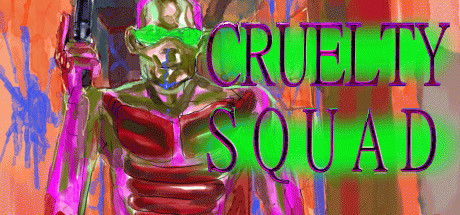
 [/spoiler], but at the same time, it overwhelms you with epileptic effects (you will be amazed by the screenshots in Google Images, it is better in dynamics, but still very close) and at the same time locks you in claustrophobic cave levels. Even the enemies are sometimes difficult to see at first, so it is quite uncomfortable at first.
Secondly, although I am a fan of level design, here the procedurality has its plus - you can conditionally enter the game, run through several maps, have fun shooting and enjoy the action. But at the same time, the obvious disadvantages of procedurality do not disappear - after half an hour or an hour of the game, you do not have much motivation to grind further, because all you do is run through randomly connected assets, which you don't even have a deep reason to go around in a circle, except to collect all the coins and upgrade the roguelike character for the future.
I cannot recommend it if you are not a fan of boomer shooters, for whom it is enough to just run and shoot, it doesn't matter where.
[/spoiler], but at the same time, it overwhelms you with epileptic effects (you will be amazed by the screenshots in Google Images, it is better in dynamics, but still very close) and at the same time locks you in claustrophobic cave levels. Even the enemies are sometimes difficult to see at first, so it is quite uncomfortable at first.
Secondly, although I am a fan of level design, here the procedurality has its plus - you can conditionally enter the game, run through several maps, have fun shooting and enjoy the action. But at the same time, the obvious disadvantages of procedurality do not disappear - after half an hour or an hour of the game, you do not have much motivation to grind further, because all you do is run through randomly connected assets, which you don't even have a deep reason to go around in a circle, except to collect all the coins and upgrade the roguelike character for the future.
I cannot recommend it if you are not a fan of boomer shooters, for whom it is enough to just run and shoot, it doesn't matter where.