Skip to content

Posts from Recently viewed games

No ratings yet — be the first to rate!
User Avatar
#277
Auto-translated
hedon

I played it almost twice last fall and wanted to write a detailed review, but I don't feel like it anymore.
In short, it's a "boomer" shooter, 12/10 – the weapons are quite good and reasonably balanced, despite being in a fantasy setting; surprisingly, it has a well-developed and engaging story that isn't presented in a stale or boring way; the huge, well-designed levels are great to explore; the atmosphere and music are excellent; there's some non-linearity; and even a separate difficulty level where the standard weapon arsenal is replaced with an alternative, mostly melee-based one – which seems like overkill.
The only downsides are a couple of short moments throughout the game, and the fact that from the second half of the game, the levels become cyclopean in scale, which means you can sometimes wander around for a while looking for a way forward, but overall it remains logical, without pointless pixel-hunting for levers or meaningless random puzzles.
And there are plenty of sprite-based visual treats.

Title


inscryption

9.5/10, if you like card games but are tired of their standard, worn-out format and want something different. The only complaint is that I wish it were about a third longer.

forgive me father

A "boomer" shooter in a Lovecraftian setting; it seemed a bit weak at first, but then it picked up and I enjoyed it. However, it doesn't have save scumming, and after you die, you're reset to a checkpoint. Throughout the game, there were several difficult moments that I had to replay again and again because of this, and I was okay with that, but closer to the end, there were noticeably more of these places, and maybe it's just me, but at one point it got tiring, I started switching from the hardest difficulty to the easiest, just to skip this place as quickly as possible, and in the process of skipping it, I found out that the next save was even further than I thought, meaning that even if I pass the current place, I could easily die from anything in the next 10-15 minutes, and you can die very easily on high difficulties – from 1-2 hits of many types of damage, with full health and full armor.
In addition, despite the fact that there is a variety of activatable abilities like in Dota and weapon upgrades that branch out and often completely change their original function, most of them seemed poorly balanced to me. Some abilities are completely useless on high difficulties; some weapons change the type of ammunition when upgraded, and you don't encounter the new type for a while, so you simply can't use that weapon, and then when they start appearing, you find a separate weapon with a similar function that is better in every way, and the need for the previous one disappears.
And the last downside is that the final part of the game is quite tedious and the levels there aren't very interesting. You're waiting for it to end, but it just keeps going and going and going, like Doom Eternal. That's not very good.
My sword, my trusted ally, unphased by my aspect.

User Avatar
#278
Auto-translated

For those familiar with the Musou genre (Dynasty Warriors, Samurai Warriors, etc.), the combat in this game will be quite familiar – you run forward and click to attack, destroying dozens of enemies in your path. However, there's a catch: firstly, the gameplay here is more engaging, with various abilities and combos. Secondly, there's a decent progression system; you can find a variety of equipment, supports, and other items with different effects. That said, even though I don't particularly enjoy open-world games, the most significant drawback of this particular game is the short levels, which are essentially several small arenas where you have a DPS check. With normal progression and gear, clearing a level takes from one to two minutes, which might be a good thing in some ways, but not as much as I would like. The combat animation deserves special attention; the movements, skills, and even simple attacks are very well done, and in combination with the more dynamic gameplay, they surpass the more popular and newer Genshin. Another thing I liked is the abundance of stuff in the menu, where you can do many things: play mini-games, craft items, exchange them, upgrade them, view a collection with cool artwork, and more. Among the drawbacks, besides the small levels, I would mention the very high prices in the store and the grind (another hidden drawback: Sakura's model is just too...). Perhaps, if I had started playing a couple of years earlier, I would have spent more time and attention on this game, but now it's just too exhausting.

Overall, if you like the character designs, then you'll probably enjoy the game as well. But if not, then you probably won't want to touch it. I'll give it an 8/10, but I don't know if I'll continue playing it myself. And yes, this is a port of a gacha game from mobile, so expectations should be accordingly. One good thing is that you can get any character on the very first day and roll for them, unlike weapons, supports, and everything else, which is not required.
Стартовый пост - Квенты - Разное
Резара - Аксель - Орвальд - ЭмилияСтэфания
User Avatar
#279
Auto-translated

If I didn't know better, I'd think that Genshin was a predecessor to Honkai, judging by the quality, because the latter is better than the former in almost every aspect I've seen, starting from character design and their availability, and ending with gameplay and the amount of content. Although, who am I kidding? It's obvious that a niche product will always be better than one aimed at a wide audience.

Let's start with the fact that it's easier to roll for characters here, and by the time you've played for a week, you'll already have a dozen or more playable Valkyries. The combat, although it relies on spamming a couple of buttons, is deeper and more diverse, and there are so many game modes that it's overwhelming. Interestingly, the main mode is largely similar to the one in the game mentioned in the previous post, meaning it consists of small levels where you first fight regular mobs and then a boss, but that's not necessarily a bad thing. After all, what's so great about an open world where you just waste time and artificially extend the gameplay by running from quest to quest and doing who knows what? Besides, there's also a semblance of an open world here, just in other modes.

The characters here also appealed to me much more. Let's start with the fact that unattractive male characters don't clutter up the pool, and end with the fact that all the characters (even those that are different versions of existing ones) have unique animations, features, and skillsets. Here she levitates, here she runs on her feet, and here she even rides a motorcycle. And the designs themselves feel more free and detailed.

As a bonus, you can play directly through Steam, and Horie Yui lent her voice to the menu character
Стартовый пост - Квенты - Разное
Резара - Аксель - Орвальд - ЭмилияСтэфания
User Avatar
#280
Auto-translated
Yakuza 6 Excellent. Throughout the entire game, there are only two minor complaints: the combat felt not very diverse in terms of moves (plus there is no way to carry weapons, except to pick them up during a fight and throw them away at the end, and there are no corresponding skills - this wasn't heavily used before, but the sudden absence is noticeable), and for some reason, there is no display of available side stories on the map - you can only stumble upon them by chance. Otherwise, it's a solid ten out of ten for this Yakuza game. Yakuza 7 Playable, cool, modern, what else can I say? The attempt to change the genre was successful. I'm not yet sure, given the specifics of the mechanics, whether it will be possible to easily create sequels for it, but anything is possible. Rustler A medieval GTA 1-2 about Alex with a corresponding isometric view. The first time, I dropped it within the first 10-15 minutes because I couldn't stand the cringeworthy beatboxing (in 2022) of street medieval bards and the strange controls. But on the second attempt, it turned out that even if you don't kill the bards, you can punch them in the face, and they will change the melody, and the control issues are simply solved - by choosing the screen orientation (or something like that, in general, similar to Heroes of Might and Magic) for the horse in the game options - then it becomes possible to ride them very easily and successfully, instead of bumping into everything. There are also other drawbacks, such as: some outdated memes, some minor bugs - all this gives the game a real indie vibe. However, this is not a problem, because personally, the game managed to give me a very unexpected pleasant feeling of indescribable ease of being, which I wanted to return to after I left it. When you ride a horse through forests and fields, and pass a village in one go near a lake, and then eat a pie, you feel - this is life, as if you returned to some positive moments of childhood, to some summer days when you could do what you wanted, and everything worked out for you. Still, if you compare medieval and fantasy settings, there is a hole in the floor in both, but fantasy will also suffocate you with its weirdness and tediousness, so choose wisely, kids. I liked it, I would rate it a solid 7.9. Nightmare Reaper A boomer shooter, roguelike-like, with procedural levels, random loot, upgrades, and several built-in mini-games. Overall, I liked it because there are many weapons and enemies, they are diverse and have randomly generated mods, the combat is moderately dynamic, but not a frustrating jump-fest like in Doom Eternal, and the shooting is enjoyable. But there are also noticeable drawbacks. Firstly, I had to get used to the graphics - it is excessively pixelated [spoiler=(just compare the faces of the heroine and the character from Doom 1)] [/spoiler], but at the same time, it overwhelms you with epileptic effects (you will be amazed by the screenshots in Google Images, it is better in dynamics, but still very close) and at the same time locks you in claustrophobic cave levels. Even the enemies are sometimes difficult to see at first, so it is quite uncomfortable at first. Secondly, although I am a fan of level design, here the procedurality has its plus - you can conditionally enter the game, run through several maps, have fun shooting and enjoy the action. But at the same time, the obvious disadvantages of procedurality do not disappear - after half an hour or an hour of the game, you do not have much motivation to grind further, because all you do is run through randomly connected assets, which you don't even have a deep reason to go around in a circle, except to collect all the coins and upgrade the roguelike character for the future. I cannot recommend it if you are not a fan of boomer shooters, for whom it is enough to just run and shoot, it doesn't matter where.
My sword, my trusted ally, unphased by my aspect.
User Avatar
#281
Auto-translated
Metal Gear Rising: Revengeance

Instead of talking about the game, I'll talk about myself))) Basically, 7 years ago I heard the track Nuclear by Mike Oldfield, then found this trailer, was incredibly impressed by it and decided to play through the entire Metal Gear line of games in order to play Metal Gear Solid V with a full understanding of its essence. Which is exactly what I did; my post about the first Metal Gear Solid is one of the very first posts in this thread. Overall, I enjoyed the journey through this series, although the final destination for which it was all started ended up leaving only disappointment and that same phantom pain. I skipped only 4 games — the first two Metal Gears that were on Sega or something like that, Metal Gear Solid 4 which was a PS3 exclusive (and there was no emulator for it back then), as well as Metal Gear Rising. The rationalization was as follows — Rising wasn't made by Kojima, Rising changed the game genre, and plot-wise it continued the events of the fourth part, which I had skipped. Some time later, I did watch a "Walkthrough" of the fourth part on YouTube (essentially 10 hours of cutscenes) and that last point lost its relevance for me. But I didn't want to play a slasher without a joystick and generally it seemed so not urgent... Anyway, I finally played this game.
I played with keyboard and mouse and this was my first experience with a full-fledged slasher in a very long time; maybe the last time I played something like that was as a teenager, or maybe I've never played a "real" slasher before. And I really liked it. At first, I was very afraid that because of the keyboard and mouse I would feel like an invalid, because I constantly hear the opinion that such games are designed for a joystick, but either the devs did a great job here, or the joy-stick is simply overrated, but I didn't feel any problems at all throughout the game, except for one moment right at the end, and even there you can avoid struggling with uncomfortable controls and just choose an alternative option. Playing it is pure and absolute joy; everything is controlled easily, sometimes the camera can act up, but personally, it seems to me that in these kinds of games such moments are inevitable and as long as it's not a problem in every fight — you can put up with it. By the way, there are no puzzles in the game, no platforming elements, only fight, fight, and more fighting, and it is a pleasure. A couple of times they make you run around avoiding pieces of shit flying at you, and you can also bother to collect collectibles, and that's it. Also, in this game you can and should chop enemies into many small pieces; the more pieces you cut — the more money they give you, with additional bonuses for precisely severed limbs (head, arms/legs); essentially, the left arms of some enemies are one of the collectibles, and at the end of the game they proudly show you statistics on the number of severed limbs. Isn't that wonderful? And the boss fights are pure bliss — the combat mechanics + music force you into a kind of battle trance where nothing exists except what is happening on the screen and the rhythm of the music in your ears, and when the fight ends — you feel slight bewilderment at returning to normal reality. Perhaps something similar was experienced by warrior berserkers.
I played on Hard; this is the highest difficulty for a first playthrough, after which Very Hard and "Revengeance" are unlocked — on the last difficulty almost everyone one-shots you, but you can also one-shot almost everyone (as I've been told, a successful move against a boss takes off 50%, though if repeated, the damage is heavily reduced, but still). And overall, I can't say that the game seemed unbearably difficult to me, but! In this game, as a result of battles, both with bosses and some groups of mobs, you are assigned a certain rank. This is done immediately after the fight, while you are given about 2-3 seconds before a new checkpoint is recorded, so if you didn't like the rank — you can quickly reload and try again. The highest rank can only be obtained if the fight is won without taking damage. And in my opinion, this is very good game design, when a game can be "beatable" even for a relatively weak player, but to beat it "perfectly" you need to really try. Classic easy to learn, hard to master. Sometimes you can hear an argument against such things like "yeah, what else should I do, tie my hand behind my back and pass so it counts," but here it's different — the game itself tells you that there is a truly "cool" way to complete an encounter and challenges you, which you can accept or not, depending on your skills and persistence. I myself completed a number of fights for the highest rank without damage — simply because I felt I could do it and therefore it was interesting to try and also because I found some cheat weapon that allows stun-locking groups of low-level mobs. The only complaint, perhaps, is the slightly strange distribution of difficulty; the first boss feels normal, the second feels more difficult, the third and fourth — quite simple (I even beat the fourth completely without damage, although it took a couple of hours, but it was just too tempting), whereas the last one really gives you a hard time; though, after defeating him, it started to seem to me that he wasn't that difficult, but considering that I beat him with difficulty without any artificial restrictions and using all my medkits and even cinematically finishing him off on the last few percent of health — I don't rule out that this is just self-deception.
Suddenly, I'll say a bit about the plot. Initially, as you remember, I didn't want to play this game because I wasn't familiar with the events of the previous part. And indeed — to better understand what's happening, it's desirable to know what was in it. But overall, the plot in the game isn't so important that 100% understanding is mandatory, and a general understanding of the essence of events will be available even if this is your first game in the series — in the worst case, if you're curious, you can later read what happened in the fourth part and a couple of gaps in your head will be filled. But what strongly surprised me were the Codec conversations. I'll quickly bring you up to speed — it's like a radio where you can call various characters and talk to them; it was in all previous parts of the game. And if in the early games there were very, VERY many Codec conversations, then in later ones their number was reduced, and in the last part they were removed entirely. Therefore, I was very surprised when in a slasher released, essentially, by a third-party company, the Codec conversations turned out to be higher quality than in the latest games by Kojima himself, roughly comparable in quality to the first three Metal Gear Solids. Here you have both a deeper understanding of what's happening, and reflections on AI and the dehumanization of death, and just random trivia — everything as before; you can again spend a lot of time listening to NPCs. But then again, you can skip them entirely if you're not a fan of that — there is no coercion here. It was very unexpected and pleasantly surprising. Not without flaws, though, which became noticeable closer to the second half of the game, but nevertheless.
The musical accompaniment of the game has been praised by many and absolutely deservedly. I already mentioned in passing the combination of music and action, but I want to praise it in a separate paragraph again — it's very well implemented. This doesn't mean that after the game you will necessarily Download its soundtrack to your player, but within the game everything combines and works great.
And finally — I'm not sure if it's such a good idea to post music from the game out of the context of battle; it might even put some people off, but I was held hostage by this melody for so long that I don't even know — whether I sincerely like it or if it's Stockholm syndrome. But I'll let you listen to it too:
Oh yeah, the regular "Almost Forgot" section. In this game, the very first fight is when you, playing as a cyber-ninja, fight a giant robot the size of a multi-story building. If you can't stand such "anime" elements because you need groundedness and realism — the game is absolutely not for you.
Where do we go?
Where do we end up when we save the world?
User Avatar
#282
Auto-translated
Author
This doesn't mean that after playing, you will necessarily download its soundtrack to your player.
Supposedly. I've actually had that very theme on my player for several years now, the one you used as an example.
User Avatar
#283
Auto-translated


A solid tactical game.
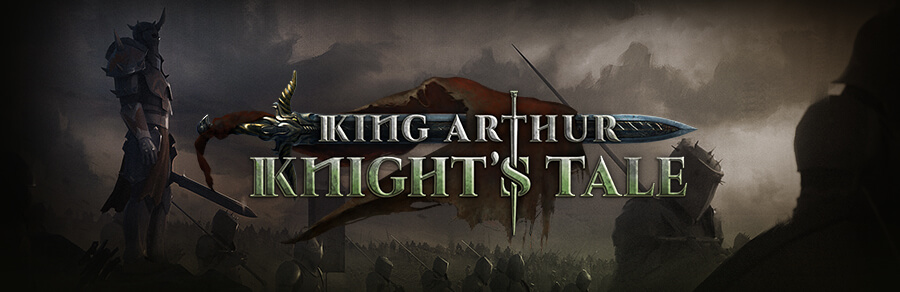
Some people compare it to Heroes of Might and Magic, but it's important to understand that in this comparison, they're not referring to the standard version, but rather the Firaxis-developed, simplified version for casual players – the only one they've seen. Here, instead of a simplified two-action system, there are normal Action Points, allowing you to perform any number of actions in a turn, move in any direction, and combine them in various ways. It's almost absurd to even think about, but after the degraded two-action system that even indie games have adopted, this feels like progress and a step towards a rating above average.

As for the combat itself, given the setting, it's mostly melee-focused – knights clash with swords and axes, using abilities like in Dota; some are mages or archers, but they primarily serve as support; I haven't tried it, but I think you could build a ranged squad if you wanted, but it wouldn't be quick, and it might not work well on some maps.
Regarding random elements, they are limited to the damage range of some weapons and occasionally the resistance of units to debuffs; otherwise, all hits are registered. Essentially, combat boils down to positioning, breaking armor/tanking, methodically cutting down enemies, and managing ability cooldowns. On one hand, some might find this less dynamic or intellectually stimulating than running around like crazy from one point to another in Heroes of Might and Magic, searching for a shield and wasting the second action with a 95% chance of missing, because that's how the engine is scripted. However, I think this feeling only arises because in melee combat, there are inevitably moments when a couple of your heavy knights stand in a crowd of enemies for two or three turns, trying to break through. In reality, these elements seem quite balanced. It's also worth adding that in Heroes of Might and Magic, players mostly run from one point to another not because it's interesting or a strong move, but because the games are specifically designed with enemy reinforcements and timers for side quests, calculated by the developers to make the player rush from the starting point with a full movement action and dramatically press a lever at the last moment, receiving a small reward like a rat in a maze. In Arthur, there are a few such elements, but they are very rare and implemented in a much more reasonable way – no one ever forces you to rush to your death, doesn't deprive you of additional rewards if you don't succeed, and always gives you the opportunity to play the map at your own pace.
Perhaps the only thing that evoked mixed feelings was the Dota-like abilities with cooldowns. I despise them in Heroes of Might and Magic and consider them a tasteless element, but here, without them, it would be a bit boring and wouldn't allow for the implementation of some basic mechanics. To be more specific, all player units are named, divided into several classes, and have different active and passive abilities. At the beginning, they are un-upgraded, so in the early and mid-game, the gameplay is more focused on melee combat, with few skills, they are not upgraded, and they perform a rare support function. In the second half and closer to the end, the protagonist and his companions gain many skills, half or more of which are various ranged attacks, and the focus shifts more towards abusing them, because, for example, in one turn, you can remotely kill several weak enemies, in the second, you can use another skill, then attack a couple of times, and the cooldown on the first one will be ready. In principle, this is compensated by the number of enemies and their strength – the difficulty curve is normal here; you feel the strength of your heroes and the increasing strength of the enemies, and you rarely encounter scenarios where you simply stomp on everything. And you can't completely rely on ranged attacks – you still continue to fight in melee, even more than before, but the emphasis of what's happening shifts proportionally to the upgrades, and I would have made this shift smaller.

The maps themselves are not procedural but hand-made, and there are many of them, which is good. A couple of times, there was a feeling of repetitive gameplay, but it quickly faded away because new knights appeared, or new tiers of abilities were unlocked, expanding tactical possibilities, or new enemies were introduced, or an interesting mission started, or you found some cool loot, or you built something new in the castle, or you unlocked a new point on the political compass – in general, they provide a steady stream of things to keep you engaged.
Regarding the last three elements, these are the management aspects outside of combat.
Random loot is found in missions or can be purchased in the castle from a merchant; the assortment is updated periodically. The items and stats are not overloaded with meaningless modifiers, but they don't look primitive either – it's a good balance.
Castle building is cool, but it's a bit lacking – in my opinion, it could benefit from more content (laws, orders) and more buildings with different effects. But it's better than nothing.
The moral compass is cool, with scales for traditionalist-Christian and just-tyrant, each quarter unlocking missions to recruit specific heroes and providing unique bonuses. It's upgraded by your choices in random events and missions. They say that this was in previous Total War-like games about Arthur from this company, but I haven't played them. Here, I played as a tyrant-traditionalist, and I can say that the abilities are good, but out of the five recruitable units, I only used Dagunet periodically (solid) and a few times used Bedivere to fill a gap in the squad (not very good – specific, but not the skill set I would want to see for that class), while healing or running around in events, Balin (top guy, in the second half, he's a killing machine. In terms of skill set, he's second only to another recruitable vanguard, but it's practically impossible to increase his loyalty, and he's not comparable in terms of appearance/voice acting/character).
I'll also add that I liked the choice of the protagonist (not Arthur) and the related storyline.

In conclusion, the game weighs 130 GB and has about half a dozen patches, one of which weighs 10 GB. Theoretically, you can play version 1.0, and I played a few missions like that, but you immediately see bugs, and some of them are so obvious that they shouldn't have slipped through even the most basic testing. So, I updated to version 1.6, and I didn't notice any problems after that.
My sword, my trusted ally, unphased by my aspect.
User Avatar
#284
Auto-translated


An excellent, upbeat RTS without base building.
The atmosphere is great – the propaganda briefings that diverge from reality, the rousing music, and the quirks from the command give a complete feeling that you are "doing your part." Like the movie and, in some ways, the book, but even better.
Despite the seemingly simple gameplay overall – mowing down bugs, destroying nests, capturing and defending points – the missions, with the exception of a couple of the very first tutorial ones, are quite engaging and fun. They are well-alternated in terms of concepts (open map, claustrophobic map with limited resources, defensive map, etc.) to avoid monotony.
In the first couple of missions, it seems that the gameplay is mainly about shooting basic bugs from automatic weapons, but in reality, the player has access to a surprisingly decent number of different types of soldiers, and the enemy also has different types of bugs, which are well-balanced and add good dynamics overall.
I really enjoyed it; I played through it in one go over a couple of days.


A wannabe-via-tribute war game/tactical game, with all the trimmings – upgrading units into different types, equipping heroes, pixel-animated sprites, and a night mode.
The "translation" is cringe as always, the voice acting is shameful and unnecessary, and there are some serious problems with the ergonomics of the interface features. Otherwise, I liked it – they presented the story well (although it is a bit underdeveloped), the maps are lively and not too long, the management and upgrade system outside of combat is more interesting compared to similar games, and the graphics are surprisingly pleasant. In terms of gameplay, it's better than Land Grinder and Fire Emblem, which, in 2022, is perhaps an achievement, but not a very unexpected one.
My sword, my trusted ally, unphased by my aspect.
User Avatar
#285
Auto-translated

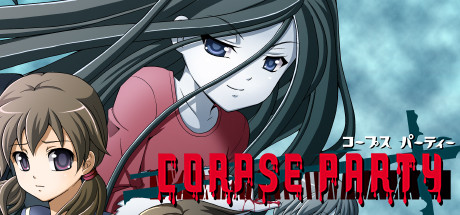
I started playing in 2017 when it was released on Steam, and I thought I had played through it or played a lot, but it turned out that I only completed one chapter. Somewhere in the middle, I regretted that I had forgotten about the existence of the remake with more modern art (for comparison: old, new), but I didn't want to start over halfway through, even though it wouldn't have taken that much time. It has a nice atmosphere, is moderately intriguing, and has plenty of bad endings, but it's not so overwhelming that it would blow your mind. So, it's just something to play that isn't too stressful and doesn't take too long.
Стартовый пост - Квенты - Разное
Резара - Аксель - Орвальд - ЭмилияСтэфания
User Avatar
#286
Auto-translated

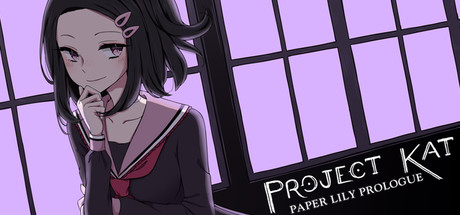
It's pretty cool. There are a lot of interactions with the environment, multiple endings, and different ways to complete the game, plus the art is cute and the main character is lovely. It's a shame that it's only a prologue for now, and it's unclear whether the full game will ever be released.
Стартовый пост - Квенты - Разное
Резара - Аксель - Орвальд - ЭмилияСтэфания
User Avatar
#287
Auto-translated
It’s similar to Ryn.
User Avatar
#288
Auto-translated


Just some dumb, zoomer-esque, post-modern garbage. There are a few good moments, but there's no point in forcing yourself to go through this trash for them.


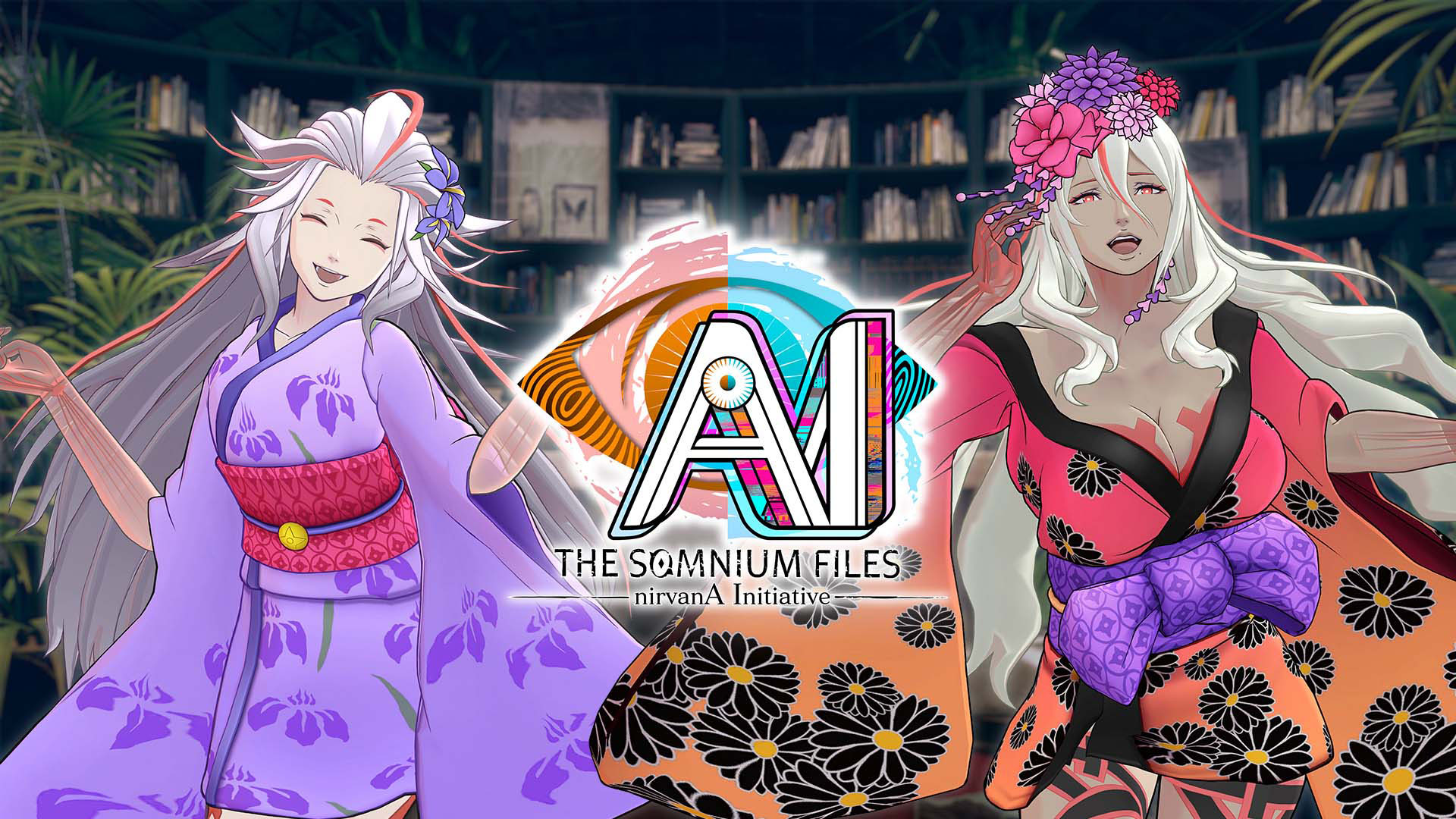
Unlike the first one, which I enjoyed but didn't particularly love compared to other works by Uchikoshika, this one was quite excellent even in that comparison. Here, Uchikoshika moved away from his favorite themes, which are sometimes repeated in his other works, and still managed to create something interesting, intricate, and organic, even with connotations and messages for hyper-observant expert fans. And perhaps the fact that the setting was already familiar played a positive role.
My sword, my trusted ally, unphased by my aspect.
User Avatar
#289
Auto-translated
Author
I recently finished it too, and I generally agree with Lock. It's an enjoyable game, although the voice acting and plot could be better. Aside from the monotonous and optional arenas, it doesn't get boring and is quite enjoyable to play, considering the micromanagement. In the late game, when there are many units and artifacts, it gets a bit tedious to deal with all of it. But that's the downside of customization. It's quite simple in terms of difficulty, but that might be because I chose the medium difficulty level. I should have chosen a higher one.


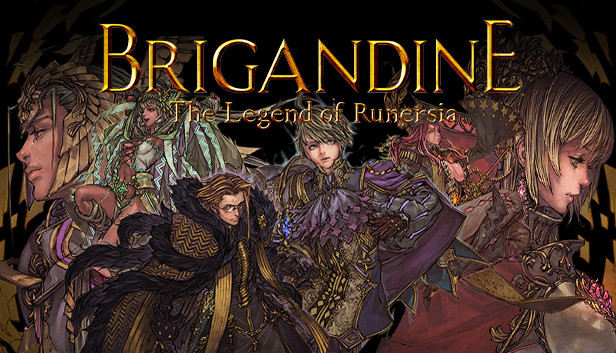
Some time before its release on PC, I came across this game in discussions about turn-based strategy games. It seemed interesting to me, and I even regretted a little that it was only available on consoles. And then the port was released, and I finally got around to trying it out. I must immediately note that the port clearly shows that the game was made for portable consoles, and it's not very convenient to play it on a computer. It requires two to three times more mouse clicks than for similar actions in any other game in the genre. In terms of gameplay, this game seems to me to be on the level of a decent mobile game, but not one that you would play on a personal computer. The gameplay is just too monotonous. Almost all battles take place according to the same scheme. It doesn't help that the maps are divided into three or four very similar types. There was a constant feeling of déjà vu. The game's Factions also don't add much variety to the gameplay, differing only in plot sequences, starting units, and a couple of unique heroes. The other heroes differ only in their portraits.
Speaking of portraits, I don't remember any particularly memorable designs. As you can see in the picture, many characters are dressed in either overly elaborate or simply bizarre costumes, with cutouts where they should and shouldn't be. There are some good portraits, but there are also some that I personally find repulsive. However, I really liked the artwork of many of the units. The music also doesn't stand out in any particular way, but it's not particularly annoying either. I have no complaints about the voice acting. The plot seemed weak to me, although I only played through the main mode for one of the Factions. It's about the same level as some event in Granblue Fantasy. Even the amount of text is approximately the same. There are a couple of funny moments, but that's usually where it ends. Moreover, even these moments are more often found in optional banter than in mandatory plot sequences.
If you want a good turn-based strategy game, it's better to spend time on a slightly better one. Especially since there's hardly more micromanagement here. But if you're not bothered by something monotonous, and the other games are already too boring, then it will do to pass a couple of evenings. I can't call this game terrible, considering the controls, but I wouldn't recommend it either. It's just very, very mediocre.
User Avatar
#290
Auto-translated
ANNO: Mutationem
The first interactions the player has with the surrounding new world involve garbage bins and bags from which they can retrieve various items. This immediately makes it clear that you've found yourself in a cyberpunk setting, a genre that has been losing popularity over the years because reality has already approached it, and in some aspects, even surpassed it, albeit in a worse way. Be that as it may, the ability to examine various containers is a result of the part of the game that is presented as an open world, or, more precisely, a city. I can't say that I particularly enjoyed this aspect, as the cities and the characters that inhabit them felt somewhat lifeless, and running back and forth from one location to another isn't very interesting in many places. Nevertheless, the cities and the levels themselves are generally connected to each other, which allows for a unified picture of the game world, which is definitely a plus. Regarding the surrounding world and immersion, I found the music to be rather generic, and I didn't even read half of the notes scattered around. The plot itself doesn't aim to be anything special, but it's not something I disliked either, so it's acceptable.

The combat was enjoyable. There are several types of weapons, each with its unique characteristics, and various upgrades for them. There is a progression system, but it doesn't really affect the gameplay style. The equipment that unlocks as the story progresses expands the range of movements available to the player, which is quite interesting. A drawback here is that at the start, there were only two difficulty levels to choose from, easy and normal, and when I chose the latter, I had to replay a certain section a couple of times. The same can be said about the casual hacking (although I did enjoy the puzzles where you had to visually determine the code). When you play a game, you want to actually play it, not just watch a movie. After completing the game, a third difficulty level was unlocked, but I don't feel like starting a replay right after the first playthrough. Separately, I can highlight the segments in which you had to think quickly and act thoughtfully, like puzzles. I would have liked to see more of these, but unfortunately, there weren't many.

And most importantly, the protagonist is beautiful; you play and admire how her hair flows in the wind. It's a shame that out of the entire set of outfits (which is good in itself), only a couple appealed to me, and the fact that they are not displayed in combat locations, giving way to the combat suit. In fact, if there were some unappealing character instead of the cute heroine, I probably wouldn't even play the game.

Overall, it's decent.


Стартовый пост - Квенты - Разное
Резара - Аксель - Орвальд - ЭмилияСтэфания
User Avatar
#291
Auto-translated

I enjoyed it so much that I played it twice in a row – first through Luxuria (~13 hours), and then through Superbia (~5 hours). I haven't explored the post-game content yet, so there's still plenty to do later.

The heroine is great – kind, naive, clumsy, and very sexy. For once, they let you play as a priestess, which is a big plus. In this genre, it's definitely my favorite (sorry, Meltis :'()). The plot and lore are not only present but also quite interesting, not to mention the humor and various piquant situations. There are many places to explore, quests to complete, and for those who like to think things through, there are battles to fight, resources to collect, and items to craft – and there are tons of different items with various purposes. At the same time, you don't feel like you're being forced into mandatory grinding – you can do without it, while the battles are quite simple, but not so simple that you completely switch off your brain. There are cool traits and achievements, music that fits the locations (even if it's not particularly special), and of course, an engaging progression of the heroine's deep fall, many artworks, several endings, etc. – in short, everything is as it should be.
Стартовый пост - Квенты - Разное
Резара - Аксель - Орвальд - ЭмилияСтэфания