Skip to content

Posts from Recently viewed games Auto-translated

No ratings yet — be the first to rate!
User Avatar
#247
Auto-translated


3

Ultra-relaxing Okinawa, warm family and friendly moments, a good story. The combat felt a bit clunky compared to the previous games - tiger drops are no longer so easy to exploit, you can't just beat the bosses head-on - you need to catch them at specific moments and try to get behind them, and they also punish you for spamming attacks and have their own quirks, and overall the combat timings are quite tight. The "chase" mode was quite difficult at first, and in this part it is really designed in such a way as to leave very little room for error, but once you understand the basic principles and get the hang of it, the problem resolves itself.
Overall - if you consider Kiwami 1 as the minimum (which it is in the series), and 0 or 2 as the maximum, then the third game is a solid, well-made middle-of-the-road title with some individual moments of relaxation and story that elevate it from the average to the above-average tier. Plus, the fact that the last port was quite a while ago played well, and I had time to miss Yakuza.
~8/10

4

A long time ago, I read a synopsis on Wikipedia and was a little worried about the format, but my fears were unfounded - it was implemented well and I liked it. Without going into details, I will say that the format-specific features of the gameplay and combat nicely diversified the usual process, and the division of the story into separate parts does not impoverish it, as one might initially assume, but presents the narrative in a horizontal method, giving the opportunity to experience a wide variety of situations, which would be difficult in a normal format. In addition, some of the story moments nicely develop some of the details from previous games. ~8.4/10

Almost forgot the only serious problem - for some reason, this part crashed a lot for me, and if at the beginning of the game these were isolated cases that happened quite rarely, then as the game progressed, their frequency increased. Towards the end, I had to run to a safe room to save every five minutes, and before predictably long story segments, restart the game just in case, which, frankly, was quite annoying, so it's worth keeping this in mind.

5

A basic fourth installment, but much better, by an order of magnitude, in absolutely every way (and no crashes).
Improved engine and graphics - some of the animation and lighting of the character models are eerily valley-like and clunky, but overall the graphics are much nicer - textures of the terrain, signs and streets, models of nameless NPCs, the surrounding environment and time of day. Compared to the previous two parts, the fifth game feels like next-gen, and for the first short time I thought that this iteration of the engine was something in between 6/Kiwami 2 and the previous two, but then I realized that it is closer to the graphics of 0 - which was quite good overall.
The fourth game had a shortage of locations - here they added an incredible number of them, by usual standards, they are beautiful and pleasant, and they are designed well. One of the new cities is now my favorite, I would like to see it someday on the current version of the engine in next-gen graphics.
The combat has been enhanced with pleasant new features that have greatly benefited and noticeably diversified the process - it's done super well.
The story, which seemed to be in the format of the fourth game, was executed even better this time, layering additional intersecting layers vertically on top of the horizontal narrative, and in general, in terms of feeling, it came dangerously close to the story direction and character design of 0, and in some ways even surpassed it. A couple of individual, not the most important, moments seemed to be implemented clumsily - as if they were cut from the final version of the game due to lack of time - but overall it did not affect the perception of the story in any way, the game is much longer than almost all the previous parts; I don't remember how long it took me to finish 0, but it is probably the only one that could compete in this category.
And as if that wasn't enough - we add to the standard game excellent, complete side stories like the real estate/club/construction from 0/Kiwami 2, with a separate storyline and radically different gameplay and atmosphere.
Incredible effort and ambition; despite the clumsiness of some moments, a solid 9/10 in the series, a conditional top-2 on the right hand side of Yakuza 0.
My sword, my trusted ally, unphased by my aspect.

User Avatar
#248
Auto-translated


I wouldn't say I expected anything specific, but I was hoping for a sort of hero experience simulator, or at least a decent RPG. Instead, I got a tedious fanfiction about communists and Christians, which relentlessly repeats for the first fifteen minutes how wonderful and non-linear it will be, only to then throw at you the same semi-fixed, banal events where you have to balance between two options to avoid your resources from dwindling 🤣. If you decide to ignore your resources and play according to your own ideas, you'll just be slogging through monotonous daily routines and waiting for this drag to end, because there's nothing interesting in the plot.
Author
The Life and Suffering of Sir Brante is a linear click and play rpg where "choices don't really matter." Although initially appearing to cater to a wide variety of roles and character element progression, players will find the outcome of their playthroughs not guided not at their own constructionism, but rather a manifestation of few end-game scenarios lacking any sense of player control or variety.
5/10
^ hits the nail on the head
My sword, my trusted ally, unphased by my aspect.
User Avatar
#249
Auto-translated
lost ruins


I don't like intellectual games, but this one is good – short, cultured, not overly complex, and beautiful.
8.5

The GOG version has game-breaking bugs and is therefore unplayable.


Title
My sword, my trusted ally, unphased by my aspect.
User Avatar
#250
Auto-translated


I am very interested in the story that this game wanted to tell... but inventory management in 2021? Yikes, dude. If it weren't for the idiotic choice of this terrible Gameplay mechanic, I would have rated this game highly, but with such an approach, I cannot recommend it to anyone.
My sword, my trusted ally, unphased by my aspect.
User Avatar
#251
Auto-translated


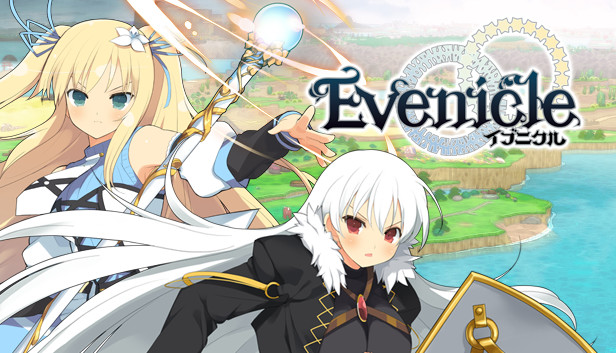
Evenicle

A game from the beloved developer of erotic games – AliceSoft. I have very mixed impressions of it, although the overall feeling after finishing it is definitely positive. It took me 3 years to complete the game, because I often took long breaks (finished it yesterday, last time I launched it was in winter). For some reason, it's a game that, after turning it off today, you don't really feel like launching tomorrow. Or maybe it's a problem with my gaming (or maybe not just gaming) stamina – I don't know. Well, let's try to break down what I've experienced.
The game has a very pleasant art style and overall visual design. The soundtrack itself is not particularly special, but it fits the gameplay moments perfectly, harmoniously complementing what is happening on the screen. The plot, although quite simple, is generally quite interesting. There are also more than enough humorous dialogues and funny situations in the game. The overall atmosphere is more kind and heartwarming, but there are also sad moments and frankly disturbing ones. The game itself is quite long, both due to lengthy expositions and plot scenes, and due to the need for grinding.
The H-scenes are, in general, rather mediocre. The art style, which looks incredibly pleasant in ordinary moments, looks quite out of place and not at all erotic in these scenes. The scenes themselves are also not very well written – too drawn out, a number of scenes contain strangeness that makes it not erotic, but either a very strange fetish, or some kind of sex comedy. Although there are some more or less normal options, but in my opinion, the old Sengoku Rance drew everything much more sexually, while not making the scenes overly drawn out. The pacing in Sengoku was also much better – the first scenes could be obtained very quickly, and the subsequent ones appeared evenly throughout the game. Here, the first scene will be much later, and the subsequent ones will either be very far apart, or vice versa, in a bunch, or at unexpected moments for the player. And yet, it seems that this should be the main aspect of an eroge.
Gameplay-wise, everything is quite sad. For most of the time, we will be clearing billions of mobs with a fork without any semblance of tactics. A few battles will require us to use something other than clicking, but that's it. Moving around the map, despite its huge size, is done quite pleasantly and without stress, but due to the specific (though pleasant) style, it is easy to miss some details. For example, it seems to you that you are walking past rocks – but in fact, there is a path for climbing and the opportunity to explore another small corner of the map. However, the main problem when moving around will, of course, be random encounters, where we will again have to take out the fork. Fortunately, the developers themselves realized what a hassle this is, and at a certain point in the game, there will be an opportunity to get a skill that will automatically skip battles with weak enemies, crediting the victory in your favor. But this skill is not exactly a salvation and the opportunity to put the fork aside for grinding, no, it is rather an act of mercy, because without it, it would be easy to go completely crazy.

Trying to summarize, it turns out that we have not so much an erotic game as an ordinary JRPG where we laugh, get touched, and cry over the plot and dialogues, endure the gameplay and combat system, and turn on the skip for the erotic scenes. As an ordinary JRPG, the game is simply excellent; you can feel that it was made carefully and with soul. But as an erotic game... In my opinion, this is not what I expected from AliceSoft, but perhaps this is just my opinion, because the game received high ratings from players, turned out to be commercially successful, and eventually received a sequel. I can't say that I'm disappointed, because the game is generally good for the genre, the problem is that it's not the genre I wanted.

P.S. Kath is objectively the best girl.
Where do we go?
Where do we end up when we save the world?
In reply to Siverfale
User Avatar
#252
Auto-translated
Siverfale
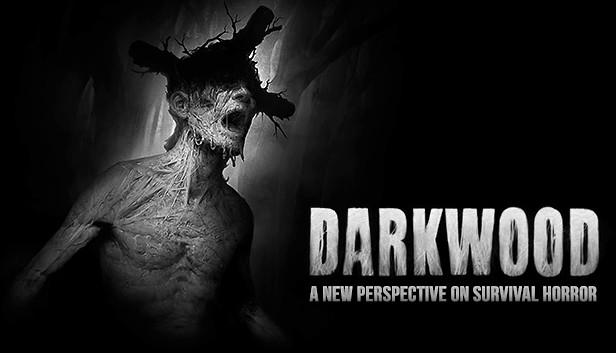
Darkwood


A horror game with survival elements and a top-down perspective. Despite its unappealing description, it's a good game. It's scary, unique, and set in an unusual world that evokes the atmosphere of a dark fairy tale. Plus, it was made by Polish developers. The only complaint is the very strange pacing and sometimes unclear next steps. Towards the very end, I had to look up a walkthrough to understand what to do next – and I rarely resort to that. Nevertheless, the game is simply excellent and very scary, and even though it seems drawn out at times, it's actually quite short. I recommend it.

So, we were hanging out in a chat room, chilling, and it was a Friday evening (though not as awful as it is now), when Siver suddenly wrote: "Buy an elephant, buy Darkwood." I started to refuse, saying that I didn't want to play it right now, that I had other things to do, that I didn't have much money, and that I still had to pay Revan for good cards in the expansion (in the end, I only had enough for one), even though the game was on my wishlist. Then he offered me a deal. He would give me the game, and I would promise, on my honor, to finish it within a month. I agreed, and then we made a deal, sealing it with an oath on the blood of Loca, on our saliva, and our good sense prevented us from going any further. So, a month passed, and our agreement was fulfilled. Now, about the game...

To be honest, I imagined it a little differently. At least, from one stream, I somehow remember that it was more about shooting in a dark and gloomy forest (otherwise, I might not have added it to my wishlist). But if I try to remember, I think I only watched it for about a minute, and I stumbled upon the moment when the guy met an NPC and started a dialogue with him. I guess I was confused by the weapon in the character's hands and the aggressive atmosphere, or maybe there really was some enemy there before that, I don't remember very well. I'll say right away that you need to approach the game with a certain mindset, when you're really ready to sit down and play, maybe even suffer a little (at least at the beginning). This is not a game for carefree relaxation. That's why it was a little difficult for me to play it at the beginning, and I also had to get used to the controls and some of the mechanics (seriously, I forgot that you can climb through the window yourself). And it's best not to take breaks while playing, even though you'll probably want to. In this case, you lose immersion, as always, and your skills start to fade. But towards the end, you even get into it, maybe because you've practiced and can easily defeat all the enemies (and not the other way around), and even in different ways. And you become curious about how the story will end, what will happen to the characters you met during the game, and so on (if you're not Loc, of course). I wouldn't say that I really liked the game, but I can't really say anything negative about it either. The first half of the game wasn't very good, although maybe that's just my problem, and I also took a long time to finish the game, which made it even longer. Then it got better. I can note the idea itself, the developers' imagination, and some individual moments, or even the creatures (perhaps the guy from the pit is the best, Revan would definitely like him). In general, I think it was worth it, and I don't have any regrets. The game will скорее (probably) give you new impressions, suggest some ideas, or inspire you to expand something.
PS sometimes the game can glitch, and then interaction with objects disappears (going to the menu helps). This happened to me at the beginning and at the end of the game.

================================================
Advertisement
================================================
If you happen to get hooked on a game, but none of your friends want to play it, then I have a special offer for you. You can always buy me that very game so that I can play it, discuss it with you, and leave my review. I can even record let's plays and upload them to YouTube, but in this case, the process will be a little slower.
if the game is not for sale, then you can find another option...
PS in some cases I may refuse
no hentai offers

Be strong. Believe
User Avatar
#253
Auto-translated
The opinion of a boomer who once wanted to play it, didn't, and now finally closed that loop for fun.

Atmospheric? Yes. Scary? No. I could call it slightly disturbing in places for some, because the atmosphere is well-built, the art design is polished, and the tags are well-chosen. Also, the first couple of times, it might be tense to spend the night in the shack, but ultimately, it's just a game, and it can't really evoke a feeling of fear, because the worst that can happen is reloading a save.
Not a bad story, even though I didn't fully delve into it.
The only problem with the game is the gameplay. It's not terrible, but it's tedious and doesn't reward you with much. Hitting enemies with a stick and crafting new items is cool, but otherwise, it's just okay. Inventory management, and even stamina in 2021? Well, you get the idea.
But that's okay, within the context of the pacing here, it affects the gameplay more and isn't so annoying that it becomes unbearable. The main problem is that you have an open-world map that seems to be atmospherically drawn and populated with lore-rich locations, but exploring it is not so much objectively uninteresting as it is stressful and ultimately doesn't give you any benefit. So you go to an unexplored place on the map, see a ruined house. You kill the monsters around it and inside, loot what's there – generic loot that you can find anywhere else. Yes, it's atmospheric, it's kind of cool, some remnant of life before the cataclysm, but your inventory is already full, and you either have to run back to the cabin to dump the loot or choose what to throw away. You go to another place, it's the same, and then night falls – you go back to the cabin and sit there again, listening to the knocks and sighs behind the wall. A new morning – you repeat the process, and so on. You're on the clock 24/7, you're kind of forced to move around and do something, but it's not necessary for your survival – there are plenty of resources, the chests are overflowing, and the actual development of the theme and atmosphere of the setting – that is, the main positive and most well-developed aspect – often boils down to the fact that you need to run somewhere, loot something, constantly manage your inventory and stamina. This tired me out a lot, and if I played the first half with more or less interest, when you don't have anything, you haven't seen anything yet, you're gradually getting used to it, building up resources, getting to know the world, and so on, then I almost dropped the game in the second half out of boredom, and I gritted my teeth and speedran it in a couple of evenings.
In short, I want to give it an 8, maybe 8.5, for the effort, the interesting idea, and the way it's presented, but the bugs and gameplay wouldn't let me rate it subjectively higher than a 7. So I'll leave it without a rating. Overall, I don't regret playing it and finding the strength to finish it. I suppose that people who are different from me in the above-mentioned aspects may really enjoy it.
My sword, my trusted ally, unphased by my aspect.
User Avatar
#254
Auto-translated
Author
Atmospheric? Yes. Scary? No. I could call it slightly disturbing for some, because the atmosphere is well-built, the art design is well-executed, and the tags are well-chosen. Also, the first few times, it might be a bit tense to spend the night in a shack, but ultimately, it's just a game, and it can't really evoke a feeling of fear, because the worst thing that can happen is having to reload a save.
It immediately reminded me of when I played the highly-praised Outlast. A reconnaissance speedrun, a failure, a reload, another rush through the creeps, a tired sigh, a reload, and now, remembering all the hiding spots and AI patterns, I reach the save point and start all over again. Of course, this happened in the first quarter of the game. A special mindset is needed for such games.
E si sui vius, er mi grans benananza,
e si ieu muoir, er mi grans deliuriers
User Avatar
#255
Auto-translated
Pillars of Eternity
Truly endless. A healthy human being can hardly handle more than half an hour, or at most an hour in one sitting -- that's roughly one combat encounter, after which you either somehow skip/postpone it or defeat it, but the point remains -- the next fight. Five to ten such grueling 30+ minute encounters per map, plus all sorts of trivia. Countless locations. How long the Walkthrough at the highest difficulty will ultimately take -- I don't even want to figure that out.
The combat isn't action-oriented, nor tactical, and isn't exactly praised for its clarity either. It's more or less beaten by abusing the rest mechanic -- spend all your spell slots, rest, manually return for supplies since you can only rest twice. Repeat. The interface is tiny, you'll definitely misclick, misclick means reloading. Didn't pick the right area -- your main gets wiped in 2 seconds, reload. Click around another dozen open locations -- one will have a simple encounter. After that, click blindly again until you hit a dead end. Turn around and guess again.
The system seems clear enough, yet somehow you still don't get it. You won't see dice rolls in the log. You can only figure out if a given map is clearable at this difficulty by reloading. There are many classes, and they're quite different. The fundamental differences only become clear when the player discovers the rest-based spell slot reset abuse. It's still faster than spamming reload hoping for a favorable run of hits. Even the developers don't know why the health-endurance mechanic exists in this game.
You can play along the meta. Read guides, dump all the story companions with randomly dumped stats, and create actually viable ones, but to me, that's cheap. On the highest difficulty, it's beatable after nuking a couple of characters; it just takes a massive amount of time.
That's probably 85% of the game. The rest is reading dreary texts, trying to parse a lore that's more convoluted than Dark Souls, thicker than War and Peace, and drier than a mop handle. Souls, Xuyushi, Guardians -- this terminology alone would be enough for a good conceptual dictionary. Does this make the texts interesting? No.
80% of the characters are handouts for donors. If you're ashamed of your first quests in expansions -- try reading their lore backstories and lose the shame. The first three story NPCs were clearly patched together in five minutes -- but it's passable. The next two, and probably all the rest, were likely scribbled on a piece of toilet paper in a second. All you could do in a second is crap out a little shit, which is exactly what we got. Actual quests are minimal.
Sure, I'm a noob, someone who can't handle it, a terrible RPG tactician, and all that. If Pwning sees this, he'll piss on my face. The problem is that it's pointless to master it. To skim through another block of dreary, but lengthy text? To trip over even more yellow text boxes -- for some reason not warned about from the start, which some random dev made? No, thanks. In Tyranny -- a review might follow later -- the combat was tolerated for the sake of progressing the story -- and even then, the mechanics weren't this dreary. No idea why you'd tolerate hundreds, maybe thousands, of these hellishly long fights towards the end of the game in the Pillars -- it's unclear.
The game is incredibly vast. Lots of locations, tons of fights, heaps of text -- only thing is, it's all shit. You see a vast expanse of water, think -- awesome, until you realize it's ankle-deep and stinks to high heaven.
And speaking of which -- despite having a seemingly passable engine, the game is rendered terribly. Not hideously bad, just... mediocre. Even the ancient first Neverwinter had more interesting graphics. Naturally not better -- but there, the artists surpassed the engine, while the Pillars artists apparently couldn't squeeze even half of it out.
And yet -- I kind of liked it, since in single-player I play to suffer. In multiplayer -- to make things difficult for others... Maybe I'll finish it, though it won't add anything new to the review. But I'd rather crank Total War to Legendary and play, say, only with cavalry -- my ass will burn from the difficulty just the same, but it'll be way more interesting and comprehensible.
4/10. If you have absolutely nothing to do -- it'll do to kill some time.
E si sui vius, er mi grans benananza,
e si ieu muoir, er mi grans deliuriers
User Avatar
#256
Auto-translated
Yeah, I also played through it in a fairly straightforward manner, albeit without any particularly exciting side quests – my main character was a Cipher, and it simply wasn't required. Essentially, the tactic for almost all battles, except perhaps the final boss in the dungeon, was the same. Separately, I didn't like that the combat requires a lot of micromanagement – after dealing with a selected enemy, the fighters just stood there like statues, waiting for further orders. Although, as far as I know, this was later fixed.
I agree about the dialogues and the dullness of the plot. The companions aren't particularly impressive, but there are a couple of decent ones – like Kana. Only Durian and the Mourning One stand out – they embody all the negative aspects of the game's dialogue, delivering one utterly depressing monologue after another. Moreover, their personal quests operate under a special system, which means you have to drag them around in your party for most of the game. But why? They are hardly the most interesting companions I've ever encountered. Even in terms of the plot, they are just two disappointments, presented under the guise of forced "grayness," which the game's writers seem to love. The main antagonist is no better than this pair – we are hyped about him throughout the game, but in reality, we just get motivation and logical connections on the level of the Reapers from Mass Effect. And yet, the plot had potential, but it was never properly realized. In some cases, the writers even simply wasted potentially interesting NPCs, like Lady Web. When I first read about her in one of the lore books, I was interested and expected a lot. But when we finally meet her, she gives us a couple of quests, after which she fades away to make way for the main antagonist's development, without really doing anything significant.
I disagree about the visuals – the backgrounds in the game are very beautiful, although I can't say the same about the character models. I also can't fault the acting or the sound design. And in the game itself, there are a couple of decent gameplay moments – I really liked the reputation system, as it came up quite often in the dialogues. Otherwise, Pillars of Eternity feels like an attempt to make another Baldur's Gate. I would even say that Obsidian succeeded – omitting the lack of a couple of features that even BG had, the gameplay and companions are roughly at the same level. However, the RPG genre has not stood still, and in 2015, a game created according to the standards of the early 2000s did not impress me very much. I played it almost immediately after its release, without any add-ons or later patches. I played for a long time, and closer to the last act, I almost burned out – I finished it out of sheer stubbornness, not wanting to leave it unfinished.
User Avatar
#257
Auto-translated
I also dropped BG (the first one, I didn't even try the second), and it definitely wasn't due to technical aspects – even Arcanum was enjoyable despite its hour-long walks through mostly empty locations. From what I managed to see, it seems like there's something akin to "Pillars," but the dialogues, NPCs, and main storyline are downright degenerate, while the side quests are comparatively better. The difficulty was even funnier, by the way – to complete it on the highest difficulty, you just had to blindly take everyone into your party and brute-force your way through. At least here, the "Pillars" were definitely top-notch with their custom companions and leveling system. Top-notch, if you ignore the crocodile-like flight, remembering the micro-management with pressing the same buttons in half-second intervals and battles that lasted for five minutes on the path of the damned.
E si sui vius, er mi grans benananza,
e si ieu muoir, er mi grans deliuriers
User Avatar
#258
Auto-translated


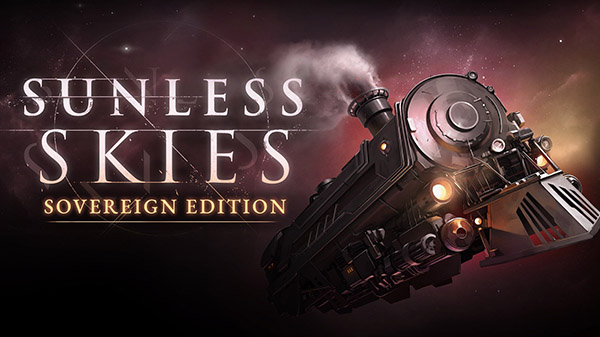
Sunless Skies

Where to even start... Anyway: a game about you flying a train-like locomotive through certain fantastical landscapes. What these landscapes are is hard to say — sometimes we see trees, there’s also a mountain that begins somewhere far below. And you think — "aha, we’re high above the ground." And other times we see nothingness stretching into nowhere, outlines of destroyed stars, and so on — and you think "aha, we’re in space." But there’s no smooth transition between them, and understanding what’s actually happening is difficult or even impossible. This, by the way, applies not just to the landscape but to the setting as a whole. I even opened the official game Wiki out of curiosity, hoping the hardcore fans had already figured out all the nuances of the plot and what’s going on, but it only had purely gameplay information. Oh well, let’s put that aside for now and come back to it later.
Let’s start with the good — game-play. The general gist resembles a sandbox like "Space Rangers," although the games themselves differ significantly. But the core idea is that we are the captain of a ship (train) and fly around the vicinity to earn some cash, while somewhere in the distance a global goal looms. In this regard, everything is in perfect order; here’s likely an incomplete list of things you can do to make money: sell goods, fulfill trade contracts, mine hours or wood and sell it, destroy officials/rebels and get a reward for it, fulfill contracts for collecting research materials, sell research results, spread propaganda against that research, transport contraband, deliver humanitarian (or not so humanitarian) aid, participate in regattas, become a minister and issue new laws, fix broken clocks, repair holes in time, just collect port reports — the opportunities for obsessing in this game, like the obsession itself, are limitless. Essentially, you could stop right there, because you don’t need anything else for obsessing, but the game offers us a fairly large map, completely covered in fog of war. To find new ports for selling goods, you need to explore the map — and even in that, you can encounter many dangers. From simply running out of fuel or supplies to some unexpected incidents that raise the crew’s terror level too high, which could have fatal consequences for the captain and the ship, not to mention simple cases of encountering unknown creatures that might just destroy our locomotive. Besides ports, the map also has a number of other objects that may be interesting both out of curiosity and for practical reasons, so there’s always some incentive to explore.
The game has many events, both random and fixed, for example, related to trying to pass a new law or send an expedition to the forest for wood, or investigate ship wreckage, whatever. These events might require upgraded skills, of which there are only four in the game. I won’t dwell too much on this; I’ll just highlight two important thoughts directly related to it. First, the leveling itself works like this: when we gain a new level, we’re given several options for events that happened to us in the past, and based on the choice, we improve our stats. I really liked the idea; it was interesting to flesh out the image of the blank slate I created as the game went on — something I sometimes do in EXP games as well. The game also has officers who boost your skills and offer their own quest lines. Moreover, all officer quest lines are non-linear and have different outcomes depending on the decisions made in them. And this brings us to the "second" point, which is unpleasant — high-level equipment for the locomotive requires not only money but also upgraded skills. Likewise, endgame checks may require a skill you haven’t leveled. So instead of choosing backstories that form an interesting image in your head, and behaving with officers the way you think is best, the game pushes you to complete officer quests in a certain way that gives you optimal stat boosts, and to level your character in the same manner, forming some ridiculous image for yourself, but one that has all the necessary skills. And this smoothly leads us to the second part of the story — the setting and story.
Once again, I recall Pillars of Eternity and how they "immerse" the player into the game’s setting by just dumping pages of information on them. Here, the game decided to take the completely opposite approach, which turned out to be just as bad — they don’t tell us anything about the setting at all, except for minimal explanations of what’s happening right here and now. And even those explanations never go beyond what’s needed for a rough understanding of the situation at that moment. And this turned out to be a very poor decision. When I know nothing about what’s happening around me or the sides in various conflicts, I don’t feel any desire to take sides. For example — we start the game in the frontier, where independence fighters and officials are at war. Why are the independence fighters fighting for freedom? Do they dislike high taxes? Are they idealists pushing for democracy? Do they want to see the world burn? I know nothing about them, so why would I side with them? On the other hand, I know just as little about the official London government. They have a Queen, she’s supposedly immortal, and that’s it. Who’s fighting for what? Unclear. Off the top of my head, I can only recall one conflict in the game that’s more or less clear — where we’re shown a port (town) and see the horrible lives of ordinary workers and the good lives of their overseers. You could try to stretch it and say "well, there you go, see, the government wants to make everyone slaves, and the independence fighters are against it." But first, that’s just one port, and second, it’s called Brabazon, so I think it’s more of a jab at Amazon and their working conditions, which is trendy to criticize these days. Or, for example, there’s a tourist port with cultists... err... of some unknown nonsense? I didn’t even understand what exactly. And the local officials don’t like them, and I’m offered to help the cult. But what does this cult want? What’s its goal? I never figured that out.
By the way, I mentioned the trendy jabs at Amazon earlier. But that’s not the only place where trends stop. I’m not a big fan of looking for agendas — where would I, in my Barnaul, but at some points it became quite unpleasant. The game has three quests (at least that I can recall) that involve a romantic storyline in some way. One is heterosexual, the second is gay, the third is lesbian. Perfect diversity, isn’t it? But it doesn’t end there. Among our officers, we have two transsexuals — one FTM and one MTF, naturally. And while with the MTF it’s not so clear-cut, and if he were the only such instance in the game, I wouldn’t even mention him, the FTM converted for no apparent reason. It doesn’t affect his story or quest whatsoever; we’re just told about it at one point and then have to live with it. And one more "interesting" point — the game allows you to "romance" officers. Overall, for a game in the "obsessive in a sandbox" genre, this is totally unnecessary, but since they added it, let’s see what these options are. And all three romance options are exclusively male officers. Does this mean the target audience is girls? But as far as I know, such games aren’t particularly interesting to them. Or is the game for gay men? I don’t know anything about their tastes, so I can’t rule that out.
Well, as a result of the story and setting — when one part is simply incomprehensible to me, and the other causes rejection — the last attempts to roleplay anything collapse. In the end, I started destroying every ship I encountered, holding in my head a formula like "if possible profit > possible risk, the ship is immediately attacked." Although in such games, I usually care a lot about the lives of innocent NPCs — for example, in Mount and Blade, I never raided villages simply because I felt sorry for the peasants. But in this game, there’s no one to feel sorry for — just some vague cardboard cutouts that are nothing more than a source of loot. My last complaint about the game’s texts relates not to their content but to their form. In some random chat, a guy once wrote that he was afraid of the English in Disco Elysium, but ended up having no issues, whereas Sunless Skies was very tough. I completely agree here. The game aims for a British Victorian-era style, so it uses a lot of ornate/archaic/exclusively British words and expressions. Needless to say, the translation difficulties only deepened my indifference to the game’s world and my desire to just skip all these text blocks.
Alright, I won’t keep trashing the story. Overall, the game has some well-written and even moderately interesting quests with a coherent story and no unpleasant elements (read: agenda). These are usually self-contained quests that don’t require an understanding of the overall setting, or explain the necessary elements along the way. They also tend to be stories where you don’t have to choose a side in a conflict (ugh, I remembered choosing from three factions in Eleutheria 🤢 okay, I promised not to trash it anymore). As an example, I’ll mention the side quest with the heterosexual romantic storyline. The story couldn’t be simpler: a grieving lover asks to bring back his deceased beloved from the afterlife. Fortunately, we immediately know where to start — you can physically travel to the kingdom where all the dead go while still alive through a known method in the game. How the process works from that kingdom’s side is explained to us there, with several possible outcomes depending on decisions and actions, everything is clear, everything is great, no complaints. There are a few other quests that also have no issues. So it’s not all bad; there are bright spots, but in essence — many problems.
What else to add? A formal line on presentation — the game has well-drawn backgrounds, some of which look simply gorgeous. Music that fits the atmosphere, good sounds overall, you can toot the train’s horn, the horn sounds are different but well-crafted and sounding. Everything’s great here.

After everything written, it might seem like I didn’t like the game, but that’s not the case. It just so happens that the key element, the core of the game, is described fairly briefly. As I said — it’s an obsessive sandbox, and in that regard, the game has minimal complaints (the need to optimize stats, an inconvenient journal), but essentially this aspect of the game is perfectly fleshed out, as it should be. The story and setting, on the other hand, can be thoroughly criticized, but they’re essentially just a backdrop for the game itself. I’ve put 120 hours into it and plan to play quite a bit more to finish the last major game quest, I’m just taking a short break for now. So if you haven’t obsessively played a sandbox like this in a while and feel the desire — I can recommend it. If you want an interesting world with an intriguing overarching plot and excellent side stories — meh, you’d better skip it.
Where do we go?
Where do we end up when we save the world?
User Avatar
#259
Auto-translated
Pinned the topic in the important section. It would be great to have a sub-section for games...
Author
BG (the first one, didn't try the second)
Okay...

Be strong. Believe
User Avatar
#260
Auto-translated
Unclear...
E si sui vius, er mi grans benananza,
e si ieu muoir, er mi grans deliuriers
User Avatar
#261
Auto-translated


Intellivision for Ment. At first, it was pretty good – the visuals and atmosphere were top-notch, the humor was enjoyable, and even the lore was relatively decent. Once that initial impression faded, the degrading nature of Metroidvanias became more apparent, which is why I despise them – running and jumping on the same platforms, monotonous killing of dumb enemies with only two animations on each new screen. However, the visuals and the developer's apparent effort still prevented me from dropping it right away. But then I didn't play for a few days, and after another launch, I got lost because I had forgotten the map. I was too lazy to explore all the previously closed-off areas after winning another boss fight in hopes of finding a passage, although I did try, but it turned out to be too tedious, and I finally dropped it.


A classic turn-based tactics game with progression, a solid 8 out of 10. The game itself offers relatively little in absolute terms – it's just wargame-style battles on maps, interspersed with VN-style story segments, and between missions, you can change the hero's gear/abilities/class, and missions towards the middle-end can take up to ~an hour, so at some point, you realize that playing it for several hours in a row is difficult, but playing a mission or two a day is quite manageable. But what it does offer is done very well – from the graphics and music to the mechanics (for example, you don't necessarily have to tediously control each soldier individually; you can simply give them an order to move/attack together with the hero with a couple of clicks) and the story – some missions have additional tasks and conditions, completing or not completing which will lead you to a different route, and for the most part, these routes differ significantly from each other, both in terms of the composition of heroes with their corresponding units and in the direction of the story, up to completely hellish ones. I went through both routes and simply got tired because you can grind a lot there, and there is a lot of content in the game.


Automata plunged me into universal melancholy simply by being in it – you saw ruined landscapes, listened to mournful music, watched the meaningless bustle of machines trying to copy human behavior patterns, but this feeling was more or less stable, and over time, at certain moments, there came a pleasant realization that, in general, everything in this world is fine, the worst thing – the human virus – is already behind us, and you can indulge in all-encompassing harmony with the freely breathing world.
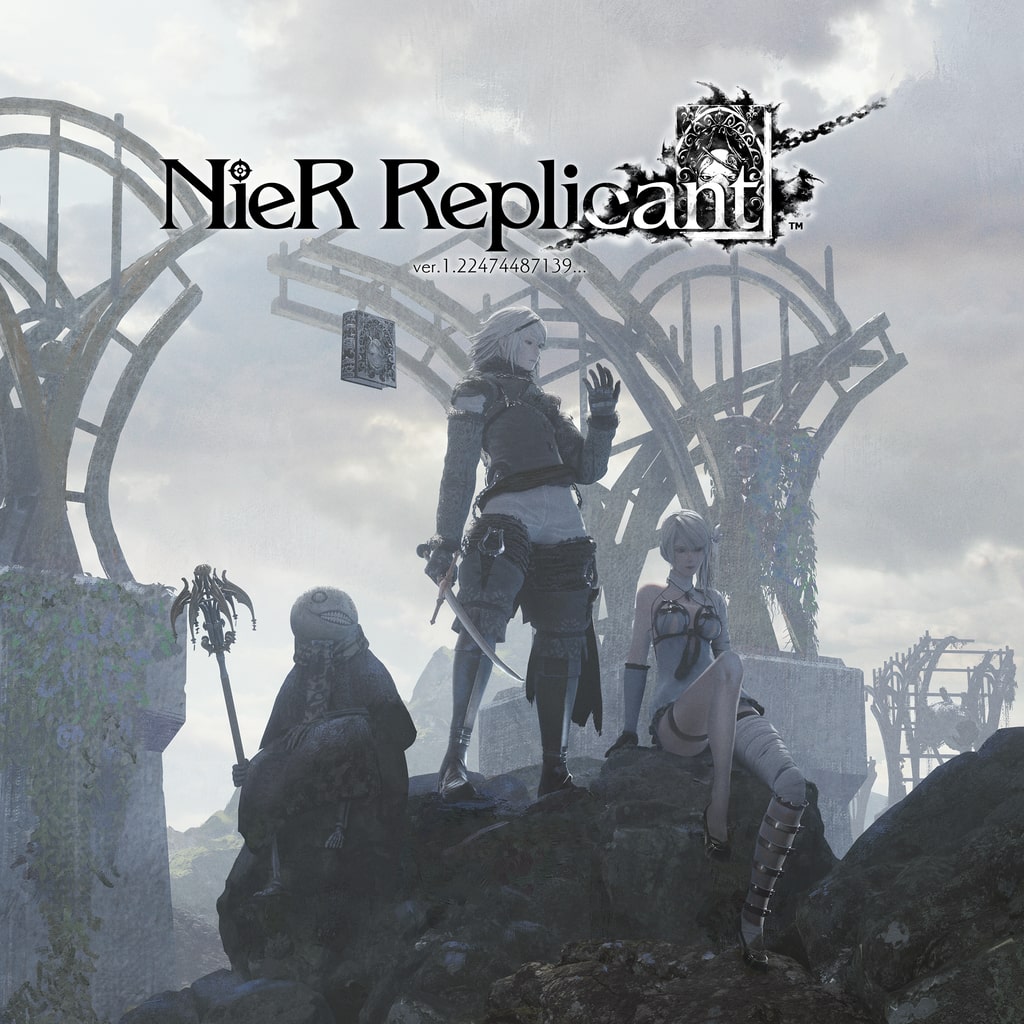
Replicant/Gestalt hurts in its own way. You are greeted by a very intimate, cozy, rural fantasy world, supposedly "dying," but you see beautiful green landscapes, a shining sun, cheerful rosy NPCs-jesters, playing children, peacefully grazing sheep, and you think – it's not that bad, you were simply given a world that has regressed to the Middle Ages, and supposedly this should be sad, but there are not even many ruins. What is there to be sad about? Pleasant music plays on top of this, you are fed with all sorts of cute everyday scenes, everyday quests, you have chickens and chicks running around in your village and on your plot, and you have a vegetable garden – you can grow grains, vegetables, watermelons, and all sorts of flowers. Why not live? You can go fishing – by the way, the fishing is pretty good, the mechanics are somewhat meager in some respects, but in terms of authenticity and interest – it's quite good. You can ride a boar around the area. You visit different settlements, each with its own atmosphere, and they are quite different from each other in terms of both external design and atmosphere, lore, and the concept of the place. At the same time, you are presented with a more or less classic fairy tale story without any forced grimdark or mind-blowing twists – it's a bit strange in places. The combat itself is partly simple, partly dynamic, again a bit strange, but enjoyable. In general, a certain haze envelops the mind and heart. Closer to the middle, I caught a very unexpected, amazing feeling – it had been brewing for quite some time, but at one point, in one of the locations, under its soundtrack, I finally realized it. This feeling was a kind of nostalgia, but nostalgia here will be a somewhat piggish, doggish, down-to-earth concept, but for something like that, some memories of childhood, about 8-11 years old, some random fragments of sensations from walks around the neighborhood, on hot summer days, alone, somewhere in the yard and further, in a period of life when you are interested in exploring the world, even just digging in the sand or pebbles in proud solitude, inventing some interesting games, experiments on physical matter for yourself. When the concepts of bad mood, depression, hopelessness do not even exist as psychological concepts, when the world is still not perceived as something final, oppressive, having boundaries, consisting of different depressing immaterial layers, but is determined by what you see around you directly and assume in your head, according to your childish guesses and pranks. I realized at one point that I was aware of this atmosphere, and for a moment, I experienced euphoria from it. Throughout my life, I have sometimes tried to recall something similar manually, sometimes consciously, sometimes not, but in our current reality, this is not easy, and here it happened by itself.
And then... Then Replicant bristled, but even here, it did it in its own way. As they say: slowly, gently - this is how life is taken. When you thought that everything was under control, and even some more vivid twists, designed to add drama, you endured without problems because you expected them, it begins to gently hit you with what you did not expect. But you didn't expect it not in the sense that it was some unexpectedly presented twist, but... Simply everything gradually begins to succumb to entropy and the destructive sands of time. This is not generally emphasized demonstratively, except for the most direct and obvious moments, but in the details, for the attentive player, this is felt everywhere and always. Not all of them are capable of striking anyone in the heart, but the fire is fired over a large area, and some of the arrows do hit between the ribs. And in most places, this is not even an attempt to deliberately evoke emotion, but simply a statement of fact, to which you are free to react according to your own awareness and attitude, and thereby it becomes more realistic, in the sense that you realize how fragile everything that you have already accepted as a given has turned out to be, and how inconspicuous the process of this entropy looks, nevertheless relentlessly and indiscriminately revealing itself. Where are you going? What do you even know? Is there any hope? And for what? How fragile is it? Are you ready to give it up? And what will you do? Are there any other options? I'm not trying to dissuade you or trick you, just try to answer these questions. In essence, the whole Replicant is a metaphor for one single human life in a fairy-tale setting.
Ultimately, I believe that this is a masterpiece by a genius, and I am glad that it was finally remastered and ported, but I will not recommend it to people without a contemplative trait in their character and without the appropriate mood for this immersion. There is less "yoba" in it than in Automata, and more deep human reflection. If you are interested in a rating, then taking everything described above into account – a solid nine, subjectively – even higher.
The translation, of course, is garbage, but this is classic for Western scum.
My sword, my trusted ally, unphased by my aspect.