


 Siverfale


Auto-translated
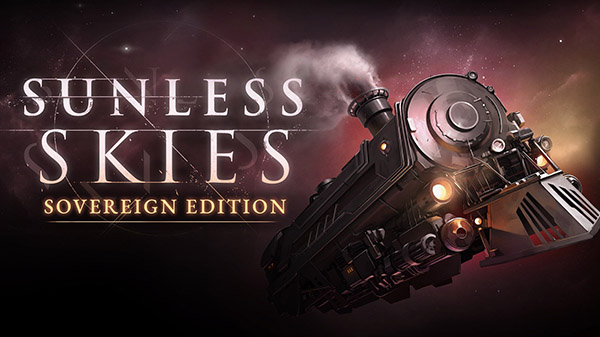
Sunless Skies
Where to even start... Anyway: a game about you flying a train-like locomotive through certain fantastical landscapes. What these landscapes are is hard to say — sometimes we see trees, there’s also a mountain that begins somewhere far below. And you think — "aha, we’re high above the ground." And other times we see nothingness stretching into nowhere, outlines of destroyed stars, and so on — and you think "aha, we’re in space." But there’s no smooth transition between them, and understanding what’s actually happening is difficult or even impossible. This, by the way, applies not just to the landscape but to the setting as a whole. I even opened the official game Wiki out of curiosity, hoping the hardcore fans had already figured out all the nuances of the plot and what’s going on, but it only had purely gameplay information. Oh well, let’s put that aside for now and come back to it later.
Let’s start with the good — game-play. The general gist resembles a sandbox like "Space Rangers," although the games themselves differ significantly. But the core idea is that we are the captain of a ship (train) and fly around the vicinity to earn some cash, while somewhere in the distance a global goal looms. In this regard, everything is in perfect order; here’s likely an incomplete list of things you can do to make money: sell goods, fulfill trade contracts, mine hours or wood and sell it, destroy officials/rebels and get a reward for it, fulfill contracts for collecting research materials, sell research results, spread propaganda against that research, transport contraband, deliver humanitarian (or not so humanitarian) aid, participate in regattas, become a minister and issue new laws, fix broken clocks, repair holes in time, just collect port reports — the opportunities for obsessing in this game, like the obsession itself, are limitless. Essentially, you could stop right there, because you don’t need anything else for obsessing, but the game offers us a fairly large map, completely covered in fog of war. To find new ports for selling goods, you need to explore the map — and even in that, you can encounter many dangers. From simply running out of fuel or supplies to some unexpected incidents that raise the crew’s terror level too high, which could have fatal consequences for the captain and the ship, not to mention simple cases of encountering unknown creatures that might just destroy our locomotive. Besides ports, the map also has a number of other objects that may be interesting both out of curiosity and for practical reasons, so there’s always some incentive to explore.
The game has many events, both random and fixed, for example, related to trying to pass a new law or send an expedition to the forest for wood, or investigate ship wreckage, whatever. These events might require upgraded skills, of which there are only four in the game. I won’t dwell too much on this; I’ll just highlight two important thoughts directly related to it. First, the leveling itself works like this: when we gain a new level, we’re given several options for events that happened to us in the past, and based on the choice, we improve our stats. I really liked the idea; it was interesting to flesh out the image of the blank slate I created as the game went on — something I sometimes do in EXP games as well. The game also has officers who boost your skills and offer their own quest lines. Moreover, all officer quest lines are non-linear and have different outcomes depending on the decisions made in them. And this brings us to the "second" point, which is unpleasant — high-level equipment for the locomotive requires not only money but also upgraded skills. Likewise, endgame checks may require a skill you haven’t leveled. So instead of choosing backstories that form an interesting image in your head, and behaving with officers the way you think is best, the game pushes you to complete officer quests in a certain way that gives you optimal stat boosts, and to level your character in the same manner, forming some ridiculous image for yourself, but one that has all the necessary skills. And this smoothly leads us to the second part of the story — the setting and story.
Once again, I recall Pillars of Eternity and how they "immerse" the player into the game’s setting by just dumping pages of information on them. Here, the game decided to take the completely opposite approach, which turned out to be just as bad — they don’t tell us anything about the setting at all, except for minimal explanations of what’s happening right here and now. And even those explanations never go beyond what’s needed for a rough understanding of the situation at that moment. And this turned out to be a very poor decision. When I know nothing about what’s happening around me or the sides in various conflicts, I don’t feel any desire to take sides. For example — we start the game in the frontier, where independence fighters and officials are at war. Why are the independence fighters fighting for freedom? Do they dislike high taxes? Are they idealists pushing for democracy? Do they want to see the world burn? I know nothing about them, so why would I side with them? On the other hand, I know just as little about the official London government. They have a Queen, she’s supposedly immortal, and that’s it. Who’s fighting for what? Unclear. Off the top of my head, I can only recall one conflict in the game that’s more or less clear — where we’re shown a port (town) and see the horrible lives of ordinary workers and the good lives of their overseers. You could try to stretch it and say "well, there you go, see, the government wants to make everyone slaves, and the independence fighters are against it." But first, that’s just one port, and second, it’s called Brabazon, so I think it’s more of a jab at Amazon and their working conditions, which is trendy to criticize these days. Or, for example, there’s a tourist port with cultists... err... of some unknown nonsense? I didn’t even understand what exactly. And the local officials don’t like them, and I’m offered to help the cult. But what does this cult want? What’s its goal? I never figured that out.
By the way, I mentioned the trendy jabs at Amazon earlier. But that’s not the only place where trends stop. I’m not a big fan of looking for agendas — where would I, in my Barnaul, but at some points it became quite unpleasant. The game has three quests (at least that I can recall) that involve a romantic storyline in some way. One is heterosexual, the second is gay, the third is lesbian. Perfect diversity, isn’t it? But it doesn’t end there. Among our officers, we have two transsexuals — one FTM and one MTF, naturally. And while with the MTF it’s not so clear-cut, and if he were the only such instance in the game, I wouldn’t even mention him, the FTM converted for no apparent reason. It doesn’t affect his story or quest whatsoever; we’re just told about it at one point and then have to live with it. And one more "interesting" point — the game allows you to "romance" officers. Overall, for a game in the "obsessive in a sandbox" genre, this is totally unnecessary, but since they added it, let’s see what these options are. And all three romance options are exclusively male officers. Does this mean the target audience is girls? But as far as I know, such games aren’t particularly interesting to them. Or is the game for gay men? I don’t know anything about their tastes, so I can’t rule that out.
Well, as a result of the story and setting — when one part is simply incomprehensible to me, and the other causes rejection — the last attempts to roleplay anything collapse. In the end, I started destroying every ship I encountered, holding in my head a formula like "if possible profit > possible risk, the ship is immediately attacked." Although in such games, I usually care a lot about the lives of innocent NPCs — for example, in Mount and Blade, I never raided villages simply because I felt sorry for the peasants. But in this game, there’s no one to feel sorry for — just some vague cardboard cutouts that are nothing more than a source of loot. My last complaint about the game’s texts relates not to their content but to their form. In some random chat, a guy once wrote that he was afraid of the English in Disco Elysium, but ended up having no issues, whereas Sunless Skies was very tough. I completely agree here. The game aims for a British Victorian-era style, so it uses a lot of ornate/archaic/exclusively British words and expressions. Needless to say, the translation difficulties only deepened my indifference to the game’s world and my desire to just skip all these text blocks.
Alright, I won’t keep trashing the story. Overall, the game has some well-written and even moderately interesting quests with a coherent story and no unpleasant elements (read: agenda). These are usually self-contained quests that don’t require an understanding of the overall setting, or explain the necessary elements along the way. They also tend to be stories where you don’t have to choose a side in a conflict (ugh, I remembered choosing from three factions in Eleutheria 🤢 okay, I promised not to trash it anymore). As an example, I’ll mention the side quest with the heterosexual romantic storyline. The story couldn’t be simpler: a grieving lover asks to bring back his deceased beloved from the afterlife. Fortunately, we immediately know where to start — you can physically travel to the kingdom where all the dead go while still alive through a known method in the game. How the process works from that kingdom’s side is explained to us there, with several possible outcomes depending on decisions and actions, everything is clear, everything is great, no complaints. There are a few other quests that also have no issues. So it’s not all bad; there are bright spots, but in essence — many problems.
What else to add? A formal line on presentation — the game has well-drawn backgrounds, some of which look simply gorgeous. Music that fits the atmosphere, good sounds overall, you can toot the train’s horn, the horn sounds are different but well-crafted and sounding. Everything’s great here.
After everything written, it might seem like I didn’t like the game, but that’s not the case. It just so happens that the key element, the core of the game, is described fairly briefly. As I said — it’s an obsessive sandbox, and in that regard, the game has minimal complaints (the need to optimize stats, an inconvenient journal), but essentially this aspect of the game is perfectly fleshed out, as it should be. The story and setting, on the other hand, can be thoroughly criticized, but they’re essentially just a backdrop for the game itself. I’ve put 120 hours into it and plan to play quite a bit more to finish the last major game quest, I’m just taking a short break for now. So if you haven’t obsessively played a sandbox like this in a while and feel the desire — I can recommend it. If you want an interesting world with an intriguing overarching plot and excellent side stories — meh, you’d better skip it.
Where do we go?
Where do we end up when we save the world?
Where do we end up when we save the world?