


 GreenEGO

Auto-translated

On the eve of the release of Heroes of Might and Magic VI, my colleague Ego and I, being passionate fans of this game series, once again asked ourselves: which is better, Sword or Magic?
It would seem that the game itself encourages a peaceful resolution to this conflict – all heroes are good. However, if you gather all gamers in a tight enclosed space and ask them this question, bloodshed is inevitable.
Therefore, while studying the game alongside other beta testers and gaining some minimal experience, we decided to address this issue in advance.
To start, it's worth looking back at history and understanding what the warrior and mage classes actually represent.
Conan the Barbarian, brilliantly played by the unforgettable Arnold Schwarzenegger, very clearly illustrates the essence of any warrior: mountains of steel muscles, distrust of everything that cannot be explained, and the ability to solve any problem with a heavy sword (or an axe, whichever you prefer). And judging by "Iron Arnie's" highly intellectual facial expression, particularly strong warriors have an innate immunity to dangerous mind magic.
Mages, being almost the opposite of warriors, appear before us instead as lean, frail, or even simply very old subjects—incredibly intelligent, dangerous in their anger, and sometimes insane. Some mages are good, some are evil, but they are all united by the ability to command the forces of natural elements and various mysterious, yet usually powerful, substances and materials.
If you recall any game, mages at the initial level of their ability development are far inferior to muscular warriors, who line up every enemy they meet in neat rows along a country road. A wizard has to literally turn himself inside out just to survive and gain new experience. But sooner or later, a moment comes when a mage, in his acquired power, can annihilate a small army of barbarians who previously mocked him with a single movement of the pinky toe on his left foot. And after that, fighters usually start pestering the developers with demands to "fix the balance"...
Amusingly, the situation between mages and warriors reflects the reality of life in the same foreign Community. Recall any American movie where cool muscular guys (mostly football players) bully downtrodden nerds. However, as one such "nerd" said: "Soon life will put everything in its place. I'll go to college and work at a leading law firm in the state. And they... at most, will be running errands for their fathers."
Well, let's return to games, specifically the Heroes of Might and Magic series. If you take a fleeting glance at the games numbered one through five, you'll see that nothing much has changed. You choose your hero, and they are either a mage or a warrior. True, while previously abilities were tied to each specific hero, now, in the sixth part of the game, you can create a hero in your own image and likeness.
Specifically, we are talking about the popular duel mode. We can choose the gender most appealing to us (unfortunately, we are not in Australia, and the third gender X introduced there is not available to us; we'll stick with two), the hero's appearance, reputation (blood or tears) and, here it is, the deciding moment, the hero type: warrior or mage.
Of course, our goal is not to impose any particular solution regarding the advantage of a mage or a warrior, but simply to reveal the characteristics of each class.
Warrior.
Whoever comes to us with a sword will get it in the same place. (C)
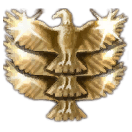
So, we chose the heavy fist icon, which symbolically reflects the essence of the class.
The first thing to note when leveling up this hero class is that in the "combat" tab we see three levels of abilities, while in the "magic" tab there are only two.

Briefly about the same progression levels. The first row reflects the abilities a hero can learn at level 1. The second row – abilities available from level 5. The third – from level 15.
It should be noted immediately that a significant number of abilities available at level 1 are strengthened at level 5 and, accordingly, level 15.
So, since you chose a fighter, all abilities should be oriented toward strengthening your army through strength, defense, and other useful things. As a side note, a mage can also use the advantages of a fighter, but only up to the second stage of development, but we will talk about that later.
All abilities are based on the hero's attack and defense, so it is advisable to maximize personal attack and defense. To repeat, you will have as many as three levels of them.
A warrior will also have an advantage in luck and morale. But think: is it worth leveling up? No, the skills are certainly useful, but for example, for a Necropolis army, studying improved morale would be like putting poultices on a dead man—pardon the pun. Undead morale is always zero, and no effects can scare it.
An undeniable advantage of the warrior will be the full study of passive skills, such as increasing the health of all units in the army or the ability to strike first during a counterattack. The bonuses of the third stage of passive skills are much stronger than the bonuses of the previous two.
The third level of abilities also provides unique capabilities, both economically, if you intend to develop a traveler hero, and combat-wise, if the hero is intended purely for duels. Passive bonuses at the third level allow units to make additional moves and significantly increase their attack and defense. Carefully study the strengths of your army, and then unlock its potential with well-thought-out moves.
And for dessert. Fighter heroes have much higher attack against enemy units when they simply charge in with a saber, ignoring all their abilities. The amount of damage your favorite will deal depends on the "hero's strike" level. And this very hero's strike is calculated based on the physical characteristics of your cool guy (or girl).
The hero's strike cannot be ignored either. Firstly, it is quite strong. Without additional abilities, a hero can easily reduce the number of champions in an enemy army by several heads with one blow. Secondly, it has certain bonuses. For instance, an Inferno hero very often deals critical hits, which increases the damage dealt by 50%. A Haven hero marks a target as a particular villain, as a result of which the entire army will hit the unfortunate soul with increased cruelty. And so on. Thirdly, the hero's strike can be combined with special abilities. When a certain unit attacks a target, the hero will strike first! And if a creature has high morale, it has a higher chance to attack twice; consequently, the hero will pass through the enemy ranks twice. Consider this bonus as well.
Mage.
Learning and labor will grind everyone down. (C)
So, you have rejected the vulgar and meaningless waving of fists, preferring a quiet and peaceful solution for settling open conflicts: the mass and instantaneous destruction of the entire enemy army with a meteor shower. Congratulations! You are a mage!
As you've already realized, wizards have access to all spells in the game but cannot excel in martial affairs. Will they suffer from this? We highly doubt it.
To start, briefly about the schools of magic.
It is no longer necessary to build expensive structures to study magic. It is enough to develop the hero's magical branch. And to attain all "levels of zen," you need to choose a mage hero.

The number of schools of magic has slightly increased compared to previous parts. There are four elemental schools, opposing light and darkness, as well as primal magic, which, similar to the warrior branch, can strengthen our initial characteristics.
As before, Fire is the most offensive magic. This entire branch is built on dealing damage. Darkness weakens and deals gradual damage; air, earth, and water are tactical arts; light heals and protects; and primal magic has its own wonderful perks that have no defense.
What does studying the third stage of mastery generally give a mage?
Definitely a lot. To start, a mage can summon elementals of all elements (except primal magic), which are capable of strengthening an army quite well. Each type of elemental possesses a significant number of useful abilities, and they also have decent attack and health. Also, by analogy with the warrior, third-level abilities surpass the first and second levels combined.
Comparing the armies of a warrior and a mage, one could boldly say that in open combat, a warrior would flatten a mage into a thin pancake, but in reality, things are different.
A mage studying mass spells can weaken the enemy army and strengthen their own in a couple of turns, sharply changing the balance of battle. A wizard who prefers hard pressure will use scorched earth tactics. But most dangerous are the sorcerers who use paralyzing abilities.
A very vivid example would be a mage playing for Haven. On the first turn, he summons Light Elementals. On the second turn, Earth Elementals. Then: Light Elementals blind the opponent for a couple of turns; Earth Elementals turn another squad to stone. Two squads of Radiance from the Haven army also blind two more squads for two turns. In total, only three out of seven squads will be active in battle! And the hero, having the opportunity to attack the enemy on the third turn, can either blind another squad or stop time, thus removing one of the squads from the game. 5/7 of the enemy army will be paralyzed in just one turn.
All this shows that magic is a terrifying force. And it doesn't have to be a destructive force dealing huge damage – it is a massive tactical advantage that must be used wisely.
Not all schools are available to the wizard – this depends on their racial affiliation. Furthermore, a certain race does not provide any additional bonuses to a school of magic. The main determining factor is the magic power, which can be increased in the primal magic bonuses. Then, in each school, you can increase the skill for that specific magic, but think: is it worth spending three ability points for one spell?
It should be noted that the strongest spells are those that hit a single target. Mass spells deal less damage to each target (but more total). And this applies not only to damage but also to weakening or strengthening factors.
Magic power strengthens not only the hero himself but also his troops who use magical attack. If you look closely, a couple of creatures in the army have purely magical attack, and quite good ones at that. Keep this point in mind. Sometimes your healer will be more useful in close combat than in the rear, nervously casting spells while crouching behind a medical tent.
Combinations.
"Smart to the right, beautiful to the left." (C)
Do not be fooled; there is no third class of hero. But having chosen the path of a mage or warrior, you don't necessarily have to put all your strength into only one direction. Simply, combat abilities of the third level will be unavailable to the mage, just as the warrior will not be able to cast the most destructive spells. Moreover, preference for one class or another imposes restrictions on the power of the other branch's abilities.
But this does not mean you should give up useful bonuses. Just as a mage can use battle cries, a warrior is capable of casting health regeneration on their squads.
Study your race, reduce the shortcomings and strengthen the advantages of your units. A warrior wouldn't mind magical armor so that mages' spells don't wipe out half the army in one turn. At the same time, a mage should not give up physical defense so that the warrior's army doesn't have a significant advantage in attack.
A Haven warrior can quite well use the Mass Heat Fire magic. Haven units have the highest morale, and with the enhancement of the aforementioned magic, the army will almost always have a chance for an additional strike.
A mage definitely needs to use the passive bonuses of a warrior to increase the health of the army, increase defense, and in every way improve survival chances.
And remember, Heroes VI of Might and Magic, while being a continuation of the famous series, also promises to be an excellently balanced online game. Unlike previous parts, there is no room here for a rigid division between magical or combat races. Inferno, who were previously considered aggressive attacking mages, can crush with sheer mass without casting a single spell. The Necropolis army, stereotypically weaker and more coordinated, may not use a single weakening curse to emerge victorious from the battle.
Away with stereotypes! In HoMM VI, the outcome of the battle will be decided only by the player and their tactical abilities!
Original article on heroesplanet.ru

 Ple-Sen