Godless
A madman who completely denies the gods is hardly ever encountered in the world. Rather, this concept refers to those whose faith is weak, and those in whose lives divine laws play no role.
+1 to all stats, +4 MP
Heavenly Gods
The heavenly gods have been prayed to since the creation of the world, the origins of the cult have long since disappeared into the darkness of the past, and now no one will remember how the world was created, where human history began, and what role the heavenly lords played in it. The elven archives still hold records of the gods descending from the heavens and granting commandments to mortals, but these records already belong to the Bronze Age.
One way or another, people believe that there is a higher law in the world, patronizing people, showing them the way, and opposing the otherworldly forces of evil. The gods reign in heaven and live by the most just laws, which correspond to the commandments bequeathed to people. Do not deceive, do not kill the innocent, eradicate injustice, fulfill the duty assigned to your position, obey the righteous king on earth and the supreme deity in heaven. Heavenly laws are the laws of order. Good order distinguishes man from the unreasonable beast, and it is by its unshakable order that the kingdom of the heavenly gods is distinguished from the kingdom of dark forces. The gods are demanding of people, and besides faith and decency, they require diligent prayers and abundant sacrifices, both animal and human, for their favor.
In the kingdom of the gods in heaven, there is a place for people as well. Man, living on earth between evil and good, is free to choose his path. Those who lived righteously and whose faith was strong will live there, knowing no need, while the godless and sinners will be eternal slaves in the service of the former. The priests are convinced that everyone who has a soul will receive one of these fates, but even those who believe in the existence of the heavenly gods often doubt such an afterlife.
Faith in the heavenly gods was once the only one in all known lands, but now it is almost forgotten in the North. The authority of the heavenly gods has been shaken over the long centuries. People have begun to forget them, the ideas of world order have ceased to seem important, and more and more people are turning to those gods who would patronize their people, their craft, their personal beliefs. Theology raises far more questions than it provides answers. The might of Turan still ensures the might of faith in the south, but even there the faith is no longer as unambiguous and firm as it was several centuries ago.
Iggoroth
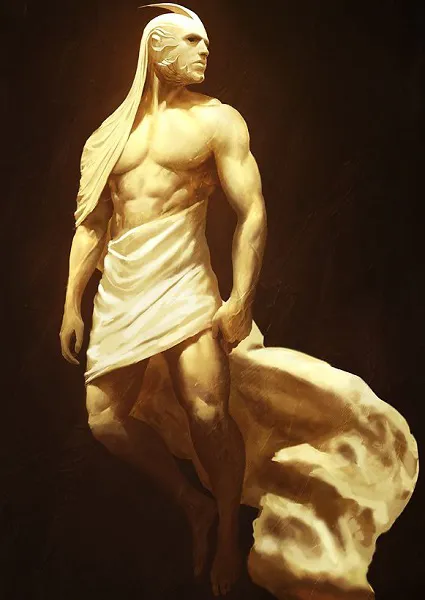
God of the sun, ruler of the heavenly kingdom, the supreme deity who grants life to all living things and expels darkness from the earth, as he expels it from the hearts of people. Iggoroth bestowed upon people the most precious and noble metal – gold and brought divine fire. The sun shines generously on everyone, from king to slave, and Iggoroth is revered by all, but the class that Iggoroth favors most of all is the class of priests. The sun god is associated with divine truth, life force, and generosity – the foundations of heavenly laws and the prosperity of the human race.
+2 to Strength, +2 to Intellect, the effectiveness of positive effects directed at the character is doubled
Healing [3]
Heals 1 HP for 1 MP.
Resurrection [6]
Revives a recently deceased character with 1 HP. 200
Divine Fire [8]
MS*10 fire damage to a single target, MS*20 to monsters, MS*30 pure damage to undead and demons. The target takes double damage from any source for 3 turns. 150.
Sun's Patronage [8]
Endurance and Strength values are increased by one and a half times.
Grace [5]
Restores 100% of own HP over 3 turns. Once per battle. Takes a turn.
Consecrated Weapon: Light in the Darkness [5]
+(MS*5) fire damage. Indestructible. Is a source of light, reduces the stealth parameter of hostile characters by three times.
Ishma
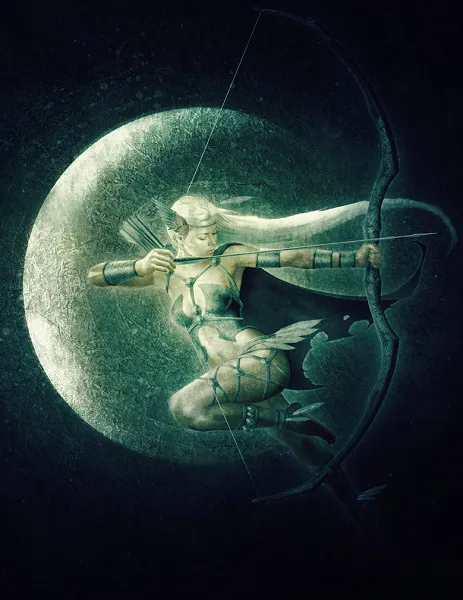
Goddess of the moon, consort of the sun god, the second most significant deity of the heavenly pantheon. The power of the Moon is immeasurably less than the power of the Sun, but Ishma does not abandon people in their time of need, and when the Sun retires to rest, the Moon shines for people in the darkness until his awakening, losing the opportunity to be with her spouse. The story about the fate of the Sun and Moon serves as an example for people of personal sacrifice for the common good, and proof of the gods' love for the human race, whose path they so selflessly and constantly illuminate.
Ishma, as a female deity, is associated with the life-giving power of water and bestows upon people silver, the metal of purity. She patronizes creative natures, and if the Sun serves as the source of life, then the Moon is its adornment.
+1 SP, the effectiveness of negative effects (except damage) directed at the character is halved (both effect and roll)
Clarity [3]
Removes all negative influences on the mind, grants +100% resistance to these effects. 50.
Meditation [3]
Out of combat, removes all negative effects from self, restores health and mana. Once per day.
Moon's Patronage [3]
Immunity to stealth attacks and instant death effects.
Consecrated Weapon: Light from Darkness [5]
On hit/shot, removes all positive effects and dispels any summoned creature. Indestructible. Is a source of light, reduces the stealth parameter of hostile characters by three times.
Astaroth
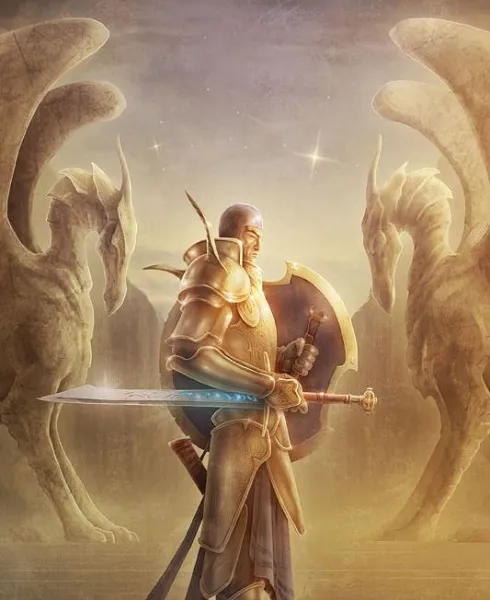
Leader of the starry host, the Heavenly Blade, son of the Moon and Sun, he corresponds to the brightest star that lights up first in the firmament. When the time comes to fight the forces of evil, Astaroth will lead the host of gods, until then he watches over the earth at night, when the forces of evil are especially strong, and restrains them. Astaroth bestows upon people the celestial metal, ideal for forging weapons, and is associated with the air element, with the agility, speed, and impetuousness necessary for a warrior. Astaroth patronizes those who protect the human race from the spawn of evil, courageous and selfless people.
+2 to Agility, +2 to Perception, +3 to Speed, weapon made of celestial metal
Consecrated Weapon: Star Blade [5]
Limitation: melee, celestial metal
Ignores all resistances. Monsters, demons, and undead receive an additional 10% pure damage from initial health. If the character has the "parrying" skill, can parry spells (Will vs Will). Indestructible.
Shakoroth
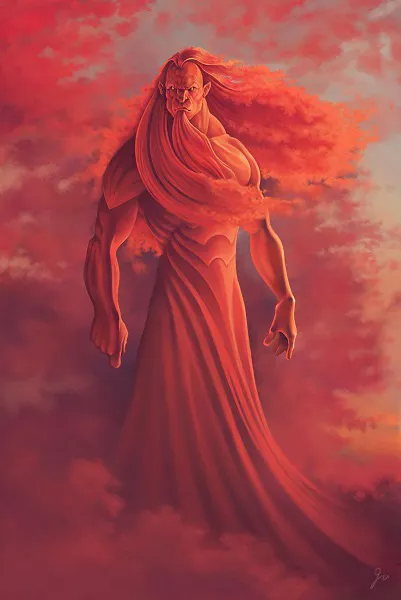
Messenger of heaven on earth, god of dominion and power, he ensures that people obey the commandments of the gods, and when Shakoroth is angry, clouds cover the sky. He bestowed upon people bronze, a metal equally needed for monetary affairs, tools, and weapons, and as the closest to people, he corresponds to the element of earth. He patronizes those who maintain order on earth: nobles, officials, warriors who suppress rebels and the unfaithful. His virtues are considered to be justice, pacification, and will.
+2 to Will, +2 to Endurance, the character gains absolute loyalty from his slaves and servants
Servant [5]
A servant/slave at the start. [15 HP, 15 MP, 1 SP]
Torture of the Weak [5]
The character deals 50% more damage to opponents whose total stats are lower.
Domination [5]
Opponents who fail a Will*2 check versus (Strength+Will) of the character surrender without a fight.
Consecrated Weapon: Destroyer [5]
Limitation: melee
Destroys armor, weapons, and shields on contact.
Church of the Almighty
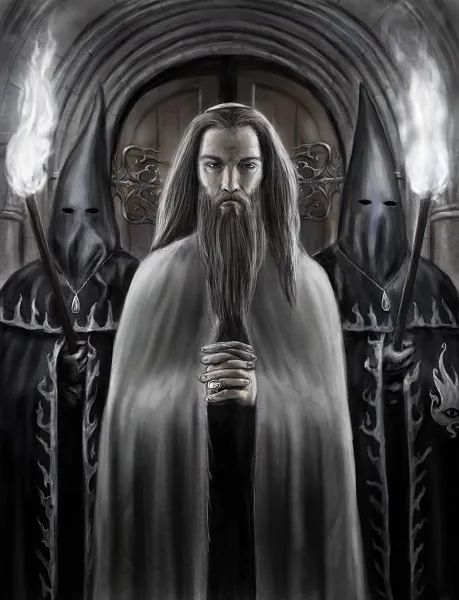
All the principles of the Ardor faith are built on the idea of a single, perfect god, whom people forgot over the long centuries of barbarism, turning to minor gods in search of strength and peace of conscience, which would no longer prevent them from committing vile acts and sowing discord.
Despite the fact that the entire life of the Ardorians is regulated by religious principles, the religion itself is very unstable. The nameless prophet disappeared, and with him disappeared the true Holy Scripture. The first bishops recorded a new scripture from memory, reaching an agreement with difficulty, for each not only remembered different words but also understood the same ones differently. Disputes about certain lines of the book of faith have not subsided to this day. The Church is very conservative on this issue, rightly believing that the first of the Holy Scriptures was closest to the truth, and amendments can only be made with the consent of all bishops.
As of today, the main principles of faith are as follows:
God is one, perfect, he is the father of all people and the sole bearer of absolute knowledge and truth. The word of the Almighty is law.
Man is the son of God; within him is the earthly and the divine. Indulging the earthly is sinful; he insults the Almighty by unworthily and ungratefully using the mind and soul, which distinguish man from the animal. Every person is a messenger of the divine will and is one with it. A sufficiently righteous person, like the nameless prophet, will be able to know the divine truth during life, uniting with the divine mind through prayer and meditation.
Every person is a brother to another, for both originate from the will of the Almighty, therefore one must not do evil to another person, unless the life and well-being of other people depend on it, or unless he is so mired in sin that he can no longer be saved.
The world is dangerous and life is hard; this is a test for people. Sin begets even greater sin and hardship, the sins of people pass onto all living things, giving rise to monsters, diseases, and other misfortunes; for this reason, sorcerers and priests of false gods are considered the worst of sinners – by going against the divine order and the natural nature of things, they generate evil even with good intentions. By fighting misfortunes together, living by just laws, and following the commandments, a person becomes righteous, and humanity gets a chance for salvation.
After death, everyone will appear before the Almighty and the truth will be revealed to them. Weak souls without faith will not endure it and will disappear in torment, sinners will fall into the hellish kingdom, a righteous person will appear before the Almighty with a pure soul and will be incarnated in the heavenly kingdom. At the end of time, when the word of the Almighty spreads across the earth, the whole world will be transformed into a true, better existence.
The foundation of the Church is the order of Paladins. Anyone who wishes can join if they prove the strength of their faith and the fortitude of their body in trials, but usually the younger sons of nobles and the sons of ordinary warriors become paladins from youth. The Order is the only military force controlled by the Church, and not by the Ardor Emperor. The paladins themselves, however, say that they serve the Almighty and humanity, not the bishops, and sometimes leave Ardor to go on pilgrimages.
The character gains full immunity to mind-affecting effects, effects of consecrated weapons, and active abilities of other religions
Conviction [6]
The character receives 50% less damage from followers of other religions
Heresy of Ditlind
The Ardor faith was always extremely conservative, and because of this – unified. It was, until 201 according to Ardor reckoning, when the congress of bishops was shaken by the speech of Bishop Ditlind. He spoke about how the Ardorians had become arrogant, that the war brought far more hardship than before the Ardorians' arrival, that the only war to be fought was the war of the soul against the sin within it; external evil exists by the will of the Almighty, and it should not be opposed, but ignored, focusing on one's own righteousness. At the time, the unending war had already been going on for two hundred years, and Ditlind's ideas proved very attractive to the entire people. Many of the minor priests present at the time were imbued with Ditlind's conviction, to whom, according to his words, divine truth was revealed when he prayed for the salvation of the Ardor people, and spread his words among soldiers and peasants.
As appealing as these ideas were to the people, they were equally dangerous for the country and the Church. Priests doubted the bishops, soldiers deserted, and when the rounding up and execution of heretics began, a civil war erupted. The Ardorians were always relatively merciful to their enemies, but not a trace of that mercy remained during the internecine war. Heretics were burned, tortured to try to force them to renounce their ideas, bounties were placed for turning them in, but the balance of power was not in the Church's favor, especially when some of the paladins refused to fight against their own people, and some themselves embraced the heresy. It would have ended very badly if the rebellion had not been suppressed by the second significant power in Ardor, the Emperor, the eternal rival of the Church, and now its only ally. The Imperial Guard suppressed the rebellion, while the Church, with great reluctance, ceded to the Emperor the right of succession to the title and lands for personal use. From these lands, the Order of the Sword of Justice was created, composed of members of the military elite personally chosen by the Emperor.
But the heresy was not forgotten. Ditlind did not recant his words under torture, and some Ardorians still believe he was much closer to the truth than the Church. Heretical teachings also became popular among the peasantry in the west, whose life under the eternal oppression of the feudal lords did not foster valor and determination in the fight against every sin, and the idea of non-resistance to evil and the future salvation of peaceful people appealed to them much more.
All defensive rolls of the character are doubled, all offensive rolls are reduced by one and a half times. The character survives one fatal wound.
Apathy [4]
The character gains the ability to be inactive in battle, ignoring all negative effects.
Theodomer
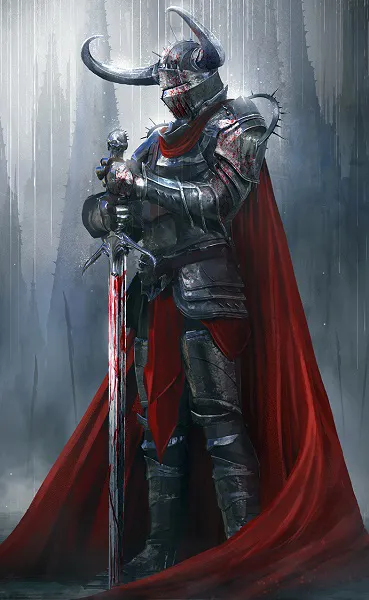
Disputes about the beginning of human history, about the perfect golden race, the bearer of the ideal spirit, and conversely, the stone race, which must have been like the barbarians of the Savage Lands, remain unresolved among scholars and theologians of the world, but everyone agrees that humanity has certainly experienced two epochs, two races: the bronze race and the iron race. The bronze race was warlike but fragmented, knew no civilization or laws, and endured many hardships, from monsters to the yoke of the elven people. The iron race, the current race, began with Theodomer. The story of his appearance is hazy; it is unknown whether he was a human prophet, a demigod – son of Astaroth, or a true heavenly god who descended from the heavenly kingdom to help people and bestowed upon them the fifth metal – iron. The latter is favored by most of his worshipers, but even among them there is disagreement – whether he violated the will of the gods out of love for people, or conversely, was carrying out the plan of the supreme deities. The priests and knights who worship him say: The heavenly gods are the rulers and protectors of the world, but Theodomer is the lord and benefactor of the human race.
When people learned to work iron, Theodomer led them against the elves, and since iron was like poison to that race, people were able to win a long war with them and freed their brothers. When the war ended, Theodomer left the people, saying that now they must create their own destiny. Further legends tell of Theodomer the dragon-slayer; that he retreated to the North, or other uninhabited lands, and will return to people in their hour of need; that he left his sword in this world, and whoever can find and lift it will become the new ruler of humanity. King, priest, knight, and craftsman – each understands Theodomer in their own way. For the former, he is the leader of people; for the second, the herald of a new age; for the third, a warrior; for the latter, a smith. Peasants are despised by Theodomer's followers – working the land is associated with dirt, weakness, and disease, while steel symbolizes strength and purity. The symbol of Theodomer is the great sword – this weapon cannot be made from bronze; previously, only elves forged them from celestial metal, and humanity's mastery of this art became, for the elves themselves, a sign of their inevitable fall. Only the most skilled smiths can forge it, and only the greatest warriors can use them with maximum efficiency.
The effectiveness of steel weapons and armor is increased by 25%.
Valor [4]
Damage in melee and ranged combat is always maximum.
Honor [4]
Immunity to stealth attacks. Damage from ranged attacks is reduced by (Will) percent.
Smith's Mastery [4]
If the character has the smith skill, grants +10 to Intellect for it and allows forging great swords.
Great Sword Mastery [4]
Unlocks the "Great Sword" specialization.
Consecrated Weapon: Perfection [3]
Limitation: weapons and armor made of steel
Improves the quality level by 1. If quality is maximum, assigns a special property.
Tenebris
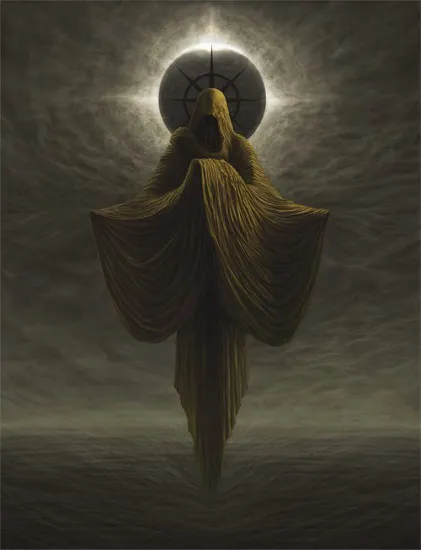
God of darkness and mystery, corresponding to his ideals, he himself is a person of the highest degree of mystery. No epic is written about him, no temples are built for him, and everyone understands the god of darkness in their own way. Some say he is a friend of people, teaching a free life in the darkness, where neither earthly lords nor heavenly gods can see. Others – that he is the embodiment of primordial evil and gloom, an enemy of the heavenly gods. Still others – that he is just a minor god of thieves and other criminals, who deep down are ashamed of their deeds, and even the stars seem like a reproach to them, and only in darkness is their conscience at peace.
The followers of Tenebris hide their true identities. Despite their abilities, often quite impressive, religious people are usually not afraid of them, but merely despise them, considering them beings so pitiful that they fear the truth even in the most harmless cases.
In darkness, stealth checks are doubled, accuracy and evasion are increased by one and a half times, the character can see in darkness.
Cloak of Darkness [5]
The character restores stealth status. Cannot be detected if not performing actions other than attack, spell, or theft. Applied at the start of a round, does not consume a turn.
Gloom [6]
An area of (Will+Intellect) by (Will+Intellect) cells is covered in thick darkness. Ranged combat is impossible, melee accuracy is halved. Observation checks are reduced by three times.
Dark Protection [3]
In darkness, the character gains a barrier of (SM*20) HP, damage bypasses resistances.
The Black Dragon
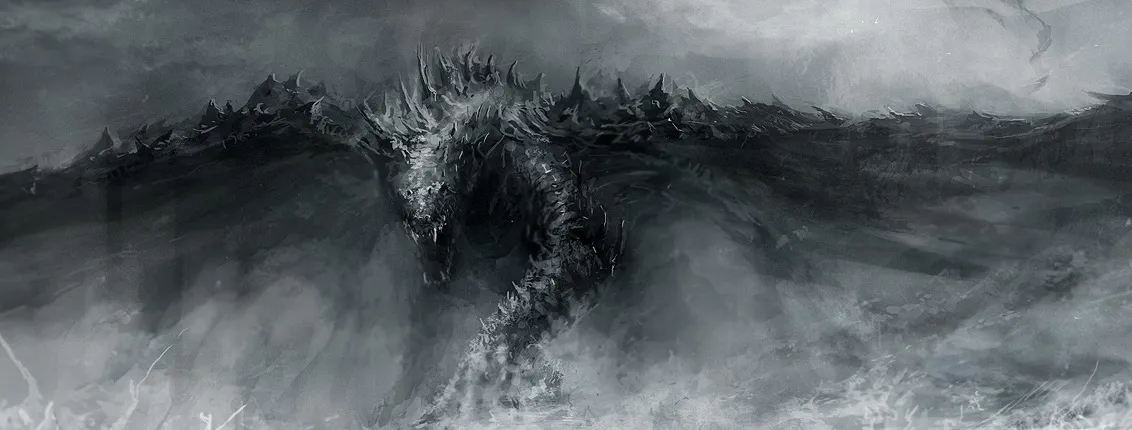
The relationship between the human and dragon races is just as ancient and full of contradictions as with the elven race. On one hand, the dragon embodies the primordial forces of evil; the dragon is like a serpent, the dragon is voracious, greedy, devouring entire herds and hoarding jewels that are completely useless to it. On the other hand, the dragon is intelligent, capable of speech, and over the long centuries of life accumulates power and wisdom inaccessible to any elf, and even more so to any human. There are countless legends about dragons, about fighting them, about dragon wrath crushing cities, about their noble traits. The dragon acts as a villain, a hero, a teacher, a trickster, an enemy and a friend of people. Some believe that each dragon is a god in itself, for gods also walked the earth in human forms.
Nowadays, it is not easy to meet dragons. The most famous of them, the great Black Dragon, three hundred years ago flew over Turan, Fenderin, Divesh, and Yaragat from south to north, giving new life to the study of dragons with its appearance. Many set off to the North to seek it, but none returned.
The Path of the Dragon is the path of power. Knights believe that by killing a dragon, a person can become a dragon themselves. For some, this becomes an obsession; they prepare their bodies and minds for years for the future battle, and deeming themselves ready, they go in search of dragons. Those who return say they found no dragons, of course never admitting if they were cowards, but what actually happens to those who achieve their goal is a mystery.
Not all dragon worshippers, of course, are so fanatical. Some seek power and wisdom in dragon secrets, others are interested in the legacy of a bygone era, and still others in mythical dragon treasures.
All stat checks are tripled, +10% CR
Ygg
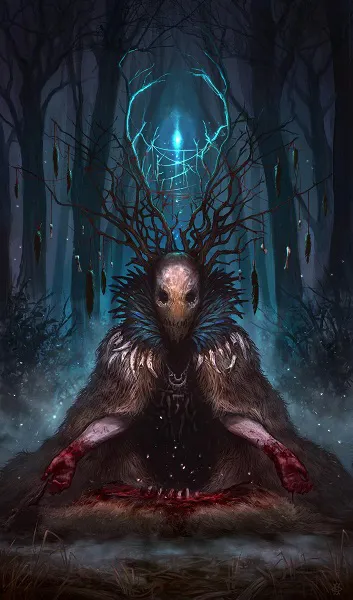
Ygg is more a unity of spirits embodying the forces of nature than a separate deity. To understand nature is to understand life, and although in civilized states Ygg is worshiped only by those whose lives are inextricably linked with the wild, in Eger, Bradan Ore, Arghaimar, and Yaragat, entire communities often worship him.
Nature is not animals or plants, but first and foremost the cycle of death and rebirth. The life force of some nourishes others. The predator feeds on herbivores, the predator dies and nourishes the earth, plants grow from the earth, and herbivores eat them. One who understands the eternity of life and knows how to manage its currents will gain great power.
+2 to Strength, Endurance, Agility, and Perception, immunity to negative environmental effects. Access to nature magic.
Svidrir
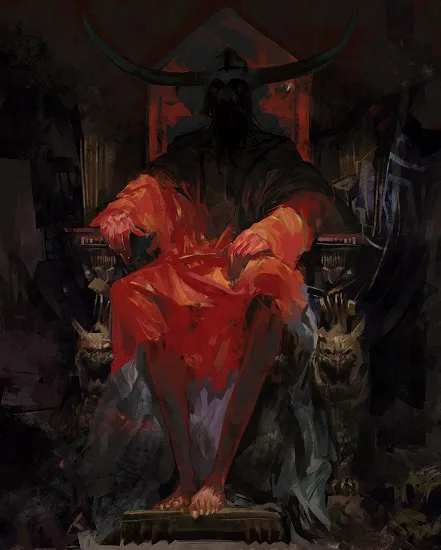
God of wisdom among the northerners, his cult originates from the North, where he is revered as the supreme deity. According to legend, the god wandered the world for a thousand years, and when he learned all the secrets of the world, he ascended to heaven, where the heavenly gods blinded him so that he would not learn their secrets, and cast him down to earth, but the defiant Svidrir did not perish. He founded his kingdom in the north, beyond the icy mountains, between heaven and earth, where he gathers worthy people to lead them into battle at the end of time. Whoever follows Svidrir's path will be incarnated in his kingdom after death.
Unlike Azavad, the god of theoretical knowledge, whose ideal is the scholar, wisdom for Svidrir is not a collection of useless information, but an understanding of the laws and secrets of the universe. They can be comprehended in two ways, the warrior's way – the inner path, and the wanderer's way, the outer path. Svidrir himself walked both paths, as did his sons Vidur and Kjalar.
One way or another, Svidrir is the patron of brave people, alien to satiety and peace. Peasantry and bourgeoisie are despised by him in any form. A person should not cling to life, should not live settled, should not pray to soft metal, and should not be a coward before earthly rulers. His cult is especially popular in Arghaimar and Yaragat, where every free person confirms the ideals of Svidrir by their very life in the North and earning a living through war.
Reflection: the character receives 1-500 experience once per phase. 10% chance to gain a mental deviation.
Consecrated Weapon: Runes [5]
The weapon adds +5 to three stats of choice.
Vidur
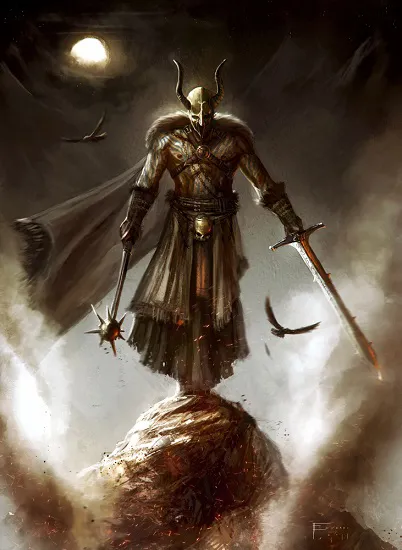
Vidur, the eldest son of Svidrir, embodies the warlike aspect of his father's personality. It is said that Vidur can be seen in every great battle, and the side on which he fights will always win. Vidur taught people the rage of the berserker, when a person forgets about their own life and sees only one goal – to strike the enemy.
Berserker
The character enters a state of battle rage, gaining +50% to final melee damage, +50% to accuracy, +3 to Speed, and double resistance to all negative effects, but evasion is halved. Activation does not consume a turn, lasts until the end of battle.
Madness of the Brave [3]
If the sum of the character's/group's stats is less than the sum of the opponent's/group's stats, the character gains +35% to damage, accuracy, and evasion.
Dual Wielding I [3]
The character has the ability to use a one-handed weapon in each hand. Number of attacks for the second hand = 1.
Dual Wielding II [3]
Number of attacks for the second hand = 2.
Dual Wielding III [6]
+25% to accuracy and evasion when fighting with a weapon in two hands.
Kjalar
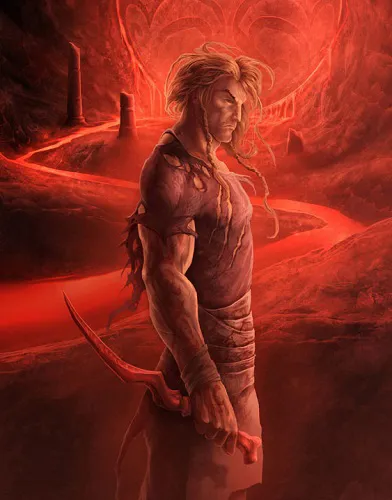
Patron of journeys, the youngest son of Svidrir, Kjalar repeated the paths of his father, only not seeing the heavenly kingdom. He patronizes people who are willing to take risks and rely on chance – the eternal companion of the wanderer.
The character makes two rolls for each action outside of combat. Immunity to negative environmental effects.
Luck [5]
The character makes two rolls for each action in combat.
Acer
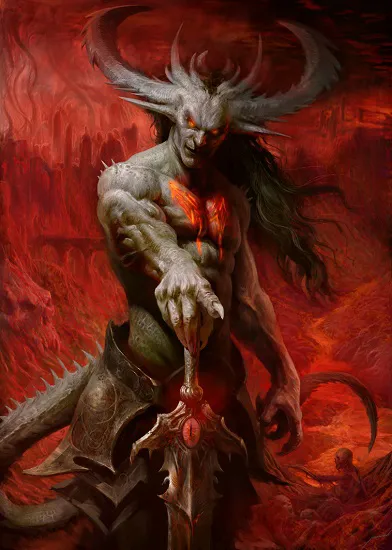
God of rage, has a certain influence among warlike societies, and, unlike the berserker's battle rage, whose main aspects are self-denial and contempt for death, the rage of Acer's followers is the result of a deliberate change of consciousness to a state completely different from the normal human one. During the mysteries of wrath, in which believers converge in a bloody battle without any rules, the weak are weeded out, the strong survive, and the last one standing is declared the new high priest. Those who practice the cult of rage are unusually ferocious and can fall into a state of frenzy over the slightest pretext. They know no restrictions inherent in other warrior cults; for them, there are no unworthy opponents, nor excessively strong ones, and they do not need a "noble" pretext for bloodshed.
Upon taking or dealing the first damage, the character gains +100% to final damage and +25% CR in melee, an additional attack, but always attacks the nearest character, not distinguishing between enemies and allies.
Bloodlust [5]
Each kill grants an extra turn and restores 50% of health.
Brumma
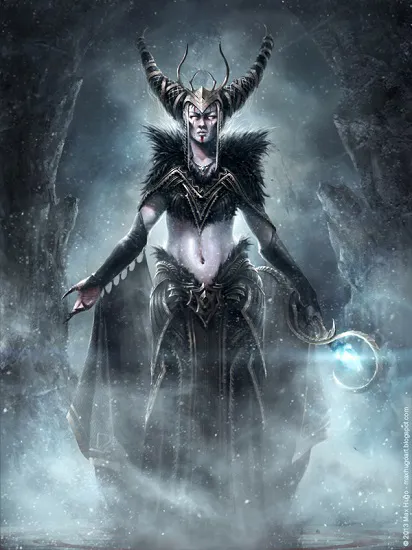
Goddess of winter and cold, rules the lands of the North. One of the rarest cults, only in some villages of Arghaimar and Yaragat is it practiced. Cold is death; one living in the north is themselves in a position between life and death. Worship of Brumma, like many other religions, is based on fear, but not fear of abstract divine wrath, but fear of death, which awaits a northerner at every step.
Immunity to water and cold, invulnerability to negative and positive effects.
Ice Spear [4]
Deals MS*20 cold damage to targets in a straight line. N.10. 125.
Ice Block [4]
The target gains full immunity to damage and is paralyzed until someone breaks the block or the caster himself wishes to release it. MS vs Will. The block has 300 HP and takes double crushing damage and double fire damage. 10. 125.
Glaciation [5]
On an area of 30x30 or fewer cells, the ground is covered with an icy crust. Each character passing through this area must pass a check (Agility vs 15), otherwise they will be paralyzed for one turn. 150.
Frost Breath [6]
Targets in a 5x3 area in front of the caster take CM*20 cold damage and are frozen for 2 turns (Will check vs MS). 200.
Ice Blade [4]
Each attack deals an additional (SM*5) percent cold damage and has a chance (Will vs Will) to freeze the enemy for two turns. 100.
Morna
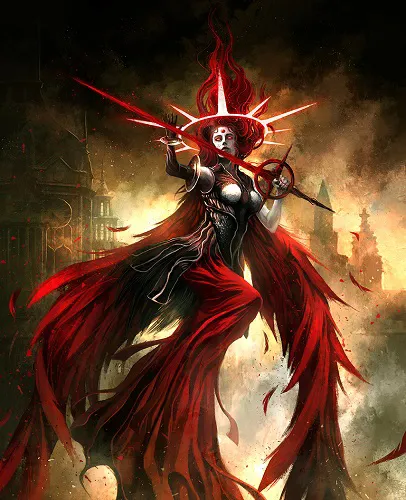
The cults of Morna, goddess of vengeance, and her sister Ilma, goddess of betrayal and deceit, are inextricably linked and have an ancient history, dating back to the beginning of the Bronze Age or even earlier, when people did not yet know kings, and lived in unions of their clans, and knew no honor of suzerain or country, only the honor of the clan. Old man Nemed had two daughters, the elder Ilma and the younger Morna. One day, a young warrior named Dann arrived at Nemed's doorstep to court Nemed's daughter. Custom required not to wed the younger before the elder, and since the arriving warrior was both rich and handsome, both daughters would have considered it a great happiness to become his wife. Dann, however, insisted that he would marry only Morna, and Nemed agreed. The wedding was held, and when night came, Ilma, driven by black envy, stabbed her sister with a knife, and lay down with Dann herself, and he could not tell the difference in the dark. In the morning, Nemed anxiously asked where the bride was, and Dann said she was not in bed in the morning, and Ilma said that her sister had gone for water, and suggested the men have some soup for lunch, and that soup was made from her heart. The men ate, and Ilma invited them to walk in the garden, where she had buried her sister's body. Pointing it out to the men, she began to laugh at them, at the father who had devoured his own daughter, and at the husband who had lain with another on his wedding night. Unable to bear the grief and shame, Nemed and Dann pierced their hearts with daggers, and their blood poured onto Morna's corpse, reviving her heartless body. Since then, Morna, in the guise of a winged woman, all stained with blood, pursues her sister, who brought eternal shame upon her husband's clan and her father's clan.
The cult of Morna plays a particularly important role in the tribal society of Eger, where matters of clan honor are especially acute, but other people can also turn to her in a difficult hour.
The character receives a 50% bonus to final damage against those who have already dealt damage to him, or have committed some vile act against him in the past.
Old Grudge [2]
The character chooses a people and a religion. An opponent falling under one of these categories takes double damage, under both – triple damage.
Consecrated Weapon: Retribution [4]
Limitation: melee
Damage is increased by double the percentage of lost health.
Ilma
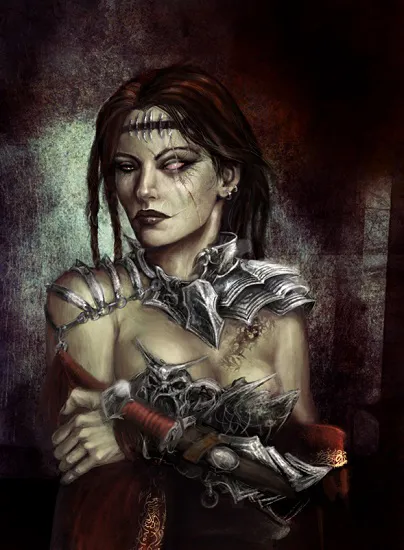
The goddess is usually turned to by not very decisive people seeking support when committing their first crime; having committed it, they usually sink into a dark whirlpool of guilt and hatred. Guilt inflames in them a blind hatred that can only be quenched by a new vile act, for which guilt will again be felt. The goddess feeds on these feelings; cold-blooded, professional killers, who also often turn to her, but not for support, but for power, are not too dear to her. One who kills without personal motive knows neither joy, nor guilt, nor remorse.
Access to stealth attacks (similar to skills in the scouting and rogue branches).
+100% to accuracy and damage if the character enjoyed the complete trust of the target.
Knowledge of Weaknesses [4]
Attacks against paralyzed opponents always deal critical damage.
Deception [4]
Opponents cease to perceive the character as a target and become vulnerable to stealth attacks. The first attack after activation will deal double damage. Once per battle.
Consecrated Weapon: Black Blade [4]
Critical attacks deal twice as much damage and always ignore armor.
Phames
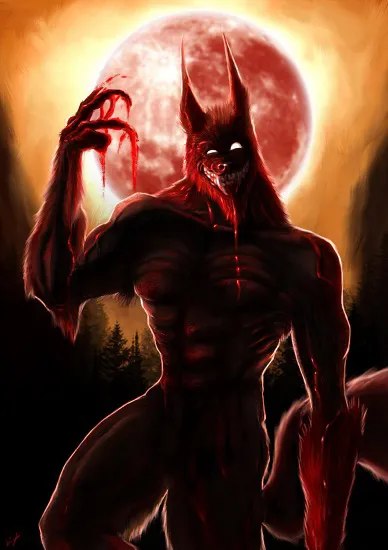
God of hunger, often turned to by those despairing in the face of death by starvation. The god does not grant them food, will not summon a bountiful harvest, but will give a person agility and strength, making them faster than a wolf and stronger than a bear, and they will be able to obtain sustenance. Each subsequent satiation passes more quickly than the previous one, and hunger begins to torment the person even more severely. Usually, those who turn to him begin to suffer from a morbid attraction to human flesh and end in madness.
+6 to Strength and Agility. The character's health decreases by 20% of maximum each day down to 1, but accuracy, evasion, damage, and speed increase by 20% of the initial values up to double. Eating sentient beings stops the process (+20% to health, up to double the base) and permanently grants +1 to Strength, Agility, and Perception.
Azavad
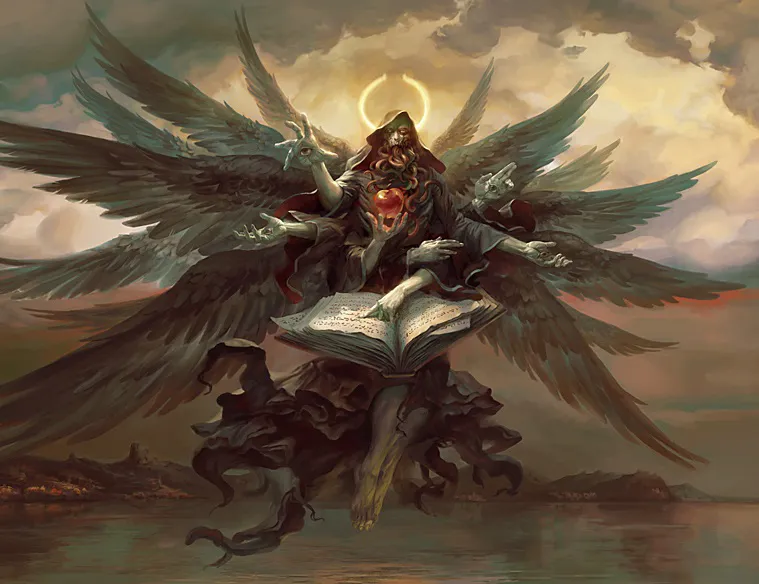
Legends about Azavad, the god of knowledge, date back to the Bronze Age; according to them, it was Azavad who brought writing to people so that they could preserve their knowledge. Knowledge is considered the highest virtue, through which a person can obtain any benefits – strength, power, wealth... Knowledge is development, a benefit not only for the individual person, but for the entire human race. Every person, by creating knowledge and preserving it, does good for humanity. His followers believe not so much in a god as in the power of the mind, and Azavad himself is more of an ideal and symbol of their beliefs than an object of worship. Azavad knows everything in the world.
The character can read and write, books are read twice as fast, the character receives twice as much experience.
Teacher [3]
The character has the ability to teach another character what they know themselves once a week. No more than 1 SP, 5 SP points.
Answer [4]
The character can receive comprehensive information about an object, character, or event in the present or recent past. Once a week.
Phalaris
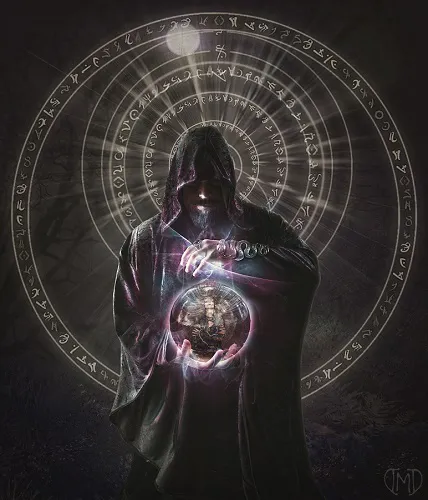
God of sorcery. At the beginning of time, the intelligent races knew only one type of magic, the magic of rituals, with which it was impossible to create a new essence, impossible to control either the mind or matter directly, by their own will alone. Phalaris, the first of the true mages, was the first of those who mastered the art of manipulation through willpower. Little remains of his magic, but black magic, the magic of people, in their short lives inextricably linked with death, and the magic of mind and matter control, mastered by elves, much stronger in mind, are alive to this day.
Many practice sorcery without even knowing the name of its founder, but the followers of Phalaris remember and strive to revive the forgotten art, believing that they themselves will then become like the gods. Currently, they have managed to restore only a little.
+1 SP for magic, except traditional and elemental. Access to arcane magic..
Tineya
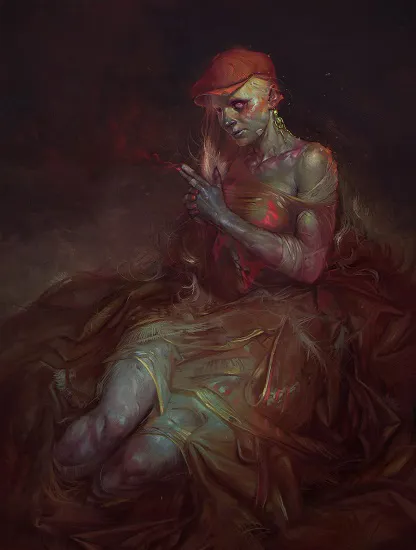
Lady of diseases and insects, most turn to her when they are already incurably ill and afraid of death, but there are also larger cults of this goddess, usually living in remote isolation. The priests speak of the naturalness, the inevitability of disease, of the natural law, but in reality, they usually use their deceived followers for their own interests, using the dark forces of Tineya.
The character is constantly under the effect of a random non-lethal disease, but other diseases and poisons do not affect them. Once a week, the player can change the disease to another random one. At will, the character can spread the disease (Endurance vs value 20) around them (radius 1 cell), or can infect at range (costs a turn), gaining +2 to a random stat on success and doubling the effectiveness of any of their actions against the infected target.
Poisonous Miasma [6]
SM*10 poison damage in a radius of 5 from the caster. Those who fail an Endurance check vs SM will take double damage, become diseased, and be poisoned with a poison of choice. 150.
Parasites [6]
Revives the character in case of death from lack of HP, once per day. Additional effects of choice:
Worms
Restore 25% of health each turn
Beetles
Increase Strength and Agility by 25%
Centipedes
Increase Speed by 5 and grant 25% universal evasion.
Infection [3]
Allows infecting other characters with parasites and controlling their consciousness on success (Will vs 15). The roll is made once. Counts as a physical nature effect.
Ergamen
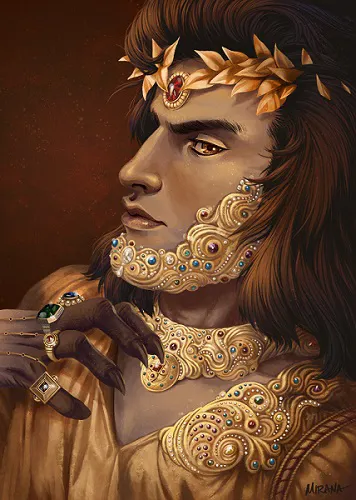
God of wealth, success, and pleasure, revered in the Golden Cities, Megiddo, and Lashia, one of the main deities of the South before the Turan conquest. Patronizes merchants, nobles, explorers, all active and inventive individuals striving for wealth and status. Greed, condemned by most religions, in the cult of Ergamen is determination; stinginess is prudence; and treachery and deceit are ingenuity, but none of this is considered a virtue in the religious sense, only means to an end. Such attitudes previously subjected open followers of this god to persecution by Turan, but the Golden Cities achieved legal permission to practice this cult… and now some Turanians, especially satraps and high officials, worship Ergamen, with whose principles life is both easier and conscience is clearer.
Starting capital is increased fivefold. Income from any source is doubled. The character has three times the chance to receive a bonus from excesses; if the bonus is guaranteed, it will be doubled. A slave (10 HP, 12 MP, 1 SP) at the start.
Mara
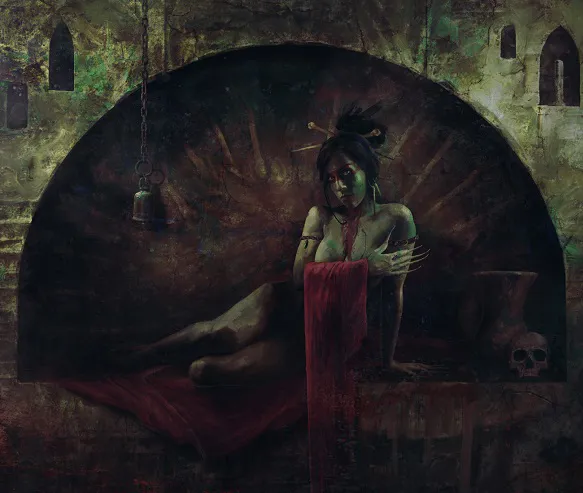
Goddess of fertility, lust of corruption and frenzy, embodiment of the feminine principle in the cultures of the South. The supreme male god has already been forgotten; under the influence of Turan, he merged with the images of the heavenly gods, but the cult of Mara survived, and exists not only in Lashia and Megiddo, but also in Turan, despite the fact that there it is often subjected to persecution, often very bloody, by the Turanians. For the Turanians themselves, this cult is forbidden, considered the domain of the rabble and insulting to human dignity. The followers of Mara are called the spawn of pigs and rabbits, and when the son, or worse, the daughter of a noble Turanian is discovered at the mysteries of Mara, scandal and bloodshed are unavoidable.
The mystery itself is a combination of gluttony, orgy, and drunkenness, traditionally held on the days of sowing and harvesting. Intemperance in food and drink is meant to demonstrate respect for the gifts of the earth, and the process of human copulation is meant to call upon nature to bear fruit. Boys born after this "ritual" are sacrificed, while girls replenish the ranks of priestesses.
Another aspect of the cult is temple prostitution. The priestesses do not take money, but refusing an offering to the temple is considered bad form.
All levels of the cult hierarchy are occupied by women. Rumor has it that they possess certain dark powers, which does not add to the trust in the cult.
The priestess gains +1 to all stats after each copulation at the expense of the partner. A character who enters a relationship with her may be subjected to a curse (similar to magic, but roll 30) and subjugation (similar to magic, but on failure lasts until the end of the phase).
Charm [5]
A chosen male character begins to experience an irresistible sexual attraction to the priestess. (Will+Intellect) of the priestess vs Will check.
Untouchable [5]
Male characters must pass an additional Will check against a value of 15 when attempting any negative action against the priestess.
Obsession [5]
Anyone who has spent a prolonged time in the company of the priestess gains a mental deviation. Charm, curse, and subjugation are always successful against targets with mental deviations.
Corruption [5]
After death, the priestess's body automatically undergoes a corpse explosion spell. The priestess's consciousness is transferred to the body of a person killed by the explosion, if there are any.
Malabar
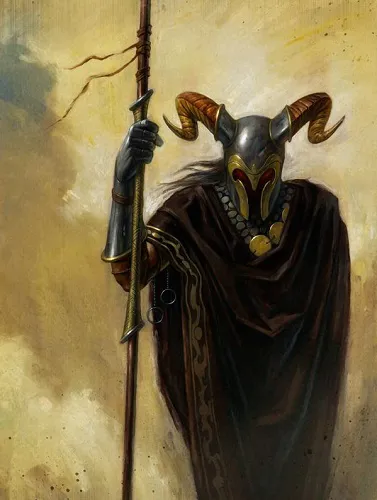
God of the desert wind, patron of desert dwellers, primarily warriors. It is believed that he was the first leader of the Anatans when they came to the desert lands from the west. The followers of this god consider their hard life in the sands to be the best of fates – their teachings require steadfast endurance of any hardship, and in their land they see not heat, thirst, and poverty, but a free, natural life, which the inhabitants of cities, mired in the lies and conventions of money and status, can only dream of.
The Sharabians identify this god with their progenitor, but the Anatans treat this idea with contempt, saying that the god taught people to survive in the desert, hunt, and defend themselves against monsters, while the Shabarians themselves are those same furry monsters.
+3 to Speed, the character cannot be immobilized by physical effects.
Storm [3]
The character's attacks have a chance (Will vs target's Endurance) to paralyze the opponent for 1 turn.
Hurricane [3]
The character deals 5% more damage for each cell moved before the strike.
Consecrated Weapon: Desert Wind [5]
+(MS*2) air damage. Chance (Agility vs opponent's Will) to blind the opponent for 2 turns.
Hachiken
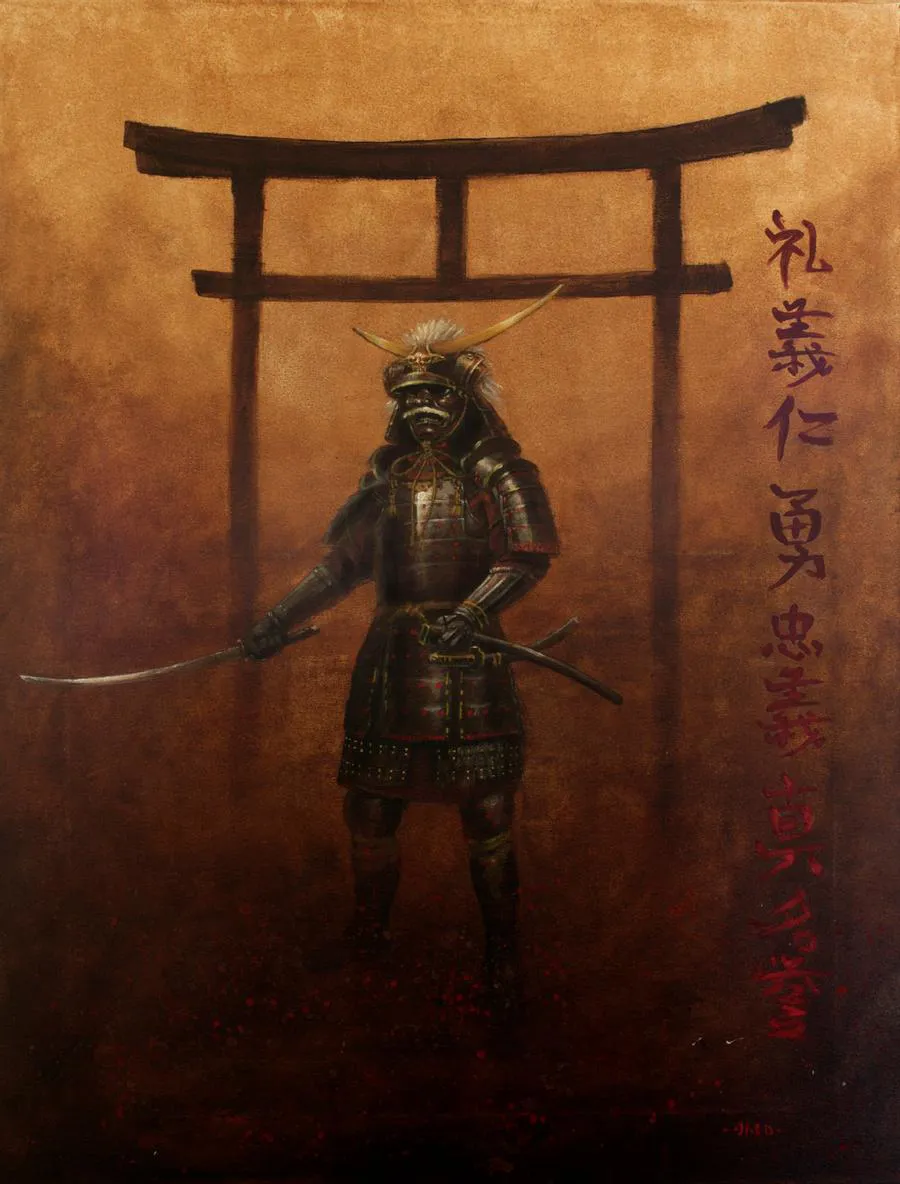
Chief deity of the western islands; during the unification of the shogunate, his cult displaced all others for the samurai, and only a few priests now remember the rituals of the heavenly deities.
Honor, death, and loyalty are the three pillars of the Hachiken cult, which lead the samurai to the highest virtue of fearlessness and perfection of spirit. The master is more than a servant; serve your master faithfully, and then your life will be filled with meaning and honor. Life is ephemeral, but honor will be in the memory of descendants forever; protect your honor, and you will gain immortality. The way of the warrior is the way of death; remember its inevitability, and then you will be able to walk the path of honor and the path of fearlessness.
It is said that Hachiken finds embodiment in the current shogun, and therefore the personality of the shogun and his law are divine. True, most samurai and daimyo believe that he is nevertheless embodied in the most worthy of the currently living warriors, and not in the one whose rear end is warming the shogun's throne.
Each battle won gives +2 to all stats. Each battle lost subtracts one. +50% to final damage. The character cannot be resurrected by any means.
Primordial Fire
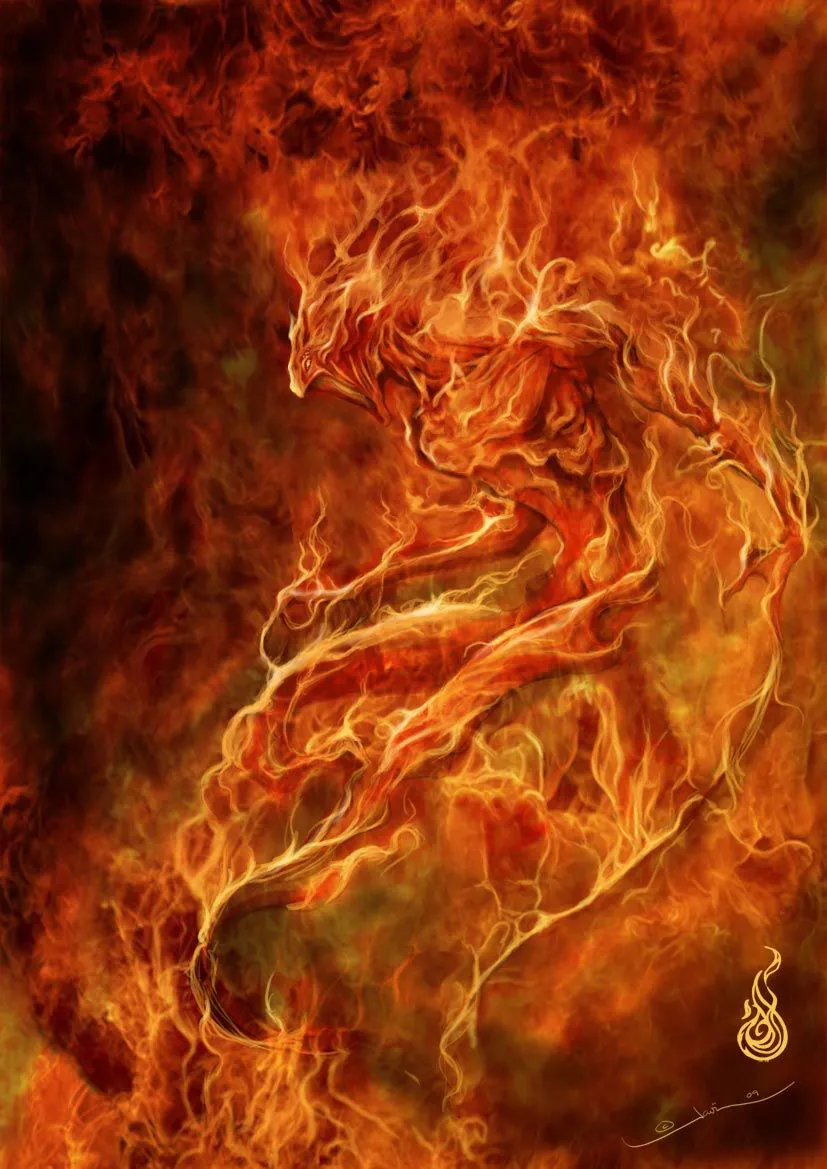
Deity of people with a perverted understanding of fire magic. Its worshippers are convinced that the entire world originated from fire, fire possesses its own will, and every individual fire, from the one lit by a sorcerer's hand to the one smoldering inside every living creature, is simultaneously an independent living entity and a part of the single world fire. At times, the fantasies of the believers lead them to obsession with the idea of fire, and those who love to worship fire look at least strange in the eyes of others.
Free fire magic skill
Fire Elemental [6]
Immune to physical damage and fire, takes double damage from water and cold, HP = SM*10, SM = caster's SM, Agility and Perception equal 20, attacks deal 100 fire damage and apply ignition (15% for three turns if a Will check vs MS is failed), casts fireball once per battle, casts fire beam once per battle. 150.
Erus
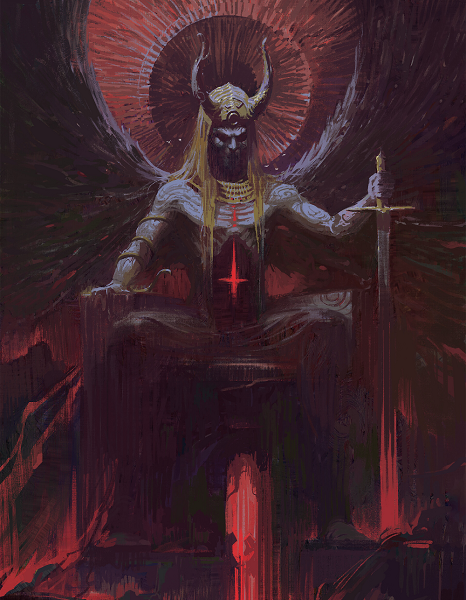
Lord of the underworld, ruler of demons. The cult of Erus is as old as the cults of the heavenly gods; it is forbidden in most states, and worshippers of the demon lord pass on their knowledge in secret. The world of demons, the personality and nature of Erus remain a mystery to people, however, from the available fragments of demonic legends, the art of summoning demons was born.
The character has the ability to summon demons for aid. A demon has 120 HP and 40 MP; it does not have access to racial abilities, abilities of the Church of the Almighty and heresy, or abilities of the heavenly gods; before the summoning, the player specifies the desired type of demon (fighter/archer/elemental mage/nature mage, etc.). The chance to summon the desired demon is (Intellect*4)%. The chance to gain full control over the demon is (Will*4)%. Each summoning deducts 2 from all stats. The demon exists for 24 hours.
Companion [6]
The character gains a permanent demon companion (parameters discussed with the GM).
Greater Demon [6]
The character can summon more powerful demons (250 HP and 100 MP); they have access to unique demonic skill branches (according to the player's wishes), but the summoning, in addition to the stat penalty, will require a human sacrifice.



 Граф Орлов