#5: Finale
About two years ago.
The crowd cheers. Today will go down in the new history of Qasardastan for a long time. The first democratic elections in the country were held without any identified violations. Thomas Stammer appears on the podium. He is met with thunderous applause and ovations. He wears an expensive suit and dark shoes. Traces of burns and numerous scars are clearly visible on his face, despite all the doctors' efforts. Or is it intentional? He greets the crowd. He reads a speech—calmly, confidently, with an unyielding firmness in his voice. "Clarity, Coherence, Consistency." Everything must work like a single ideal synchronized mechanism, without failures, delays, or malfunctions. The national anthem sounds.***
The giant corporation "Mitasacker" announces its own closure. After about ninety percent of the existing shares of most large organizations in Old Qasardastan became concentrated in the hands of the community owners, it will, in a sense, be reorganized into a state administrative-legislative apparatus controlling all resource deposits, markets, and industry within the state. From this moment on, all private organizations, along with ordinary residents of the country, pledge to pay a mandatory fixed tax if they wish to continue their own activities on the territory of Qasardastan. The board of directors is dissolved, and the corporation's shares are destroyed and no longer valid. I do not envy its shareholders, who wasted huge savings on the acquisition of securities.
***
A new currency has been introduced to replace the collapsed Qasard—the Acend, which will be issued under strict state control and supervision and will be temporarily backed by the country's gold reserves, which will strengthen this currency. In the next three years, all of Qasardastan's debts to other countries of Akteia will be mandatorily repaid. Priority is given to transitioning to electronic cashless currency.
***
Qasard the Great has been declared a national hero, the best leader the state could have ever had. He was buried in a mausoleum located near the Temple; numerous monuments are being erected throughout the country and streets are named in his honor. Similar honor was bestowed upon Akbar Akhal, who rid Qasardastan of the vile and bloodthirsty ruler Richard Lasenhedge, who usurped power and acted for many years at the behest of corporations, attempting to turn the country into a corporatocracy. It is to him that Qasardastan owes a prolonged crisis that escalated into a civil war. The former owners of the largest joint-stock communities were, if not planted spies from other countries, then simply greedy and selfish rich men eager to squeeze every last drop out of the state and its residents.
The monopoly of the Stammer family itself is presented in new history textbooks as an organized community fighting for workers' rights and the reduction of social inequality, caring for its own subordinates for twenty years now.The United States of Qasardastan "Clarity, Coherence, Consistency"
(Четкость, Последовательность, Согласованность) [/I]
Currency: acend (аценд)
Structure and Type: National-territorial, symmetrical, cooperative, incorporative territories within a centralized, presidential, federal democratic republic.
Languages and Names: currently, the international Akteian language remains predominantly widespread; however, a new type of Qasardastanian, which bears a significant resemblance to German, is rapidly gaining popularity. Roughly the same applies to names.
General:- The first constitution was introduced, defining the basic principles and legal norms that determine the highest bodies (executive, legislative, and judicial power), the procedure for their formation and functioning, as well as the fundamental position of the individual in relation to state power.
- Accordingly, the first labor legislation and several documents of similar importance were developed. The main points of the bill were a standardized ten-hour workday, and a minimum wage was established.
Citizens:- Development of political freedoms and civil rights within moderate limits.
- Increase in taxes to a
medium-high level (20-30%). - Increase in wages, average subsistence minimum, reduction of social inequality, simplification of vertical social mobility, which will be based on the abilities and knowledge of the individual rather than the amount of their money.
- Support for education, start of citizen training, opening of free schools, kindergartens, colleges, and higher educational institutions, preparation of specialists and teachers. Highly specialized educational organizations are placed under private sector control.
- Improvement of healthcare and medical provision for citizens. Free treatment and annual preventive voluntary medical examinations for residents. Training of professional specialists in this field. The private sector is permitted into this sphere with some restrictions.
- Provision of pensions, various benefits, payment of scholarships to students. Provision of free goods and housing to residents in case of special merits to the country. Support for large families, pensioners, and disabled persons.*
*Retirement age: 60 years. To utilize free services and state support (including pension and disability benefits), it is necessary to provide document(s) (agreement with employer(s)) based on which the individual's length of employment during their lifetime exceeds thirty years. Otherwise, no support is provided at all.- Fight against unemployment in all its manifestations. Employment of citizens of almost all ages. An unemployed citizen cannot utilize corresponding free social services of the state, nor free medical assistance.*
*Conditionally unemployed (not belonging to this category):
-Minors (up to 16 years) (it is possible to get a light job from age 12)
-Students studying in higher educational institutions (up to 26 years)
-Pensioners (after 60 years, 30 years worked)
-One parent in a large family (3 or more children) until they reach the age of majority respectively.
-Disabled persons (taking into account 30 years of work). In some situations, transfer to lighter types of professions, reduction of the workday, and cessation of salary payment (living at state expense) are possible.
-Mothers in the six-month period after the birth of a child (provided there is actual presence at the workplace, salary payment is not suspended in this case).
-Citizens who are away from the workplace (vacations, sick leave) for any reason (this is regulated more detailedly by relations with the employer accordingly).
-Citizens actively seeking new work (a corresponding certificate must be obtained) within a two-month period. Subsequently, an application to the labor exchange and selection of a more or less suitable profession from those available are required. Otherwise, unemployed status is assigned.- Development of public transport, introduction of a system of toll roads, tracks, and highways, which are appropriately maintained. When using personal transport, a citizen must in some situations pay a certain amount for passage; a similar situation applies when using public transport. Free passage provided when using public transport for certain merits to the state. Sections located outside large urban zones are placed under private sector control.
- Start of settlement of all regions of the country without exception, development and cleaning of contaminated and uninhabitable zones, fight against environmental pollution. Private investments are actively attracted into this area.
- Creation of green zones and parks in large cities, planting of trees.
- All large deposits of natural minerals become the personal property of the state, but may be bought out by private individuals. All non-governmental organizations, communities, and firms are subject to mandatory taxes, which they must pay to continue their own activities.
- The entertainment industry, automotive industry, as well as some others, are completely handed over to the management of private individuals.
Economy:- Overall, the course of the state remained unchanged. Development of all spheres of industry, limitation of private business in some areas, strict supervision of compliance with legislation.
- Increase in import tariffs, reduction of export tariffs for products (excluding trade agreements between states). Provision of residents of the country with all necessary goods; production surpluses enter the market.
- Fight against the black market and illegal resource turnover.
Tourism:- Creation of various entertainment zones, construction of comfortable hotels, conversion of some sections of the northern bay into resort zones. Significant increase in prices, ensuring maximum convenience, comfort, and safety for tourists.
Immigrants:- Imposition of a negative attitude and fight against those illegally staying on the territory of the state.
- High requirements for obtaining citizenship of the country. Mandatory knowledge of the international language, passing a medical examination, recommendations and/or invitations from employers, higher education, and qualification.
Law and Order:- Creation of executive and judicial bodies and committees, training and preparation of law enforcement structures and their representatives accordingly.
- Start of construction of prisons and police stations, a clear and synchronized system for ensuring the safety of citizens and compliance with laws.
- Demonstrations are possible only with government permission in specially designated places.
- Special fight against tax evaders, prosecution and detention with mandatory seizure of property.
- Fight against corruption and bribery.
- All weapons in the country are subject to mandatory registration.
- Fight against drug trafficking, reduction of consumption of prohibited substances and drugs by citizens.
Armed Forces:- Complete reorganization of this sphere. The new priority of the state is the efficiency and power of weaponry.
- Technological developments and every possible improvement of the country's military power, high level of training for military personnel.
- Army service is not mandatory but is henceforth the second most prestigious in the country. Development of a sense of patriotism and love for the homeland in citizens.
- Active cooperation with international partners and the private sector to provide the state with the latest developments in this field.
- Continuation of full-scale development of weapons of mass destruction, anti-missile systems, and strengthening of state borders against possible aggression from neighboring countries.
- All capable citizens of the state who have reached the age of majority are admitted to military service. Special emphasis is placed on increasing the power of naval and air forces respectively.
| 


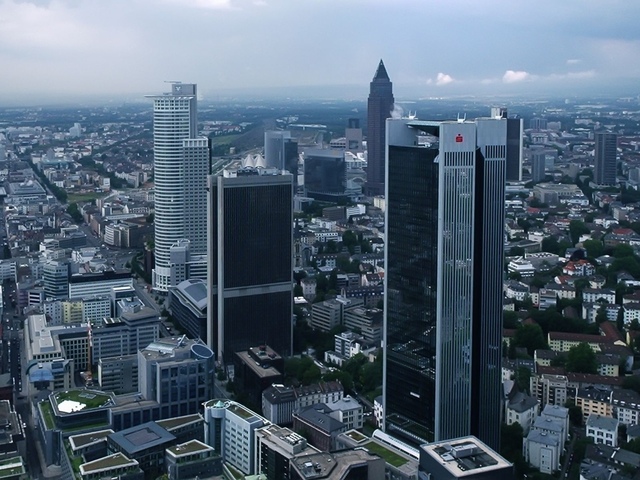
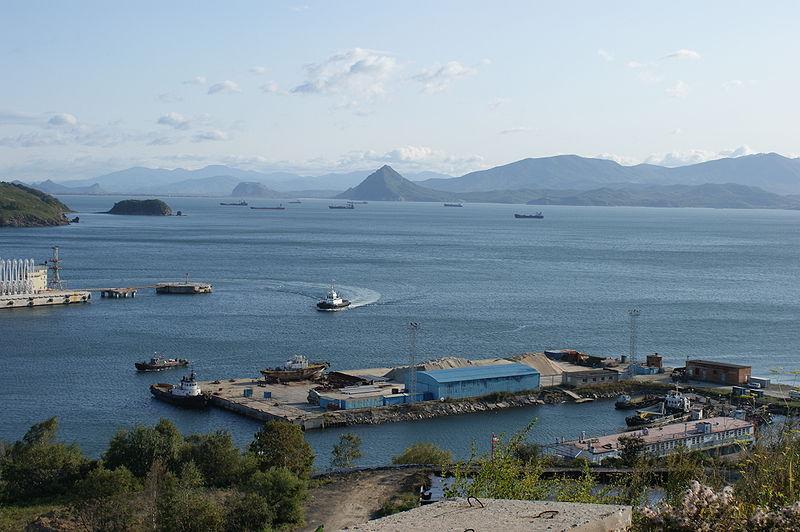
 |
Political System and Administrative Division: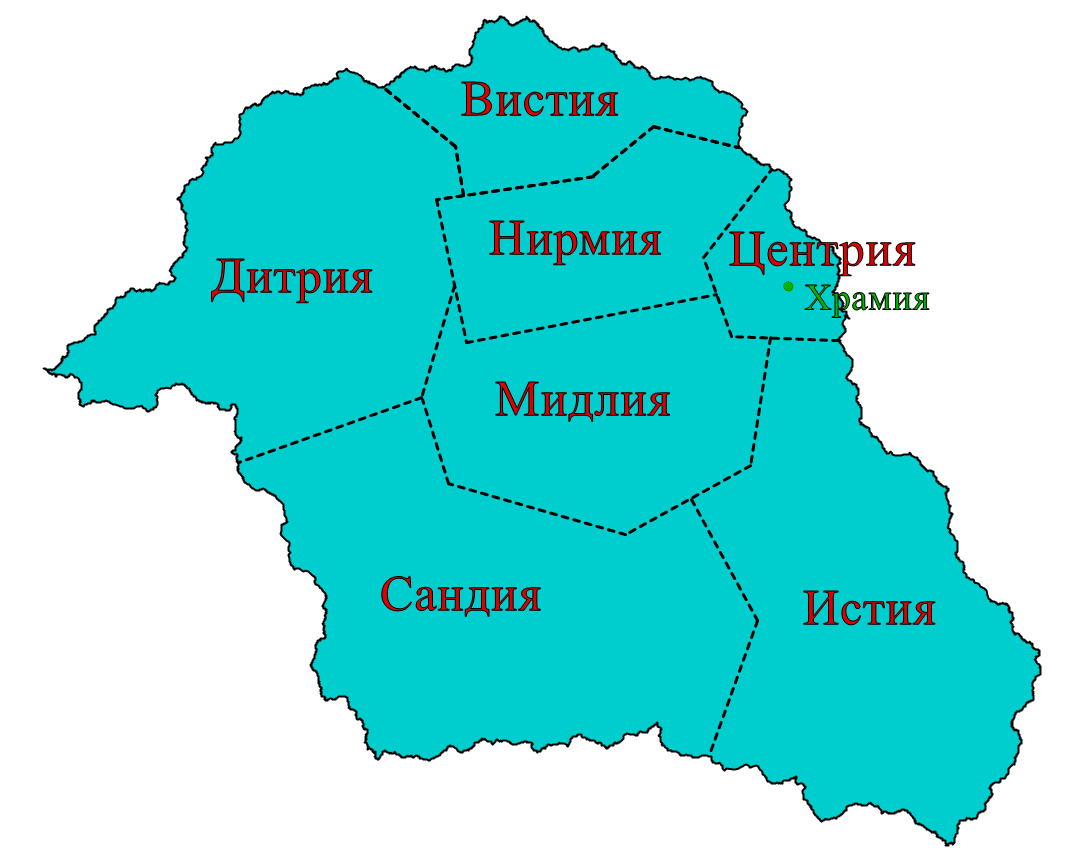
- The state is divided into incorporative organized territories under the clear control of the central region. In essence, they are quite similar to states in a federal state. Currently, there are seven states. The Khramian and Sahanian regions are located within a single Central State; the capital of the state has not changed.
- States have their own executive, legislative, and judicial bodies, while the country's constitution applies to them in full, although it is subject to some changes and amendments depending on the state. Furthermore, incorporative territories do not have the right under any circumstances to withdraw from the republic.
- States are in turn divided into regions, which are then divided into cities, villages, and smaller administrative-territorial units.
- Elections for heads of small centers are held once every four years among residents living in that territory by means of voting.
- After this stage, elected Representatives recommend candidates for the position of Managers of the Regional Council. A Manager can be a Representative of a city or village, as well as any resident of the country with some restrictions. The Regional Council forms legislative, executive, and judicial bodies in its subordinate region, after which it exercises control over all spheres of life for citizens of the state.
- The President is elected by popular vote for a term of six years and possesses all rights and duties of a head of state in an ordinary democratic republic, and also serves as commander-in-chief. The President may be elected to this position multiple times.
- Upon taking office, the president selects Directors—responsible for managing an entire state of the country. A Director is accountable for everything that happens on their assigned territory; furthermore, they are able to regulate, control, and (in exceptional situations) dissolve and conduct early re-elections of the Regional Council. Directors are appointed to their positions for an indefinite term but can be dismissed by the president of the country.
- The formation of corresponding government bodies in the Central State follows the usual pattern for the country; however, only on this territory is the Constitutional Court convened, which is capable of making amendments to laws that apply to the state as a whole.
- The current political and economic course of the country is determined by the president, and the directors in this case act as his direct assistants, who convey and oversee the execution of his decrees in the regional Regional Councils. The Director of the Central State becomes a kind of analogue to the prime minister.
There is currently no need for political parties, since the top leadership and executive bodies are formed by popular vote and by the election of a president who meets the requirements and expectations of the state's population.
International Relations:- Socialism and capitalism in its extreme manifestations are evils that must be fought with all available methods.
- Countries whose government belittles and does not respect the rights of its own residents, as well as states under the unlimited non-democratically established control of a person or group of people, should be subject to destruction, and their people liberated.
Suspension of all diplomatic relations (if any existed) with all states that are not members of the Security Council. One hundred million marmeladines have been transferred to the Mushroom Government in gratitude for provided assistance in overcoming the crisis, but at this point, all diplomatic relations at the international level cease.- Maintenance of trade agreements with AFTA and full participation in the KOSAP military-political bloc.
Incorporative Territories: Centria
Director (Prime Minister): Adolf Stammer (52 years old)
Regional Council: 70 people
Population: 25%
Income Level: very high
Employment: medium (high)
Social Services: very high
Crime Rate: very low
Life Expectancy: medium
Environmental Pollution: low
Industry: state educational institutions, medical facilities, small household goods and products, weapons, furniture, tourism.
Potential Regional Power: 0,32 sor
Centria (Centrian State, Center, Central State) is the main region from which control and supervision over all territories of Quasardastan are conducted. The state capital is also located there. During the crisis, which lasted about three years, practically nothing changed in the lives and way of life of the local residents. The absolute majority of wealthy people and entrepreneurs still live here; however, with Thomas Stammer's rise to power, many familiar things were revised. Primarily, any crime was eradicated in the shortest possible time, and the first police stations and prisons were built. As for the sphere of public goods, the state has done magnificent work here, the fruits of which have been a significant increase in the average life expectancy, education, and income of citizens.
In the times of Old Quasardastan, Centria was heavily overpopulated for obvious reasons. The highest level of unemployment and hunger made themselves felt until quite recently, when the state began modernizing the other territories of the country. Recently, the number of residents in this region has begun to gradually decrease, as people prefer to move to new places, and the construction of schools, hospitals, and shopping centers has provided others with permanent work.
Magnificent furniture is produced in Centria, which in terms of quality can only be compared to the weapons also manufactured here. As for the latter, however, most samples for some reason do not reach Aktean markets, but it is obvious that at present the state is allocating huge funds from its own budget for the further development of this field.
 Vistia
Director: Van Deming (61 years old)
Regional Council: 52 people
Population: 17%
Income Level: high
Employment: very high
Social Services: medium (high)
Crime Rate: mediumLife Expectancy: mediumEnvironmental Pollution: mediumIndustry: automotive industry, information technology, scientific and technical inventions, insurance.
Potential Regional Power: 0,19 sorMost of Vistia's territory in Old Quasardastan belonged to the holdings of the huge "L&L" corporation, whose owners fled a few days after the start of the crisis. The local population consists mostly of people from Calmia, as well as refugees from the eastern territories of Akteia. Residents of Vistia are extremely unfriendly toward strangers, as well as anyone who tries to impose their opinion and rule over them. Partly for this reason, the Director of this region was elected by a vote of the Regional Council, rather than by order of the president of the republic. In general, citizens here are distinguished by their capacity for work and discipline.
The criminal world of Vistia is represented by various criminal groups and clans consisting of local residents who try their hardest to establish themselves in one of the profitable areas of industry while the state is not strong enough to put an end to this once and for all.
 NirmiaDirector:
 Arthur Stammer (32 years old)
Regional Council: 29 people
Population: 13%
Income Level: lowEmployment: lowSocial Services: very lowCrime Rate: very highLife Expectancy: lowEnvironmental Pollution: mediumIndustry: black market, weapons, drugs, alcohol, gambling.
Potential Regional Power: 0,02 (+0,11 fact.) sorAt present, Nirmia is perhaps the most unfavorable region for living if not in all of Akteia, then absolutely certainly in all of Quasardastan. For long years, residents of this same territory distributed drugs and cheap weapons across the continent; human and organ trafficking were conducted here, and terrible atrocities and absolute lawlessness occurred. It is easy to imagine the local population and how they reacted to the "reforms" of New Quasardastan. In a state of severe post-crisis condition, the state simply could not afford to waste its few budget funds on an endless struggle with Nirmians, and therefore it was decided to temporarily freeze all projects for the improvement of this land and simply forget about its existence for a while.
Most freedom-loving people, residents dissatisfied with the current state power, and simply those who have nowhere else to go, gather precisely in this region. After the introduction of a ban on drug distribution and slave trade, the introduction of criminal punishment for violence, and the tightening of laws on firearm ownership, it became obvious that sooner or later this small echo of the past would be dealt with. But at present, the local population is ready to fight to the end for their home and absolute freedom.
 MidliaDirector:
 Helga Stammer (40 years old)
Regional Council: 64 people
Population: 23%
Income Level: mediumEmployment: highSocial Services: highCrime Rate: low (very low)Life Expectancy: lowEnvironmental Pollution: highIndustry: factories, small trade, logging, mining industry, minerals.
Potential Regional Power: 0,18 sorMidlia is more and more often called nothing other than the "second Centria," and absolutely deservedly. This is related not only to the fact that Thomas Stammer's wife was appointed Director of this region. At present, most state funds are being poured into the modernization of this territory. Huge areas of polluted land were cleaned in the shortest possible time, although the average level still remains quite high; numerous plants and factories were restored and built; the development and extraction of minerals, valuable mineral rocks, non-ferrous metals, and much more are in full swing. The state strives to provide everyone with a decent salary and social services, so it is not at all surprising that Midlia's population is rapidly increasing every year. "The Pearl of Quasardastan," as the president himself once called this region, is currently already ready to surpass Vistia and rightfully take second place after Centria in the list of the most favorable economically developed states.
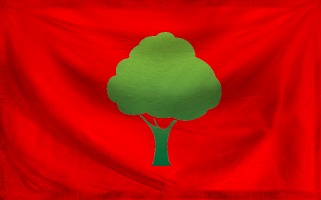 IstiaDirector:
 Ivan Horvat (28 years old)
Regional Council: 26 people
Population: 12%
Income Level: lowEmployment: highSocial Services: medium (high)Crime Rate: medium (low)Life Expectancy: lowEnvironmental Pollution: mediumIndustry: agricultural products, book printing, scientific research, private investment in environmental cleanup projects, tourism.
Potential Regional Power: 0,10 sorOf the three second-order incorporative territories, Istia has been developing most rapidly and confidently in recent years largely because essentially the entire region was given under the control of the private sector, which, with successful state support, can fully count on huge profits. Strangely enough, many were willing to make such positive long-term investments. Practically half of all regional funds are spent on the implementation of various ecological nature projects; waste disposal is in full swing; various amateur scientific projects and research are actively developed and sponsored; books, magazines, newspapers, and articles are printed. Recently, certain beginnings have appeared for the restoration of the agricultural industry lost due to high environmental pollution, and the southern shores of the bay are rapidly being converted into resorts and tourist zones.
In Istia, they breed phoenixes, restore lost and preserve existing rare species of animals and birds; the crime rate is gradually decreasing, while income and life expectancy, conversely, are increasing. The private sector, despite always being ready to profit from its own workers, is strictly regulated by the state, which handles the construction of affordable free housing for settlers, roads, and cities.
 DitriaDirector:
 Gustav Stammer (71 years old)
Regional Council: 17 people
Population: 3%
Income Level: very lowEmployment: lowSocial Services: lowCrime Rate: highLife Expectancy: very lowEnvironmental Pollution: very highIndustry: state settlement of underdeveloped areas, fight against environmental pollution.
Potential Regional Power: 0,03 sorDitria is a territory that in old times belonged to the Outer region of the state, a doomed place polluted by production waste and turned into impassable wastes and swamps. Quasardastan's economic power is insufficient to fully provide for the reconstruction of Ditria, but some successes in this matter have still been achieved.
Crime here is an everyday thing, and the few law enforcement structures are simply unable to provide protection to local residents, and they themselves are not averse to profiting at others' expense. Unlucky is he who is sent here to work, as it is considered among state service employees. As for the government of this region itself, corruption flourishes here like nowhere else, and officials try to enrich themselves using the few funds allocated from the center for the development of the state. Old Gustav is forced to turn a blind eye to such outrages, for what else is he left to do.
 SandiaDirector:
 Elizabeth Smith (31 years old)
Regional Council: 21 people
Population: 7%
Income Level: lowEmployment: medium (high)Social Services: low (medium)Crime Rate: medium (low)Life Expectancy: very lowEnvironmental Pollution: very highIndustry: state settlement of underdeveloped areas, fight against environmental pollution.
Potential Regional Power: 0,05 sorThe twin of Ditria, Sandia clearly demonstrates what could have awaited the first region if its improvement had been handled by an ambitious and determined person loyal to their cause. Elizabeth Smith, although not belonging to the Stammer family herself, proved worthy of leading the management of this not-so-pleasant spot in Akteia and fully proving herself. As it turns out, at present she is succeeding surprisingly well.
Practically no funds are allocated for the development of Sandia, but even despite this, one can easily notice how the region is being transformed. Being knee-deep in radioactive waste, Elizabeth nevertheless manages to find the strength within her to overcome countless difficulties and failures, instill faith in success among her own assistants, and even attract private investments. Among local residents, she became famous as a pleasant and kind person, sincerely sympathetic and wishing to help, but at the same time ready at the right moment to become a tough and cold-blooded leader capable of inspiring her subordinates to long and hard work. The crime rate has decreased almost twofold, employment of citizens is in full swing, and even the number of residents increased by as much as three percent in the last year, which had not happened once in the entire history of the state.
Thomas Stammer's Large Press Conference 6


 Драккошка




 Ple-Sen
