


 Граф Орлов

Auto-translated
The Ahassan Sultanate.

History: The history of the founding of the Ahassan Sultanate began on the island of Abd-el-Male (an island off the southeastern coast of Actea). It is not known exactly when civilization arose on the island; according to modern historians, this happened about 3 thousand years ago. The oldest chronicles of the state that have survived to our time describe events from two millennia ago, when the first sultan, Ahas ibn Shamil, completed the unification of the disparate tribes of the island of Abd-el-Male. Ibn Shamil is considered the founder of the dynasty, and the current sultan, Muntazir ibn Yarub, is his direct descendant.Geographical structure of the Ahassan Sultanate:
The Ahassan Sultanate is geographically isolated from other countries. In the northwest of the continental part of the country lies the Great Ahassan Desert, and in the east – a mountain range.
Most settlements are concentrated in the south of the mainland and in the northwest of the island due to favorable climatic conditions. The eastern part of the island is completely uninhabited and consists of wild jungles, as does part of the southeastern territory of Ahassan on the mainland. It is almost impossible to find a settlement in the desert. The capital of Ahassan, Mekdad, is located on the island of Abd-el-Male.
yellow -- deserts and semi-deserts
light green -- subtropics
dark green -- tropics
white with red stripes -- altitudinal zone areas.
Basic information.
The Sultan is the sole ruler of the country; he rules with the support of the vizier and ministers, but the right to make decisions on any issue always remains with the Sultan. Elections have been abolished; the sultan passes power to his eldest son (in some cases, the sultan may choose an heir himself, but this happens very rarely), and he also chooses people for the positions of vizier and ministers.
The Ahassan Sultanate is an extremely conservative and religious state that clings desperately to traditions. In education, primary attention is paid to religion, while much less attention is paid to applied sciences. Compulsory education lasts five years, and schools are usually completed at age 12. From the age of 10, citizens of Ahassan gain the right to work; from the age of 16, they are drafted into the army, with a mandatory term of service of 5 years. Only men serve in the army and police. Women are never allowed to hold leadership positions and cannot nominate themselves for the position of minister. Overall, about 75% of women of working age are unemployed. Pensions have been abolished, except for payments to disabled people and (in some cases) veterans.
Polygamy is permitted in the country, but given that families are generally provided for only by men and sons aged 10 or older, harems are not a particularly common phenomenon. By the way, there are only 19 wives in the sultan's harem, and only 8 in the harem of the current vizier, Shakur ibn Hidr.
The death penalty is prescribed for murder, treason against the Motherland, speaking out against the government or religion, drug trafficking, and homosexuality.
Technologically, the Ahassan Sultanate lags far behind the rest of the world. Computer technology is prohibited; the army is armed with single-shot rifles and drum revolvers, and some units are even armed only with crossbows and bows – industry simply cannot fully meet the needs of the huge army. In addition to a poorly developed industry, despite high taxes, technological development is hindered by conservatism and fear of technology.
The main state subsidies go to the spheres of religion, art, defense, and law enforcement.
The Ahassan Sultanate has almost no contact with the outside world; the government and citizens of the country tend to consider residents of other countries as eccentric barbarians and do not recognize technologies, science, equality, atheism, and capitalism.
_____________________________________________________________________________________________________________________________________________________
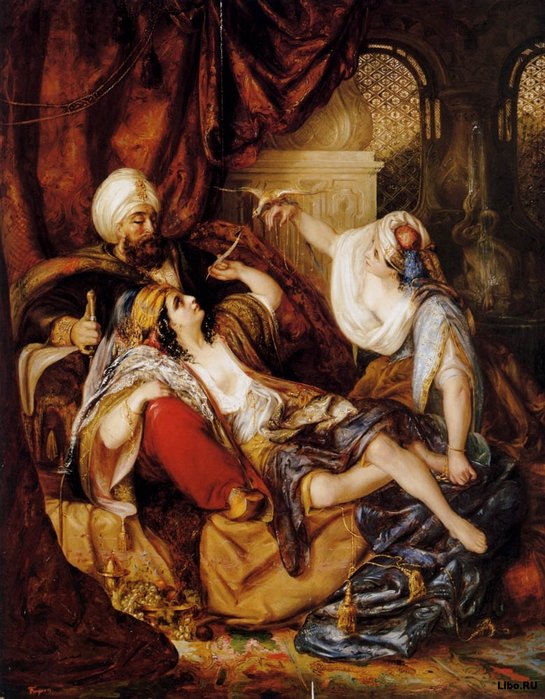
His Excellency Sultan Muntazir ibn Yarub
E si sui vius, er mi grans benananza,
e si ieu muoir, er mi grans deliuriers
e si ieu muoir, er mi grans deliuriers



 Ple-Sen

