
Skip to content

Posts from Tales from a parallel world.

5.0 (1 rating)
User Avatar
9 years ago
Auto-translated
Ant colony, hehe)
User Avatar
9 years ago
Auto-translated
a little more

port


bridge to a neighboring island (where there's a local amusement park similar to Disneyland)


this cute express train goes there
the cars don't necessarily have to be blue; there are also other fun colors
Attachments 3
3 files attached • Total size: 112.7 KB
In reply to Ment
User Avatar
9 years ago
Auto-translated
Ment
Anthill, heh )
well that's what the Chinese are good at )
Here's another one by the way (I don't even know what these buildings are, maybe some university or residential).


Attachments 2
2 files attached • Total size: 71.8 KB
User Avatar
9 years ago
Auto-translated
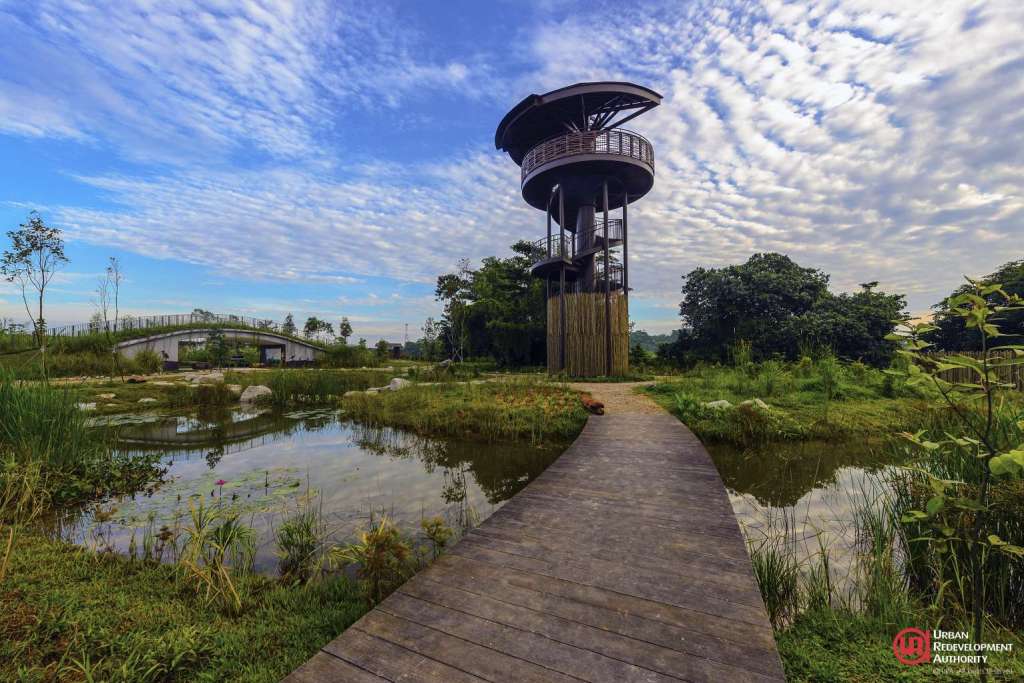
just to avoid the impression that we only have concrete jungles here, here's some local nature from the internet.
Specifically, a park with swamps, which I'm planning to visit next weekend, if I can figure out what to wear (although they seem to provide rubber boots at the entrance).


some kind of swamp


observation tower


oh, besides herons, you might even run into a crocodile there ))

User Avatar
9 years ago
Auto-translated
interview about science in Korea, but there is also a bit about the history of science and other things as well.
there are very active attempts to develop quality science in the country, world-class science, with an understanding that now, with China "nipping at their heels" and Vietnam looming, Korea cannot do without high science and high technologies. There are no minerals here that can be dug up "for free" and sold, so they have to work.

It turns out they have brought the story of Munchausen to life. In a sense, they pulled themselves out of the swamp?

Definitely! And not just them, but all the countries of East Asia. The leap of South Korea, as well as the leap of Taiwan—there are subtle differences in strategy, but the basic principles are similar—it is the leap of countries that have no resources at all. Taiwan has at least some, but Korea has none. None at all. Zero.

Where did they start? What followed what?

The classic model of the dictatorship of development. It has been tested many times: first under a pseudo-democratic "sauce," then under a pseudo-communist one. Now Vietnam and China operate according to this model; previously, South Korea and Taiwan modernized this way, and to some extent Singapore, although it is a city-state with its own inevitable specifics.

What does this model provide for? A bet on cheap, high-quality labor. The only thing these countries had was a very large number of disciplined people prone to following orders. The key word here is the "wet-rice culture," which for centuries formed practically industrial habits regarding labor and working in collectives, and fostered high trust in the state. Accordingly, these countries bet on labor—raw materials and technologies were imported from abroad, and people sat and processed it all into finished products. Previously, Koreans did this, and now the Chinese do.

This is a standard path; Korea was simply one of the first countries to follow it. At the same time, of course, this path had many unpleasant moments; "there is no war without losses." This involved the very harsh suppression of the labor movement and the harsh, repressive suppression of the opposition—in terms of authoritarianism, these regimes varied from strongly authoritarian to overtly dictatorial; there were no democracies here. In addition, for the purpose of mobilizing the masses, the nationalist factor was actively used in forms that would cause an average Russian intellectual to have a fit of nausea—all of this definitely happened. The leadership itself often didn't believe in this nationalist nonsense much, but they used it very well for mobilizing the people.

Also, of course, a significant role was played by the most meticulous attitude toward their own international financial rating, as well as, in the case of Korea and Taiwan, the alliance with the USA as a guarantor of security. That is the model.

I will say right away that it is unpleasant, but no other model would have worked at all. There were attempts to find an alternative—all of them failed. We will never know if it could have been done differently; for centuries the intelligentsia will criticize all this, because the intelligentsia in Korea is slightly left-wing, "pink," and democratic. They criticize this model terribly and say that all this was a suppression of freedoms, and that social democracy, free medicine, and education should have been introduced immediately, and censorship removed (although free medicine and education happened quite quickly). And they would have had a complete paradise long ago. Maybe they would have—I don't know, and no one will ever know. However, they tried to test it, they tried to build a liberal democracy in the region, but it always ended badly.
If we think about the development of science, then school education must also be developed. What is its level in South Korea now?

It is very good. Also with various shortcomings, but I could talk about that for a long time. One of the characteristic features of East Asian culture is the cult of education. Education is good, it is cool. This cult is due to historical tradition: for centuries in countries of the Confucian system, education specifically was an important marker of social success. On the other hand, there was an examination system that ensured social mobility specifically based on education. If you wanted to live well, the most reliable social elevator was educational.

Currently, South Korea has 12-year secondary education. The school is built on the Soviet model, so to speak. Generally, to simplify—there are two school models in the world: the American and the Soviet. The American model means that only the elite receive a normal, quality education—those who were pushed in this direction by parents or whose brains are wired accordingly. The masses there aren't taught much book wisdom; they are taught more how to play basketball and a bit of something else.

And there is the Soviet model, in which the base model of the Prussian gymnasium, originally intended to train a few percent of the population, was spread to practically 100% of the population. They take the scheme that was originally created to train officials and managers from the elite in a society with a very strong pyramidal structure, where this elite was very small, and this scheme is made universal. This approach triumphed in the USSR and triumphed in Korea. That is, there is rigid school education here, with very little freedom in terms of choosing subjects and a very high bar of requirements.
User Avatar
9 years ago
Auto-translated
It’s been a while since we had any news from the parallel world... :(
User Avatar
9 years ago
Auto-translated
and they've been in the politics thread lately. I'm showing them with my example what should be discussed there, but the local politicians aren't biting and aren't posting pictures of how they're spending their summer :(
User Avatar
9 years ago
Auto-translated
and they've been in the politics thread lately
And it's not surprising. The title "Tales from a Parallel World" fits the politics thread just as well as it fits this one.
User Avatar
8 years ago
Auto-translated
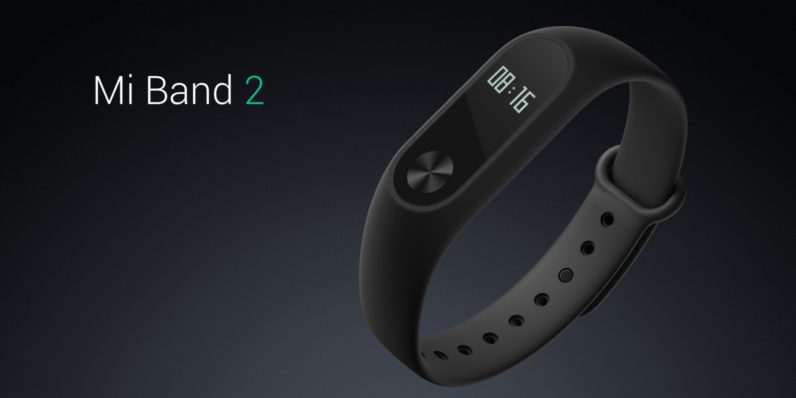
A bit of an off-topic post, but to avoid creating new threads, I'll brag here about a little gift I got for my birthday.

a Fitbit tracker from Xiaomi.


First, the good stuff.
1. price from 17 (at a local online sale) to 40 USD (from a Singaporean official representative).
2. the design is quite stylish, the straps are interchangeable, so you can pick something flashier than the standard one.
3. battery lasts about 3-4 weeks.
4. functions are exactly what I needed: clock, heart rate monitor (because I was tired of counting manually during workouts), pedometer, sleep control.
You can also synchronize it with the Xsmart Alarm app to enable a smart alarm that wakes you up at the most appropriate time :) I haven't installed it yet; I just wrote it down so I wouldn't forget the name of the program.
5. the watch turns on with a flick of the wrist. That is, usually the display is off, but if you lift your arm to check the time, as we normally do, the display turns on automatically.
6. notifications for incoming calls from the phone come through to the bracelet. Considering that I usually have my phone on silent, it's a very useful thing.

I already posted one screenshot in the flood thread. A few more.

sleep statistics


this is it complaining that I sleep incorrectly (I'll fix it, honest, but later)


step statistics (the amount of gasoline saved is especially touching)
User Avatar
8 years ago
Auto-translated
Now, let's talk about some specific drawbacks. 1. As can be seen from the sleep statistics chart, it sometimes malfunctions. Specifically, it only counts nighttime sleep. On the day I went to bed at 5 a.m., it decided that I hadn't slept at all. I haven't yet figured out how to fix it so that it counts correctly, or even if it's possible. 2. Some software issues. I couldn't add friends to view their statistics, and they couldn't view mine. The developers promised to fix it, but I've been without friends for the second month now. 3. The fancy bracelet that came with the watch wasn't an official one (because the set was purchased from an unknown Chinese seller) and caused a terrible allergy after a couple of days of wearing it (I guess you have to be me to get an allergy from a watch). So, I'm now wearing the standard design. Maybe I'll change it later. 4. According to user reviews, the glass scratches easily, so it's best to apply a protective film. I haven't applied one yet; I'll experiment. And here are some other observations about its performance, neither good nor bad, just... there. The bracelet is waterproof, so you can take a shower with it. It seems that it's recommended to remove it while swimming, but hmm... that's the main reason I need the watch. So, for now, I swim 100 meters with it and then take it off. I'll see if it breaks after a couple of months of this, and if not, I might not take it off at the pool at all. I compared it to a Lenovo watch that a friend has; it has more sophisticated algorithms (but also a higher price). Mine can't automatically recognize activities like "climbing stairs." You have to specify it separately. Or you can be content with the fact that climbing stairs will be counted as regular walking on a flat surface. Added after 23 minutes: Oh, and one more thing. I saw in the reviews, I think on AliExpress, that there are fakes being sold. Of course, they are of poor quality. So, if anyone is going to buy one, read the reviews of the seller.
User Avatar
8 years ago
Auto-translated
Congratulations to everyone on the past holidays!

For some reason, there weren't any normal photos on my phone, only these ones taken at dusk)).

Now, all the Christmas and New Year reindeer, snowmen, and fir trees have been put away.
And the streets have been decorated for the Chinese New Year.
Now, everywhere you look – flowers, coins, gold bars, and wishes for prosperity.


Attachments 5
5 files attached • Total size: 370.2 KB
User Avatar
8 years ago
Auto-translated
And what if you are a lazy Chinese person who doesn't want to throw away the Christmas tree but it’s already time to decorate for the Chinese New Year? The solution is very simple – decorate the tree with flowers in a Chinese style. That is, change the colors from red and green to pink and purple. And replace the tinsel, gifts, baubles, and other decorations with flowers and ribbons. Christmas wreaths will also come in handy – add a couple of branches of flowering cherry and red tassels. Done. The decoration for the Chinese New Year is complete.
Attachments 2
2 files attached • Total size: 112.7 KB
User Avatar
8 years ago
Auto-translated
and about the weather

meanwhile, it is already spring outside for us


Attachments 3
3 files attached • Total size: 409.0 KB
User Avatar
8 years ago
Auto-translated
and this is what the harsh local winter looks like (not just in Singapore, because such weather is rare for Singapore, as they have a good drainage system. But in neighboring countries, I periodically get caught in similar downpours, where the water is up to my waist)

In reply to Sesame
User Avatar
8 years ago
Auto-translated
Sesame
This is what the harsh local winter looks like (not just in Singapore, as this is rare for Singapore because they have a good drainage system. But in neighboring countries, I occasionally get caught in similar downpours where the water is up to my waist).

The village of Gadyukino will be washed away... But seriously, the weather is just strange. And even the Epiphany frosts are dreaded. If all this freezes, it's best to stay away from the roads.

Statistics

Welcome our newest member: recijeb