Alucard

Auto-translated
We are starting our lecture series on the study of Arandor; please take your seats and grab the handouts with the key points.
So:
1. Arandor from the perspective of topology.
This is a very broad question, and although scientists have been working on it, we only have fragmented knowledge.
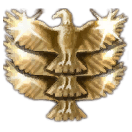
In this regard, the experience of Professor Amarant is noteworthy. I remind you, colleagues, that he proved that if you connect two Arandors in such a way that they are rotated 180 degrees relative to each other and connect them using a "mouth-foot" connector, you get a ring similar to a Möbius strip, and a spatiotemporal paradox is formed, which has a number of interesting properties, for example, it is possible to get from one point on this surface to any other without crossing the edges.
Also known is the experience of Professor Maggot, who, by placing Arandor in a certain vessel, proved that it is possible to obtain a spatial paradox similar to a Klein bottle, in which the inner and outer sides of Arandor are indistinguishable. This phenomenon is extremely difficult to understand, and I suggest that you familiarize yourself with it independently.
2. Arandor from the perspective of combinatorics.
Here I will use the example of Professors Vis and Lizard, who proved that if Arandor is split into an even number of copies and arranged in a row, the binomial theorem cannot be used to count them, which completely changed our view of combinatorics. The professors also noted that every 10th Arandor held a sword, and when attempting to remove it, there was a mixing of interspatial connections, and a "Space with the absence of absence" was formed, in which there was no non-being! We do not know what drinks these scientists were drinking, but judging by the data, it was ethylene glycol.
3. Arandor from the perspective of higher mathematics.
This is a very broad topic that Professors Ex and Siv have been working on.
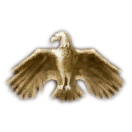
For example, Professor Ex noticed a clear similarity between Arandor and the notation for an ordinary indefinite integral and found that the distances between the nose and foot of Arandor cannot be calculated using trigonometric identities of a right triangle, since the space inside Arandor is distorted, and what seems to us to be a straight line is actually a zigzag.
And Professor Siv, having inscribed a circle in Arandor, discovered that its radius is numerically equal to the circle circumscribed around Arandor! He discovered the famous Arandoristic effect of adding perpendiculars! Together with the scientist-topologist Maggot, they found that the space inside Arandor is closed with an orientation towards itself, thereby creating a paradox in which the inscribed and circumscribed circles overlap.
This was a lecture dedicated to the study of Arandor from the perspective of topology, combinatorics, and higher mathematics. Ask your questions.
P.S.
Stay tuned for a new lecture series! We will consider Arandor from the perspective of natural sciences.
 Arandor