Skip to content

Posts from Recently viewed games Auto-translated

No ratings yet — be the first to rate!
User Avatar
#353
Auto-translated
Besides Steam, I've also gotten back into Diablo 2. I can't buy Resurrection because Blizzard closed the store, and it looks like they won't reopen it until the war is over. So, I'm sticking with the old graphics. I'm trying to learn how to play a Necromancer in Hell difficulty on 3-player mode. They say some players one-shot Baal on 8-player mode, but those are just epic stories. Even on 3-player mode, the monsters are quite challenging. Although, to be honest, I'm already incredibly tired of Diablo 2. Besides the Necromancer, I also have unfinished Sorceress and Amazon characters. And not long ago, I started playing as a Druid and even a Paladin. He was so poorly built that I couldn't even beat the first act.
Смысла нет, но вы держитесь там. Удачи, здоровья, хорошего настроения!
И пока в кармане пачка милкиуэйев - значит все не так уж плохо на сегодняшний день


User Avatar
#354
Auto-translated


Castlevania
Castlevania II: Simon's Quest
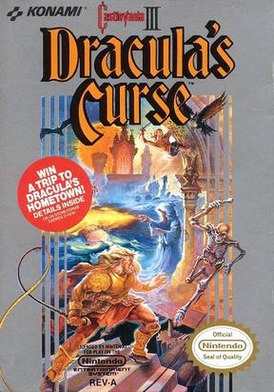
Castlevania III: Dracula's Curse

I've wanted to play Castlevania for a long time, especially since this series passed me by in childhood. Usually, I came across pure platformers, beat 'em ups, or another Contra (not to mention simpler games). True, there were some good examples among them, but perhaps I'll talk about those another time. I won't go into detail about the gameplay and all the specifics; I'll focus only on my own impressions.
Naturally, I started with the first part, which I had already tried playing some time ago. But back then, I limited myself to just the first level, although that was enough to feel how good the game is. This time, the emotions remained mostly the same. Pleasant combat, decent music (I even thought it was the best of the three), and the level design is quite good, + there are secrets. Only two things bothered me. First and foremost were the ladders, which I couldn't always climb on the first try. And it would be fine if they were only a problem in the first part, but no, it's a problem in all three parts (although I have a feeling it's worse in the first one, or maybe I just got used to them over time). Seriously, specifically at this point, the controls are inconvenient. Of course, the technical side might also add some difficulty. The second problem of the first part is the overly chaotic monsters attacking from all sides. Fortunately, not always and not everywhere. But there are places where they really get on your nerves. And if you happen to be on a ladder at that moment, you'll probably die. Why? Because when taking damage on a ladder, you fall down (off-screen) rather than staying on it. Also, it's hard to attack from a ladder because your character doesn't do so while moving, which means you have to stop, turn around (since those chaotic creatures love attacking from behind), and swing your whip, which isn't known for its high speed. It's good that there is a slot for a second weapon. In such cases, it doesn't always help either, but it'll definitely come in handy in other ladder (and non-ladder) situations. There were also moments when it wasn't quite clear where you could step, leading to falls. This happened a couple of times in the third part as well, but maybe that's just my problem. But the first part is certainly in the lead regarding glitchy platforms and walls. Otherwise, everything seems fine. It's worth noting that the final boss is the hardest right here. I spent definitely more than an hour on him. The previous one also caused some difficulties, but it doesn't compare to Dracula, of course. Good thing I played with saves x) By the way, they were in the Japanese versions, but not in the Western ones.

When I launched the second part, it seemed to me that visually it was worse/poorer. Maybe it's because of the starting town, or maybe it really is like that. It should be noted right away that freedom of movement was added here and it's already closer to a Metroidvania, although not quite in the usual form, since we mostly run back and forth, but there are several branches, so I even drew something like a map. Not that the game is very confusing in this regard, but for convenience, it certainly doesn't hurt. Confusion arises here when you have to solve puzzles, and there are problems with that. I'll start by saying that hints are needed for the solution, which are usually given by townspeople in towns. But not all of them are useful, not all of them are clear, and some hints are hidden in walls/etc., which must be broken with specific weapons (few of these are useful). By the way, some merchants in towns also hide behind walls (what the f**??). Would I have figured this out quickly if I played without a guide? I don't know, although at the beginning one guy mentioned walls of evil that need to be broken with holy water. It would be fine if these walls looked different somehow, but no x) But that's easy; in one of the castles, I accidentally jumped into a wall and thus found out that you can pass through some of them. I think the hardest were the hints for plot progression (when you need to perform specific actions with items/find them, or perform an action with the character, like crouching in a specific spot and sitting for five seconds). However, this didn't bother me much, given my playstyle. In childhood, I think I would have quickly abandoned it and hated it. By the way, many people don't like it. As for merchants, loot no longer drops from enemies here, as in the first part. Upgrades and weapons must be purchased, as well as various auxiliary items. So I had to farm a bit, although without any knowledge, I think you wouldn't have to do that, since you'll kill hundreds of enemies while running back and forth thinking about what to do. Otherwise, the game has barely changed, so it's pleasant to play. Except that only three bosses remain and they are really very easy. That is, all the difficulty of the game was simply reduced to searching rather than fighting. On the other hand, there seems to be more good music here than in the first one. Or maybe I just got used to it, because there's a different melody for every level there, while here many repeat, given the backtracking. And yes, day and night cycles were added in this part (normal for '87?).

And of course the third part, which was also released on the NES. For this reason, I decided to put these three games in a separate post, since they are all from one console. I can call this part the best right off the bat. It's closer to the first one, but improved in almost every point (- music and bosses are easier). So no more complex puzzles (only secrets) and backtracking; instead, branches/level choices were added during the plot, which means replaying the game will be significantly more interesting (+ listening to new tracks). Moreover, the chosen path not only affects the length of the game but also gives the opportunity to meet one partner or another. There are three of them in total, therefore there are four endings in the game. If you've seen the Netflix animated series, you should be familiar with them, as this part was used as its basis. Initially, I wanted to take Grant, but I had to settle on Sypha to complete the game as quickly as possible. Alucard also lost out in this regard, but I'll get to them someday. So, the choice of character is perhaps the main feature of the game (for me). I remember the first two parts and how much I liked playing, hitting enemies with a whip and getting pleasure from it. And suddenly I get a mage with some short staff(?), which is not only hard to reach the enemy with, but also requires delivering more hits to make up for the lack of damage (at least that's how it seemed at first). It's logical; she's not a fighter, but a sorceress and therefore her strong point should be magic, which is given as a second weapon. And so it is. The first choice is fire, which is OP against bosses. I killed everyone specifically with it. Then I got freeze, which is a lifesaver against groups of attacking monsters (if only the first part had that 🤤 ). And the third are spheres, which are generally also not bad in specific places, although sometimes they worked poorly, + there's some limitation. The only downside is that magic consumes hearts and you can't just mash it chaotically. But if you take freeze and act reasonably, the levels are passed quite comfortably, especially considering that with freezing enemies are killed in one hit. Moreover, over time I was able to feel all the beauty of the staff, namely its speed. Often hitting own-way flying enemies with a whip is inconvenient because you need to time it, height, etc., while the staff just needs to be pressed at the right time. In the end, I played almost the whole game as Sypha, switching to Trevor only when encountering certain mobs. And yes, towards the end it was pleasant to be in a location from the first part. There, the entire game is Dracula's castle, but here the castle is only part of the game. I will definitely replay this part someday, but I probably won't do the first two. Besides, there are parts on other consoles, so the next one will be the 4th, or parts from the GB.

upd. completed with all partners and although Alucard is considered the most useful, I liked Sypha more (couldn't fly properly in bat form x))

Be strong. Believe
User Avatar
#355
Auto-translated
I was about to just give up on it, but then I thought—alright, I'll jot down a few lines about the indie games I've been grinding lately.

yohane the parhelion

I hate "intellectual" stuff, especially when it's not for cool people but for anime-idiots, so I'll give this one only 8.5.
Even a polished engine and animations, smooth gameplay, full Japanese voice acting, and references to the original material for anime-retards aren't able to compensate for some weird—though not critical—moments in the mechanical features. You could also add short completion time as a plus, but that's only relevant for a legally infringing free warez version, certainly not for a thirty dollar purchase.

tevi

I'm absolutely puking retardation in a steady stream, so I can't possibly rate this higher than nine and a half, even if it is from developer rabi ribi in the same format, with voice acting, a full plot, and a bunch of "quality" compared to the previous project, plus expanded customization and features.
That's understandable, but it's still a shame that for the sake of the infamous little plot, they had to move away from the light atmosphere of its predecessor into more grimdark territory.

octopath traveler 2

Working-class grind: season two. After starting to play, I realized it's quite a chore—something that was very easy and simple to feel even in the first part—but here they went down the path of increasing the grind by inventing day and night cycles, which change the location of town and wilderness NPCs, as well as the version of the ability used on them, which increases the number of clockwise laps two or more times. Even with that—if you overcome this feeling of plowing through WORK—you can enjoy the stories and main quests of the workers; they are at least no worse than in the first part, and you can also sail the sea on a little boat. But ultimately it all comes down to whether you like the format itself—if yes, then go for it; if not, you'll drop it quickly; if you "just don't puke over it"—you'll still drop it at some point, as I did, just not immediately.

astlibra revision

Crap if you have ADHD; absolute top-tier if you have time to grind, a desire to immerse yourself, and are okay with the combat—side-scrolling and not very dynamic, but requiring some skill in places. An anime-idiotic, ten-fold exaggerated multilayered plot, reasonably well presented, with ceramics and drama, and little jokes on top.
If you grind it fully, it'll take a own decent amount of hours, but you can choose not to do that and spend two to two and a half times less time, losing only in autism rather than final output.
Despite all the above—it's meditative and almost effortless, so it'll work even for boomers.

sanabi

First impression: Katana Zero-ish with a simpler plot and worse gameplay, but on the internet I saw another comparison—Ghostrunner 2D (if anyone besides me has played that crap and knows what I mean), which seems more appropriate to me.
The gameplay really could have been better; it makes sense and is balanced both narratively and mechanically, but personally it doesn't get me excited as such—it's a platformer where you pull yourself with a hook and one-shot enemies (robots) with the same hook, and its essence isn't about blood-guts-boobs-swearing, but primarily about calculated and competent maneuvering. Like... doubtful, but okay)))); it could have been better, plus a couple of separate moments really pissed me off with their complexity, even though there was nothing super hardcore in them, but the game's formula itself can trigger such emotions in places, even if you understand it's just an average title.
But overall, for the sake of the little plot it's worth it—it's not exactly mind-blowing or heavily twisted, but just very wholesome and quite well presented; for dumb sentimental boomers 30+ who have already seen everything life has to offer—it's perfect. In places it even reminds me of some typical (in a good way) sci-fi action flick from the nineties, where there is a certain chambered feel, if not limitedness, to the world, but despite that you feel very well that this same chamberedness doesn't narrow the world down to only the action events shown in it, but on the contrary—it's presented so that you feel the worldbuilding and the embedded plot idea behind it, even though at a glance you shouldn't. It might not be easy to explain in words, but being an elitist and getting it, you realize how competently and masterfully it's done; not everyone is capable of such a thing.
To sum up, I think this pro-ect will appeal to many—plot-idiots won't be too bothered by the gameplay and will like the story (especially since there's a casual difficulty you can turn on at any moment), and gameplay-idiots will find the gameplay acceptable, and they'll still understand the plot without guides, and it will strike chords in their hearts one way or another, because it really is made with soul. So... I can recommend it to many?.. I guess. You certainly won't consider the 7-10 hours spent on it as wasted in the end, but rather get a certain pleasure from them.

Lastly, I'll fart about the trendy youth (about a year or two ago) indie scene "vampire survivors" genre, of which I managed to play several titles.

vampire survivors - judging by the hype, not as cool as expected; judging by the gameplay, not as shitty as expected. There are dozens of heroes and upgrades that can be unlocked under certain conditions, which significantly adds to the playability, but at one point you might find that without an internet guide you no longer understand how to unlock things further, and without unlocks there's no point in playing, so don't be shy and look them up. But otherwise—as strange as it sounds—the most advanced of its "genre" in terms of graphics-gameplay-unlocks. It won't click from the first run, but it'll click fast enough, and you'll realize that overall, the initial antipathy is overcome and it's quite playable—not as no-brain as it might have seemed before.

brotato - some kind of bullshit like early 2000s Flash games; gameplay is polished enough in terms of understanding and transparency, and that seems correct, there's a conditional variety of upgrades-weapons-builds, but at the same time, despite the "quality," it lacks this very variety. Idk, maybe it's due to the lack of a global game layer, like in Vampires? Essentially, everything you do outside of strictly "quality" structured runs is trying to trigger an unlock for a specific hero under a specific condition, whereas in Vampires you unlocked all sorts of things, all covered by a layer of mystery, hints suggested enigma, maps were almost infinite in size and you felt something more than just calibrated numbers.

bio prototype - sort of Brobulba, but about mutating maggots. Gameplay on the maps here is even poorer, global unlocks are worse, but the essence itself is built on getting various strange mutation modules to install on the champ; they aren't super complex, but in places very strange and hard to perceive, not combining with each other, focused on building quite calibrated synergies. Overall, building a champ during a run is perhaps relatively interesting here, but unfortunately, everything else is done quite dullly, so the general impression doesn't carry it.

boneraiser minions - absolutely vomit-inducing pixels for graphics, but otherwise a very fun vampire-like (can we call this creepy genre that?). Here the essence is focused not on upgrading the hero's attacks during a run, but on generating and upgrading his summons, which smash mobs, though there are also separate themes for the hero's own attack, using spells with different effects, etc. There are also tons of different types of summons; they evolve into different branches, and there are tons of different heroes giving various bonuses to different types of summons or gameplay styles. You can play on manually chosen and customized maps where you can place specific buildings that give certain bonuses... In general, the customization here is huge, variability and replayability too, and unlocks are bought with farmed currency rather than by fulfilling conditions like in Vampires. This one is a clear top-tier among all imitators, moreover, one that fully competes with Vampire Survivors themselves without being a pale copy, but developing the "genre" in another direction. If dementia ever hits you and you decide to play this genre, then you can try this title—provided your eyes don't leak out.
My sword, my trusted ally, unphased by my aspect.
User Avatar
#356
Auto-translated
Author
where there is a certain intimacy, if not to say limited scope, to the world, but despite all that, you can very well feel that this very intimacy does not narrow this very world down to the only action events shown in it, but rather – it is presented in such a way that you feel the world-building and the underlying narrative idea behind it, even though at first glance it might not seem so.
A similar feeling to what you described was once experienced with the second Portal. So, I guess I understand.
 

К А
Стикеры GBF в Telegram
User Avatar
#357
Auto-translated
kandagawa jet girls 10/10 animation, 8/10 game. There's nothing to say, and there's no need to. The gameplay trailer on Steam is self-explanatory.
TitleKuromaru > Rin > Inori > Yuzu > Dina > Misa > Yennefer > Emily > Manatsu > Fuka > Zui > Kaguya > Naraku > Kamui
witchspring r Easy 10/10, I haven't seen such a soothing experience for a weary soul in a long time. A very cool implementation of character progression and the everyday life of a witch in exile, with all the corresponding elements; a very slow and intimate beginning, and at first it seems a little grindy - not in terms of difficulty, but in terms of the need to gather resources for crafting items, but soon it turns out that there is no problem, and you don't even need to do that, you have almost everything without extra effort. The world is small by JRPG standards, but something is constantly happening in already completed locations with a bunch of semi-random NPCs, so it feels very alive. A cool plot, well-written characters, a relatable protagonist, in general, it's just top-notch. I was especially pleased that, for once, the Japanese voice acting is worse than the original Korean one - although I've never liked it, but here it's a pleasure to listen to. I'll have to play through it again if they release more. King Kuma: Delivered Easy 9/10 + just top-notch; I can immediately recall a few other playable open-world games (which I generally don't like for being half-baked and lifeless), but I can't name a single one that surpasses it in fun and quality of development. I once thought it was a meme game because of a couple of streams and the general opinion on the internet, but I really liked the design of the forest and nature back then - it's as if I stepped out of my house in my neighborhood, I have never seen such a perfectly drawn depiction of the middle strip anywhere, the forests, meadows, and so on are drawn so realistically as possible in this genre - all it took was to pick up a brush, and not to frantically copy and paste in half an hour, like Todd and his team. And in the end, it turned out that it also has a cozy setting and atmosphere, cool quests and dialogues, entertaining combat (many didn't manage it, but it's not difficult and fun if you get the hang of it), the gameplay and the overall feeling of the world are also great, no uncanny valley like in Bethesda games. Even after eight years, it's not without bugs, some of them quite unpleasant, but strangely enough, they don't spoil the overall impression today, but simply act as another game obstacle that needs to be overcome. There are other minor flaws, but overall it's great. I read on the internet that it was designed by a guy who was the designer of the first Mafia, which I hate for its clumsiness and ugliness. So, as much as I despise it, I enjoyed King Kuma just as much. I hope they don't "medievalize" it in the sequel, or if they do, they do it ironically. And once again, I was convinced that a normal medieval setting is better than fantasy, because there's a hole in the floor in both, but the realism is much more organic than the cringe-worthy fairy tales about magic, races, classes, and fictional pseudo-realistic history filtered through the prism of modern perception. Hands of Necromancy A kind of Hexen-like boomer shooter with level-hubs, finding keys, and "puzzles" like "turn into a golem and break through a wall, and find the transformation on another map." It's boring, and I can say that it's because the levels are large and not very interesting, there aren't many enemies at the same time, and they are also more or less not different from each other, and most importantly, the weapons are mostly some kind of staffs, rings, scrolls that shoot elements, and do it with single shots, as a result, there is no feeling of excitement and drive that a good boomer shooter should bring. They are at least diverse in their mode of operation, and this saves it a little, but overall it's boring. Although you can play for an hour, overall it's about 6.8/10, there have been worse, for example: Wrath: Aeon of Ruin It's playable, and there are "fun" weapons, sometimes it's exciting, but overall it's tedious, I'm not even sure what the problem is. Maybe it's because instead of normal saves, there are only saves on a limited item and at checkpoints, and sometimes you have to replay individual moments, or maybe it's just that the levels are too huge, the mobs in them are the same, and there's nothing interesting except for the dilapidated fortresses, you play - like you're chewing on a Soviet lollipop, which is barely chewed and sticks to your teeth, loosening the fillings. It's similar to the first Quake, I fell asleep + dropped it / 10
My sword, my trusted ally, unphased by my aspect.
User Avatar
#358
Auto-translated

Persona 3 Reload
An unexpected reunion with Parfynora von Flexxia, during which I managed to restore multiversal justice and give her a chick!

I got into an awkward situation with this game – a friend, the same one who let me play the fifth installment on his account, made the same offer regarding the third game, and I agreed, but then, in the first few days, I felt a strong reluctance to play. Considering the circumstances, dropping it seemed like a bad idea, and putting it off and keeping someone else's account for a long time also didn't seem right, so I had to play. This, combined with my terrible mood and the tedious gameplay, probably didn't do much good for my perception of the game, so my assessment should be treated with skepticism.

In general, it seems to me that this is the worst of the installments in this series that I've played. The main reason for this conclusion is the dungeon with 250+ floors, in which all the levels are the same (the layout is only slightly randomized, and the textures change slightly every few dozen floors). Even in The Elder Scrolls, exploring dungeons was more interesting, which should say a lot. This turned out to be one of those rare cases when I switched to the easiest difficulty and practically didn't interact with the tactical and strategic elements of the game, because I just couldn't be bothered. But the downsides don't end there. The music is worse than in parts 4 and 5, the town isn't very appealing, and the plot is nominal – it's there, but it probably makes up about 5% of the whole game, and even the slice-of-life moments are implemented rather mediocrely. Many characters appear and disappear without the player having time to get to know them properly, which means the emotional impact remains weak.

On the plus side, the main characters seemed, on average, better than in the other two parts. And I have a thought that if I were a bigger fan of this series or at least in a better mental state (for example, in 2019), maybe this grind through the 250+ floor tavern would have been interesting, especially at higher difficulty levels, but alas...

Parfynora > Robot Girl > Girl with Glasses > Gray Mouse > Transgender Person.
Attachments 1
1 file attached • Total size: 75.6 KB
User Avatar
#359
Auto-translated
I don't think they made this tower significantly more interesting in the remake compared to the original, and in the original, it's just terrible. And overall, yes, the third part is very weak. I played it right after the fourth one, which I enjoyed immensely, and that was about 10 years ago.
Where do we go?
Where do we end up when we save the world?
User Avatar
#361
Auto-translated
Rabi-Ribi

This is what Touhou Project might look like if Zun didn't drink beer.
I had a lot of ideas about what to write and how to replay it in a slightly different way, but I got bored and dropped it.
The main game is a 9/10, the post-game is a 6/10 (I only liked the fight with Rumi). Maybe I'll finish it when I retire.

Town:


Added 2 hours 26 minutes ago
Morning
Aru > Pandora > Shina > Cocoa > Lilith > Sharo > Noa > Tsitsini > Saya > Rabi > Ribi > Alice > Ashuri > Lili > Chocola > Pixie > Niva > Nisha > Vanilla > Miru > Miriam > Kotri > Kek > Rumi > Rita
Lilith > Erina > Pandora > Rita > Miriam > Rumi > Aru > Ribbon > Noa > Cocoa > Shina > Vanilla > Chocola > Tsitsini > Sharo > Kotri > Saya > Miru > Nisha > Niva > Ashuri > Keke > Irisu
User Avatar
#362
Auto-translated


Elden Ring

I played it a while ago, but for some reason, I felt like writing about it now. In short, I'm grateful to this game for opening my eyes to certain things, but let's go through it all in order.

Although, okay, I can state the conclusion right away: all Souls games are nonsense (in my subjective opinion, but I'm still right). And now – in order.

I tried playing DS2 once, played it for a bit, and then dropped it, although I couldn't understand why. Many consider that game to be the best in the series, and in any case, it definitely had the best character editor among DS1-DS3, which has always been an important aspect for me... The most important, actually. Nevertheless, something made me not want to continue. I determined for myself that the reasons were that increasing stats gives some unappealing micro-effects (and it costs a decent amount of souls), and also in the form of a green penalty for death (if death is part of the mechanics, why turn the character into a monster because of it? I didn't understand). Well, okay, I gave up on it.

Dark settings and high difficultyTM still appealed to me, the feeling of overcoming something incredible was desirable, and so, after some time, I installed Elden. I won't hide the fact that the amount of memes about it on the internet also played a role... I'll try to approach the issue scientifically: I open guides, choose a not-too-boring but still quite strong intelligence-dexterity build, and as a new character, I go down into a beautiful green valley, filled with classical music, peacefully grazing animals, stupid zombie-like dummies, and useless resources, so that the player has something to press E on.

The first thing I realized, to my great displeasure, was that I was bad. Absolutely. I made a bunch of fatal mistakes simply because I attack with a sword, hoping to knock the enemy off balance or finish them off, but I hit a millimeter to the left or right, after which some average legionnaire or knight quickly finishes me off, without having any problems with hitting me or my armor. He just doesn't care. Through trial and error, I realize that swords are a noob trap, and I need to take a chain, because the chain has an attack angle close to 180 degrees (the entire right half of the space from the character, if you hold it in your right hand). In short, the chain doesn't miss, and you need to calibrate microradians with a piercing weapon so as not to miss. Fortunately, chains scale with dexterity, so it's fine for me.

Despite a more successful choice of weapon, and with the help of magic in killing stronger enemies (the basic attacking spell (c) was actually useful), I still couldn't call the game comfortable... And after playing to a certain point, when you are given a horse, I understood reason number 1: the sluggishness of your character. All this time, I thought the zombies were dummies, but in reality, I was the dummy... All the enemies around are faster, more agile, more accurate, and only by getting on a horse did I realize how it should be. The extra speed from the horse finally allowed me to avoid most attacks, or even not let them attack me, and relatively comfortably run up to all the pedestrians, while giants and other riders remain a certain threat that requires some consideration, so you could say that the game becomes fair. There's probably no need to talk about the problems of this approach: in dungeons, against bosses, and phantoms, you are most shamelessly deprived of the horse, turning the character back into a Tortilla. True, considering that you don't have much stamina anyway, it's more like... Tortilla-invalid?

This may seem like a casual complaint at first glance, but I now seriously believe that Souls games are not even about difficulty. These games are just trying to annoy you, and I don't feel any interest in overcoming them as a challenge, because I don't have the feeling that I'm fighting against enemies, whether they are evil monsters, named dangerous entities, etc. I feel like I'm fighting against the game itself, against slow animations and clunky controls. Against the need to run far from the bonfire every time, although functionally this is the same as saving. The same, except for one small detail: you weren't annoyed enough by the battles, so they decided to annoy you with running around.

The phantoms mentioned a little above also helped me understand the essence of things: even after getting a horse, I still continued to doubt, maybe something is wrong with me? Everyone is playing, no one is complaining, right? Maybe I just have bad reflexes and that's it? And then a red phantom controlled by AI ran at me, and after dying a couple of times, as usual, I studied his movements and suddenly got scared. I was scared by how pathetic this opponent was, all his animations, his movement speed, even the rolls he actively used (and I couldn't use them because of heavy armor, I had a speed penalty on them), it was all... I saw in him a reflection of my clumsiness, my lack of skill, and everything that prevents me from playing properly. When he attacked me with his incredibly ultimate powerful skillTM, spraying lava everywhere dramatically, I just had to jump 😅, and that was it, he couldn't do anything to me... After watching him for a bit, I quickly figured him out, much easier than many ordinary enemies, and I was forever convinced that the game's character doll is intentionally defective.

In the end, I can't perceive this as a complex, exciting game, unfortunately. In terms of difficulty, it's enough to say that I encountered only one really difficult, but rewarding episode in all the hours I played: it was the teleporting treasure chest trap. When I was transported to a high-level location, the exit from which is carefully guarded by some magical Cthulhus that easily kill you in 1-2 seconds, and when you die, you are resurrected in the same trap house in the middle of mines teeming with enemies, this really made me feel like I was overcoming something. True, it was impossible to pass it by legitimate means, I had to hide in some structures from the mages, shoot at them once, briefly run out, then hide again, wait for the illithids to calm down, and repeat until I succeeded... But in the end, I cleared the guard and successfully escaped, and even farmed some rare ore, it was great, but unfortunately, this is a small part of the game, and the way I passed it was interesting with 95% probability precisely because this method of passing was not actually intended. It is assumed, I think, that you need to learn the enemy patterns to the millisecond and dodge them like a programmed robot, while perfectly understanding that any maneuvers must be started a few minutes before the attack on you, otherwise, while your sluggish character reacts............

Looking back, it's clear why I didn't really want to play DS2 at the time. Undoubtedly, it was the same thing, only there wasn't a horse to smooth out the problems of these games.

In general, I am sincerely grateful to Elden Ring for showing me very clearly why this genre is meaningless, and despite the beautiful screenshots and the general hype, it's not worth getting involved in it. Thank you, and goodbye... Instead, I decided to replay the really difficult, but well-designed, Enderal.
 

К А
Стикеры GBF в Telegram
User Avatar
#363
Auto-translated
robocop rogue city

Not bad, it was enjoyable. 
There was one problem at the very beginning, when after a cool first level, you are thrown into the Detroit neighborhood, and you have to deal with boring back-and-forth activities and issuing tickets to citizens for minor violations; perhaps this is a very authentic depiction of police work, but it's not fun at all, and Robocop can barely move, and you have to run back and forth a lot. This was a moment close to quitting, but thankfully, it didn't happen again.
Otherwise, the shooting is very satisfying, the maps are cool, and you can see them in the movies, there are a million references for fans of the film, and even the smallest "ported" details from the film, such as meticulously copied interiors, sparks under the bumper when leaving the station in a car, and so on.
However, if you don't count Robocop himself and a couple of similar moments, I can't distinguish what is shown from everyday life in the USA. I was also amused by the moment of "political choice," "affecting" the ending - to support the CEO of OCP in the mayoral elections, or the current corrupt black mayor, under whom criminals are killing people in the streets and burning houses. Democracy as it is.
Also, for some reason, Robocop can't crouch or jump - maybe it's the console players' fault again, there weren't enough buttons on the pad.

mullet madjack

"Boomer" shooter, in which the only thing "boomer" is the cyberpunk vibe (which wasn't really in the games of that time, but rather in the movies, and even then, not in many, and in TV commercials), and otherwise it's like an ironic parody of zoomers, because the whole point of the shooter is that you run down the corridor, and you have to kill at least one enemy every ten seconds, otherwise the viewers of the stream will get bored and you will die. Even if someone thinks that this is intense but interesting, and not everyone will think so, - in reality, it's not. You just hold down W and periodically click the left mouse button for a dash, sometimes shooting enemies or dashing into them when they are standing next to an electrical outlet/fan/etc. to kill them "beautifully" and earn more bonus, there is no talk of any tactics, weapon selection, or anything similar, let alone exploration. Moreover, the same assets are reused everywhere - textures, the "structure" of the map (a corridor), in general, XYNTA.

battletech (2018)
Imagine a typical Firaxis-XCOM-turn-based game, only about robots from Battletech, all crooked, clumsy, and awkward, with an overloaded, strange interface (have you seen the interfaces of both MechCommanders from the 90s? Why do they look adequate, but this one looks like vague attempts by a zoomer in cyberpunk or something like that, with stupid triangles-rectangles, some non-functional lines, pseudo-buttons, etc., it's a real schizophrenia) and a plot about the feuds of noble blacks. It's scary to say, but even XCOM: Chimera Squad will be more interesting.
Ultra-bad.

last train home

A cool "darkest dungeon" tactical game in a cool setting - globally, you travel with a squad of Czech fighters on a train through the Russian Federation of 1917 from Moscow to Vladivostok, fighting redcoats in separate combat missions, but not as a political statement, but simply because that's how fate turned out. That is, in this case, the darkest dungeon is Russia of the 20th century.
In the global mode, you need to manage the train and the fighters - repair and upgrade the cars, distribute the soldiers to the engine/boiler/kitchen, etc., research and produce something, periodically loot forests, lakes, abandoned villages, trade with locals, calculate fuel and food, make sure that no one freezes while you are traveling through Siberia, escape from the red threat, make some small choices in events, and so on.
And the missions are similar to something between Commandos and "Behind Enemy Lines" - where you can stealth, and in other moments, you fight. There are various classes of fighters, such as a machine gunner-grenadier, abilities (sort of like in turn-based games, but mostly not as much). I completed the first couple of missions almost entirely in stealth, and it took me a lot of time; then I thought - will it be like this all the time? But no; after a couple of missions, I roughly understood the mechanics, and I acquired some other possibilities, and then it became much more fun, and most importantly, more flavorful - here we quietly take out someone so as not to raise the alarm, there we throw a grenade, here we set up a machine gun and set up an ambush for the patrol, in general, it's quite cool.
And also, while I was doing combat missions, I had a thought: all the combat takes place in real time, but there is a free pause on the spacebar; but they could have made all this in a pure turn-based game (or even a regular one), as most indie developers do today. How much more awkward it would all look - completely overloaded for no reason, slow, tedious, stupid, unatmospheric. But they made real-time, and it all looks organic and lively - I respect them for that. For "just not doing it badly" - yes, for our time, this is already a plus.
An 8 out of 10.

chrono ark

Perhaps the best card-battler of all the ones I've played, even better than Inscryption; it gives all possible "spoilers" and the like on the first try due to top-notch art, a cool mechanic of hiring a team - each character has their own strategies, equipment, consumables, upgrades, and bonding with them, with a large number of good and well-presented plot and dialogues. There are many things you can interact with on the map, you can upgrade these characters in many different builds, and at the same time, the mechanics - for a card game - are quite interesting, but not overloaded, there is no such thing that you spend several minutes trying to read a canvas of description of some card, yawning and losing focus every second because of the stuffiness of this descriptive canvas. In addition, it is quite simple, not in the sense that it is casual, but simply if you understand the mechanics, you can upgrade so much that the default mobs will fly away with half a kick, except that you can sometimes fail on bosses, but still there is a noticeable degree of challenge even in very easy runs, and in addition, in terms of interest, this is compensated by the variability of possible builds. And it's very good that it's done this way, because if they made a hardcore roguelike, in which you have to sweat through dozens of runs until you get some super-imba, with which you can finally, with great difficulty, pass the next section of the plot, then this would largely kill the charm.
A 10/10 card game.

Titlesharon > lyusya > trisha > sonata realm > selena > momo > pila > lera > huz > helia > siz > lina
My sword, my trusted ally, unphased by my aspect.
User Avatar
#364
Auto-translated
Cyber Slayer
An unusual amalgamation of traditional Chinese martial arts with a dark cyberpunk setting serves as the backdrop for an engaging action-detective story with an unexpected twist; the conveyance of certain philosophical and technological themes is excellent, and there is much to ponder both during and after experiencing the plot; the pacing is perfect – it never drags or feels rushed, allowing the events to unfold in a measured way while keeping you engaged. The main characters, with their tragic depth, are very likable, and the supporting characters also have a specific role that they fulfill perfectly, complementing the well-oiled plot.

Lily's Tales
An expedition on a minimal scale; a decent game in its genre, but not essential – not playing it won't make you miss out on anything.

Counter-Strike 2
It's all the same as it was 20 years ago – the formula still works. The changes are minimal, so even if you've forgotten how to play, you can start and get back into it after a few matches. While playing (mostly with Arandor), it made me think about how tactical and even strategic decisions in shooters are not necessarily less than in strategy games (at least turn-based ones). You need to know the map, where enemies might be, how long it takes them to get from one point to another, where they might be hiding, and take into account the characteristics of the weapons, etc.

U.S. 6
You launch it and start playing, without any lengthy cutscenes, drawn-out city explorations, or anything like that, and yet the plot is interesting, and the cozy atmosphere of the setting is felt in every step you take, as well as the good moral message embedded in the plot. The protagonist is a classic "Hero," with a capital H: he travels, saves people, defeats villains, and fights against cataclysms, all without resorting to pompous or awkward dialogue, solving everything through action – most often with the sword in his hands, which has been hardened by thousands of battles.

Lily and Andryukha's Box


Surprisingly captivating and atmospheric; a rare case where vulgar American dialogue doesn't cause a strong feeling of cringe, but instead adds to the authenticity. Perhaps this is because, in this case, the scenario and the characters were conceived as such by the author, and the text is not the work of talentless barbarian localizers or "advisors" breathing down their necks.

Стартовый пост - Квенты - Разное - Список НПС -
Резара - Аксель - Орвальд - ЭмилияСтэфания - Амвросий - ЛестерАльсираАлария

User Avatar
#365
Auto-translated
Teenage Ninja Turtles 2 (1990)

The game is quite challenging. I figured out how to deal with the robots on the first level; they're easy. Then, I struggled for a long time to defeat Rocksteady. After him, there was some kind of ship with some kind of minotaur. Then, I think, a clone of a turtle, then Bebop. I really got stuck on Bebop.

Added after 22 minutes
Soldiers of Fortune (Sega, 1993)

Another cool game. I played it for days and nights as a kid, recorded the music, and made guides on the secrets.
Смысла нет, но вы держитесь там. Удачи, здоровья, хорошего настроения!
И пока в кармане пачка милкиуэйев - значит все не так уж плохо на сегодняшний день


User Avatar
#366
Auto-translated
Author
Soldiers of fortune (Sega, 1993)
You are most likely referring to The Chaos Engine, which was often called "soldiers of fortune."
(available on Steam)

Be strong. Believe
User Avatar
#367
Auto-translated
Musician!

A multi-hour visual novel about playing the guitar.

One might wonder, what is so captivating about this topic? You intuitively expect it to be more of a costume, with the main focus on intense drama, conflicts, and the like. Such moments were certainly present in the plot, but they didn't drag on longer than necessary — that is, they weren't an end in themselves. In reality, it showed a musician's journey from the very beginning to the very top, with all the details; starting from the spark that ignited the protagonist's interest in music, continuing with his attempts to break into its world, and ending with his success both as a master of the instrument and as a person overall.
The learning process, the peculiarities of the modern music industry, historical and field-specific details are revealed in great depth. Reading this novel, you can easily discover something new about real-life bands (which, by the way, is strange because such names are usually censored) or, for example, how things work in the music business or music clubs. You might even ponder music in general. For instance, I never liked the idea of belittling studio-recorded music compared to live performance, but the advantages of the latter were presented in such a romantic light that you ultimately have to acknowledge its unique value. It even reminded me that in my youth I sometimes went to metal concerts, but at that age I probably couldn't fully grasp all these things, and later I moved on to more diverse genres. Nevertheless, in the end, I still don't find digital music inferior, if only because for me it's not associated with "performance" as such, but with the personal circumstances in which you listen to it. For example, listening to a wonderful soundtrack from a great game or novel while playing through it in a cozy setting — that's a completely unique and incomparable experience that doesn't require live music. Though, of course, if you do go to a concert, listening to a recorded performance while the performer pretends to sing or play an instrument is nonsense. I also liked how the difference in music perception between a musician and a listener was shown.

The moral seemed mentally healthy. There was, for example, a guy with a two-digit IQ, and another who was downright flamboyant, but they were portrayed very naturally — there was no sense of forced corporate stench. Well, this is what I've long thought about such matters: if a person has certain traits, so what, who cares; and if you treat him normally (and he treats you the same), you'll respect those traits, while forcing those traits on everyone and demanding respect from everyone, including random people, is both evil and nonsensical.

The concept of mercilessly passing time is felt very strongly while reading this novel. The plot develops over several years, significant changes occur in the characters' lives, and the world changes. You can, for example, feel the characters' emotions from being stuck in place for a long time, contrasted with their competitors who skyrocket overnight while they themselves stand still, barely making ends meet. And yet, despite this, it's a story about *our* characters and no one else. I think it can be quite successfully compared to an RPG — it doesn't matter how many abilities or cool items someone has; what matters is that you write your own character's story, because with good and, most importantly, personally enjoyable roleplaying, you can easily overcome stats and other meta-content.
And overall, the plot is very "life-like," in the sense of how small coincidences can completely change the direction of a person's life, while at the same time the importance of life's constants isn't downplayed. While reading, you understand that simply wanting something and desiring achievement isn't enough. For example, how important it is for personal development to have worthy role models in childhood and youth, what role upbringing, material wealth, etc., play in everything a person does. And, of course, the necessity of consistent hard work: you can feel the real progress the guys build brick by brick, each of them investing pieces of their soul, sweat, and hopes.
As for groundedness, the idea of "learning to play the guitar, finding like-minded comrades, and making a living through music" can, after reading this story, truly seem very romantic, even to someone like me who never thought about it, though obviously only in the past tense, given my advanced age. And you might think that in reality, it all depends more on connections and marketing than talent and passion, but even those points were pretty clearly stated. So it didn't feel fantastic or naive at all. I also liked that the idea of "don't give up and do what you love" was presented in such a harsh, gray manner, and it was clearly conveyed that this requires serious willpower.

The dialogues are interesting, sometimes amusing, and at other times make you think about philosophical, ideological, and everyday topics. Moreover, the reader doesn't have to agree with them or refute them; life isn't so simple that it can be described in one manual, and you always know what's right and what's wrong. There were also touching moments.

Regarding the characters.
The way the protagonist performed the role of founder and leader of the band felt very authentic. That is, he's a leader not just because the author wanted it that way, but because it makes sense given the depicted circumstances and his character. It's clearly demonstrated that effectively handling this role requires significantly more effort and emotion than one might think, and in return, you get nothing much except a few crumbs of extra attention.

I really liked Snow White; I think out of all the heroines in visual novels, I'd rank her third or even second. Evil tongues might say I'm projecting something here, but that's actually not the case — certain similarities actually raised the bar of expectations (which she still didn't quite reach, she's so unattainable).
First, the very first scene and illustration with her — just stunning. Second, her unique (in a positive sense) character and a voice that was unknown to me until this moment but turned out to be very pleasant. For a seiyuu expert like me, this is a rare discovery 🧐.
An unusual, slightly crazy, depressive, expressive, very friendly and kind heroine quickly won me over. A particularly cute moment for me was that she always speaks in keigo, even when cursing. You look at her and think, how much joy she finds in any little thing, while you walk around gloomy all the time with a long face — aren't you ashamed?
When she disappeared from the screen for a long time, I was hoping for her quick return, and when it happened, I was immediately overjoyed.
To be a bit more specific, she's the kind of person you could do absolutely any nonsense with and genuinely enjoy it. Just an incredibly fun and charming heroine, despite her clumsy nature.

The protagonist's source of inspiration
The theme of rock is explored; I think that says it all.

The Dude
Have you seen the movie "Idiocracy"? That's about him. Okay, okay, I'm just joking affectionately. The thing is, this character is deliberately "pathetic," stupid, weak-willed, vulgar, annoying, etc., but still a good guy at heart and a clear example that even a dimwit, if shown patience and care, can achieve something in life, and you can build a strong friendship with him if you turn a blind eye to certain, albeit obvious, flaws.

Tnya
When I first met her, I thought she was just a random character, but she turned out to be one of the main ones (fortunately, I didn't even look at the novel's cover, so such things are a surprise to me). I liked her "aura" and mindset.

Regarding the translation.
I'm satisfied about ~90%, which is actually a fantastic number compared to the disgusting stuff that appears all too often.
What you hear almost always matches what you see in the text (it makes me shudder that in 2024 such a basic thing is a detail worthy of separate mention). The text itself is not robotic at all, contrary to the widespread myths among fans of barbarism and vandalism that if you don't plunge the translation into the gutter, it will be soulless. In short, the English text can be cleanly quoted, as it has quite a lot of cool speech patterns, metaphors, etc., while still matching the spoken content. The characters' personalities are not rewritten by the translator for some cringey attempt at political correctness or originality.
It's a real shame that an English translation *can* be pleasant to read, but this potential is not realized, and most of what comes out is soul-torturing crap.
There were, of course, failures too. For example, the incorrect order of first and last names (even though name suffixes and nicknames were recorded correctly). Or, say, when yuki-onna was translated as yeti — that was a major facepalm. And you could nitpick about various minor things (especially closer to the end), but apparently, in contrast to the perversions of the "major" mistranslators, it doesn't seem so bad.

Technical side.
The format is a bit unusual — text appears not in a dialogue window, but over the entire screen, while sprites in the background dim. There are not enough illustrations, and not enough music either (despite the main theme). It seemed the budget was limited, but despite this, the authors still managed to create a captivating story.
For a visual novel, there were a lot of dialogue options here, but until the end of the first route, I wasn't even sure if they changed anything. When I finished it, the gallery opened, and it became clear there was still more to read here, but I felt like I had already lived through this story and was fully satisfied with how it ended, so for now, I have no desire to explore the alternatives.

Conclusions
You might think this novel left a pleasant impression on me and lifted my spirits! But in reality, it's quite the opposite. Precisely because the story is completely devoid of fantasy, I involuntarily had to look at my own life, especially my childhood and the cause-and-effect links with my current dissatisfaction with life. As a result, I felt pity for myself and even a certain degree of disgust at my inability to fully immerse myself in any interesting endeavor. After all, I picked up this novel in the first place because, after another few weeks of trying to read in Japanese, I lost motivation at the thought that, due to the uncertainty of even the near future, all this effort might be meaningless. So it was easier to read something in English — a language that has long become like a second native tongue and doesn't require a dictionary at hand. In the end, I don't want to throw the spear, and I can't find the will to invest intellectually and physically in anything either; apparently, not only has my body aged, but my spirit too — like dry soil where nothing will ever bloom again. In short, unlucky.

Стартовый пост - Квенты - Разное - Список НПС -
Резара - Аксель - Орвальд - ЭмилияСтэфания - Амвросий - ЛестерАльсираАлария

User Avatar
#368
Auto-translated
samurai block:

monochrome mobius

A "sort of" JRPG prequel to the masked Utawarerumono, about the life of Oshutoru and his buddies from the very bottom.
From a JRPG perspective, the same-game experience is probably more or less classic and normal; from mine—it's a bit weak. Ancient turn-based combat without movement; an unremarkable overworld—meaning both the general street where mobs are and the dungeons; side quests to bring resources or kill a mob, most of which lack any particular dialogue or story background; the biomes themselves are also poor in terms of variety—meadows and forests and that's it. I usually complain about the opposite effect, when games have mandatory lava, ice, desert, and forest biomes all neighboring each other and looking inorganic, but here it is actually maximally organic from a logic and world perspective, though it still looks poor. A separate joke is that the models of no-name NPCs in cities aren't just drawn indistinctly, Persona 5 style, but are actually deliberately made of ten polygons, underpainted, etc., as if they are just peasants beneath a major's feet.
But all this is first impression; over time, some individual features are noticed that do add something unique—for example, certain combat nuances like manipulating the same-turn and initiative, or suddenly realizing that almost the entire world consists of one seamless, long, huge external "street with mobs" to which cities and dungeons are attached, and that's sort of cool. These moments don't exactly make the gameplay much more fun, but at least they move its perception out of the "maximally default-skeleton" paradigm.

The first few hours are a slog, where given the above inputs there is minimum plot and maximum running through corridors with mobs, even with a decent amount of dialogue. But then, once the "prologue" is passed, everything shifts into masked-style mode, with a bunch of buddies, funny and silly (and in some places quite cultured) scenes, feelings of Slice of Life, liters of fanservice and references, and that already settles pleasantly on the soul. As always, excellently written core characters with their own motivations; some already familiar ones are fleshed out so that they can be viewed from a new angle—in short, it's up to par.
At this point, I regretted a couple of times that I started on normal instead of hard out of the two difficulties, because I had already gotten into the groove and the fights were too easy. But in the end, simply with the amount of grind required during the walkthrough, I think I made the right choice. I made up for the missing challenge toward the end when it was necessary (or possible) to farm several unique cryptids, which even on normal kicked my ass.
Overall, a fan of the title will enjoy it, especially if the gameplay doesn't bother them.


ghost of sushima

I adore typical third-person console open worlds with towers, question marks, and conveyor-belt side quests; I counted down the days until the release of this blinding wine, beloved by PlayStation fans, on PC—I even specifically bought a Soviet tear-off calendar for my wall; finally, I waited and was not disappointed.

Magnificent graphics, occasionally referencing the great Oblivion 4, caress the eye with their deliberate unkempt sloppiness designed to visually convey a heavy historical period, especially striking the imagination when you try to examine NPC models—in their deformed faces and mud-smeared low-poly clothes, one can really feel all the horror of that Japanese-Mongolian war. Fortunately, interiors in houses are practically absent, which allows one not to be distracted by fluff and fully devote oneself to contemplating the hills over which you'll have to gallop on a horse to the next marker.
The engaging combat hides behind external simplicity and four-button controls a maximally authentically conveyed samurai spirit of sword fighting—running into a group of enemies, parry a sword with one button, dodge a spear with a second, strike the body with a third, strike the shield with a fourth. Only by mastering these techniques can you consider yourself a master of bushido. And before the battle, you can challenge one of the opponents from the enemy pack to a duel, where you'll similarly need to press one button on timing to kill him. This doesn't get boring on the tenth, hundredth, or thousandth time.
The abundant number of interesting side quests is also very pleasing—here you need to follow a marker, here collect a collectible, over here you need to follow a marker again and press X, and here you need to follow a marker, collect a collectible, and then also press X. When the text "altars collected 1 out of 200" appears on the screen, you realize that the real world will lose you for a long time, but you'll return to it later as a veteran samurai, fully cultured in Japan according to American developers, having learned the secrets of existence.

The genius plot premise "Mongols arrived, now we fight" is wonderfully presented in rich dialogues brimming with an incomprehensible Eastern spirit: "we need to win back the island from the Mongols/defeat the bandits"—"yes, we should." Behind these seemingly routine words and the protagonist's monotonous answers, one acutely feels the burden placed on the shoulders of the unfortunate residents of Tsushima. The residents themselves, by their very nature, provide an excellent example of fortitude in the face of danger—during the time I played, I managed to meet three strong women who, contrary to all expectations, don't mince words and kill whole packs of Mongols no worse than any man; another one was mentioned in passing in a side quest that I didn't finish, and thus couldn't get to know her. It's a pity the men of Tsushima don't follow their example—two of them were captured, two more are incompetent, another is too rigid in his thinking, others have turned to banditry and betrayal, and of course the protagonist—a yesterday's boy tormented by doubts, unable to find an answer to the question: does the end justify the means used to achieve it?—and thus stains his samurai honor time and again with the lowest possible actions.

As a fan of typical console open worlds, I will give this product a solid, well-tailored 3.5/10 for the four hours I managed to play before clearing space on my hard drive, and I recommend it to everyone. Be sure to buy it with all DLCs and play—but only after registering in PSN, because otherwise this product will be unavailable to you on Steam—and enjoy this game of the year, or essentially a game from two years ago if you count the preliminary release of its beta version on PS4 several years earlier. And do not believe for a second those few negative reviews on Steam that you might see, as they were left by hater review-bombers raging solely at Sony's decision to move the game to PSN and do not reflect the actual state of affairs.


yakuza ishinn

It obviously doesn't compare to the Ghost of Kyiv; even real Japanese found it hard to beat such a hit, but as an enjoyer, it worked perfectly for me.
A Yakuza spin-off in historical times; as far as I understand without being an expert, it layers its plot with conditional assumptions over more or less real historical events, in which talking heads familiar from the series take the place of historical figures. In the prologue, it seemed to me that the plot would go in a cringey direction, but in the end, it wasn't so, and any occasionally popping up questionable questions were backed by hard logic.
There is no reason to once again dwell on things that are gold standards for the franchise like core character development, world design, various fun side activities, etc.; it makes sense to highlight the differences—for example, the combat seemed even more diverse and bold to me than in other parts where it was considered so before, simply because the four fighting styles differ fundamentally from each other in tasks and capabilities. Fighting bosses with a sword is also cool and authentic; every strike is felt, and overall the fights seemed more "piano-like" (complex) than usual.
There's a cool moment with "fighters"—when the plot provides an opportunity to put together a support squad of guys for each of your fighting styles, who boost your stats and give passives/actives to the already diverse combat.
The economy surprisingly pleased me—unlike in "regular" parts, there isn't such a huge income in money, but there are things to spend it on at any stage (mostly on crafting weapons/gear, as full equipment is implemented here along with a branched crafting system requiring lots of money and materials), while there are many possible sources of earnings, but most of them are inconsistent. This creates a cool feeling that you aren't throwing a spear 8/5, but are some historical warrior drifting through life, earning wherever possible for your necessary needs.
There is also friendship and reputation with NPCs, which later flowed in a modified form into Judgment, where you befriend them by visiting their establishment or doing things for them, eventually getting rewards or substories. Unlike Judgment, there's a bit of overkill here because there are too many potential friends, but on the other hand, no one forces you—go if you want, don't go if you don't. But when you've done a lot of good in one of the city districts, you can walk down the street and everyone bows to your feet. Actually, there is much more, but I'm too lazy to remember.
Overall, it's a bit grindy if you go for completion, but top-tier. A separate plus is being able to slap the same old British colonizer.
My sword, my trusted ally, unphased by my aspect.