


 kcfgogbfalgfl
Auto-translated
Ilinar
Origin StoryAt the beginning of 325, the Kingdom of Illiniar lost a significant portion of its southern lands to the Kalevrit State. There were several reasons for this, but primarily it was due to the king's indifference to the events of that year. During the reign of King Engir, the entire country, with the exception of its central part, existed in a state of widespread chaos, yet even then few governors dared to go against the monarch's will. The governor of Sharshard — the capital of Grindania, Demeros Sankersil, driven to the brink of madness by the epidemic of necromorphosis raging at the time, appealed for help to the High Priest of Kalevritia, asking for protection and patronage. Kalevrit emissaries Leonard and Alexia, carrying out a secret assignment from His Holiness, encountered a traveling princess of an overseas empire, her retinue, and mercenaries who subsequently agreed to take part in saving the province from total extinction. The princess refused to participate but provided the help of one of her bodyguards.
The culmination of the plague in Grindania was the battle at Daggernight fortress between paladins accompanied by a squad of skilled mercenaries and one of the leaders of the Elulu-Suen movement.
Elulu-Suen | Grindania |
In less than a month, the Kalevrit army occupied Sharshard and other settlements of Grindania. After finishing off the remnants of the wandering dead and securing the civilian population, Kalevritia annexed the lands of the southern province of Illiniar. Leonard was appointed Warden of Grindania; the participants in the battle against Jarevik were glorified as heroes and saviors of Grindania (the deaths of Hugen and Enkara, however, were presented in a positive light and shown as the salvation of their souls from sin).
This time, the response from the Illiniar throne followed immediately: a massive army set out south, a full-scale confrontation broke out, and Sharshard was besieged. Following instructions from the high command, Master Ertos, who participated in this campaign, destroyed the fortress structures, and the city was captured in just one day. It was obvious that the High Priest would not leave it at that, so another army was sent south, but when a host of the Lord's warriors appeared on the horizon, the Illiniar reinforcements never arrived — Grindania could not be held.
The second Illiniar army was destroyed in Gaddar when it stopped to replenish supplies and rest. Talaus Vanterfar, the governor of the city, ordered the king's soldiers to be slaughtered under the cover of night. The reason for this betrayal was never revealed. On the same day, Master Lalena was burned at the stake; Ramola, Lutros, and Ena fled to the capital. Einar and the Nightstar family had left Gaddar long before these events.
All these incidents affected King Engir's reputation extremely negatively and only strengthened the influence of Deimos Nightstar. In the autumn of 326, events that took place in Covellia changed the course of history forever.
"... — I thank you, Lutros. — Deimos confirmed his words with a firm handshake. — Rest assured, when I take the throne, you will receive a generous reward.
— I have no doubt. — The fire sorcerer smiled modestly. — I am convinced that you, unlike Engir, will be able to lead the kingdom to prosperity and properly appreciate my help.
Deimos nodded. — The talents of a sorcerer of such high rank are in themselves a huge help to our cause, let alone your supporters among the king's inner circle. By the way, may I know their names?
— I am afraid that is impossible. — Lutros looked away. — In the event of our failure, they would wish to keep their heads on their shoulders. Such is their requirement and I can do nothing about it, alas.
— Well, I understand. — Deimos strongly disliked it when information was hidden from him, but now he did not want to lose potential allies due to excessive caution. The head of the Nightstar family already saw himself at the head of the kingdom.
Largely thanks to the efforts of Lutros and his mysterious supporters, the conspirators managed to take the palace under control without casualties among the civilian population. The only obstacle on the way to the throne room remained Tartarrus Ghostdrain — a dark knight, the strongest man in Ertenia.
— Begone, demon! — Deimos growled angrily. — Engir's times are coming to an end. Step aside from my path and you will save your life. Stay — and you will share the fate of your master. — The self-proclaimed king was clad in heavy armor; in his right hand was a beautiful sword, in his left a shield with the family crest.
The Dark Knight answered nothing and simply lunged into battle. In just a few minutes, all of Nightstar's warriors were dead; Einar fought the frenzied warrior one-on-one, while Deimos stood aside, paralyzed by fear. Although he did not consider himself the strongest, he still wielded sword and shield very decently, but compared to this monster, he was simply nobody. No less surprising were the abilities of his companion Einar — he was simply unkillable. No matter how many times the Dark Knight's blade hacked into his flesh, the mage's body recovered almost instantly. In the end, through consistent actions, the sorcerer finally managed to immobilize the warrior — he could no longer move. Einar won.
— Incredible... — Deimos spoke softly, still in a state of shock. — Einar, that was magnificent!
— Later, Your Majesty. — Einar, for his part, was very tired and spoke with difficulty. He forced a smile. — The throne awaits you. I will handle things here myself.
— You are right... You are right... This is truly a great day! — After everything that happened, Nightstar still could not believe that his dream was finally becoming reality. Anticipating how he would take Engir's life with his own hands, Deimos approached the massive doors of the throne room and ignited. In just a few seconds, the failed king turned to ash along with his dreams and hopes.
— Lu... — Einar did not have time to finish; a stream of hot fire covered him from head to toe and burned faster than he could regenerate.
When they were finished with them, the fire mage opened the doors and entered the throne room. At the end of the spacious and long room, on the steps lay the decrepit and bloody body of the dead king; a red-eyed brunette sat upon the throne.
— Well?
— Nightstar is dead, Einar is dead. After the battle with your brother he was exhausted and it took little effort to finish him off.
— Everything went as you said. I never would have thought that my brother would lose in a duel. Is he alright?
— He will come around in a few days. Let him rest. But it is too early for us to relax; there is still much work ahead."
After this mysterious night, significant changes occurred in the country; the kingdom ceased to exist, giving way to a young republic.
Present Time
Eight years have passed since the founding of the Ilinar Republic. During this time, the situation in the country has completely stabilized, the bureaucratic apparatus worked like clockwork, the economy grew at steady rates, and military power became stronger than ever before.
Senate
Initially organized from all acting governors of major cities of the then-Illiniar. After the events of autumn 326, they were all invited to Covellia to decide the fate of the kingdom. They supported the creation of the Inner Council and all proposed reforms. Those who refused (or did not come to the meeting at all) subsequently disappeared mysteriously from the political life of the country.
Over time, the position of governor was replaced by the position of provincial governor; a governor, unlike a same-named predecessor, was elected at a local level rather than appointed by the center (the king).
The Senate's powers include appointing members to the Inner Council, the ability to strip current members of their powers, veto rights regarding all decisions made, etc.
In reality, the Senate has no power over the Inner Council.
Inner Council
A collective governing body of the state that replaced the sole authority of the monarch. Almost all its members were involved to some extent in the conspiracy against King Engir and Deimos Nightstar and, as a result, the main positions of the Inner Council were distributed even before the corresponding reforms.
State issues are decided by the council collectively, but each of them has their own specific duties.
| Arabette Ghostdrain Position: Master of Shadows During the final era of the Kingdom of Illiniar, Arabette and her brother Tartarrus were close to the king, carrying out various assignments and bringing his will across the kingdom. Currently, Arabette handles matters of internal security and intelligence. The bulk of her activity is carried out unofficially and outside the law. The loyalty of senators and the absence of real opposition in the country are primarily her achievement. Before the events that took place in the old castle near Gaddar in 324, Arabette far surpassed the masters of the mages' guild; it is unknown how much her abilities have recovered since then. | |
| Lutros Position: Grandmaster of the Academy of Sorcery During the formation of the republic, Lutros disbanded the Illiniar mages' guild and founded the Academy of Sorcery; he personally created the structure of the new organization, devised the education system, and popularized magical sciences in society, which led to very positive results — over eight years, the Republic acquired thousands of new wizards. Lutros is a greedy but prudent and hardworking man. In addition to his personal projects and activities at the Academy, he is the author of numerous laws and ideas. | |
| Sartos Alyesir Position: Minister of Finance Head of an influential Illiniar family whose ancestors were close allies of the first king. Sartos, in turn, showed no loyalty to King Engir; he financed the coup d'état out of his own pocket. During the reformation, he became the creator of a new economic system; it was at his suggestion that private entrepreneurship began to flourish in the Republic and the role of the state in the same economic life of the country decreased. | |
| Mizua Jad-Mahmani Position: Admiral In his youth, Mizua, being a skilled warrior and possessing a sharp mind, managed to survive all the hardships and misfortunes of southern life. He was not taken by the hot sun nor swallowed by endless sands; he did not become breakfast for scorpion-people nor allow orcs to defeat him. Upon arriving in Illiniar, Mizua first became a simple sailor, then a captain, and later a smuggler. In his position as fleet admiral, he is responsible for conducting naval operations, fleet readiness, and the protection of the country's maritime borders. | |
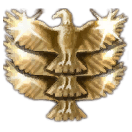
| Tadiel Position: Marshal Chief of the city guard of Covellia under King Engir. He remained loyal to the crown until the end but, ultimately understanding the hopelessness of the then-regime, defected to the side of the conspirators. Honest, unassuming, brave, intelligent, charismatic. Tadiel sincerely strives for the good of the Republic and its people. Leader of the first legion of the republic — "The Insignia of Ilinar" | |
| Welt Esford Position: Kaistr Although Welt Esford comes from a simple Gaddar family that made a living through wickerwork, since childhood he knew how to handle money well and make the "right" friends, subsequently achieving authority and a coveted place on the council. He handles matters of maritime expansion, foreign diplomacy, and trade with overseas countries. He used his powers and privileges to create his own trading company, "Wesford". | |
| Hikari Position: Justiciar Justiciar is the only position in the Inner Council established after its founding, appearing in the summer of 332. At that time, it was decided that a seventh person was needed on the council for faster and more efficient decision-making. The candidate had to possess an impartial view of things, a perceptive mind, a developed sense of justice, strong will, and a pure heart. Council agents found a suitable person in the province of Selenidia; she turned out to be a descendant of a low-influence Taosian clan. The Justiciar monitors compliance with laws in the country and possesses the exclusive right to judge both residents of the country and guests from outside (council members possess immunity). |
Religion
The status of religion since the founding of the Kingdom of Illiniar has changed little: as before, there is no official faith in the country. Nevertheless, despite the official status, various religious currents are very widespread in Ilinar and representatives of the most diverse denominations with their own unique way of life, holidays, events, etc., can be found in almost every city. Even the teaching of Elulu-Suen was no exception, despite the war between the republic and Teios.
Like any other non-governmental organization, religious institutions (temples) must pay taxes, provided they have income from their activities (donations, sale of items or services, etc.).
Gaddar
The fortress-city of Gaddar, the first capital and one of the most important settlements of the Kingdom of Illiniar, remained under the independent control of former governor Talaus Vanterfar from spring 325 to summer 329. During these four years, many men, women, and children disappeared without a trace along with everything valuable in the city. When the second legion of the republic appeared on the Gaddar border, there was essentially nothing left to capture.
Since then, Gaddar has been transformed into a reservation for all humans and non-humans unable to live in society (criminals and those who could no longer care for themselves for one reason or another).
Races
Ilinar is the only human state that does not oppress representatives of other peoples at all. In the eyes of the law, all residents of the country are viewed equally. This, however, is where it ends; the government does not participate in the development of inter-racial relations and does not list crimes committed by representatives of one race against another as a separate point. Similarly, nothing prevents an employer from denying a candidate a desired job solely on the basis of dislike.
Other
Names: Ilinar, Republic of Ilinar, Ilinar Republic.
Ethnonym: Ilinarians, Ilinarian (m), Ilinarian (f)
Colors: purple, gold.
Kingdom of Nozenroth
ReformsAs for its huge neighbor, 326 marked a series of numerous and very significant changes for the Kingdom of Nozenroth. Queen Marzelda, who stood at the head of state eight years ago from today, was under the strong influence of her many advisors — people either greedy or overly ambitious. This caused the royal council in those ambiguous days to seriously consider the possibility of attacking Ilinar. The arguments of supporters of this venture revolved around two main points:
- Over long years of Engir's reckless rule, the economy and power of the kingdom's army rapidly weakened, people grew poor, and remote provinces were either plundered or did not obey the central authority.
- The unexpected death of the monarch and a sharp change in regime, as believed in Nozenroth, should lead to even greater disorder for subsequent years, making this time not only ideal but the only chance for a full-scale invasion.
There were many opponents of this idea, but all their voices lacked serious weight in state affairs. Among them stood out the queen's cousin, who had recently returned from a seafaring expedition — La-Rouan Devail. He argued that even with the current state of affairs in Ilinar, war with this country would bankrupt Nozenroth. In his opinion, Ilinar was not as weak as it was described in the royal council and, moreover, even victory did not guarantee benefits from this venture in the long term. He himself insisted on his idea of maritime expansion — distant lands were just waiting for someone to conquer them. Numerous islands, large and small, served as home to either weak civilizations or savages, and therefore posed no great threat to Nozenroth's military machine.
Nevertheless, regardless of what arguments La-Rouan presented, the royal council, and with it the queen, did not support the aristocrat's idea. He himself, of course, did not stop there and continued the realization of his ambitions in the shadows of history.
A few months later, shortly before the start of the planned invasion of Ilinar, Queen Marzelda, all her children, and several other relatives died under mysterious circumstances, making La-Rouan the heir to the throne. Of course, in a normal situation, no one would have left such events unnoticed, but by this point most influential landowners had either been executed by their own peasants or remained silent and did not speak out. Crowned, La-Rouan, as he wanted, proceeded to implement his plans, while maintaining friendly relations with the Inner Council of Ilinar.
Had it happened otherwise, the history not only of Nozenroth but of all Ertenia could have fundamentally changed.
Present Time
Thanks to the modernization of society, close trade with Ilinar, and not least the expansion of controlled overseas lands, Nozenroth did not stop rapidly developing, becoming a truly influential force in Ertenia and beyond.
Liberalization
One of the first changes introduced by King La-Rouan was the liberation of commoners from the power of the aristocracy, for which he gained great popularity among the common people (and for which, accordingly, he was disliked by many nobles). Although aristocratic houses still exist, princes, dukes, and barons ceased to be masters of lands, while remaining in positions as administrators.
Arquebuses
Long before the day Engir died and gave his place to a new government, an Illiniar master of fire magic — Lutros — developed a certain system of society and state that would later be called the "Lutros Model". Initially it became the basis for Ilinar reforms, and subsequently was used in Nozenroth, albeit not as thoroughly. Among its elements can be mentioned the existence of great personal freedoms for citizens and the development of entrepreneurship and a cult of consumerism in society. In the case of Nozenroth, this led to the birth of the private company "Niko", a producer of a new type of weapon.
Initially these guns were sold in small quantities to other private individuals and organizations, but when they proved their effectiveness, the King of Nozenroth quickly caught on, immediately putting arquebuses on state order, thus equipping his army with modern weapons.
Currently "Niko" has several representative offices in Ilinar, Yorun, and Taosia. Three weapon production factories are located in Nozenroth and one in Taosia.
Prices for this type of armament are quite high, but it should be understood that the organization is not limited to their production.
Slavery
Paradoxically, in a society liberated from class inequality, slave labor exists on completely legal grounds. This is primarily related to the appearance of overseas colonies: unlike its southern neighbor with its policy of integration, Nozenroth uses its colonies predominantly for the enrichment of mainland Nozenroth (specifically, that part located in Ertenia). The bulk of conquered peoples inevitably end up in the slave market or remain doing menial work "at home".
This practice is not limited to colony residents — sometimes even representatives of such a rare people as Assarians can find themselves bound in slave chains.
Duchy of Puria
A dwarf state located west of Nozenroth, which gained independence from the kingdom according to a secret treaty concluded between La-Rouan and the Duke of Puria even before the death of Queen Marzelda.
The details of this treaty remain unclear, but it is no longer a secret to anyone that La-Rouan used the duke's help to achieve his goals. It is also known that both rulers pledged to help each other in case of war.
Notable facts:
- No reforms similar to those of Nozenroth were introduced.
- Despite the existence of class inequality, the position of commoners cannot be called terrible — the duke's family came from that circle of nobility who always had high moral standards, not for show, but in fact.
- Preaching foreign religions is forbidden.
- The practice of magical arts outside special institutions is also forbidden.
- In the last two years, relations between the duke and the king have become complicated.
Duke Dankul Marian of Puria
Once a winner of numerous tournaments, a renowned knight of Nozenroth. During Marzelda's reign, thanks to the wealth of his house and personal connections, he possessed great influence in the kingdom. He found the idea of invading Ilinar rash, but seeing the colossal weight in the royal council in favor of this venture, he did not speak out against it. Instead, highly valuing La-Rouan's potential for himself, the duke decided to support the ambitious aristocrat. In this way, he tried to protect his lands from a bloody tribute and at the same time hoped to satisfy an ancient desire of his family and acquire independence.
King La-Rouan of Nozenroth
A skilled swordsman, reformer, and sailor. A talented politician, a leader blessed with charisma, a liberator and favorite of the common people — such is his image in modern Nozenroth culture; for the native inhabitants of the colonies, however, he is primarily an object of hatred, an invader and tyrant.
More detailed and authentic information about him is not available to the general public, but there are unverified rumors about his cruel treatment of servants and a lustful nature.
It is known that he is on friendly terms with two members of the Inner Council of Ilinar — Grandmaster of the Academy of Sorcery Lutros and Admiral Mizua Jad-Mahmani; at the same time, he competes with Welt Esford on the maritime expanses.
Other
Ethnonym: Nozenrothians, Nozenrothian (m), Nozenrothian (f).
Colors: blue, white.
Taosia
If for Nozenroth and Ilinar the last eight years marked a period of stability, economic growth, scientific progress, and territorial expansion, then for Taosia they, on the contrary, turned into the bloodiest years in the last century. During this short span of time, internal conflicts became more intense, and battles even more global than before. The Taosian people found themselves locked in an all-out and unrelenting war: Clan Ito, Faction Shameimaru, and the Eastern Coalition — the leaders of each of these three forces sought one goal, but they all had their own vision of what a united Taosia should become.Clan Ito | Faction Shameimaru | Eastern Coalition |
Leader: Ito Bansai | Leader: Maeda Sojiro | Hirano Ayaka |
| In the open field, warriors of this clan can hardly withstand the power of their enemies: virtuosos of the art of killing — ninjas — are few, and simple soldiers are weak and cannot compete with the skill of samurai. But despite this, never in its existence has this clan lost battles on its own land: the skill of silent killers, cunning tactics, clever use of geographical features and architecture, as well as treacherous traps always stopped invaders. And nothing more was required, for ninjas realize their plans in the shadows of history. Not long ago, agents of Arabette Ghostdrain discovered that the previous leader of the clan was the organizer of King Engir's poisoning, which caused him to lose his mind and become very paranoid. Thus Ito tried to weaken the then-Illiniar. | The united Matsubara-Matsuo clan was undoubtedly a powerful force on the map of Taosia, however it was not destined to exist long enough to unite the country. When fever took the life of the head of the Matsuo clan, disorder began immediately: clan differences and old feuds made themselves known instantly; in the heat of loud arguments, the new head of the Matsuo clan, Matsuo Yoshitsugu, cut down the head of the Matsubara family. Thus a new internal strife began. At the same time, many samurai more frequently began to visit the temples of Shameimaru, goddess of war and martial arts. The clashes between the two leading clans and the increased popularity of Shameimaru opened the way for her faithful followers — in one of those bloody years a faction was formed, which suppressed the weakened clans with its authority. Now that the selfish ambitions of clans remained in the past, samurai could finally fight for a common goal. Maeda Sojiro — an example of martial valor, was chosen as leader. | In Taosian society it was accepted that a woman should defer leadership to males in all matters and, as a rule, could not become the head of a clan. But it so happened that when the penultimate leader of the clan died, he had two daughters but no sons. Out of deep respect for the daimyo and his last request, vassals agreed to make his eldest daughter — Ayame — the head of the clan. Soon it became clear that the dying man was guided not by fatherly love: his daughter turned out to be a very competent leader and a benevolent lady, quickly earning the gratitude of the people. In contrast to Ayame, her younger sister was arrogant, selfish, and very energetic. Meditative kyudo techniques seemed boring to her and she repeatedly stated that shooting was meant for killing. When it became clear that her presence on the clan's land was inappropriate (Ayaka killed a person without any particular reason), Ayame sent her sister to study in Ilinar. She returned home only after four years, when her sister was gone. Of course, she did not return just for nothing, but no one wished to see her as the leader of the clan; however, they had no other choice: Ayaka and her Nozenroth friends brought magic sticks with them and demonstrated their effectiveness on those who spoke against the new ruler. Having strengthened her position, Ayaka agreed with Nozenroth on regular supplies of arquebuses for her army, and the trained archers of the Hirano clan learned to effectively use the new type of weapon without much trouble. A bit later, a coalition would be created by the Hirano and Uchiyama clans with the goal of achieving peace through victory over samurai and ninjas, but the truth behind this agreement remains in a fog. |
Other
Ethnonym: Taosians, Taosian (m), Taosian (f).
Colors: purple, amber, crimson.
Geirt
Two Kings
Two Kings
Ainar "the Righteous" | Tarvos "Head-Ripper" |
| Over the past eight years, many significant events and great changes have occurred in the world; however, the volatility of this era had almost no effect on Kalevritia, and little has changed there. But the same cannot be said for religion itself: the Kalevrit faith has spread extensively and gained enormous influence over the tribes of Geirt. This is largely due to the skillful policy of the High Priest and the wonderful work of his missionaries. Until very recently, Ainar was the chief of the largest tribe of Geirt, achieving this not through a warrior spirit, but through the deliberation of his actions. Unlike his brethren, the future king preferred to participate only in those wars that promised him profit and an opportunity to strengthen his power. When a Kalevrit missionary came to his city, Ainar listened very carefully to the clergyman and, after several days of deep reflection, accepted the Kalevrit faith. As the missionary was departing, Ainar gave him a letter intended for the High Priest. In it, he asked His Holiness to provide military assistance to the servant of the Lord and to help save his people from sin. In the worst-case scenario, the High Priest would have ignored his request, and Ainar would have simply abandoned all this; but in the best-case scenario, a large piece of the pie awaited him. And so it happened: Ainar's associates followed their chief's example, and Kalevrit Knight and paladins helped forcibly "convince" other tribes of Geirt to renounce faith in their pagan gods and swear loyalty to the sole King of Geirt, chosen by God. | Tarvos embodies the traditional image of a Geirtian as seen by other civilizations in all its glory: he lives for war, fears no one, and does whatever he wishes. Among many tribes of Geirt, legends are told about Tarvos. One of them claims that he has never lost a battle—neither as a commander nor as a warrior. Despite this, he never sought to dominate other tribes or expand his lands. A good raid, a noble battle, captured treasures, and captive women—this was enough for him to live by. As they say, the chief is satisfied, and his subordinates are fed. Once, Tarvos said that ruling a large people is tedious and not at all fun, but life forced him to place a crown upon his head against his will: the proud Geirtian could in no way turn a blind eye to Ainar's madness. "Allow a free people of warriors to become slaves to a foreign god and renounce the ways of their ancestors? Never!" In such a fateful time for the Geirtians, it was not difficult for so influential a man to rally around himself the tribes that had not submitted to the false king. Currently, two kings are waging a bloody war against each other: one seeks the unification of the tribes, while the other tries in every way to prevent it. |