


 kcfgogbfalgfl

Auto-translated
Another game from the "Expeditions" series. In my opinion, the fRPG theme has great potential on ХВ if implemented correctly. It hasn't always been successful, but the fact remains that some games, one way or another, generated a considerable number of interesting moments. In any case, what do we have to lose? Well, alright. I spend an enormous amount of time writing and dreaming up all this. But that's me. What about the players? Is it worth raising this type of game from the grave for a second time, or should this idea be left forever and ever?
In any case, a few points:
The game will proceed without personal threads; nevertheless, I wish to implement another form of plot delivery that I've devised to avoid the negative aspects of other options. In this case, player characters will be members of one organization (naturally, with their own pasts and unique motives for being in it) performing certain functions across a vast territory. Thus, all players will be intertwined from the start—meaning they will be acquainted (avoiding the very tedious and intrusive "getting to know each other" part)—furthermore, they will perform various tasks, so they can act separately from one another (most likely in groups, which prevents the forced and aimless travel of a huge group of people); nevertheless, returning back, they will all be in one organization, and therefore will meet again. More about this organization below, as well as about the world—below (among those described below, only one part of the world plus some bits of others will be detailed). Details can be understood from the rest of the text.
The Order of Watchers
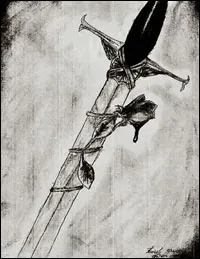
Once, magic in the Nine Kingdoms was a commonplace thing, but currently, meeting someone who practices it is extremely difficult. The reason for this is that more than a millennium ago, sorcerers caused true chaos in these lands. Not only did they use their power to satisfy their personal whims, but they also became the cause of numerous cataclysms. Ordinary people overthrew the tyrants, and thus the Order of Black Ice was founded, named after the leader of the anti-magic movement, now known simply as the Watchers. In those days, a treaty was signed by the ruler of every kingdom, granting the order the right and authority to resort to any methods within the territories of the kingdoms for the sake of preserving the magical balance.
The Order exists to this day, but since the "magical threat" vanished long ago, the order's authority is also fading. Nevertheless, it still remains the most influential independent organization of all.
Every kingdom has its own attitude toward magic, but formally, the order possesses the right to imprison any person who, in the opinion of the head, represents a great threat, even if that person is the king of an entire state. Within the order itself, magic is used on a regular basis. As they say in the order, "sometimes to defeat a monster, you must become a monster yourself."
Recruits are gathered from all over the world. They can be people of low origin as well as nobles; they can be honest citizens or former prisoners recruited right during their sentence. Since the order is quite popular in legends and pays well for work, it attracts both people simply wanting money and those desiring glory.
The main requirement for entry is ability. Any ability. Anything that can help the order in its mission.
Goals of the Order:
- Preserving the magical balance in the nine kingdoms.
- Registration/Imprisonment/Execution of unregistered wizards.
- Storage or destruction of great magical artifacts.
- Destruction of monsters, demons, and other abominations.
Enemies of the Order:
- Unregistered wizards. People who practice the use of magic without having received appropriate permission from their state government.
- Witches. A separate category of wizards practicing magic whose effects are extremely difficult to notice in everyday life. Subject to immediate imprisonment or destruction.
- Demonologists. Wizards drawing their power from deals with beings of the Abyss. Most often, the terms of the deal are achieved through sacrifices. Also, some women become lovers of demons and give birth to terrible monsters. They represent the greatest threat of all and therefore are subject to immediate destruction.
- Monsters (Monsters, Vampires, Shapeshifters, etc.). As in the case with demonologists, they are subject to immediate destruction.
- Wizards who disrupt the balance of power in a kingdom. Officially recognized sorcerers who secretly use magic to achieve their personal goals.
The Nine Kingdoms
Helligkait
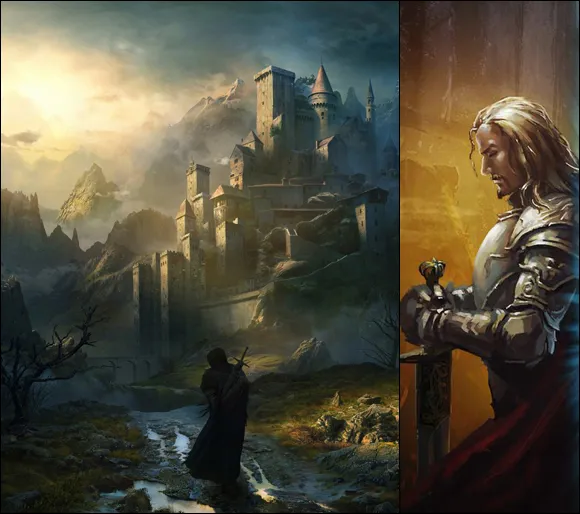
The first king of Helligkait traveled a long way from his overseas homeland in the White Lands before finding this fertile land, abundant in natural resources and blessed with a wonderful climate. The first settlers moved very far from their native lands, but it was worth it—currently, after so much time, only Katarian in the Nine Kingdoms can rival Helligkait in power. It is a cultural (numerous holidays, festivals, tournaments, and more gather people from all over the world) and trading center of the kingdoms, and since honest labor is believed in here, the kingdom's borders are open to any honest worker, be it a refugee or simply a wanderer.
People here are cheerful and friendly, believe in a bright future, and are always hospitable. Distinctive features and the calling card of a pure-blooded representative of the nation are golden hair and blue eyes. Unlike their ancestors from the White Lands, they possess softer facial features.
Titles are inherited by the eldest son; if there is none, then by the daughter.
The royal dynasty prospers; the current king has two sons and three daughters, each of whom is gifted and skilled. Prince Reksev is a talented administrator and an excellent swordsman who has not yet lost to any opponent; his brother is a charismatic leader who is a true sun for his subordinates; the eldest daughter Beatrice is recognized as the second knight of the kingdom; the youngest Alice is an excellent commander; and the middle daughter Charlotte is revered as the most beautiful woman in the Nine Kingdoms.
Katarian
Often called the mirror image of Helligkait, this militaristic state fights its neighbor for a dominant position in the Nine Kingdoms, not shying away from any methods. The last war between the two kingdoms, started by the mother of the current queen, occurred twelve years ago and, thanks to the divine commander and invincible warrior Metzger, ended in victory for Helligkait.
Here, a human life is viewed as a resource, and one's dignity is determined by their usefulness to the crown. Accordingly, the lives of many people are quite sad, but the gifted and capable have many opportunities to realize their potential in order to rise up the social ladder. Money and the fame of ancestors will not bring success here; only by demonstrating loyalty and utility can a noble title be achieved. This rule works in the other direction—the family of a person who has not left a worthy (in the opinion of the crown) successor is stripped of all titles and reclassified as commoners.
Representatives of this nation are not known for talkativeness; they are always focused on their task and always strive for success using any methods available to them. Externally, they are distinguished by light-colored eyes and red or chestnut hair.
The crown is inherited by the most worthy heir regardless of gender.
The last king had no sons, and his daughter's reign was a period of terrible crisis in the kingdom; moreover, her only daughter was born to an unknown man. The queen at the time was beheaded by Metzger—a general of Helligkait—for war crimes. The heiress girl was sixteen years old then, and it was believed in the nine kingdoms that she would not live long, as she would become a target for assassins in a series of conspiracies, and thus the dynasty would die with her. However, the young queen turned out to be of another sort. In her, strength, beauty, and genius were blended.
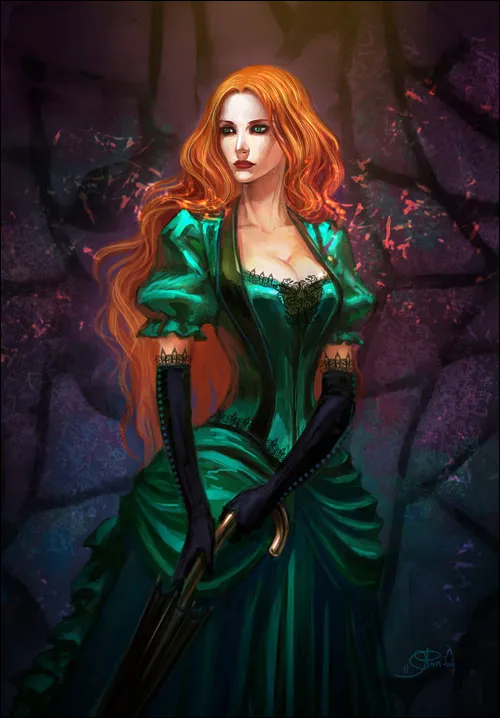
Now, twelve years later, the names of the traitors have long been erased from people's memories, and Queen Catherine is the most influential person in the whole world, second only to the emperor of the Ataraxian Empire. During her reign, Katarian restored its former power and is strong under her absolute authority as never before, which cannot be said for its neighbor—Helligkait.
Vaironia
According to legend, originally there was only one deity who created the world—the land, sky, seas, and everything else—but after some time, it split in two. The god Anchainabul and the goddess Eliseya were complete opposites of each other. Their opinions differed primarily regarding humans. Eliseya considered them her best creation, but Anchainabul looked upon them with pity. Human life seemed completely absurd to him, meaningless, consisting only of an unbreakable chain of suffering and trials, the necessity to fight for one's own survival, and regardless of the past, always ending in dust. The god decided to grant humans Peace through death.
Understanding that he would achieve nothing as long as Eliseya stood in his way, he, being a god of destruction, used all his power to cut the goddess off from the world of mortals. Thus it happened; she could no longer influence events occurring here. Anchainabul himself ended up in a mortal body as a result. Nevertheless, even so, having lost most of his powers, he was still a deity. People of that time remembered him as a very tall and muscular man with pleasant facial features and hair dark as a raven's feather, falling to the very floor.
Now, with Eliseya gone from his path, he could resort to carrying out his will, but in a mortal body, his capabilities were greatly limited. Therefore, he decided to build an army. His first daughter became the mother of the first demons, and they became his host, which devastated ancient states like a swarm. Despite everything, people did not surrender so easily, and at some point, Anchainabul began recruiting volunteers among ordinary people who, strangely enough, shared his views. He accepted them on the condition that when no one else remained, Peace would also reach them. During this time, the god fell in love with a mortal woman and she gave him a child, and his name was Vaironis. The war continued, and the child grew. And when he turned twenty, he led the resistance army. Being a demigod, he was the only one who could wound a deity. And so it happened. The god was defeated, and the demons were driven by the great warrior into the depths of the earth, where they remain to this day. Vaironis himself went north and founded his own state there, where he ruled justly and generously. His heirs rule here to this day, often naming their children after the first ruler.
Most kings of Vaironia were gifted rulers and possessed unique talents, but for the last four generations, nothing like that was observed... Until Vaironis VII was born.
The man who was presented as the new sun of the kingdom turned out to be so hot that he did not bring warmth to his subjects, but burned them.
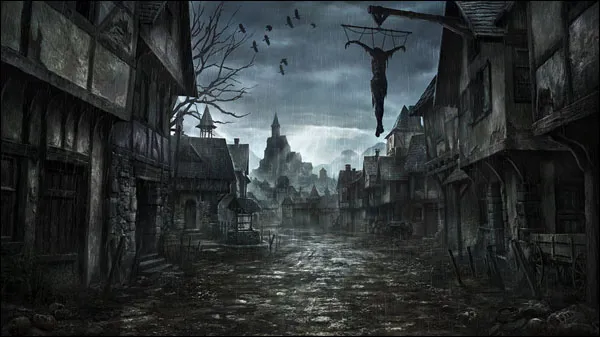
The new king became the first tyrant in the history of Vaironia, so terrible that even residents of neighboring states felt compassion for the tyrant's subjects. Cruel torture and executions were carried out by him merely for entertainment; he took baths in human blood, drank wine from their skulls; people of his country live in eternal fear, not knowing what to expect from the mad ruler; men hide their wives and daughters, since the king took every woman he deemed attractive. But the most terrifying thing is his strength—no, perhaps there is no man stronger or more skilled in the handling of a sword than he. When a peasant revolt occurred, the king did not even need the help of loyal soldiers; he slaughtered everyone with his own hands.
The territory of Vaironia is surrounded by impassable reefs from the sea and separated from the rest of the world by a huge canyon that runs across its entire border, where there are only a small number of bridges, making this state absolutely impregnable.
Land of Clouds
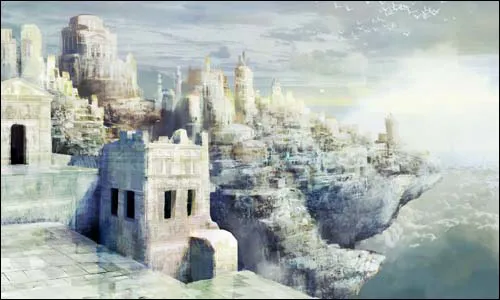
A celestial fortress built in the middle of a massive cluster of mountains is home to a proud and graceful people of winged beings, often called angels among humans. They possess wings located on their backs, allowing them to soar in the air like birds, and also have one pair of "winglets" on their heads that emphasize their beauty. They live isolated from the rest of the world, although occasionally they descend from the heavens to earth.
In human states, there are known cases of interbreeding with other peoples; half-breeds could inherit the upper pair of winglets, but were never born with wings.
Shadow League
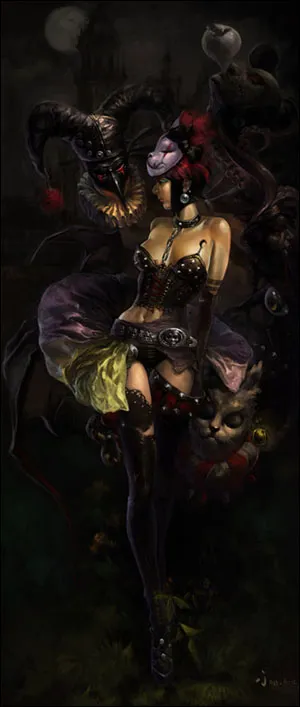
A mysterious organization that appeared out of nowhere more than a hundred years ago. In this time, it managed to absorb two entire states, literally reducing their number from nine to eight. The high government never reveals its faces, hiding them behind masks. For this reason, no one has yet been able to determine either the leader of the organization or its goals. Despite this, the population of the assimilated states is not oppressed and is not limited in personal freedoms at all, at least as long as they do their work. It produces everything that can be sold, from grain to mass production of weapons. It is also the primary owner of the best brothels across all nine kingdoms.
Korania
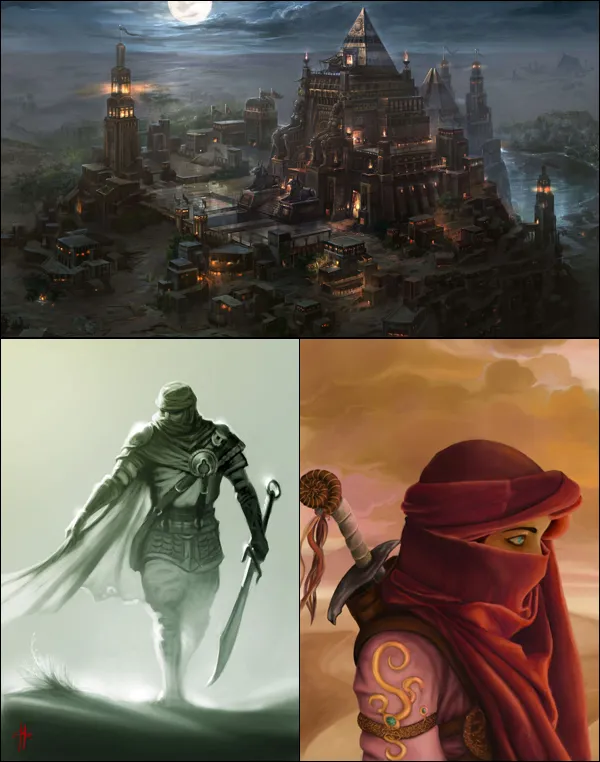
For most people, rivers and blooming fields are commonplace, and the sun is a pleasant response of warmth, but for the people living here, things are different. Only a few are privileged to live in what the common folk call golden cities, which are rapidly developing and built in those few places favorable for life. These cities are homes for the nobility and their associates, while others are doomed to survive in a cycle of hot days and cold nights, in the absence of any benefits.
Unlike the inhabitants of the golden cities, who spend most of their time entertaining themselves, desert dwellers work very hard, which has strongly affected their mentality. Merriment is almost unknown to these people, and all life consists either of routine or attempts to reach a better life.
Due to the hot sun, people of this country are characterized by dark skin and black hair. Eyes are often brown, although light ones are occasionally found, which is likely a consequence of the fact that a large number of foreigners live in the golden cities.
Tan Khanate
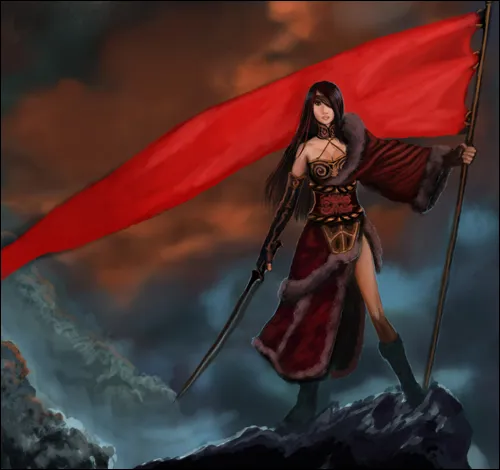
In the Nine Kingdoms, little was always known about the history and culture of the eastern lands, and thus the territory beyond the borders of the farthest state in the region was covered in darkness and was a mystery to all. The veil of darkness only began to disappear thirty years ago when a multi-million horde of fierce warriors appeared on the border of that very state and completely captured it in a short time.
After some time, they fully assimilated the captured people, destroyed their culture and customs, imposing their own. Currently, the Khanate is a headache for the leaders of the Shadow League (whoever they may be), as the horde's captured lands border the territory of the League.
The main conviction of this people is the belief that he who is strong is right. This is reflected in daily life, government, and war. They never make compromises and get their way, even if they lose in the end. Perhaps their only weakness is that they always follow the strong and, theoretically, whoever defeats them can easily impose their own views on things.
Free People
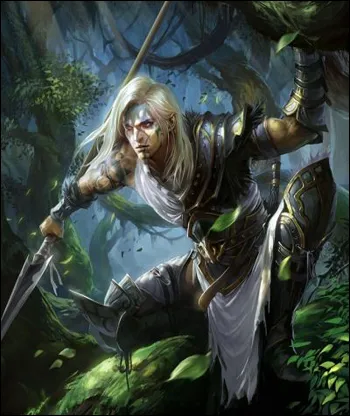
Humans are probably the most numerous people in the whole world, who have always differed from others by their extraordinary speed of development—they built huge cities and stunning architectural structures, created various things that improved quality of life, invented new weapons, developed culturally, and much, much more; however, even among them were those who wanted to be closer to nature, far from the city bustle. These people went into forests and built their villages and small towns there, trying to live in peace both with each other and neighboring kingdoms. And if they succeeded in the former, the latter proved to be a difficult task, which became the reason for uniting villages and towns into one state. According to an old treaty, each village and town chose its representatives, one of whom, through voting among them, became king.
White Lands
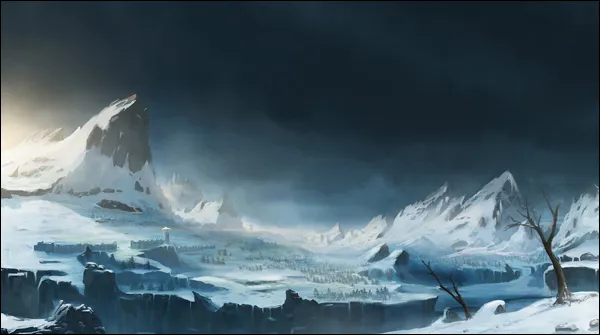
Island lands located to the north of the kingdoms across the Cold Sea. Throughout its period of existence, it was known as the homeland for numerous clans of barbarians who either fought among themselves or attacked coastal settlements of the kingdoms.
The chief of each clan was chosen by ritual. Before the start of another war, warriors chose one woman and each of them rewarded the chosen one. According to their belief, a child conceived by warriors going into battle will certainly be born an even stronger warrior. Despite such a ritual, women were always allowed to fight, as refusing someone who wished to go to war was an insult to the gods. Thus they lived until forty-five years ago when High Chief Vidal I united all clans under his banner. First, he forbade women from fighting, as he considered it foolish to lose soldiers whom they could give birth to. Second, he abolished the barbarian ritual and established blood succession, guaranteeing his heirs the right to the throne. Third, he stopped all wars occurring in the white lands and slowly began preparing a mass invasion of the kingdoms, though he had not yet done so. Understanding that he did not have long left, he decided to leave this to his successor. When the time came, the high chief ordered all his sons to undergo trials and, when they were finished, he chose an heir. A sturdy thirty-year-old man worthy of replacing the wise ruler. He ordered the other children to be executed to avoid rebellions. Vidal is still alive, but no one doubts that with his death, the kingdoms will have to fend off an invasion by the overseas horde, which has craved blood for several decades.
Wildlands
Humans know only a little about the inhabitants of these places, and only those who are in close proximity to them. Since humans needed to call them something, they named them based on the symbolism they observed on them. Therefore, in any human society, they are mentioned as "moon" and "sun." They themselves call themselves differently.
Chosen of the Moon
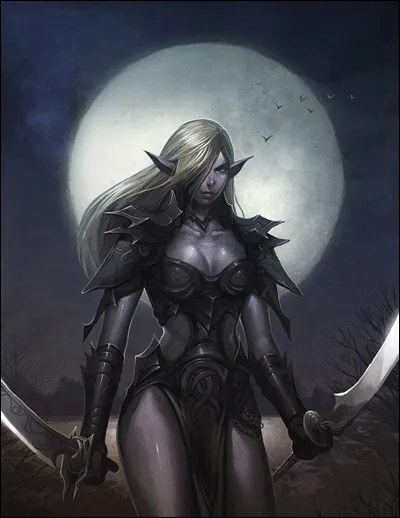
Inhabitants of the wildlands, once a large kingdom, now broken into numerous clans each with its own rules. They see perfectly in the dark, use both hands equally well, and easily achieve excellent physical form. Bloodthirsty, they live for war.
Children of the Sun
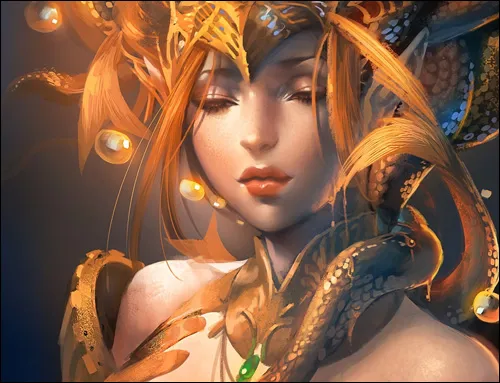
A peace-loving nation that has long had religious disagreements with the moon people. Because of this, they are under constant attack from neighboring clans.
Good at any creative endeavor.
Ataraxian Empire
There is no living person who has not heard of this name. The most powerful state and the most influential religion in the whole world share one name, embodying this country and its people.
Ataraxia is, first and foremost, a worldview of the people that determines their existence from beginning to end. Unlike other peoples, no one here rushes, and life passes not chaotically, but calmly—moderately and consistently. Every person has their own role in society, which they receive depending on their abilities, and every person lives according to conscience and under equal conditions; no one is better, no one is worse. This has continued for more than a millennium, and this was made possible by the great and immortal emperor, who is revered as a god in the empire.
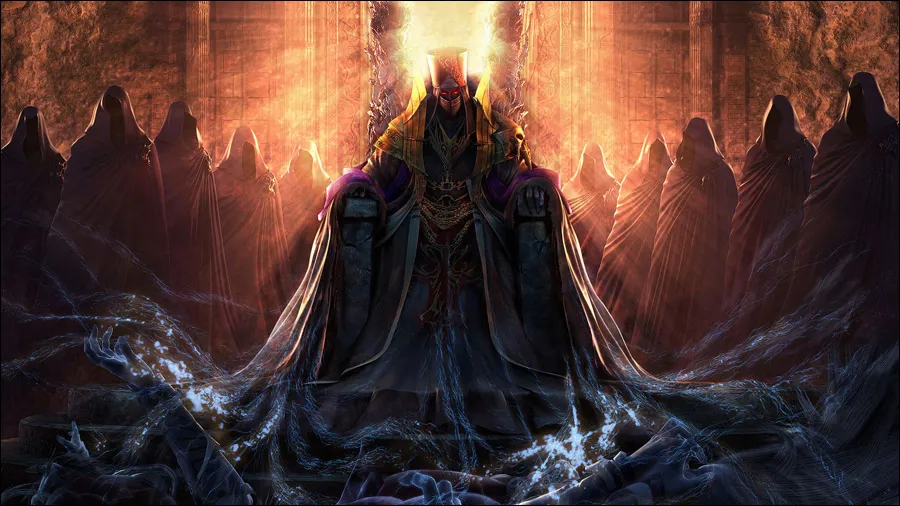
No one knows exactly when he appeared, but a huge empire did not arise on its own, and its creation also began with him.
For his subjects, he is a bright light that dispels the darkness.
Foreigners view the glorification of a living, albeit immortal, man as a god with skepticism, yet no one denies his power. His magical potential is limitless, and his will reaches people loyal to him even in distant corners of the world.
One of the features of the empire's geographical location is that the main exit from the Abyss is located on its territory. This obligated the warriors of the empire to wage an eternal war with demonic spawn.
The empire almost never resorts to using weapons to capture territories of other states, unless they contain adherents of his religion who need salvation from the rule of unbelievers.
Separately, one should mention the apostles, associates of the emperor.
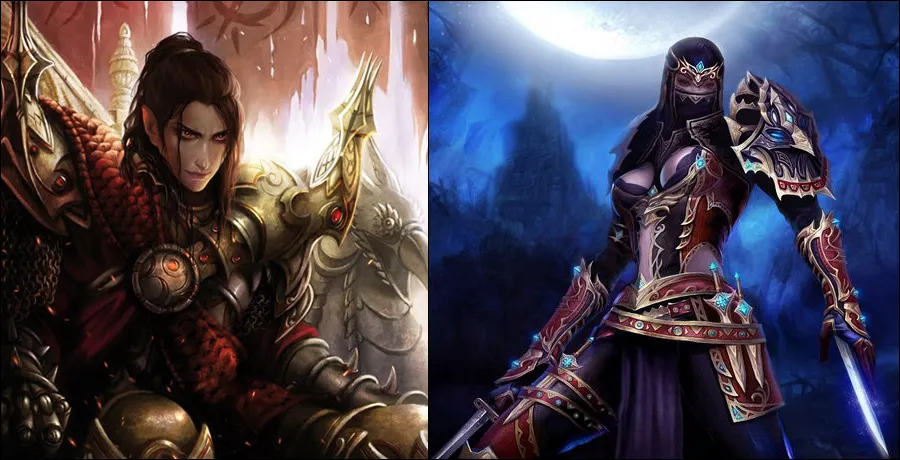
These people are chosen from the most gifted and believing residents of the empire. They help the emperor in governing the state, solve internal problems, and also carry out special assignments, which sometimes may include tasks outside the empire, although rarely. Since it is believed in the empire that a woman complements a man, completing a perfect whole, marriage is sacred, and in the case of apostles, it is organized by the emperor himself, being something of a gift. An apostle's wife performs the same functions as her husband.
The faith in the emperor among believing people is unshakable and can only be changed by death.
- I'll probably add more later. Honestly, I'm tired of writing it all out, but I don't want to leave it for later.
- The game (if) will start no sooner than my mafia ends, the events of which will take place before the plot of this game. Plus, if I go into slavery in the near future, there will likely be a bit less time, and therefore my activity won't be as much as one would want. And on top of everything, I won't run it if only two and a half people play; that's anti-fun.
- There will be no classes in the game. There will be skills that determine the character's capabilities. Various weapon specialties improving efficiency with a specific type, herbalists, fools, scouts, and all such things will be as skill points, so you can plan ahead. I'll add what stats do later; it's not critical right now—it's only important to understand that they will be determined by the described biography + chosen people.
In any case, a few points:
The game will proceed without personal threads; nevertheless, I wish to implement another form of plot delivery that I've devised to avoid the negative aspects of other options. In this case, player characters will be members of one organization (naturally, with their own pasts and unique motives for being in it) performing certain functions across a vast territory. Thus, all players will be intertwined from the start—meaning they will be acquainted (avoiding the very tedious and intrusive "getting to know each other" part)—furthermore, they will perform various tasks, so they can act separately from one another (most likely in groups, which prevents the forced and aimless travel of a huge group of people); nevertheless, returning back, they will all be in one organization, and therefore will meet again. More about this organization below, as well as about the world—below (among those described below, only one part of the world plus some bits of others will be detailed). Details can be understood from the rest of the text.
The Order of Watchers
Once, magic in the Nine Kingdoms was a commonplace thing, but currently, meeting someone who practices it is extremely difficult. The reason for this is that more than a millennium ago, sorcerers caused true chaos in these lands. Not only did they use their power to satisfy their personal whims, but they also became the cause of numerous cataclysms. Ordinary people overthrew the tyrants, and thus the Order of Black Ice was founded, named after the leader of the anti-magic movement, now known simply as the Watchers. In those days, a treaty was signed by the ruler of every kingdom, granting the order the right and authority to resort to any methods within the territories of the kingdoms for the sake of preserving the magical balance.
The Order exists to this day, but since the "magical threat" vanished long ago, the order's authority is also fading. Nevertheless, it still remains the most influential independent organization of all.
Every kingdom has its own attitude toward magic, but formally, the order possesses the right to imprison any person who, in the opinion of the head, represents a great threat, even if that person is the king of an entire state. Within the order itself, magic is used on a regular basis. As they say in the order, "sometimes to defeat a monster, you must become a monster yourself."
Recruits are gathered from all over the world. They can be people of low origin as well as nobles; they can be honest citizens or former prisoners recruited right during their sentence. Since the order is quite popular in legends and pays well for work, it attracts both people simply wanting money and those desiring glory.
The main requirement for entry is ability. Any ability. Anything that can help the order in its mission.
Goals of the Order:
- Preserving the magical balance in the nine kingdoms.
- Registration/Imprisonment/Execution of unregistered wizards.
- Storage or destruction of great magical artifacts.
- Destruction of monsters, demons, and other abominations.
Enemies of the Order:
- Unregistered wizards. People who practice the use of magic without having received appropriate permission from their state government.
- Witches. A separate category of wizards practicing magic whose effects are extremely difficult to notice in everyday life. Subject to immediate imprisonment or destruction.
- Demonologists. Wizards drawing their power from deals with beings of the Abyss. Most often, the terms of the deal are achieved through sacrifices. Also, some women become lovers of demons and give birth to terrible monsters. They represent the greatest threat of all and therefore are subject to immediate destruction.
- Monsters (Monsters, Vampires, Shapeshifters, etc.). As in the case with demonologists, they are subject to immediate destruction.
- Wizards who disrupt the balance of power in a kingdom. Officially recognized sorcerers who secretly use magic to achieve their personal goals.
The Nine Kingdoms
Helligkait
The first king of Helligkait traveled a long way from his overseas homeland in the White Lands before finding this fertile land, abundant in natural resources and blessed with a wonderful climate. The first settlers moved very far from their native lands, but it was worth it—currently, after so much time, only Katarian in the Nine Kingdoms can rival Helligkait in power. It is a cultural (numerous holidays, festivals, tournaments, and more gather people from all over the world) and trading center of the kingdoms, and since honest labor is believed in here, the kingdom's borders are open to any honest worker, be it a refugee or simply a wanderer.
People here are cheerful and friendly, believe in a bright future, and are always hospitable. Distinctive features and the calling card of a pure-blooded representative of the nation are golden hair and blue eyes. Unlike their ancestors from the White Lands, they possess softer facial features.
Titles are inherited by the eldest son; if there is none, then by the daughter.
The royal dynasty prospers; the current king has two sons and three daughters, each of whom is gifted and skilled. Prince Reksev is a talented administrator and an excellent swordsman who has not yet lost to any opponent; his brother is a charismatic leader who is a true sun for his subordinates; the eldest daughter Beatrice is recognized as the second knight of the kingdom; the youngest Alice is an excellent commander; and the middle daughter Charlotte is revered as the most beautiful woman in the Nine Kingdoms.
Katarian
Often called the mirror image of Helligkait, this militaristic state fights its neighbor for a dominant position in the Nine Kingdoms, not shying away from any methods. The last war between the two kingdoms, started by the mother of the current queen, occurred twelve years ago and, thanks to the divine commander and invincible warrior Metzger, ended in victory for Helligkait.
Here, a human life is viewed as a resource, and one's dignity is determined by their usefulness to the crown. Accordingly, the lives of many people are quite sad, but the gifted and capable have many opportunities to realize their potential in order to rise up the social ladder. Money and the fame of ancestors will not bring success here; only by demonstrating loyalty and utility can a noble title be achieved. This rule works in the other direction—the family of a person who has not left a worthy (in the opinion of the crown) successor is stripped of all titles and reclassified as commoners.
Representatives of this nation are not known for talkativeness; they are always focused on their task and always strive for success using any methods available to them. Externally, they are distinguished by light-colored eyes and red or chestnut hair.
The crown is inherited by the most worthy heir regardless of gender.
The last king had no sons, and his daughter's reign was a period of terrible crisis in the kingdom; moreover, her only daughter was born to an unknown man. The queen at the time was beheaded by Metzger—a general of Helligkait—for war crimes. The heiress girl was sixteen years old then, and it was believed in the nine kingdoms that she would not live long, as she would become a target for assassins in a series of conspiracies, and thus the dynasty would die with her. However, the young queen turned out to be of another sort. In her, strength, beauty, and genius were blended.
Now, twelve years later, the names of the traitors have long been erased from people's memories, and Queen Catherine is the most influential person in the whole world, second only to the emperor of the Ataraxian Empire. During her reign, Katarian restored its former power and is strong under her absolute authority as never before, which cannot be said for its neighbor—Helligkait.
Vaironia
According to legend, originally there was only one deity who created the world—the land, sky, seas, and everything else—but after some time, it split in two. The god Anchainabul and the goddess Eliseya were complete opposites of each other. Their opinions differed primarily regarding humans. Eliseya considered them her best creation, but Anchainabul looked upon them with pity. Human life seemed completely absurd to him, meaningless, consisting only of an unbreakable chain of suffering and trials, the necessity to fight for one's own survival, and regardless of the past, always ending in dust. The god decided to grant humans Peace through death.
Understanding that he would achieve nothing as long as Eliseya stood in his way, he, being a god of destruction, used all his power to cut the goddess off from the world of mortals. Thus it happened; she could no longer influence events occurring here. Anchainabul himself ended up in a mortal body as a result. Nevertheless, even so, having lost most of his powers, he was still a deity. People of that time remembered him as a very tall and muscular man with pleasant facial features and hair dark as a raven's feather, falling to the very floor.
Now, with Eliseya gone from his path, he could resort to carrying out his will, but in a mortal body, his capabilities were greatly limited. Therefore, he decided to build an army. His first daughter became the mother of the first demons, and they became his host, which devastated ancient states like a swarm. Despite everything, people did not surrender so easily, and at some point, Anchainabul began recruiting volunteers among ordinary people who, strangely enough, shared his views. He accepted them on the condition that when no one else remained, Peace would also reach them. During this time, the god fell in love with a mortal woman and she gave him a child, and his name was Vaironis. The war continued, and the child grew. And when he turned twenty, he led the resistance army. Being a demigod, he was the only one who could wound a deity. And so it happened. The god was defeated, and the demons were driven by the great warrior into the depths of the earth, where they remain to this day. Vaironis himself went north and founded his own state there, where he ruled justly and generously. His heirs rule here to this day, often naming their children after the first ruler.
Most kings of Vaironia were gifted rulers and possessed unique talents, but for the last four generations, nothing like that was observed... Until Vaironis VII was born.
The man who was presented as the new sun of the kingdom turned out to be so hot that he did not bring warmth to his subjects, but burned them.
The new king became the first tyrant in the history of Vaironia, so terrible that even residents of neighboring states felt compassion for the tyrant's subjects. Cruel torture and executions were carried out by him merely for entertainment; he took baths in human blood, drank wine from their skulls; people of his country live in eternal fear, not knowing what to expect from the mad ruler; men hide their wives and daughters, since the king took every woman he deemed attractive. But the most terrifying thing is his strength—no, perhaps there is no man stronger or more skilled in the handling of a sword than he. When a peasant revolt occurred, the king did not even need the help of loyal soldiers; he slaughtered everyone with his own hands.
The territory of Vaironia is surrounded by impassable reefs from the sea and separated from the rest of the world by a huge canyon that runs across its entire border, where there are only a small number of bridges, making this state absolutely impregnable.
Land of Clouds
A celestial fortress built in the middle of a massive cluster of mountains is home to a proud and graceful people of winged beings, often called angels among humans. They possess wings located on their backs, allowing them to soar in the air like birds, and also have one pair of "winglets" on their heads that emphasize their beauty. They live isolated from the rest of the world, although occasionally they descend from the heavens to earth.
In human states, there are known cases of interbreeding with other peoples; half-breeds could inherit the upper pair of winglets, but were never born with wings.
Shadow League
A mysterious organization that appeared out of nowhere more than a hundred years ago. In this time, it managed to absorb two entire states, literally reducing their number from nine to eight. The high government never reveals its faces, hiding them behind masks. For this reason, no one has yet been able to determine either the leader of the organization or its goals. Despite this, the population of the assimilated states is not oppressed and is not limited in personal freedoms at all, at least as long as they do their work. It produces everything that can be sold, from grain to mass production of weapons. It is also the primary owner of the best brothels across all nine kingdoms.
Korania
For most people, rivers and blooming fields are commonplace, and the sun is a pleasant response of warmth, but for the people living here, things are different. Only a few are privileged to live in what the common folk call golden cities, which are rapidly developing and built in those few places favorable for life. These cities are homes for the nobility and their associates, while others are doomed to survive in a cycle of hot days and cold nights, in the absence of any benefits.
Unlike the inhabitants of the golden cities, who spend most of their time entertaining themselves, desert dwellers work very hard, which has strongly affected their mentality. Merriment is almost unknown to these people, and all life consists either of routine or attempts to reach a better life.
Due to the hot sun, people of this country are characterized by dark skin and black hair. Eyes are often brown, although light ones are occasionally found, which is likely a consequence of the fact that a large number of foreigners live in the golden cities.
Tan Khanate
In the Nine Kingdoms, little was always known about the history and culture of the eastern lands, and thus the territory beyond the borders of the farthest state in the region was covered in darkness and was a mystery to all. The veil of darkness only began to disappear thirty years ago when a multi-million horde of fierce warriors appeared on the border of that very state and completely captured it in a short time.
After some time, they fully assimilated the captured people, destroyed their culture and customs, imposing their own. Currently, the Khanate is a headache for the leaders of the Shadow League (whoever they may be), as the horde's captured lands border the territory of the League.
The main conviction of this people is the belief that he who is strong is right. This is reflected in daily life, government, and war. They never make compromises and get their way, even if they lose in the end. Perhaps their only weakness is that they always follow the strong and, theoretically, whoever defeats them can easily impose their own views on things.
Free People
Humans are probably the most numerous people in the whole world, who have always differed from others by their extraordinary speed of development—they built huge cities and stunning architectural structures, created various things that improved quality of life, invented new weapons, developed culturally, and much, much more; however, even among them were those who wanted to be closer to nature, far from the city bustle. These people went into forests and built their villages and small towns there, trying to live in peace both with each other and neighboring kingdoms. And if they succeeded in the former, the latter proved to be a difficult task, which became the reason for uniting villages and towns into one state. According to an old treaty, each village and town chose its representatives, one of whom, through voting among them, became king.
White Lands
Island lands located to the north of the kingdoms across the Cold Sea. Throughout its period of existence, it was known as the homeland for numerous clans of barbarians who either fought among themselves or attacked coastal settlements of the kingdoms.
The chief of each clan was chosen by ritual. Before the start of another war, warriors chose one woman and each of them rewarded the chosen one. According to their belief, a child conceived by warriors going into battle will certainly be born an even stronger warrior. Despite such a ritual, women were always allowed to fight, as refusing someone who wished to go to war was an insult to the gods. Thus they lived until forty-five years ago when High Chief Vidal I united all clans under his banner. First, he forbade women from fighting, as he considered it foolish to lose soldiers whom they could give birth to. Second, he abolished the barbarian ritual and established blood succession, guaranteeing his heirs the right to the throne. Third, he stopped all wars occurring in the white lands and slowly began preparing a mass invasion of the kingdoms, though he had not yet done so. Understanding that he did not have long left, he decided to leave this to his successor. When the time came, the high chief ordered all his sons to undergo trials and, when they were finished, he chose an heir. A sturdy thirty-year-old man worthy of replacing the wise ruler. He ordered the other children to be executed to avoid rebellions. Vidal is still alive, but no one doubts that with his death, the kingdoms will have to fend off an invasion by the overseas horde, which has craved blood for several decades.
Wildlands
Humans know only a little about the inhabitants of these places, and only those who are in close proximity to them. Since humans needed to call them something, they named them based on the symbolism they observed on them. Therefore, in any human society, they are mentioned as "moon" and "sun." They themselves call themselves differently.
Chosen of the Moon
Inhabitants of the wildlands, once a large kingdom, now broken into numerous clans each with its own rules. They see perfectly in the dark, use both hands equally well, and easily achieve excellent physical form. Bloodthirsty, they live for war.
Children of the Sun
A peace-loving nation that has long had religious disagreements with the moon people. Because of this, they are under constant attack from neighboring clans.
Good at any creative endeavor.
Ataraxian Empire
There is no living person who has not heard of this name. The most powerful state and the most influential religion in the whole world share one name, embodying this country and its people.
Ataraxia is, first and foremost, a worldview of the people that determines their existence from beginning to end. Unlike other peoples, no one here rushes, and life passes not chaotically, but calmly—moderately and consistently. Every person has their own role in society, which they receive depending on their abilities, and every person lives according to conscience and under equal conditions; no one is better, no one is worse. This has continued for more than a millennium, and this was made possible by the great and immortal emperor, who is revered as a god in the empire.
No one knows exactly when he appeared, but a huge empire did not arise on its own, and its creation also began with him.
For his subjects, he is a bright light that dispels the darkness.
Foreigners view the glorification of a living, albeit immortal, man as a god with skepticism, yet no one denies his power. His magical potential is limitless, and his will reaches people loyal to him even in distant corners of the world.
One of the features of the empire's geographical location is that the main exit from the Abyss is located on its territory. This obligated the warriors of the empire to wage an eternal war with demonic spawn.
The empire almost never resorts to using weapons to capture territories of other states, unless they contain adherents of his religion who need salvation from the rule of unbelievers.
Separately, one should mention the apostles, associates of the emperor.
These people are chosen from the most gifted and believing residents of the empire. They help the emperor in governing the state, solve internal problems, and also carry out special assignments, which sometimes may include tasks outside the empire, although rarely. Since it is believed in the empire that a woman complements a man, completing a perfect whole, marriage is sacred, and in the case of apostles, it is organized by the emperor himself, being something of a gift. An apostle's wife performs the same functions as her husband.
The faith in the emperor among believing people is unshakable and can only be changed by death.
- I'll probably add more later. Honestly, I'm tired of writing it all out, but I don't want to leave it for later.
- The game (if) will start no sooner than my mafia ends, the events of which will take place before the plot of this game. Plus, if I go into slavery in the near future, there will likely be a bit less time, and therefore my activity won't be as much as one would want. And on top of everything, I won't run it if only two and a half people play; that's anti-fun.
- There will be no classes in the game. There will be skills that determine the character's capabilities. Various weapon specialties improving efficiency with a specific type, herbalists, fools, scouts, and all such things will be as skill points, so you can plan ahead. I'll add what stats do later; it's not critical right now—it's only important to understand that they will be determined by the described biography + chosen people.