Connection ErrorBad RequestThis page went staleSession ExpiredSign in requiredForbiddenNot FoundToo Many RequestsServer ErrorBad GatewayService UnavailableGateway TimeoutHTTP Version Not Supported
Session Expired
Your session has expired. Please log in to continue.
Sign in required
You need an account to do that. Sign in or create one — it only takes a minute.
This page went stale
Your security token was rejected, usually because the page sat open too long or you signed in elsewhere. Nothing was saved. Reload the page and try again.
Request Failed
We encountered an issue while processing your request.
Please check your internet connection and try again.
While the data was being analyzed, Erefir had already managed to write some information for Belyana about her craft (and give it to her?). Most likely, everything is fine, as she tried to clarify, but if she embellished too much somewhere, let Rev say so, and I will revise it.
[spoiler=Smithing Runes]Everyone knows that blacksmiths and enchanters use runes to enhance equipment. In this regard, I would like to talk about the subject from my perspective, as a blacksmith. I will put enchanters in parentheses, since dwarves clearly use a different technique.
First, it is obvious that this is a magical craft; if you are wary of magic, it is not for you... [Then, as detailed a description as possible of the process as Erefir does it].
An important thought that follows from this is that in order to apply a rune, it is far from enough to know what it looks like and be able to depict it by engraving it on an object. Nevertheless, this knowledge is still of scientific interest, because it contains the philosophy of our teachers, who created all these techniques. In my opinion, the principle of how runes work is largely tied to the craftsman's state of mind, and I will show examples of what they are like below:
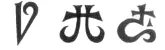
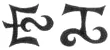
Rune of Penetrating Defense
It consists of two symbols: the first means destruction and conquest, the second – avoiding death (the end). It provides armor penetration against the opponent.
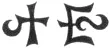
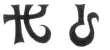
Rune of "New Life"
It consists of two symbols: the first means avoiding death (the end), the second – life, water, greatness. It provides +200 defense at the beginning of the battle and restores 25% of health per turn.
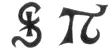
Rune of Invulnerability
It consists of two symbols: the first means union, loyalty, and the second – eternity. Thus, this is a rune of eternal service (the chosen weapon, armor, or any other item cannot be destroyed).
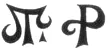
Guiding Rune
It consists of two symbols: the first means balance and harmony, chaos, the second – light and the nobility of the soul. This rune provides light, illuminating the path, calming the mind, and useful in fighting certain creatures associated with the element of darkness.
Rune of Accuracy
Symbols: speed (accuracy) and law (justice). The rune increases the accuracy of the weapon to which it is applied.
+///// Elemental Runes (Damage)
Elemental runes of six basic elements, providing corresponding types of additional damage, are combined from the symbol of grace (power) and, at choice: eternal flame, life (water), wrath (storm, air), strength (rage, Schism, earth), light (nobility of the soul), shadows (night).
As you can see, some symbols are repeated. The more symbols you know, the more different runes you can create. Accordingly, to protect against the same elements, you can use the runic word – silence, loneliness, weakness, death. However, they should be arranged in reverse order, starting with the element word, and then the above.
Although I give an example of two-word runes, this is not necessary, and depending on the request, they can be three-worded: Rune of Magic Suppression
The new word here is the first one; it means magic, moonlight, luck. Three words – because it is necessary to suppress both magic itself and additional effects (chaos and harmony).
Rune of Invisible Clothing
Flight (wind), memory (recollection), and the already known silence (loneliness). It makes clothing made of fabric (or just fabric) become invisible. I could not figure out the application of this rune.
There is another tradition of writing runes, consisting of more capacious words, which, for example, the famous blacksmith Kragg from Hellfire adheres to. In this tradition, there is no combination of words, but there are only the words themselves, equivalent to runes, and there are much more of them. Example:
Rune that gives intelligence.
In principle, any tradition allows you to formulate a huge number of requests; it is a flexible tool. However, it is worth remembering that each act of creating an item is a difficult creative process, and it often happens that some tools hinder the use of others. Despite the power of runes, the ability to create desired and useful items without them is absolutely necessary, and you should not rely on magic in everything. Skillful mastery of both runic craft and ordinary craft opens up many paths.[/spoiler] Author
Not far away, Amamius was talking to Arivell about something, and Tluassa stood aside, thinking about something profound.
In principle, if Tluassa was not too preoccupied, these groups could be combined, which is shown to the priestess nonverbally, without distraction/insistence. Erefir heads towards the larger group in the meantime.



 Ment
Ment
 +
+  /
/  /
/  /
/  /
/  /
/ 
 – silence, loneliness, weakness, death. However, they should be arranged in reverse order, starting with the element word, and then the above.