

Auto-translated
VidaBox PicoPC turns a TV into a PC
The latest addition to VidaBox's catalog adds Internet access, email functionality, and other PC features to HDTV. This is not surprising, as the miniature device is essentially a computer with a solid-state drive.
Here are its technical specifications:
* Processor: AMD Geode LX800 (500 MHz clock speed);
* RAM: 256 MB DDR-333 MHz;
* Storage: 2 GB CF 233X (expandable to 16 GB);
* Ports: RS-232, 2x USB, microphone and headphone jacks, Ethernet Port 10/100, VGA connector;
* Wireless adapter: Wi-Fi 802.11b/g (optional);
* Power consumption: 18 W;
* Aluminum alloy case, size 17.5 x 11.3 x 3 cm;
* Weight: 370 g.
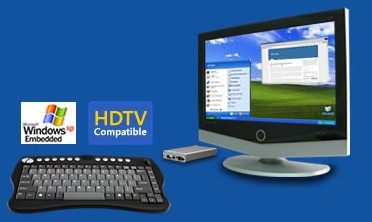
An important advantage of the product, considering its intended use, is the write protection of the memory area where the OS is located. According to the manufacturer, this prevents infection with viruses and other malicious programs. To restore the system, simply perform a full reset. Another useful feature is the use of passive cooling and flash memory instead of a hard drive, which eliminates noise. The package includes a wireless keyboard.
The only thing that raises concerns is the price of the PicoPC, which is $929.
Source: VidaBox
Added 3 minutes ago
NVIDIA comments on rumors of defective desktop GPUs
A couple of weeks ago, NVIDIA's stock took a hit when the company publicly acknowledged problems with mobile GPUs, resulting in significant losses.
The Inquirer, known for publishing unverified data and "rumors," published information on its website stating that the G84 and G86 desktop graphics processors are also defective, and that a massive failure of accelerators based on them is inevitable. Several online publications reprinted this information, which undoubtedly damaged NVIDIA's image and sales.
NVIDIA commented on the situation to Ars Technica, stating that while this failure rate due to constant GPU overheating was very rare for laptops, the problem does not exist at all for desktop graphics accelerators.
Given the lack of widespread reports of GeForce 8400/8600 failures, it seems that NVIDIA can be trusted, and Inquirer lied again…
Source: Ars Technica
The latest addition to VidaBox's catalog adds Internet access, email functionality, and other PC features to HDTV. This is not surprising, as the miniature device is essentially a computer with a solid-state drive.
Here are its technical specifications:
* Processor: AMD Geode LX800 (500 MHz clock speed);
* RAM: 256 MB DDR-333 MHz;
* Storage: 2 GB CF 233X (expandable to 16 GB);
* Ports: RS-232, 2x USB, microphone and headphone jacks, Ethernet Port 10/100, VGA connector;
* Wireless adapter: Wi-Fi 802.11b/g (optional);
* Power consumption: 18 W;
* Aluminum alloy case, size 17.5 x 11.3 x 3 cm;
* Weight: 370 g.
An important advantage of the product, considering its intended use, is the write protection of the memory area where the OS is located. According to the manufacturer, this prevents infection with viruses and other malicious programs. To restore the system, simply perform a full reset. Another useful feature is the use of passive cooling and flash memory instead of a hard drive, which eliminates noise. The package includes a wireless keyboard.
The only thing that raises concerns is the price of the PicoPC, which is $929.
Source: VidaBox
Added 3 minutes ago
NVIDIA comments on rumors of defective desktop GPUs
A couple of weeks ago, NVIDIA's stock took a hit when the company publicly acknowledged problems with mobile GPUs, resulting in significant losses.
The Inquirer, known for publishing unverified data and "rumors," published information on its website stating that the G84 and G86 desktop graphics processors are also defective, and that a massive failure of accelerators based on them is inevitable. Several online publications reprinted this information, which undoubtedly damaged NVIDIA's image and sales.
NVIDIA commented on the situation to Ars Technica, stating that while this failure rate due to constant GPU overheating was very rare for laptops, the problem does not exist at all for desktop graphics accelerators.
Given the lack of widespread reports of GeForce 8400/8600 failures, it seems that NVIDIA can be trusted, and Inquirer lied again…
Source: Ars Technica