 kcfgogbfalgfl
Auto-translated
Year 1257
Head of state: board of directors of the most influential corporations
Territory: 929342 km² (11716 km² Nevermore), (121350 km² Shabette), (90878 km² Duran), (102387 km² Khontai), (61021 km² Karen), (93892 km² Tarren), (25311 km² Highlight), (219649 km² settlements in the Wild Lands and surrounding territory) (203138 km² other territory)
Population: 273 million (Nevermore: 29), (Shabette: 53), (Duran: 16), (Khontai: 39), (Karen: 35), (Tarren: 47), (Highlight: 5 million), (others: 49).
Currency: Riena (R)
Standard of living: B (Nevermore), D (Shabette), A (Duran), B (Khontai), E (Karen), D (Tarren), B (Highlight), ? (other territories)
Armed forces: A
Technology: S+
Quote from the official history of Nevermore (1181):
... Like all other central cities of the New World, Nevermore was one of the first settlements of that time which from the very beginning served as a home for talented and intelligent people who desired nothing more than to pursue science. And although their intentions were good, neighbors—specifically the rulers of Dal Tarren—did not wish to coexist peacefully and attempted to subdue Nevermore by brute force. The city's brave defenders resisted to the last and did not allow this to happen; however, after some time, due to a lack of resources, they were forced to sign a peace treaty on unfavorable terms and join the then-unified kingdom of the New World. This continued for a long time, and then one day, when a catastrophe struck Nevermore and it stood on the brink of destruction, everything changed: Ivissa Thant revived the city and led it toward a bright future, and after some time, the inhabitants of Dal Shabette, Dal Duran, Dal Tarren, Dal Karen, and Khontai overthrew their tyrant rulers and voluntarily joined Nevermore, where not titles, but intelligence, diligence, and integrity reigned...
Regardless of the truthfulness of these lines, starting from the second half of the fifth century, Nevermore was and remains a center of technological development. After the same "catastrophe" in Nevermore, the New World was indeed led by Ivissa Thant, and later by her successors—brilliant people who lived for science. None of them demanded special treatment (except for the arrogant Ivissa), and each of them always strove to make decisions based on justice. Thus, science moved forward, intelligent people were at the helm, and ordinary people lived quite well.
In 1180, after a series of intrigues and various machinations, Ivissa's successors lost their former influence. As a result, a great multitude of competing corporations emerged in the state, and the leadership of the country was divided among four leading organizations:
Thant Technologies

Red Triangle Industries
Kassio Medical

Asode

Additional Information
Identification system: since 1226, every person upon reaching ten years of age is implanted with an identification microchip, through which the country's leadership can track their location at any moment.
Currency: since 1228, physical currency within the country was withdrawn from circulation and replaced by virtual currency. Any actions related to money (purchases, transfers, etc.) are performed using the identification chip and debited/credited from a virtual account.
Implants: recently they have become common practice even among ordinary people.
Old Town: unlike the rest of Nevermore (the city), this part is very poorly monitored by the government; the standard of living here is much lower, while crime is conversely higher. A project for the complete reconstruction of this place is currently being considered, as a result of which all residents are to be evicted to other regions of the country.
Brief information about other regions:
Shabette — a poor region specializing in providing the state with food (agriculture); Duran — a beautiful region with a high standard of living, intended for wealthy people and their families; Khontai — an autonomous republic since 1183; Karen — a neglected territory with a very high unemployment rate; Tarren — largely similar to Shabette, specializing in industry; Highlight — a resort island.
Religion: the majority of inhabitants are apatheists.
Form of government: Absolute monarchy
Head of state: Andrey I Nikolayevich (Emperor)
Territory: 1573992 km² (384495 km² Tyria), (238950 km² Tan Province), (315382 km² Koranian Province), (430213 km² White Lands), 146664 km² Eastern Archipelago, 58288 km² southern islands.
Population: 271 million (69 million Tyria), (60 million Tan Province), (62 million Koranian Province), (51 million White Lands), (30 million Eastern Archipelago), (9 million southern islands).
Currency: Imperial (И)
Standard of living: S+ (nobility), C (commoners, Tyria), E (commoners of other provinces).
Armed forces: S
Technology: A
First and foremost, Tyria is a country of traditions, strict etiquette, and strong religiosity. Even now, in an age of advanced technology, the aristocracy of this country prefers painting, instrumental live music, theaters, horse riding, and especially magnificent balls. Noble society is built on mutual respect and love for the sovereign and parents. For an insult, a nobleman may demand satisfaction of wounded honor through a duel (classic dueling pistols are used). Marriage is considered sacred and cannot be dissolved; extramarital relations are condemned by both society and the church. The material well-being of nobles varies from not very high to colossal, but children even of the poorest among them receive individual education.
Since 992, all commoners, excluding household servants, have acquired personal freedom, but since all lands remained with the nobility or clergy, this changed the state of affairs only slightly.
The Tyrians themselves are a kind, hospitable, and simple people.
Religion: The Tyrian Church. The Father is revered as the one god-creator of all existence, and the Knight is his son, who once found embodiment in King Vsevolod, who sought to unite the world to rid it forever of injustice and give happiness to the people (thus, Tyrian rulers have religious grounds for carrying out their conquests). This faith cherishes traits such as love for one's neighbor, courage, justice, meekness, moderation, patience, and diligence.
Koranian pantheon of gods: banned by Ataraxian Cerokovye.
Ataraxian Church, Tan and overseas pantheons: banned by the Tyrian emperor.
Form of government: military autocracy
Head of state: Rainfrid Blutenshimmer (Führer)
Territory: 433866 km²
Population: ~73 million
Currency: Helligkait mark (H)
Standard of living: A
Armed forces: S+
Technology: A
The reckless journey of King Winfrid, which ended in his death, was a great blow to the state: internal conflicts tore the country apart and, naturally, this most affected the lives of ordinary people. Thirty years later, the patience of the Helligkaiters reached its limit: in a bloody civil war, they overthrew the monarchical system, dissolved the nobility, and completely changed the state structure. At first there was democracy, but as soon as it became clear that such an ideology was nothing more than a utopia, and that people had simply replaced nobles with hypocrites and thieves, another coup occurred. Since then, the country has been ruled by selfless and strong personalities—ideologues.
Rainfrid Blutenshimmer came to power at the age of 31, and over the last twenty-three years he has achieved significant success: the average standard of living in the country reached the highest indicator in the entire world, class inequality was eliminated, science, sport, and art were at the peak of their development and popularity, and no other country can compare with its military power. Blutenshimmer's actions are condemned by many people worldwide, pointing out that he completely crushed the opposition, eradicated dissent, and sacrificed the minority for the prosperity of the majority; nevertheless, despite this, it cannot be denied that the well-being of the bulk of Helligkait citizens is greater than anywhere else.
Helligkaiters love their country, are proud of their government, and sincerely believe in the superiority of their people over all others; in their eyes, both the aristocracy of neighboring countries and the rich of the New World are an equal evil requiring immediate destruction.
They are hardworking, never late, tactful, and reasonable.
Religion: Church of Lucian.
Form of government: ?
Head of state: ?
Territory: 913849 km² (409275 km² White Lands)
Population: 124 million (46 million White Lands)
Currency: dragon (D)
Standard of living: C
Armed forces: A
Technology: C
At present, Vaironia has no official government; instead, power is split between various military formations, each of which has a certain sphere of influence within the country. Constant skirmishes between them are far from rare, and therefore even an ordinary citizen will likely be armed with something. Vaironia is a scourge to the entire "civilized world"; criminal organizations of this country poison the lives of other states, carry out terrorist attacks, produce and sell drugs, organize assassinations and armed raids. When it comes to protecting state borders, the leaders of all organizations present a united front, and few wish to tangle with an opponent who possesses the largest stockpile of nuclear weapons capable of leveling all populated areas on the planet...
Vaironians, undoubtedly, were warriors and have remained so; they die more often in fights and shootouts than from old age or disease.
Religion: officially absent
Capital: Bojua
Form of government: Constitutional monarchy
Head of state: Celestin du Boisgilbert (King)
Territory: 371194 km²
Population: 59 million
Currency: catar (K)
Standard of living: S (aristocracy), D (common folk)
Armed forces: B
Technology: B
The long-term Catarian crisis, accompanied by feudal fragmentation, ended only when enemies from without began to threaten the territorial integrity of the country. A new king was then chosen (his predecessor had been killed along with all relatives several years earlier); however, his first act was to incur numerous obligations to his vassals, and since then the royal dynasty has had no actual power in the country. Ordinary people live poorly, and feudals have the right to dispose of the lives of their subjects as they please.
Religion: Catarians revere the following deities: Alissandra, Lucian, Nox, Gyurdir.
Form of government: Parliamentary republic
Head of state: Tarnadil Harin (President)
Territory: 405206 km²
Population: 60 million
Currency: deor (DE)
Standard of living: D
Armed forces: C
Technology: C
Once, the inhabitants of these lands proudly called themselves dwellers of the forest and were proud of their freedom; however, everything changed with the start of the century of industrialization, the rejection of old traditions, and the formation of statehood—now it is a poor country that has been in decline for two centuries. People live poorly and not very long, primarily due to bad living conditions and backward medicine, which is unable to cope with modern diseases.
Religion: Amrita, Tyrian Church, Church of Lucian.
Form of government: Federal republic
Head of state: Kagon Magorm (President)
Territory: 33454 km²
Population: 9 million
Currency: Helligkait mark (H)
Standard of living: A
Armed forces: D
Technology: S
Southern ally of Helligkait, homeland of the Children of the Sun.
Religion: Church of Lucian
Form of government: Monarchy/Matriarchy
Head of state: Ziritta de La Luna (Queen)
Territory: 102303 km²
Population: 19 million
Currency: bronze, silver, gold coins.
Standard of living: C
Armed forces: C
Technology: C
The Northern Reach received its name for a specific reason: these lands were always considered the place where the world ends. In the second half of the fifth century, a traveler named Laust Brightstrider, together with his companion Melissa, set out on a journey, bringing with him a large number of Moon-Chosen (as they initially called themselves), who had once lost their land and were doomed to an eternal search for a new home. And although the path was difficult and dangerous, they eventually managed to find a suitable place to found the first city (at first, the further they went, the lower the temperature became; however, at some point they discovered that the further they advanced north, the more tolerable the weather became). And although almost all settlers were Moon-Chosen, it was Laust Brightstrider who became the first king, and Melissa de la Luna his wife. His reign lasted about three to four years and ended on the day when he, feeling dissatisfied with his current monotonous life, left the kingdom under cover of night and never returned. It was a miracle that he even managed to reach the old world alone, although Melissa would have been sincerely glad if the man who betrayed her feelings had perished from the searing cold of these lands. A few days later, she declared that men are reckless and irresponsible creatures, and therefore they should obey women in everything, as women are reasonable and caring. Of course, there were many dissatisfied with this decision at the time, but somehow this regime survived those times and has persisted to this day.
Lands outside state borders are dangerous and uninhabitable; the temperature there is much lower than necessary, and giants and other monsters inhabit the snowy expanses.
Religion: Moon, Nox, Sanexa.
Form of government: Absolute monarchy
Head of state Xiang Yu (Emperor)
Territory: 1261125 km²
Population: 183 million
Currency: qin (Q)
Standard of living: A
Armed forces: S
Technology: S
The eastern continent has always been a mystery to the people of the west, but no one could have imagined that these lands house the most ancient civilization on the planet, with its own unique culture and history spanning thousands of years. Throughout its entire history, the Yangtze Empire has been an isolated state, and this remains true today. Residents of the empire are allowed to leave its borders, but foreigners are admitted only in exceptional cases. Although the lack of foreign trade may negatively affect the economy, the Yangtze Empire is a self-sufficient state and largely does not need it.
Territory: 68386 km²
Population: 20 million
Currency: qin (Q)
Standard of living: A
Armed forces: F
Technology: A
A small state under the patronage of the Yangtze Empire. The entertainment industry flourishes here.
Southern Reach (territory of the Ataraxian Empire in its final years)
Territory: 6573459 km²
Population: unknown
In 471, Airos, lord of demons, attempted to subdue the entire world but did not succeed: after victory over Vasanta and her army, he suffered enormous losses and disappeared in an unknown direction along with all high demons (except for Eleuia, who was the only one among them not to submit). And although Airos left, all these lands remained ravaged and were later poisoned by the daughter of the god of death. At present, a huge wall has been built in the old world, shielding it from this cursed place. Despite this, people still live here, and their lives are as hard as can be, for day after day they must survive in a world full of monsters and walking dead.
The Abyss
Although abandoned by demons, it is still a nest of numerous abominations. Used by corporations for resource extraction.
Nevermore
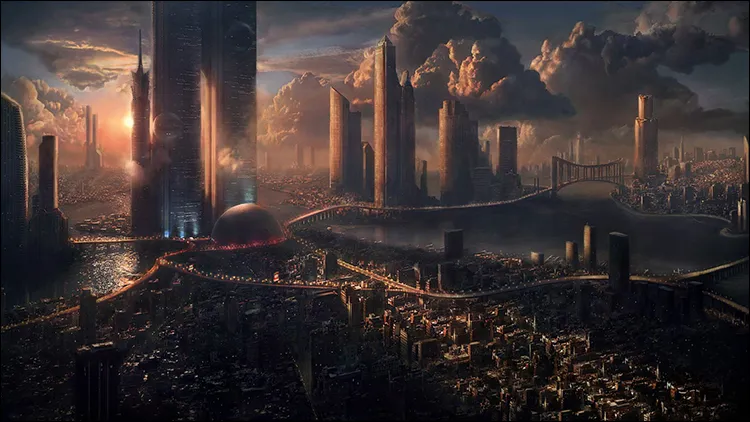
Form of government: corporatocracy (technocracy until 1180)Head of state: board of directors of the most influential corporations
Territory: 929342 km² (11716 km² Nevermore), (121350 km² Shabette), (90878 km² Duran), (102387 km² Khontai), (61021 km² Karen), (93892 km² Tarren), (25311 km² Highlight), (219649 km² settlements in the Wild Lands and surrounding territory) (203138 km² other territory)
Population: 273 million (Nevermore: 29), (Shabette: 53), (Duran: 16), (Khontai: 39), (Karen: 35), (Tarren: 47), (Highlight: 5 million), (others: 49).
Currency: Riena (R)
Standard of living: B (Nevermore), D (Shabette), A (Duran), B (Khontai), E (Karen), D (Tarren), B (Highlight), ? (other territories)
Armed forces: A
Technology: S+
Quote from the official history of Nevermore (1181):
... Like all other central cities of the New World, Nevermore was one of the first settlements of that time which from the very beginning served as a home for talented and intelligent people who desired nothing more than to pursue science. And although their intentions were good, neighbors—specifically the rulers of Dal Tarren—did not wish to coexist peacefully and attempted to subdue Nevermore by brute force. The city's brave defenders resisted to the last and did not allow this to happen; however, after some time, due to a lack of resources, they were forced to sign a peace treaty on unfavorable terms and join the then-unified kingdom of the New World. This continued for a long time, and then one day, when a catastrophe struck Nevermore and it stood on the brink of destruction, everything changed: Ivissa Thant revived the city and led it toward a bright future, and after some time, the inhabitants of Dal Shabette, Dal Duran, Dal Tarren, Dal Karen, and Khontai overthrew their tyrant rulers and voluntarily joined Nevermore, where not titles, but intelligence, diligence, and integrity reigned...
Regardless of the truthfulness of these lines, starting from the second half of the fifth century, Nevermore was and remains a center of technological development. After the same "catastrophe" in Nevermore, the New World was indeed led by Ivissa Thant, and later by her successors—brilliant people who lived for science. None of them demanded special treatment (except for the arrogant Ivissa), and each of them always strove to make decisions based on justice. Thus, science moved forward, intelligent people were at the helm, and ordinary people lived quite well.
In 1180, after a series of intrigues and various machinations, Ivissa's successors lost their former influence. As a result, a great multitude of competing corporations emerged in the state, and the leadership of the country was divided among four leading organizations:
Thant Technologies
Red Triangle Industries
Kassio Medical
Asode
Additional Information
Identification system: since 1226, every person upon reaching ten years of age is implanted with an identification microchip, through which the country's leadership can track their location at any moment.
Currency: since 1228, physical currency within the country was withdrawn from circulation and replaced by virtual currency. Any actions related to money (purchases, transfers, etc.) are performed using the identification chip and debited/credited from a virtual account.
Implants: recently they have become common practice even among ordinary people.
Old Town: unlike the rest of Nevermore (the city), this part is very poorly monitored by the government; the standard of living here is much lower, while crime is conversely higher. A project for the complete reconstruction of this place is currently being considered, as a result of which all residents are to be evicted to other regions of the country.
Brief information about other regions:
Shabette — a poor region specializing in providing the state with food (agriculture); Duran — a beautiful region with a high standard of living, intended for wealthy people and their families; Khontai — an autonomous republic since 1183; Karen — a neglected territory with a very high unemployment rate; Tarren — largely similar to Shabette, specializing in industry; Highlight — a resort island.
Religion: the majority of inhabitants are apatheists.
Tyrian Empire
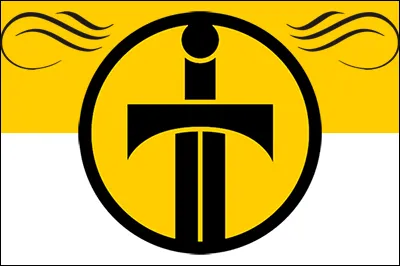
Capital: TsargradForm of government: Absolute monarchy
Head of state: Andrey I Nikolayevich (Emperor)
Territory: 1573992 km² (384495 km² Tyria), (238950 km² Tan Province), (315382 km² Koranian Province), (430213 km² White Lands), 146664 km² Eastern Archipelago, 58288 km² southern islands.
Population: 271 million (69 million Tyria), (60 million Tan Province), (62 million Koranian Province), (51 million White Lands), (30 million Eastern Archipelago), (9 million southern islands).
Currency: Imperial (И)
Standard of living: S+ (nobility), C (commoners, Tyria), E (commoners of other provinces).
Armed forces: S
Technology: A
First and foremost, Tyria is a country of traditions, strict etiquette, and strong religiosity. Even now, in an age of advanced technology, the aristocracy of this country prefers painting, instrumental live music, theaters, horse riding, and especially magnificent balls. Noble society is built on mutual respect and love for the sovereign and parents. For an insult, a nobleman may demand satisfaction of wounded honor through a duel (classic dueling pistols are used). Marriage is considered sacred and cannot be dissolved; extramarital relations are condemned by both society and the church. The material well-being of nobles varies from not very high to colossal, but children even of the poorest among them receive individual education.
Since 992, all commoners, excluding household servants, have acquired personal freedom, but since all lands remained with the nobility or clergy, this changed the state of affairs only slightly.
The Tyrians themselves are a kind, hospitable, and simple people.
Religion: The Tyrian Church. The Father is revered as the one god-creator of all existence, and the Knight is his son, who once found embodiment in King Vsevolod, who sought to unite the world to rid it forever of injustice and give happiness to the people (thus, Tyrian rulers have religious grounds for carrying out their conquests). This faith cherishes traits such as love for one's neighbor, courage, justice, meekness, moderation, patience, and diligence.
Koranian pantheon of gods: banned by Ataraxian Cerokovye.
Ataraxian Church, Tan and overseas pantheons: banned by the Tyrian emperor.
Helligkait
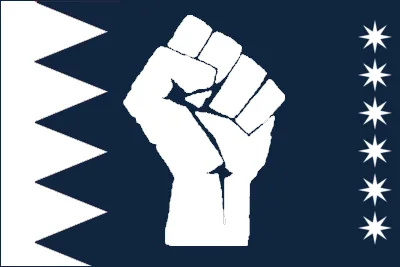
Capital: MondensheinForm of government: military autocracy
Head of state: Rainfrid Blutenshimmer (Führer)
Territory: 433866 km²
Population: ~73 million
Currency: Helligkait mark (H)
Standard of living: A
Armed forces: S+
Technology: A
The reckless journey of King Winfrid, which ended in his death, was a great blow to the state: internal conflicts tore the country apart and, naturally, this most affected the lives of ordinary people. Thirty years later, the patience of the Helligkaiters reached its limit: in a bloody civil war, they overthrew the monarchical system, dissolved the nobility, and completely changed the state structure. At first there was democracy, but as soon as it became clear that such an ideology was nothing more than a utopia, and that people had simply replaced nobles with hypocrites and thieves, another coup occurred. Since then, the country has been ruled by selfless and strong personalities—ideologues.
Rainfrid Blutenshimmer came to power at the age of 31, and over the last twenty-three years he has achieved significant success: the average standard of living in the country reached the highest indicator in the entire world, class inequality was eliminated, science, sport, and art were at the peak of their development and popularity, and no other country can compare with its military power. Blutenshimmer's actions are condemned by many people worldwide, pointing out that he completely crushed the opposition, eradicated dissent, and sacrificed the minority for the prosperity of the majority; nevertheless, despite this, it cannot be denied that the well-being of the bulk of Helligkait citizens is greater than anywhere else.
Helligkaiters love their country, are proud of their government, and sincerely believe in the superiority of their people over all others; in their eyes, both the aristocracy of neighboring countries and the rich of the New World are an equal evil requiring immediate destruction.
They are hardworking, never late, tactful, and reasonable.
Religion: Church of Lucian.
Vaironia
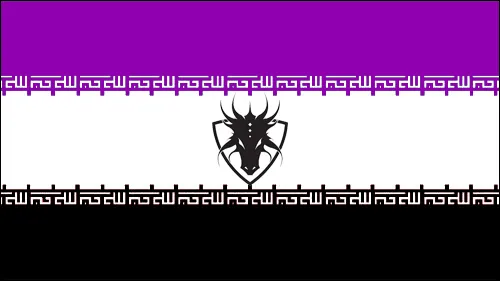
Capital: ?Form of government: ?
Head of state: ?
Territory: 913849 km² (409275 km² White Lands)
Population: 124 million (46 million White Lands)
Currency: dragon (D)
Standard of living: C
Armed forces: A
Technology: C
At present, Vaironia has no official government; instead, power is split between various military formations, each of which has a certain sphere of influence within the country. Constant skirmishes between them are far from rare, and therefore even an ordinary citizen will likely be armed with something. Vaironia is a scourge to the entire "civilized world"; criminal organizations of this country poison the lives of other states, carry out terrorist attacks, produce and sell drugs, organize assassinations and armed raids. When it comes to protecting state borders, the leaders of all organizations present a united front, and few wish to tangle with an opponent who possesses the largest stockpile of nuclear weapons capable of leveling all populated areas on the planet...
Vaironians, undoubtedly, were warriors and have remained so; they die more often in fights and shootouts than from old age or disease.
Religion: officially absent
Catarian
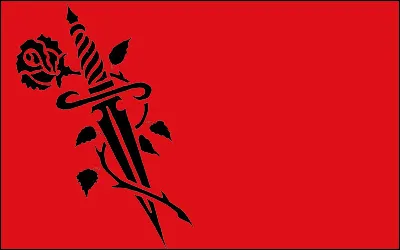
CatarianCapital: Bojua
Form of government: Constitutional monarchy
Head of state: Celestin du Boisgilbert (King)
Territory: 371194 km²
Population: 59 million
Currency: catar (K)
Standard of living: S (aristocracy), D (common folk)
Armed forces: B
Technology: B
The long-term Catarian crisis, accompanied by feudal fragmentation, ended only when enemies from without began to threaten the territorial integrity of the country. A new king was then chosen (his predecessor had been killed along with all relatives several years earlier); however, his first act was to incur numerous obligations to his vassals, and since then the royal dynasty has had no actual power in the country. Ordinary people live poorly, and feudals have the right to dispose of the lives of their subjects as they please.
Religion: Catarians revere the following deities: Alissandra, Lucian, Nox, Gyurdir.
Republic of the Free People
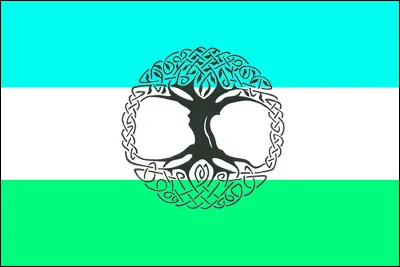
Capital: BoagbarForm of government: Parliamentary republic
Head of state: Tarnadil Harin (President)
Territory: 405206 km²
Population: 60 million
Currency: deor (DE)
Standard of living: D
Armed forces: C
Technology: C
Once, the inhabitants of these lands proudly called themselves dwellers of the forest and were proud of their freedom; however, everything changed with the start of the century of industrialization, the rejection of old traditions, and the formation of statehood—now it is a poor country that has been in decline for two centuries. People live poorly and not very long, primarily due to bad living conditions and backward medicine, which is unable to cope with modern diseases.
Religion: Amrita, Tyrian Church, Church of Lucian.
Solar Republic
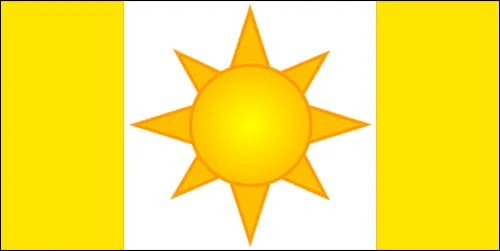
Capital: City of the SunForm of government: Federal republic
Head of state: Kagon Magorm (President)
Territory: 33454 km²
Population: 9 million
Currency: Helligkait mark (H)
Standard of living: A
Armed forces: D
Technology: S
Southern ally of Helligkait, homeland of the Children of the Sun.
Religion: Church of Lucian
Northern Reach

Capital: FrostgardenForm of government: Monarchy/Matriarchy
Head of state: Ziritta de La Luna (Queen)
Territory: 102303 km²
Population: 19 million
Currency: bronze, silver, gold coins.
Standard of living: C
Armed forces: C
Technology: C
The Northern Reach received its name for a specific reason: these lands were always considered the place where the world ends. In the second half of the fifth century, a traveler named Laust Brightstrider, together with his companion Melissa, set out on a journey, bringing with him a large number of Moon-Chosen (as they initially called themselves), who had once lost their land and were doomed to an eternal search for a new home. And although the path was difficult and dangerous, they eventually managed to find a suitable place to found the first city (at first, the further they went, the lower the temperature became; however, at some point they discovered that the further they advanced north, the more tolerable the weather became). And although almost all settlers were Moon-Chosen, it was Laust Brightstrider who became the first king, and Melissa de la Luna his wife. His reign lasted about three to four years and ended on the day when he, feeling dissatisfied with his current monotonous life, left the kingdom under cover of night and never returned. It was a miracle that he even managed to reach the old world alone, although Melissa would have been sincerely glad if the man who betrayed her feelings had perished from the searing cold of these lands. A few days later, she declared that men are reckless and irresponsible creatures, and therefore they should obey women in everything, as women are reasonable and caring. Of course, there were many dissatisfied with this decision at the time, but somehow this regime survived those times and has persisted to this day.
Lands outside state borders are dangerous and uninhabitable; the temperature there is much lower than necessary, and giants and other monsters inhabit the snowy expanses.
Religion: Moon, Nox, Sanexa.
Yangtze Empire
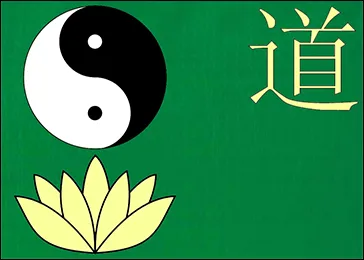
Capital: NoyanForm of government: Absolute monarchy
Head of state Xiang Yu (Emperor)
Territory: 1261125 km²
Population: 183 million
Currency: qin (Q)
Standard of living: A
Armed forces: S
Technology: S
The eastern continent has always been a mystery to the people of the west, but no one could have imagined that these lands house the most ancient civilization on the planet, with its own unique culture and history spanning thousands of years. Throughout its entire history, the Yangtze Empire has been an isolated state, and this remains true today. Residents of the empire are allowed to leave its borders, but foreigners are admitted only in exceptional cases. Although the lack of foreign trade may negatively affect the economy, the Yangtze Empire is a self-sufficient state and largely does not need it.
아름다운

Capital: Aniyo Territory: 68386 km²
Population: 20 million
Currency: qin (Q)
Standard of living: A
Armed forces: F
Technology: A
A small state under the patronage of the Yangtze Empire. The entertainment industry flourishes here.
Southern Reach (territory of the Ataraxian Empire in its final years)
Territory: 6573459 km²
Population: unknown
In 471, Airos, lord of demons, attempted to subdue the entire world but did not succeed: after victory over Vasanta and her army, he suffered enormous losses and disappeared in an unknown direction along with all high demons (except for Eleuia, who was the only one among them not to submit). And although Airos left, all these lands remained ravaged and were later poisoned by the daughter of the god of death. At present, a huge wall has been built in the old world, shielding it from this cursed place. Despite this, people still live here, and their lives are as hard as can be, for day after day they must survive in a world full of monsters and walking dead.
The Abyss
Although abandoned by demons, it is still a nest of numerous abominations. Used by corporations for resource extraction.
 Arandor