Connection ErrorBad RequestThis page went staleSession ExpiredSign in requiredForbiddenNot FoundToo Many RequestsServer ErrorBad GatewayService UnavailableGateway TimeoutHTTP Version Not Supported
Session Expired
Your session has expired. Please log in to continue.
Sign in required
You need an account to do that. Sign in or create one — it only takes a minute.
This page went stale
Your security token was rejected, usually because the page sat open too long or you signed in elsewhere. Nothing was saved. Reload the page and try again.
Request Failed
We encountered an issue while processing your request.
Please check your internet connection and try again.
Error Details:
Share Link
Posts from Expedition: general discussions.Auto-translated
I'll be a bit of a stickler, but if we're going by the idea that the meme should be D&D-themed (judging by the list of classes) and most likely refer specifically to the currently most popular 5th edition, then rogues only outperform warriors in damage at low levels (up to level 5), after which they perform roughly the same (assuming the rogue sneaks every round). And the fighter also has very good burst options. I'm not entirely sure what was meant by "before their turn" for the wizard. If it's something abstract like "it's not their turn yet in the initiative order," then perhaps it could be preparing traps before the battle, as summons act during the caster's turn. Wizards don't have attacking spells that cost a reaction. Unless it's a wizard-bladesinger with a warcaster, but then the fighter (at early levels or if they're an eldritch knight with a warcaster) or the rogue (the paladin too, but the meme doesn't mention him) can also take an opponent out of the fight before their turn comes. Perhaps I could agree with the bard's buffing abilities, but the wizard is also quite good at that. Still not as good as the bard, but nonetheless. However, depending on the archetype, a bard can replace either the rogue and fighter, or the wizard in the party.
The wording of the meme suggests that rogues can make multiple moves per round, which I don't know if it's true in D&D, but it seems unlikely. Or, maybe it's a bad translation, and it's about "one weapon attack" in the second case; otherwise, the wording of "turn" and "round" is literally equivalent.Author
I'm not entirely sure what was meant by "before their turn" for the wizard.
I'm not sure either, but I read it as "before the start of the battle." Like, cast a fireball and kill a bunch of people first, and then everyone makes initiative rolls (of those who are left).
The wording of the meme suggests that rogues can make multiple moves per round, which I don't know if it's true in D&D, but it seems unlikely.
No, in D&D, there are established terms like "round" and "turn," where a round is the sum of each participant's turns in a battle. And each character has only one turn (at least, I can't recall any mechanics that would allow them to make two turns per round), although it's broken down into different types of actions (movement, action, bonus action, reaction, and free action), although a reaction can also be used outside of one's turn. And there are abilities, like Sneak Attack, that have a limitation of "once per turn," meaning a rogue can Sneak Attack once during their turn and then again if they have the opportunity to attack an opponent with a reaction. And there are abilities like Divine Strike for clerics, which allows them to deal additional damage with an attack once per turn of the character and essentially cannot be used more than once per round. In any case, rogues don't have abilities that would allow them to perform additional actions in a round, except for expanding the list of bonus actions (for example, a fighter can only perform a Dash by spending an action, while a rogue can do it as a bonus action). But a fighter does have an ability that allows them to perform an additional action per turn, albeit very limited in number of uses.Author
Or maybe it's a bad translation, and it's about "one weapon attack" in the second case.
Rogues do indeed have only one attack per round (on which, due to Sneak Attack, their main damage is based), unless they decide to use dual-wielding (an additional attack as a bonus action), multiclass, take any feats with similar effects, or are under external buffs/fighting with special magical weapons. But for a fighter, the number of attacks (without taking into account the same feats, magical items, buffs, or dual-wielding) varies from one to four. The damage per attack is usually less than from an attack with Sneak Attack, but the total damage is more stable and not tied to external requirements. On the other hand, critical hits feel stronger for rogues, due to the fact that all the damage is tied to one attack and the specifics of how critical hits work.Author
otherwise, the wording of turn and round are literally equivalent.
As I described above, round and turn are not equivalent concepts in D&D. However, given that when using a reaction, a character makes only one attack (even if it's a 20th-level fighter), rogues feel like they have a stronger impact than fighters (a rogue with 20 Dexterity, conditions for Sneak Attack, and a +1 rapier at level 8 will deal 11-38 damage, while a fighter with 20 Dexterity, a +1 rapier, and the Duelling style will deal 9-17), meaning a rogue may fall behind a fighter in damage dealt during their turn and exceed them in total damage dealt during the round. Unless the fighter has a feat for two-handed weapons at level 8, which would give them comparable damage with a provoked attack, but at the cost of lower accuracy. The gap will only increase at higher levels. We could also mention cantrips and the War Caster feat, but I'm a little lazy. And it doesn't make much sense anyway—the option is available for both classes.
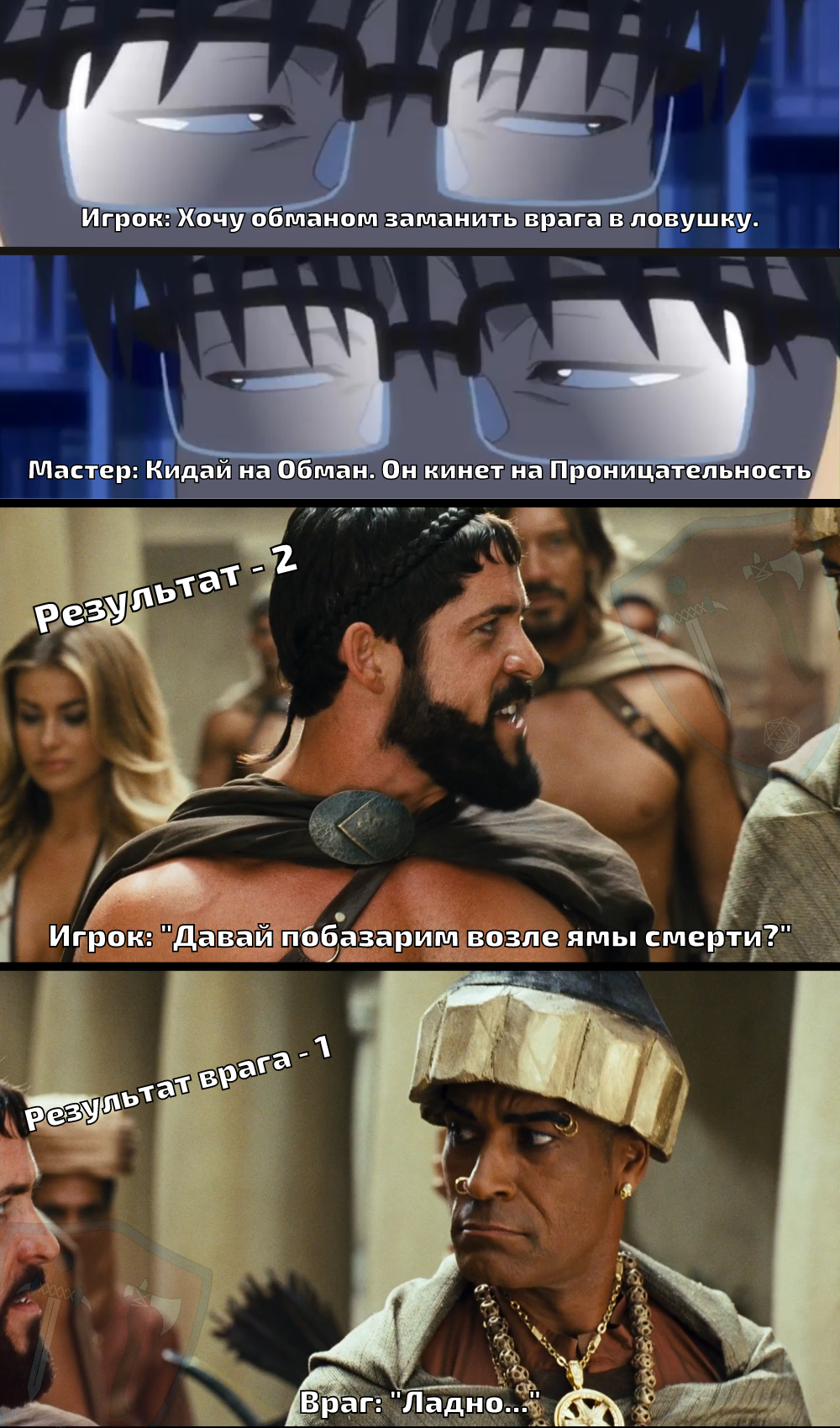
It happens more often than you might think. There was another case where a Necromancer tried to show off in front of pirates, claiming that his skeletons were just as smart as them, and could even pilot a ship better. They tested it with an intelligence contest. The Necromancer turned out to be right.