Connection ErrorBad RequestThis page went staleSession ExpiredSign in requiredForbiddenNot FoundToo Many RequestsServer ErrorBad GatewayService UnavailableGateway TimeoutHTTP Version Not Supported
Session Expired
Your session has expired. Please log in to continue.
Sign in required
You need an account to do that. Sign in or create one — it only takes a minute.
This page went stale
Your security token was rejected, usually because the page sat open too long or you signed in elsewhere. Nothing was saved. Reload the page and try again.
Request Failed
We encountered an issue while processing your request.
Please check your internet connection and try again.
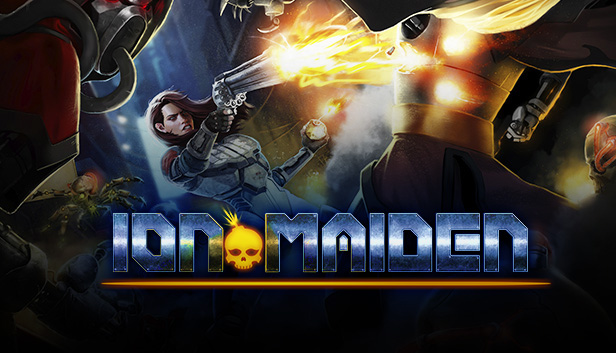
Another "old-school" shooter in the new wave of games appealing to Gen Z. It's made using the Duke Nukem engine, so it should primarily be compared to other games built on the same engine. I'm not sure if it's better than the divine Blood, but it's definitely three times better than Duke Nukem 3D and Shadow Warrior.
The industrial-cyberpunk setting is relevant today, although personally, I find it to be a somewhat overused idea that can easily be ruined by poor execution. However, in this case, they managed to create well-designed levels with excellent music and visuals. It's not particularly groundbreaking, but the weapons are well-made and useful at various stages against different enemies – something that Shadow Warrior failed to do, as it's primarily played with a grenade launcher and a shotgun, which I found quite annoying. And here, there are even headshots.
The levels are huge, with a billion secrets, secrets within secrets, and not always an obvious path to follow. I spent a lot of time figuring out some of them, but overall, they are quite logical. There were very few instances where I was completely lost and had to wander around aimlessly for half an hour. Plus, there are quite a few maps, so it takes a relatively long time to complete. And, of course, there are a huge number of diverse references that will appeal to older gamers.
The heroine (to shock everyone with how progressive it is for an old-school shooter in 2019) is a good concept, but her one-liners are mostly boring – this is a major problem for an old-school action hero. Another area where I noticed a drawback is that by the middle of the game, or even earlier, you've already found all the weapons and unlocked almost all the enemy types. Because of this, a significant portion of the game, around the halfway point, felt somewhat like filler, although the enjoyable mechanics, balance, and atmosphere helped to mitigate this. But it reminded me again of the criticized Shadow Warrior, which has only ten enemy types throughout the entire game, which you mow down with billions of bullets from the same weapons in slightly different environments. I was quite surprised when, closer to the end of the game, they suddenly introduced several new, more dangerous late-game enemy types, which added variety to the gameplay. Why they didn't bring them out earlier is unclear.
It's also interesting how they "revamped" the inventory and consumable system from old build-engine games. Usually, in these games, the inventory is full of useless items that you rarely use, and Shadow Warrior excelled at this with its collection of colorful, completely unnecessary grenades with terrible effects. The developers here solved the problem simply by reducing the entire available inventory to two consumables, one of which is classically useless, and the other is a health pack, which you carry with you in a stack just in case. This turned out to be a very good solution; you could argue that it's a sign of laziness on the part of the developers, but you need to understand that an inventory with items in build-engine games has always been a cumbersome, inconvenient, useless, and unused feature, so in this case, not overloading the player with additional clutter is a good thing.
Overall, it feels like an eight out of ten, but if you evaluate it as a high-quality old-school shooter, and also considering the need for more games like this, then it's definitely a ten. I hope the trend of modern old-school shooters continues to develop, so that we can gradually bring back the best moments from that exciting boomer era and, at the same time, further develop their concept with decades of new experience in game design.
Atelier Sophie: The Alchemist of the Mysterious Book I've wanted to play it for a long time, but I just never got around to it. I started playing a couple of weeks ago, and when I saw the Koei logo on the starting screen, I immediately braced myself for disappointment, as games from this company rarely stand out for their quality. Nevertheless, the game turned out to be quite good. It features a rare depiction of alchemy in the form of, well, actual alchemy, and not magic disguised as alchemy, as is often the case. All the equipment, in one form or another, is a direct result of the main character's work; it's either various consumables (potions, grimoires - especially for Arandor) or materials needed by other crafters to create weapons, armor, and other items. The protagonist is cute, she improves herself as an alchemist, and she helps the residents of her town in every way possible. In this regard, the atmosphere is quite cozy. The other characters aren't particularly interesting, but they're generally good. The combat and the map are boring. I stopped playing after about forty hours when I felt the need to grind levels and unlock a bunch of recipes to progress further in the story. I initially just decided to take a break, but after a couple of weeks, it became clear that I didn't really want to continue.
I've had it downloaded for about ten years, but I haven't launched it even once. Now that I've decided I only want to read novels in their original language, it will probably take another ten years before I can do that.
It's essentially the same, only the hero is male, and there's some cheesy stuff. I'm relying on your description, so if there are any gameplay differences, it's not my fault.
Where do we go? Where do we end up when we save the world?
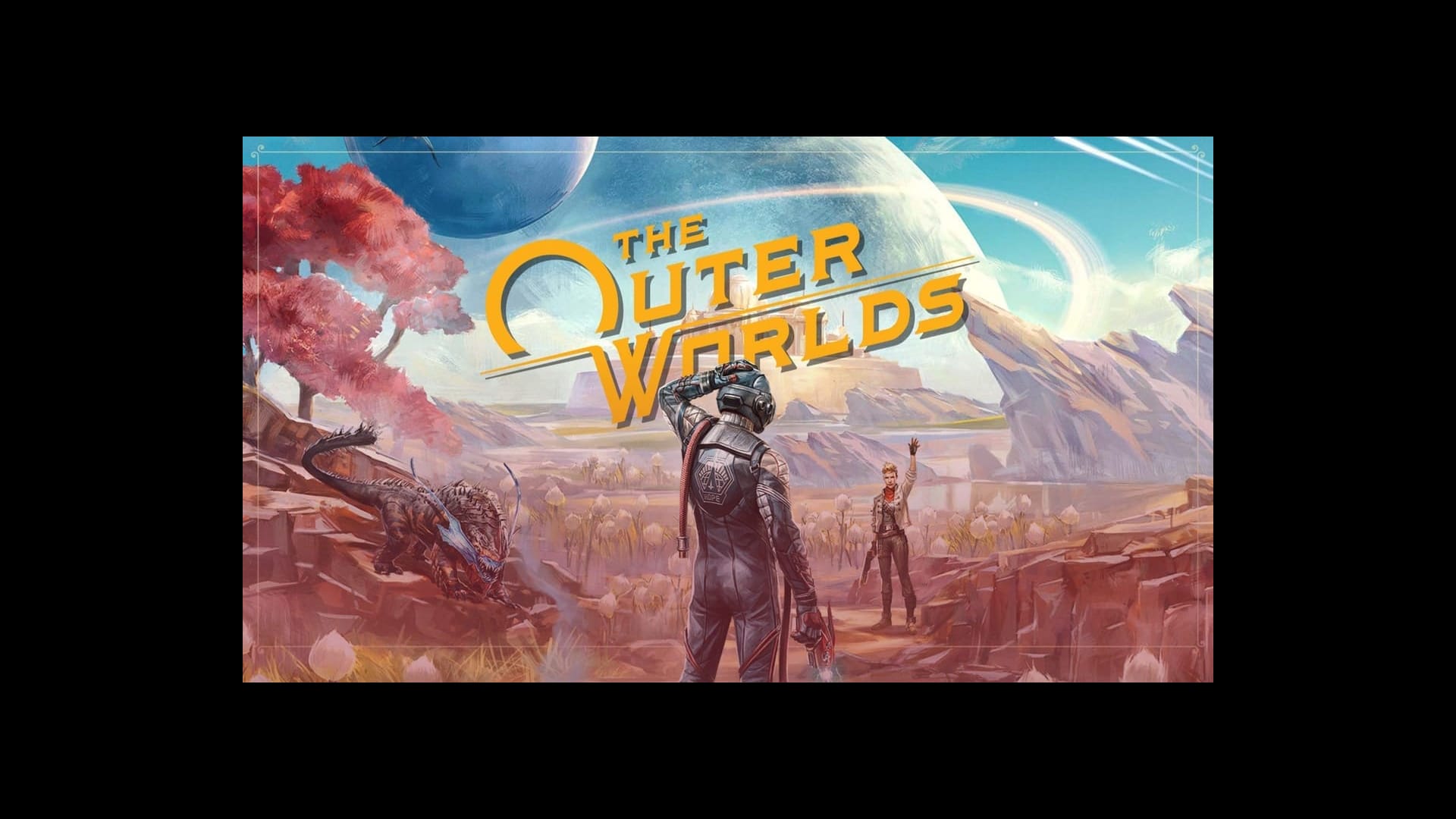
If you liked Fallout 4, then this is the game for you. The graphics and gameplay are similar, although the weapon customization is much more rudimentary. There are only about ten weapons: PISTOL-RIFLE-ASSAULT RIFLE-SHOTGUN-MACHINE GUN, and they are made so well that each has several versions for different upgrade stages, differing only in higher stats; even the name and model remain the same. Shooting is as enjoyable as in Fallout 4, but it's monotonous because the weapons don't differ much, and there are only a couple of weapon skills, and the ways to deal damage are limited. There are even fewer enemies: bandit, bug, gorilla, lizard, two types of robots, dog. This is for "all" the planets, and there are very few of them, really only three and a half, and they differ from each other only in the texture of the ground. By the way, the "planets" are just an excuse to split one not very large open world into several small, depressing locations, each 2x2 square kilometers. In one of the bars, a worn-out old man tells stories about how he survived in the natural anomalies of a wild planet and what amazing sights he saw. These one and a half stories are just a mockery from the developers; this is the closest you can get to experiencing the exploration of alien worlds in this game, because you certainly won't see any of it yourself. All that awaits you is running around the hills, endless shooting at gorillas, lizards, and bandits, and looting thousands of identical containers and bodies for half a dozen coins or cartridges each. In general, in terms of gameplay, it's like Borderlands, but heavily cut down. If you like that, then you're in luck. The story is quite dull; don't expect it to be on par with Vegas (assuming Vegas is a benchmark); here, too, everything is quite close to Fallout 4, only even more cut down and intimate, because there are only 3.5 locations, 2x2 kilometers each. In terms of story and quests, you can still enjoy it and do something at the beginning of the game, laugh at the trendy, modern, and discourse-driven writing, but after 10-15 hours, even that is gone; all the stories turn into mediocre fetch quests, kill, and talk quests, seen and rehashed in every other RPG a hundred times. They say that RPG fans love it when their character progression affects the ways to solve quests and allows for non-linear outcomes. There is almost none of that here. Yes, you can say four phrases with different nuances, of which one is conditionally for the corporations, one for the workers, one neutral, and one "goodbye" or "I'll kill you," but in the end, your choice doesn't affect anything. This is in terms of non-linearity, and in terms of solution options, you can either shoot everyone, pass one or another skill check, or manually steal an item/read a terminal. In the end, none of these options affect anything either. That is, the "non-linearity" in the ways to solve problems is on the level of Deus Ex 3, when you stand in front of a locked door that you can pick with a lockpick or open with a key, and right next to it is a box with a ventilation shaft leading into the same room, and on the other side is a computer that will open the same door. However, given that the progression here is very casual, you will most likely be able to pass any skill check right away because you have enough experience for everything.
The good things: decent shooting until it gets boring, some good humor, and occasionally a good atmosphere and references. Everything else is quite mediocre. 5/10 is the most generous score I can give it, and that's without being a hater, with a cool head, after honestly spending 25-30 hours, reading the dialogues, and so on. But you can also look at the ratings and read reviews on the internet if you want, and you will see that die-hard fans of Vegas give it 75-80, which speaks for itself.
Initially, I was afraid it would be excessively short and rushed; if the latter might be true, the former certainly is not. Please forgive me in advance.
I'll start from a distance—a very great one. In years long past, I no longer remember which, Obsidian Entertainment—a studio for which I felt immense love and trust at the time—went to Kickstarter with an outstretched hand, solemnly promising that if they raised enough money, they would release a cool old-school RPG, just mind-blowing. Since I trusted the studio and their promises, while ambitious, were still within reasonable bounds, I had little doubt that they would succeed. Shortly after them, another project was launched on Kickstarter—this time by some nobodies (to me), who promised to recreate such a masterpiece (in my eyes) as Planescape: Torment. Given the strange goalposts on Kickstarter (their own stronghold? Why does a successor to Torment need one?), a somewhat odd setting (what tides? What are they even talking about?), and the fact that nobodies had taken on the spiritual sequel to a masterpiece of a game, I felt not just skepticism, but absolute certainty that they would produce a bad game. A few years passed. Obsidian released their old-school RPG, Pillars of Eternity; I even played it. And while at first I decided its overall rating was "not so bad," over time, apparently, I stopped looking for excuses for the time I wasted and changed my assessment to "complete disappointment." Tides of Numenera hadn't been released yet, but a number of scammers on Kickstarter had already managed to discredit themselves. If my skepticism could have dropped any further, it undoubtedly did. I forgot about this game and only remembered it when I read reviews on other gaming sites, where it was described as same old garbage. "Nothing surprising," I thought, "but maybe someday I'll play it for introductory purposes." And again, I successfully forgot about it for a couple of years. And then, a couple of weeks ago, by some twist of fate during a chat, the notorious Planescape: Torment came up. I felt a surge of nostalgia, and with it, a perfectly natural desire to replay that game. However, since I had already played through it many times, I simultaneously realized it would be rather boring to read dialogues I had already memorized. While searching for a few facts about the original Torment, Google also gave me information about its "sequel," which I had successfully forgotten. I thought, "what the hell—at least there will be something new here; maybe the impossible will happen and they'll manage to reproduce at least some of the original's features." Downloaded, installed, launched. Oh miracle, am I finally going to write about the game? I approached the game with my hackles practically raised to the maximum. Of course, I tried not to be a fool who intentionally looks for flaws, but at the same time, I took the hardest possible position in the sense that I expected nothing good. However, literally from the first few minutes, the game began to reproduce the atmosphere of the original—we wake up as a man without a name, who remembers nothing of his past, but who is recognized by people on the streets, in a bizarre world whose laws are unknown to us, but which can be mastered very easily and quickly. Nevertheless, I kept my skepticism almost until the very end of the game, and only in the last third did I abandon it completely. "Well, people hated it," I constantly thought, "which means it's ready to turn into garbage at any moment." Nonetheless, in my opinion, that never happened. So, now I'll try to be more specific about the game itself. General impressions of Gameplay: What is the original Planescape: Torment? If I tried to answer this question, I would probably say—running around an unusual setting and talking to unusual characters who tell their amazing stories and views on the world, as well as attempts to complete one's own personal quest, which is not linked to saving the world. And if we stick to this definition, it immediately turns out that Torment: Tides of Numenera is indeed a sequel to the original game. Perhaps I am trying to fit two games into one standard, but I had never encountered this thought anywhere before—it came to me specifically during my Walkthrough of Numenera. What else distinguished the original Planescape from RPGs of that time? The fact that the playstyle consisting of chatting was encouraged by the game itself—at that time, it was the only RPG where the player gained more experience from solving quests and communicating than from killing monsters (and yes, this includes the first two Fallouts—if you're wondering, calculations have already been made). Numenera continues this concept but takes a step further—combat as such brings no experience at all, much like in another good game—Vampire: The Masquerade – Bloodlines. The bulk of our experience comes from completing quests; a much smaller but still solid amount comes from studying additional dialogue options, finding connections in dialogues, and sometimes even asking the same question a second time. Yes, yes, this is one of the few games where the "ask again" option serves not only to refresh memory but can also bring a new result although undoubtedly, if taken to a munchkin extreme and clicking through all dialogues twice, some might find it frustrating. You can also recall fragments of your past life in the game, which also brings experience or provides new options. Sound familiar? Recognize it? Combat and battles: At first glance, the combat seemed extremely flawed, inconvenient, and stupid to me—and I wasn't alone in this opinion. However, does that say much if most people shat on the game across all fronts anyway? Over time, however, my opinion changed—and I decided that the combat in the game is quite normal and performs its functions, even if it doesn't reach for the stars. Though, the change in my opinion coincided with the fact that my character and companions leveled up and began taking out enemies much more effectively. Coincidence? Perhaps. About battles in general. Here they are called "crises." At first, I thought this was an attempt to stand out somehow to give a greater sense of elitism to their game. But in reality, crises are indeed far from always boiling down to fights. There are quite few of them in the game, and all plot crises can be completed without killing anyone like Fallout 4, though, so that doesn't say much either. In some crises, there will be an opportunity to talk to the opposing side; in others—to use interactive objects. In the very first crisis, of course, all these opportunities will be present just to show off to the player, but in subsequent ones—far from always, especially in side quests, where often there is only one option—kill the enemy with a sword. Stat checks: In the original Planescape, certain characteristics either opened new options in dialogue (wisdom and intelligence) or gave the possibility of getting a good result when using an option (charisma, occasionally dexterity and strength). Modern RPGs practice a slightly different approach—you see the option immediately, and you immediately see that it is tied specifically to having a certain skill. Essentially, the only difference is that if in the original Planescape you could only assume that a certain option was the best choice, then in new RPGs you know for sure. Numenera is closer to new games—in it, you immediately see that some option is tied to a specific skill. Moreover, even without this skill, most options can be brute-forced—simply because absolutely all checks in the game are based on percentages. I believe this is a controversial and rather unsuccessful decision, but the game sometimes fights against it by placing several stat checks in a row and thereby (sometimes) preventing the ability to abuse save-scumming. The problem is that it works both ways—it's frustrating to fail a stat check with a 90% success rate. Despite the fact that objectively this is perhaps a flaw, I cannot say that it caused me dissatisfaction. The system is fully functional; personally, I almost never had to save-scum—and I am a very convinced save-scummer, so keep that in mind. Plot: As I already said—here it's not tied to saving the world. Interesting, only now did I realize a curious point—in the original Planescape our hero sought a way to die; in this game, the hero seeks a way to escape inevitable death. However, as in the original, during the plot it becomes clear that the hero's quest will have consequences not only for him—but still, you won't have to save the entire world. General impressions of the plot—it's not bad, it doesn't sag, and the end and resolution don't cause frustration or disappointment. But still, it is weaker than the original—this especially applies to the ending. Companions: Objectively—it's clear that effort was put into their writing. They have quests, they periodically insert their own lines into dialogues, new topics for conversation appear, and if you take some of them into the last section of the game, it opens additional options for them. Nevertheless, the vast majority of them did not evoke strong emotions or attachment in me. It's even kind of a shame, considering that effort was clearly spent on their development. There is only one companion who stands out among the rest in her poor development—that's the woman who exists in multiple dimensions simultaneously and joins us at the beginning of the game. By the way, romances or even hints of them were not included—but specifically, the plot of this game is constructed such that the absence of romances seems almost natural. Alignments: Only a lazy person hasn't criticized the D&D alignment system; that's true. So why do people continue to use it? I intentionally created a thread with a test on moral principles to show that even for people living in the same country (CIS for some), in a fairly similar socio-cultural environment, opinions on what is good and what is bad can differ greatly. D&D, however, takes entire worlds (!), various countries and nations where societies are at different cultural, social, and technological stages of development and tries to fit them into a single axis of "this is good, and this is evil." Forgive me, but is it the year 1000 AD? Nietzsche and Stirner haven't existed yet? What kind of caveman concepts are these? Numenera uses a different system—Tides. They can be various colors and represent motivations and aspirations behind certain words and actions. In total, the system offers 5 Tides: 1) Blue - aspiration for knowledge. 2) Red - aspiration for emotions or "the desire to act as your heart tells you"—meaning an emphasis on emotional actions. 3) Indigo - aspiration for justice, fairness, fulfillment of social norms. 4) Silver - aspiration for fame and recognition. 5) Gold - aspiration for altruism and helping others When I first saw this system on paper—personally, it seemed very weak to me; I decided it was an excessive simplification and that in reality, there are far more motivations. Nevertheless, specifically in the game, the implementation is, in my opinion, simply brilliant and this system looks extremely organic in it, aside from a few strange "silver" options near the beginning. In any case, everything is better than D&D alignments. By the way, within the same run—it's easy to notice that indigo and gold colors perform the same functions as lawful-good and good options in D&D, but their "opposites" were not included. And this, in my opinion, is quite logical—rarely does anyone do "evil" or "chaotic" actions just to be evil and chaotic. Even teenage rebels rebel not just because (at least from their own point of view), but within the desire to bring more good to other people or become famous. In general, a good system, in my opinion. What else I liked: In many quests, there is sometimes an obvious and sometimes non-obvious connection to each other. For example, we have a quest with options A, B, and C for its solution. If we choose option B, then in another quest that also had options A, B, and C, an additional option D appears. There are quite a few such interconnections (more than two!), which, considering the fact that in most modern games absolutely every quest exists in a vacuum relative to others, caused me great delight. In general, I can't recall many moments in the game where there was a feeling of "but wait, I learned information X in another quest/dialogue, why can't I now make decision Y based on it in this quest/dialogue?". In my opinion, this is a fairly strong statement and I wouldn't be surprised if more critical players find counterexamples to my words, but personally, I can't remember any, so I am under a good impression. The presence of certain items in the inventory adds new dialogue options and descriptions, as does the presence of some skills. This is always a plus in my eyes. I liked how they introduce the setting: they don't dump a pile of information like in Pillars, where you easily start to struggle and get lost, but simply give you info in pieces that you need to know at the moment to understand the situation—again, very similar to the original. What I didn't like: At first, I wanted to write "there are no bad moments in this game!!!1", but then I decided to take a few breaths and force myself to find moments that I didn't like—and suddenly realized they exist, even if they are purely subjective. I don't like consumables in games. I always keep all potions, ammo, and grenades waiting for a truly difficult fight, and as a result, they gather dust in the inventory until the end of the game. And here Numenera played a truly foul trick against my psychology. It introduced special consumables called "cyphers"—various items, relatively powerful, which can give a tangible advantage during a crisis, and more rarely, outside of one. At the same time, if you have too many cyphers in your inventory—you start receiving debuffs. "But Cypher," you might object, "this is actually a brilliant idea that should stimulate you not to hoard everything but to use it actively." On paper—yes, but in practice, I got my usual pattern, only complicated—constantly running to shops, spending half an hour thinking which cypher was better and which was worse, selling the worst one, then not using it in a crisis because "there isn't another one!!!!!", then finding an even better one, running to the shop, selling the old one... However, perhaps thanks to this warning, it won't become as much of a problem for you as it did for me. The second point is merecasters. These are things that, upon activation, lead you to read an interactive story, like a text quest. Depending on your decisions, they will have more or less different endings. They cannot be used again (excluding save-load). At the same time, in most of them, the ending will always have either a gloomy tone or be slightly unfinished. As a result, every time I experienced internal frustration that can be described as:Morning
And then what?! Where is the moral of this fable?! The chapter and verse?! The message?!..
Meanwhile, for the rest of the game, your choices in merecasters have no effect on anything, with very rare exceptions. Why did the game fail? Personally, I believe that people who didn't like the game can be divided into three types: 1) Ducklings. People who will always and in everything be dissatisfied because their potency, both sexual and gaming, is no longer as strong as in former times. Everything was better before, and now everything is worse. I spit in their faces. 2) Those who actively followed the campaign on Kickstarter. The thing is, the developers didn't fulfill some promises, and others they fulfilled in such a way that it's completely unclear why they asked for such huge amounts of money. I can understand the frustration of these people, but I want to ask them a counter-question—were those things they promised really necessary? Is a personal stronghold actually needed in this game? And if it had been implemented "half-heartedly," as in Pillars of Eternity—would it have been much better? However, I feel a certain sympathy for these people because betrayed expectations are unpleasant, regardless of the game. 3) Those who don't fit into the target audience of this game. The game was initially positioned as the spiritual successor to Planescape: Torment, which, although recognized by many as a masterpiece, if we're being honest—is still a fairly niche product. Therefore, it wasn't made for them. I wave my hand at them to keep moving past. VERY BRIEF SUMMARY: This game is weaker than the original Planescape: Torment, but at the same time is its spiritual successor, so it's perfectly suited for that specific situation when you want to experience similar emotions but don't want to replay Planescape yet again. All of this is my personal opinion, which does not coincide with the opinion of most other people, so I may be wrong.
Where do we go? Where do we end up when we save the world?
This is my fifth game (visual novel?) by the not-so-stereotypical master, Uchikoshi Kotaro. The three previous ones were already mentioned in this thread by Revan; in fact, I was the one who recommended them to him back then. They were brilliant zero-escape games. I finished the fourth one at the beginning of this year, and it was:
I didn't write about it here because I thought the community wasn't ready for something like that, plus I was feeling very warm and fuzzy at the time, which I felt would be somewhat cheapened by simply writing about it. But that feeling has subsided, and since I decided to write about the first title, I can't help but fully describe the situation.
So, the Zero Escape series is a rather serious, mind-bending, and dark trilogy, not without its share of crazy weeb stuff, but in very limited amounts, unlike Danganronpa. In general, everything is quite grimdark and intense, dramatic, and the intricate plot unfolds into a number of routes, sometimes dragging on like cold, leftover pasta, but ultimately culminating in a soul-stirring catharsis that explains almost all the smallest details. All of this is complemented by a dense atmosphere, well-developed characters, and a mix of scientific and more nerdy questions about philosophy, mathematics, physics, and so on. In short, the trilogy is undoubtedly a masterpiece.
When I saw that the title from the second picture was ported to PC, I read its synopsis and watched the trailer (you're a ghost and you're peeking under the skirts of anime girls), then I saw that it was also "by Uchikoshi," and then I also saw that a not-very-well-received anime was made based on it. I realized that the games were over, and the excellent trilogy of escape games was more of a coincidence than a pattern. Nevertheless, tempted by the name, I downloaded it just to have a laugh. For the first ten hours, I wanted to drop it; it was boring, and the gameplay, while tolerable, wasn't particularly engaging, but it was still pretty bad compared to the enjoyable puzzle rooms in the Zero Escape series. The next ten hours flew by unnoticed – I simply woke up in the fetal position, in a puddle of my own saliva, tears, and snot (not literally speaking). Behind the initial deceptive layer of a dubious synopsis, seemingly designed to specifically repel pretentious plebs (and attract a different kind of pleb), lies a hidden depth of the same feelings that I experienced from the wonderful trilogy: a sufficiently intricate and interesting plot, a magnificent atmosphere, well-developed characters, incredibly heartwarming moments, a bit more weeb-y, but still excellent presentation. In my mind, I rated "Punch Line" one point lower than "Zero Escape," simply because it's shorter and a standalone title, and in some places it's a bit derivative. But one point lower than Zero Escape is, in fact, 9/10.
And now I've finished the latest one – the top picture. It's more serious than "Punch Line," closer to "Zero Escape." It's still quite intimate, with not a very large number of locations, but not as much: unlike the previously mentioned titles, you're not locked in four walls, but you play as a detective investigating murders in "real-life" Tokyo. Does it have any flaws? Of course. Are there moments that sometimes echo previous titles by Uchikoshi? Yes, undoubtedly, a little bit. Are there moments that are a bit cringeworthy, or simply not intended for someone completely new to the culture? There are. Did I feel bored at times in the first third or half of the game? Not without it. Did I regret spending the time? No. Did the author, despite all of the above, manage to deliver another intricate, detailed, atmospheric, and completely satisfying story, in a completely new setting once again, with an interesting branching plot, well-developed characters, dramatic/sad/warm/heartwarming moments, and once again twist the gameplay (which this time was much more successful and conceptual than in "Punch Line"), and leave a purely warm feeling at the end? Yes.
Before "Punch Line," I ironically, in analogy with Kojima, called Uchikoshi a GENIUS. Now I believe that he has fully earned and justified that title in my eyes, as someone who consistently delivers quality products.
Lock, when you write about games, please include their names. Because images might disappear over time, and it will be unclear what game you were playing. Also, not every image code contains the game's name.
Небо – мольбы не ждёт Небо – угроз не слышит Небо – ведёт особый счёт Небо – тебя найдёт





 Happy Life
 kcfgogbfalgfl