Connection ErrorBad RequestThis page went staleSession ExpiredSign in requiredForbiddenNot FoundToo Many RequestsServer ErrorBad GatewayService UnavailableGateway TimeoutHTTP Version Not Supported
Session Expired
Your session has expired. Please log in to continue.
Sign in required
You need an account to do that. Sign in or create one — it only takes a minute.
This page went stale
Your security token was rejected, usually because the page sat open too long or you signed in elsewhere. Nothing was saved. Reload the page and try again.
Request Failed
We encountered an issue while processing your request.
Please check your internet connection and try again.
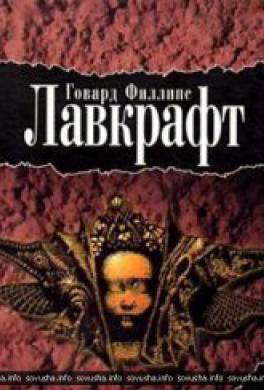
I suddenly felt like it. The more I read King, the more he reminded me of Dondova, but in the world of horror. I decided to take a break. I'm thinking of getting a physical copy of some of Lovecraft's classics.
Stephen King - "The Dark Tower" series King is definitely not my writer; for 95% of his books, my reaction ranged from "well, it's okay with some beer" to "remind me why I'm still reading this?". This book, however, is truly good. It describes a very interesting world—bleak and eclectic, very dark, and rich. While reading, I caught myself living in the world of "The Dark Tower," and it was hard to think about anything else; all my thoughts returned to the characters, building various theories and guesses. The characters turned out well, they don't irritate me, and overall the narrative is logical, though its logic is quite peculiar. The interweaving with the real world and (spoiler!) the author's self-insert look like creative impotence on one hand, but on the other, they fit into the fabric of the narrative as if they were meant to be. Again, authorial whim and a "do whatever I want" attitude creep out of every corner; there seem to be a ton of references to other works (I didn't notice them, I'm not a fan), but strangely enough, all of this works more as a plus. It's all due to the peculiar composition of the plot and the settings. The ending sparked a new wave of theories and thoughts. Overall, a very solid, unusual, and striking book. The only downside is the typically King-esque love for detail, including those that could be omitted for the better (for example, exactly which final words one character used to curse another, exactly how many meters of intestines a third character pulled out of a fourth, and what shape and color those intestines were). It's irritating, provides no useful information, and as a result, the paragraph is just skimmed. Although in the DT, it's not yet the peak of sloppiness. 9/10, I'm taking off a point for the author's signature style. Strictly 18+ and strictly not for moralists who might faint at the word "wee-wee" in a book. But it's worth reading, if only for the very non-standard format.
Isaac Asimov - "Foundation" series I am in absolute puppy-like delight over this series. A ton of plot twists of varying degrees of unpredictability, a moderate amount of science, a moderate amount of fantasy, a moderate amount of action, a most interesting idea, and an insane scale of narrative—we watch as the history of an entire galaxy unfolds! This cannot be described; it can only be read, simply a magnificent masterpiece *_* The only thing is, there are few characters that grip me, but those are my problems, and the general narrative is worth it. Simply an ode to the human mind and progress. 10/10, a must-read.
Dmitry Glukhovsky - "Metro" series 2033. I started reading it just for fun, not expecting anything special—I'd just heard a lot of good things, it caught my eye, I opened it and... Everything after that is a blur. You'd think, well, what can you actually do by limiting the world to a single Moscow metro? It turns out, it can become a most beautiful post-apocalyptic fairy tale, dark and cruel, frightening in places, but insanely beautiful and captivating. For Muscovites, it was probably much more interesting to read, while I had to constantly check a map of the Moscow metro, but that didn't spoil the impression at all. The author has a good command of language; he builds the atmosphere perfectly without overdoing it, everything is very effective and beautiful. A stunning scene where mutants chased the main character through nocturnal Moscow kept me awake for a long time; King's works combined didn't scare me as much as this one scene. And then there are moments in the library, in the metro itself... The ending is simply amazing; I tried to guess it but couldn't, yet the idea was right on the surface, and I was surprised by how simple it was. A most brilliant book, a must-read, worthy of being called a classic of modern sci-fi. 10/10. 2034. The people craved a sequel—the people got it. One of the episodic characters from the first part is developed, and several new ones are introduced. The action takes place at the other end of the metro. Overall, the book is weaker than the first part, but still readable; the atmosphere remains more or less, but it's already somewhat pale and derivative. You can read it, but it's not necessary. 6/10. 2035. Stop it, pot, don't boil. All the characters from previous parts gather in a huddle, new ones multiply, but this only exacerbates things. If the first part was a struggle of man against a mutilated post-apocalyptic world that he himself created, then here everything boils down to mouse-bickering, political talk, various petty intrigues, filth, nastiness, the absolute bottom, and just "ew". If in the first part a cold sweat broke out at the mere thought of having to go to the surface, here the characters stroll through the ruins as if they were at home, not even always caring about hazmat suits. As for the metro, there's nothing to say; the main danger is no longer mysterious forces, mutants, etc., but simply people, and the whole book is about how a bunch of people in the metro tear each other's throats out. I finished it out of sporting interest. In short, he would have been better off not writing it; he should have left the beautiful fairy tale and not tried to "realism" it. 2/10, dislike, I do not recommend reading it if you don't want to be disappointed in the universe. Not a 1, because some interesting points are raised and it's not quite the absolute bottom. Generally, the author should have stopped at the first part, because the second and third look like fanfics based on it, and there's already plenty of that stuff. He created a gorgeous world; he should have left it as is and let others imagine and develop it. But alas, in our world, money defeats evil, which is why the author started cranking out sequels. Don't repeat my mistakes; don't read beyond the first part.
Yesterday, Geektimes published An Introduction to Singularity, in which the author discusses why not everyone benefits from technological progress and why they won't in the future. Naturally, it's under the "sci-fi" tag.
Here are a couple of quotes for the announcement:
The exponential progress they describe will affect an exponentially decreasing portion of humanity. That is, everyone will benefit from the singularity, but its onset will occur individually for each person. For some, the singularity will never come. Not everyone, it turns out, will want to fly to Alpha Centauri, upload their consciousness into virtual reality, or transform their body to live underwater and in lava flows.
— Amazing! But what is this related to? Surely, immortality, travel to other planets at near-light speed, and other things haven't interested the residents of this city?
— Frank, you're asking the wrong question again. Of course, some of the population was interested, and part of it left Varanasi, but most simply didn't understand how the world had changed. Imagine that in 2020, an ordinary city teenager tries to explain to his grandmother, whom he visited in the village, that he won't go to the river by bicycle because his firewood app crashed, and now he won't be able to catch a satellite. Or how he asks why his grandmother doesn't use the Google Loon stratospheric airship system, and how her refrigerator replenishes its food supply if she can't place an order or send coordinates of her hut to Amazon drones. The old woman will be, at the very least, somewhat surprised. And this is despite the fact that she is separated from this teenager by no more than half a century of technological progress, and with the onset of the singularity, people will be separated by chasms of thousands, albeit subjective, years!
..разым двазым трызым рызым пята лата сигерь мата локом боком крюк за крюк из бульмы бульма урюк.. Знание некоторых закономерностей освобождает от изучения многих фактов. Мечты сбываются рано или поздно, так или иначе.
Yesterday, an introduction to Singularitarianism was published on Geektime.
Yes, I read it too. It seems a bit oversimplified to me, but considering the ending, maybe that's how it should be.)
In general, there's a lot of good fiction on GT. I especially liked the completed cycle "The Thin World". Currently, "Gene of Chimeras" is good. But in general, the entire "reading hall" tag is quite readable. I also published my little piece of writing under that tag once.
Right now, I'm reading "Great Expectations" by Charles Dickens. It's too early to draw conclusions; I've only read a small part of the book, but overall it's interesting and amusing. The first-person narrative style is a bit tedious, but on the other hand, it makes you feel closer to the narrator.
Regarding Pratchett, with whom I've now finished (and there are almost no books left)
Terry Pratchett The Colour of Magic -> The Light Fantastic -> Equal Rites -> Mort -> Sourcery -> Wyrd Sisters -> Guards! Guards! -> Eric -> Witches Abroad -> Small Gods (10/10) -> Lords and Ladies -> Men at Arms -> Soul Music -> Interesting Times -> Maskerade -> Feet of Clay -> Hogfather -> Jingo -> The Last Continent -> The Fifth Elephant -> The Truth -> Thief of Time (To be honest, the stories about Rincewind become increasingly boring towards the end. "The Last Continent" still had some spark in places, but "The Truth" is only interesting because it's a crossover, and the plot and characters are shown rather blandly) -> Night Watch (unlike Rincewind, the cycle about the Watch becomes even better over time, and as a culmination, we have this wonderful work! 10/10) -> Thud! -> Snuff -> Going Postal -> Making Money -> I Shall Wear Midnight (as I said, it's not the same anymore... Yes, here we meet one of the most interesting characters from Pratchett's early books, but it doesn't really save it. The book doesn't *consist* of truly great moments, as many of Pratchett's books do; it simply includes such moments, and you come across them from time to time, nothing more...) -> Raising Steam (an important book for Discworld, but I found it relatively boring) -> Snuff/Vimes (well, this is more like the old, good Terry! The Watch isn't dead!) -> The Science of Discworld I (this isn't a work of fiction; it's a fun piece of popular science. It's a bit more difficult to read than other books, but the experience is very interesting. I didn't learn any new facts, but the point is the interesting presentation. Maybe I'll take on the second and third parts later) -> Unseen Academicals -> Truth -> The Wee Free Men (a short story) -> Death and What Comes Next (similarly) -> Monstrous Regiment -> The Shepherd's Crown (well... It's okay. But it's still the last thing Pratchett wrote in his life.)
Towards the end, I seem to have completely confused the order, and I didn't even read some of them ("Pyramids," for example), but overall... It's okay. There was no strong misunderstanding of what was happening anywhere. I've read 41 books and stories, and according to my calculations, there are about six large books left. I don't plan to read them for now, but later...
Arthur C. Clarke - "Space Odyssey" series A good trilogy, but it was difficult to read. I doubt it's the translation; I suspect it's the author's style. It seems okay, but there's a feeling that you're struggling through a wall of text, trying to get to the point. On the plus side, there's a lot of interesting and scientific stuff. 7/10, it didn't quite click, but it's a decent book.
Andrey Belyanin - "The Secret Investigation of Tsar Gorokh" series I was strongly advised to read this, they insisted, so I had to agree. I wouldn't say I read it reluctantly, but there have been better books. The same jokes are repeated over and over, everything feels contrived and stereotypical. But the plot is interesting, it's easy to read, and it's suitable for relaxing. 6/10, I don't share the enthusiasm, but I don't regret the time I spent reading the book.
Omission. I didn't mention reading Graham Greene's "The Power and the Glory". And yet, it's a very powerful book, 10/10.
Life in Mexico in the early 20th century and the fate of the main character are felt right down to the bone.
Actually, I read this timeless classic a long time ago, but I didn't finish it because I only had nine books available. I remembered very little, so I reread it, essentially experiencing it with fresh eyes for the first time. The timeless classic is divided into two parts, and I will rate them separately. Corwin's Pentology is a very cool thing. Together with the protagonist, the reader is amazed, stunned, tries to understand something, is amazed again, turns the picture of the world upside down, consumes buckets of popcorn, tries to figure out this soap opera, takes half a liter of vodka, leaves half a liter alone because it's still difficult to understand, jumps half a meter with a new, shocking plot twist, and in the end, is no longer surprised by anything. The impressive, very colorful descriptions are particularly pleasing - I don't know if the author or the translator tried hard, but there is a lot of color and special effects in the book, sometimes it even makes your eyes hurt. 10/10. Merlin's Pentology is a bit weaker. Using the personality and biography of the protagonist, the author throws a lot of content at the reader, and if at the beginning everything is quite interesting in the spirit of the first pentology, then in the middle it turns into a complete mess, chaos, and absurdity, new plot elements appear out of nowhere and are immediately cut off, pianos come out of cars and gods out of bushes, the level of SURPRISE is off the charts, and the ending is weak; the author, apparently, could not bring everything to a beautiful finale and hastily cobbled together something that somehow completes the main plot lines, but there are more questions than answers, and overall this pentology left a more chaotic impression. But it is still interesting and readable. 7/10.
I read Dickens' "Great Expectations". It's a good book. One of those that initially seem boring and drawn-out, but in the end, you're a little sad that it's over. Now I've read "The Martian Chronicles" and the accompanying short stories, all by Bradbury, of course. I really enjoyed it.



 Драккошка