


 Граф Орлов
"No one living today witnessed those times, and even their fathers' fathers had only heard of them from their ancestors; thus, with all possible modesty, I write: I can recount neither what truly happened, nor what was written before me, but only that which our ancestors have preserved to this day with all the firmness of faith.
In time immemorial, people knew neither fire nor steel, and lived like beasts, finding life only in the flesh of slain animals, the blood of enemies, and the embrace of women. And then the Father-Sun, scorning the eternal void, reached out his hand to his suffering children and sent us an Emperor, whose countenance shone like the sun and whose heart burned with an unquenchable fire. And though he was as much man as god, filled with compassion, he did not return to his rightful place beside his father at the appointed time, but tore the blazing heart from his chest and rent it into myriads of pieces; in that moment, the world shone with myriads of bonfires, the dark creatures fled, and humanity rose from its knees. And the holiest among men then enclosed sparks of that sacred fire within themselves and led the people on a long journey south. With the sword, our merciful ancestors exterminated the non-humans, burned their settlements and burrows with fire, and in great glory, humans settled from sea to sea. And he who was first and best among the flame-people was appointed by general consent as the new Emperor, guardian and protector of mankind, and there was peace.
But the descendants did not preserve that fire which was in the hearts of their fathers, for fire always strives upward, and after each union of a scion of fire with an ordinary woman, the hearts of their sons became less flaming. Once again, people surrendered to drunkenness, gluttony, fratricide, and lust, hoping in this way to draw closer once more to the light and warmth of the celestial fire. Then three brothers, the last descendants of the Emperor, in whom the weakest spark still smoldered, rallied their vassals and knights around them, and there was a great war, when the earth itself warmed from living blood, and its vapors intoxicated men like wine. Not one yielded in his pride, and in a great battle, all their vassals and warriors fell, and only the three brothers continued to fight, unable either to retreat or catch their breath, for each was waist-deep in corpses. And the Father-Sun wept bitterly then, and out of shame and grief, he hid his radiance from human eyes. The brothers were horrified, for seeing no light, they could not fight, and they sobered from their rage. They decided to divide the Empire equally and fight no more, and then the Father-Sun turned to the people once again, and the brothers understood that they had done well. This was the 101st year since the founding of the Empire."
Gislen of Bass, bishop of the Church of the Father-Sun, year 326, "Great History"
Arran
In the 101st year, the first brother, the most valiant and righteous, said: "Heavy is my crime, and I foresee great hardships in retribution for it. I shall go north, and let the wind cool my heart until it is purified." And he led his people north and founded the kingdom of Arran, for his name was Arr, and foreseeing that his land would face many troubles, he wished to immortalize his name.
And so it happened, for he died without leaving an heir. After the war, he fell into great asceticism, and it is said that although he knew the dynasty must continue, he could no longer bring himself even near his own wife. For many years his barons fought amongst themselves, until the strongest among them was proclaimed King Athaulf I and forced the others to swear fealty to him. But his eldest son, Athaulf II, perished repelling Northern raids, and Athaulf III, his younger son, paid a massive tribute to the Northerners, emptying the treasury and selling many of his people into slavery. Then the people—both serfs, barons, and knights—rose against him, and history knows no other instance where the entire populace rose in a single impulse. Athaulf III was captured, blinded, deprived of his feet and hands, and delivered thus to a powerful Jarl; this was the final tribute the kingdom paid to the Northerners, though raids continue to this day.
Then the barons, not by force of arms but by force of reason, elected the best among their ranks, and it was a great celebration, for for the first time since King Arr, the whole people bowed before one man, and there was a brief moment of peace. And King Fridolin I chose the four wisest and most loyal, granting them counties adjacent to his domain and calling them his closest friends, the High Council, and the eight strongest, to whom he gave margraviates in the borderlands, and granted small viscounties to eight other valiant men, calling them the Lesser Council. Before all the people, the king swore thus: if he makes a decision, the High Council may contest it, and if the Lesser Council supports the contest, the decision is overturned. If anyone from the Lesser Council breaks the law, he shall be judged by the king and the High Council; for members of the High Council, the reverse is true, and the king himself can be deprived of power only by the common will of both Councils. So it remains to this day.
Such a valiant dynasty also faded, as did the next, and now the third is on the brink of ruin, for the sole heir is a minor, and a regent rules.
The lands of Arran are harsh, the grip of cold is strong for most of the year, and harvests are meager. The land abounds in forests and marshes, from which miasmas rise with the coming of warmth, and many perish. Noblemen, as is their custom, often wage war, but these wars bring little evil—no one wishes to unnecessarily condemn to fire an already poor land that feeds them, and the nobility fears the judgment of the king and council. Both nobles, warriors, and commoners are always religious, usually leaning toward the Void, for life here is harder than in other lands, and there is no strength for pleasures or hope, only for detachment and that sense of brotherhood shared by everyone who has emerged from the Void and is destined to return.
+2 Resilience, +2 Will, once per phase the character survives loss of health or sanity (remains 1)
Legran
In the 101st year, the second brother, the strongest and most agile, said: "Dear to me are the forests and mountains of the West, for there is much good game and the earth is full of good metal, and it will be my great happiness to live in a land capable of producing valiant knights and other brave men."
"Le Gran!" — such were the first words spoken by the new lord of the West when he stepped onto the land of his new holdings, and since then this land has been called exactly that.
Following his words and a secret desire to one day resume the war and reclaim the Empire, the king surrounded himself with the best warriors, endowed his vassals with unlimited rights over their lands, and burdened the peasants with an unbearable yoke of taxes—all for the sake of possessing the greatest army in the world. And the army was the greatest, and the vassals were powerful—too powerful for loyalty. The king, a great knight, was stabbed in his sleep; the royal domain shrank to the size of a barony, and the heir henceforth had only one right—to be king, but nothing more. Influence was divided among dukes, their power was contested by barons, and only a fragile balance of forces and kinship ties kept the lords from a great slaughter. Over time, external threats forced the nobility of Legran to unite and turn to the king for protection, but to this day, the latter's power is weaker than in any other kingdom.
And yet, the founder's dream for Legran came true. Nowhere in the world can one find more impressive castles, more numerous and valiant warriors, or more skilled smiths. Winter is far less prolonged and harsh than in Arran, and the serfs, tightening their belts, are able to provide for the numerous whims of the nobility. Amidst hunting, luxurious feasts, rich garments, and, of course, frequent tournaments and blood-stirring wars, a proud and life-loving spirit was fostered in the knights of Legran, so distinct from the austerity of their northern neighbors and the vain busyness of those in the east. Respect for them is great—for the mere glint of their armor and clothes blinds the serfs and strikes them with awe, while the knowledge that a single mounted man-at-arms is enough to slit the throats of a dozen peasants for any offense strikes them with fear. Despite this, the life of commoners is not so sad—lords always need skilled servants, and their generosity can be as sweeping as their anger.
Besides luxury and slaughter, the nobility loves songs and tales of ancient times—not about how humanity was cast from the void into a world of cold and death, but about the feats of ancestors in cleansing the land of filth, about the blessing of the Sun, and about their forefathers with fire in their hearts.
+1 Combat Spec for martial specializations, victory in battle gives +1 to a random characteristic
Silentia
In the 101st year, the third brother, cunning and wise, said: "A heavy lot you have chosen for yourselves, brothers, and for your peoples, this burden will be threefold. I shall go east, where the rivers are deep and the fields are fertile, and let the burden of my people be more bearable." There he found lands rich and warm, and with great energy organized many settlements; and while his brothers built castles, he ordered cities to be built, for, not being a brave man, he feared the military power of his vassals and said that his best defense would be a numerous, contented, and loyal people. He named the kingdom Silentia, for the land seemed to him a place of calm silence, and he harbored a passion for the euphony of names.
In reality, the cities knew hunger, plague, and other disasters, but their wealth lured people from all lands, especially the daring and the intelligent. Many wonders were invented in Silentia—from the crossbow to the clock. Silentia is famous for its architecture, sciences, and markets—all these joys, of course, only for the better part of society. But there is something for everyone—the abundance of sects and beliefs. Though in life people, as everywhere, are tied to communities, guilds, and estates, their souls feel no unity, and each loses themselves in that to which the Silentian mind is more inclined—restless, vain, and weary.
The glitter of cities, fertile fields, and sweet wine blinded these people, and they, proud, are the only ones besides the islanders who dare to venture into the sea, which has long been known as the abode of evil. The thirst for profit outweighs the instinct for self-preservation—if there is a place in the world where one can find any commodity, any faith, a person of any nation (and any non-human), it is Silentia, a country of colossal supply and demand.
+2 Intelligence, -2 Will, +5 Skill Points, peaceful activities are more effective
North
Some people are incapable of existing in civilization. There is no place for them among men. Too stupid, too hot-tempered, too unreliable—since the time of the first humans, such have always existed. If they do not find their death, they flee further and further north, until the cities and plains are left behind and they find themselves in a land of only ancient coniferous forest and permafrost. Only then do they stop, for beyond lies only death, snows and ice so distant that they cannot be encompassed by sight even from the highest mountain.
There they live, knowing no agriculture, feeding only on the meat of bears, deer, whales, and seals, dressing in skins, and their souls are as fierce and beastly as their appearance. Usually, there is only one stead for many miles, inhabited by one family with their slaves. They have neither kings nor lords; the strongest and wealthiest among them are called Jarls, and they rule by force of arms over several steads, collecting tribute in meat and fur, which they often trade in the south for iron and grain, for nothing is more valuable to these half-beasts than a sturdy sword and bitter beer. In years of great need, Jarls unite to plunder the southern lands; usually, however, they feud among themselves, for they tolerate neither encroachment on property nor even a careless word, and blood-feuds are the only thing that gives meaning to their lives and are considered a great feat of valor.
Each believes in their own way, or does not believe at all. To this day, superfluous people flock to the north—from low-born criminals to disgraced nobility. But the cold death from the edge of the world encroaches upon their lands, forcing even age-old pines to break and causing even bears to freeze to death, and with each year, there is less of the much-needed space for these people, and their raids grow fiercer.
+3 Strength and Resilience, +50% resistance to elemental damage and negative effects, peaceful activities are less effective. Free Berserker specialization.
Aldor-Ner
When there was the great war, and the old Empire was drowning in blood, the weakest and most despised did not wish to fight for their future and fled east. Finding themselves before the sea, they did not stop—for so great was their fear that, scorning the laws of their ancestors, they preferred to entrust their fate to the waves of the great dead water and the monsters lurking in its depths rather than stay. And although many perished, many managed to reach a large island, which they called Aldor-Ner, meaning "refuge" or "haven." That island belonged to spirits and other unknown creatures, and many more were sacrificed to them so that those remaining could find a new homeland. These sacrifices are still offered by the heretics of Aldor-Ner to this day, for in their godlessness, they fear the wrath of lower spirits.
In current days, they have their own king and army; on the few lands suitable for farming, fields are spread, but mostly they eat sea fish, cold and stinking, and the stench has settled in their souls and permeated their bodies. Often they build ships and set sail for the mainland, but, being descendants of the greatest cowards, they usually engage in trade rather than raiding, selling amber, ceramics, salt, and copper, and purchasing wine and good timber. And although the appearance of overseas guests often evokes contempt, the greed of lords and the cunning of islanders force the people of the continent to reckon with them.
+50% income from any sources, +2 Reflexes and Intelligence, -2 Etiquette, no penalties at sea
Snakefolk
Ancient dangerous enemies, now—creatures driven into holes. At the dawn of humanity, the snakes that ruled the earth entered into a perverse union with human women and sired monsters—so say the humans, but this peculiar folk says otherwise—they always lived in peace on this continent until humans came to their lands with fire and sword. Humans came, slaughtered almost everyone, built their high fortresses—and all for the sake of beginning to exterminate one another. And if a snakeman did not fear losing his life, he would surely ask a human a certain question for which there is hardly an answer.
Usually, snakefolk live in small communities in secluded corners, engaging only in hunting, but many centuries have passed since the founding of the Empire—and now they are more of a strange curiosity than a hated enemy. Owning a snakeman slave is prestigious, having a snakeman assassin in service is useful, and sometimes the youngest and most curious leave their communities to see with their own eyes what is happening now on lands that once belonged to their people. Of course, sometimes they are skinned and sold... But alive, they are nonetheless more useful.
+8 Reflexes, +2 SP, -3 Intelligence
Immunity to poison.
Sanity doubled
Paralysis upon receiving any cold damage (Will vs 10)
Abominations
They have always been. They will always be. Once there were many of them; they wandered the earth, naked, unarmed, and aimless, and even then they instilled such strong terror in the distant ancestors of present humans that legends of them live on to this day, as does the fear of pale beings so similar to humans.
They are that which should not be, corporeal on the outside and empty inside, but they exist, and no one knows why they exist. Perhaps it is the will of the Void—copying the image, but not the essence, of the Father's creations. Perhaps they were once humans who suffered madness. Perhaps they were sent as punishment and admonition, or perhaps they are harbingers of the end of the world. One thing is certain—they are loathsome and dangerous.
Character does not remember events from more than a year ago, but possesses information about the world
Immunity to any cold effect, +50% vulnerability to fire.
Immunity to injuries and bleeding
Regeneration 50% HP at start of turn
Character independently recovers after death, except in special cases (loses one unit of Will)
Mental deviation
Do not require air, sleep, or food
-1 Strength, Resilience, and Reflexes. Character will incur the wrath of authorities and cults upon revelation of identity
Access to the power of cold
Do not spin the wheel of fortune, available convictions—Void or Atheist
Half-breed
The character descends from a union between a lower spirit and a human.
Unique skill tree. Randomly from -2 to +2 to each characteristic. Random mutation.
e si ieu muoir, er mi grans deliuriers


 AstralLein
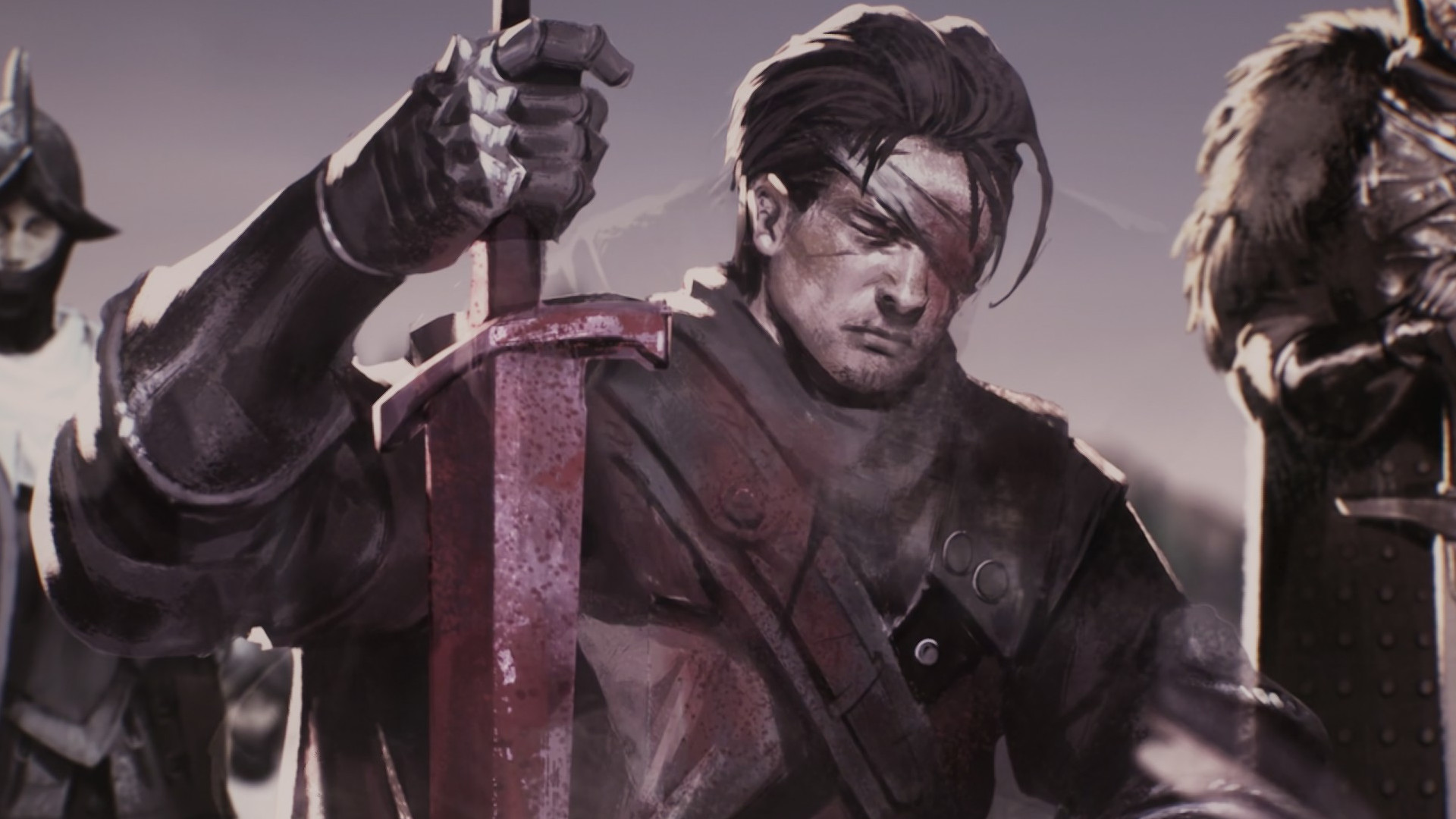 Hargen von Radengrad
—Tell me, Father, why is there no end to our suffering? Father, why does the sunlight fade year after year? Father, why does the warmth of the souls of the innocent get devoured by physical and mental deformities?
The Father was silent.
—Father, why does matter not grant us all-powerful, eternal peace without pain and suffering? Why do we shine in our sun-like armor, offering empty prayers to a forgotten heaven?
The Father did not utter a word.
—I was like you, Father. The rays of Your light shone in the eyes of my proud family. We burned the huts of witches and blew the heads off overripe abominations. Yes, with years of service, I would have become like You. A guide of light to lost souls.
The Father answered with silence.
—But I saw the truth. I saw it when our squad was engulfed by the eternal Void. Fire is just a relic of a useless struggle against the eternal. And the more prayers you offer to save your friends, to ease your suffering, to give peace to your mind... the more suffering your soul creates in response.
The Father turned into nothing.
—Only by surrendering to the inevitable did I find the long-awaited peace. The agony of my wounds, of my mind, will never end. Only by accepting this reality, by abandoning dreams and hopes, is it possible to endure a little longer on this desolate earth.
The Father never existed.
—Why, you ask? "Just because." There is nothing in existence more correct than this naive truth. Is it not true, Father, that the Void and Simplicity are so similar?
After a moment of silence, the former proud Radengrad, now a landless, wandering mercenary, got to his feet and left the ruined Sanctuary of Fire.
The Void will consume everyone.
Gender - Male
Origin - Legrand
Belief - The Void
Strength 5+2+1
Endurance 5+1
Reflexes 5
Intelligence 5+2
Willpower 5+1
SP 3+2
Aggression
1. +10 to hit, +25% (multiplicative) to critical hit damage x3
2. Attacks reduce the opponent's sanity by 1 point x3
3. Additional attack x3
Literate
The character can read and write x5
Berserker
+2 to Strength, the character uses the Strength stat instead of Etiquette and Endurance checks.
1. +100% (additive) to melee damage, -5 to Dodge x3
+2 SP x3
Weapon Specialization:
Two-handed weapon
1. +2 to hit per point of Strength, damage +10% per point of Strength x4
2. The character deals damage to opponents in adjacent cells x3
Sun Eater is not a legendary family blade, but merely a current two-handed sword of decent quality that is in his possession, and receives this name.
Clouded armor with faded sun emblems is a heavy armor that is now medium armor because there is no skill for it...
Travel cloak
Healing potions
Charred medal for unknown merits
Savings
[/spoiler]
Hargen von Radengrad
—Tell me, Father, why is there no end to our suffering? Father, why does the sunlight fade year after year? Father, why does the warmth of the souls of the innocent get devoured by physical and mental deformities?
The Father was silent.
—Father, why does matter not grant us all-powerful, eternal peace without pain and suffering? Why do we shine in our sun-like armor, offering empty prayers to a forgotten heaven?
The Father did not utter a word.
—I was like you, Father. The rays of Your light shone in the eyes of my proud family. We burned the huts of witches and blew the heads off overripe abominations. Yes, with years of service, I would have become like You. A guide of light to lost souls.
The Father answered with silence.
—But I saw the truth. I saw it when our squad was engulfed by the eternal Void. Fire is just a relic of a useless struggle against the eternal. And the more prayers you offer to save your friends, to ease your suffering, to give peace to your mind... the more suffering your soul creates in response.
The Father turned into nothing.
—Only by surrendering to the inevitable did I find the long-awaited peace. The agony of my wounds, of my mind, will never end. Only by accepting this reality, by abandoning dreams and hopes, is it possible to endure a little longer on this desolate earth.
The Father never existed.
—Why, you ask? "Just because." There is nothing in existence more correct than this naive truth. Is it not true, Father, that the Void and Simplicity are so similar?
After a moment of silence, the former proud Radengrad, now a landless, wandering mercenary, got to his feet and left the ruined Sanctuary of Fire.
The Void will consume everyone.
Gender - Male
Origin - Legrand
Belief - The Void
Strength 5+2+1
Endurance 5+1
Reflexes 5
Intelligence 5+2
Willpower 5+1
SP 3+2
Aggression
1. +10 to hit, +25% (multiplicative) to critical hit damage x3
2. Attacks reduce the opponent's sanity by 1 point x3
3. Additional attack x3
Literate
The character can read and write x5
Berserker
+2 to Strength, the character uses the Strength stat instead of Etiquette and Endurance checks.
1. +100% (additive) to melee damage, -5 to Dodge x3
+2 SP x3
Weapon Specialization:
Two-handed weapon
1. +2 to hit per point of Strength, damage +10% per point of Strength x4
2. The character deals damage to opponents in adjacent cells x3
Sun Eater is not a legendary family blade, but merely a current two-handed sword of decent quality that is in his possession, and receives this name.
Clouded armor with faded sun emblems is a heavy armor that is now medium armor because there is no skill for it...
Travel cloak
Healing potions
Charred medal for unknown merits
Savings
[/spoiler]

