The Reimian Empire is a vast state in the center of the continent of Enclessia, surpassed in size only by the empire of the Celestials to the east. This country possesses the world's most advanced technologies backed by a strong economy and an abundance of resources, an educated population, and the strongest armed forces on the continent.
TerritoriesReimian lands stretch from the Mediterranean Sea in the south to the Northern Ocean. An aggressive foreign policy and centuries of forceful expansion have led all of this country's neighbors to view the empire with hostility, although many of them still refuse to abandon their trade relations with it.
Aside from the eastern empire, the Reimian Empire borders eight other states and is surrounded by a portion of uninhabited territories that serve as home to wild, as yet unconquered peoples.
To the west lies the kingdom of Alivar, homeland of the half-dragons. In the past, Alivarian warriors, led by the Dragon King, plundered and burned human settlements, taking their inhabitants into slavery; however, the territorial expansion of the Reimian Empire cornered them — occasionally clashes occur between the two states in border territories, but the conflict does not develop beyond that.
To the southwest, the empire borders the countries of the Enclessian Faith — Tanarsis, Areid, Hem, and Asteya. The Holy See, due to its religious peculiarities, refuses to maintain diplomatic relations with the Empire, however, its allies maintain trade routes with it despite a recent war.
Beliad, which was an ally to the empire in the past, is located to the south of the empire. Relations between the two countries deteriorated significantly after the Reimian Emperor decided to take part of Beliad's southern lands to gain access to the Mediterranean Sea. Neighboring it is the kingdom of Serafol, famous for its cuisine, festivals, and peace-loving nature.
And finally, the southeast of the empire touches the territory of the ancient state of Dreyeria, infamous for its contemptuous and cruel treatment of foreigners. Diplomatic missions to Dreyeria always proved unsuccessful.
TechnologyDaily LifeThe technological progress of the Reimian Empire has taken deep root in the society of this country, allowing its citizens to enjoy the convenience of numerous inventions useful in everyday life.
RailwaySince the Reimian Empire is the only country that knows the methods of extracting, processing, and using the liquid that serves as fuel for rolling stock, trains run only here.
This allows the residents of the country to move across the territory much faster and with greater comfort, brings enormous advantages to the economy, and helps in times of war.
WeaponryBy now, the most significant fruit of science for the empire's armed forces has become ephemeral weaponry. This new type of weapon had a shorter firing range than a bow or crossbow but was more convenient to handle and, depending on the configuration and type of ammunition, possessed greater power. Compressed magic crystals of Alait origin, which elves have long produced from natural gemstones, were used as projectiles. Depending on the type of magic stone, the effect of the projectile varied.
Peoples of the Empire97% of the empire's population consists of humans and (to a lesser extent) elves.
HumansThe traditional (stereotypical) Reimian appearance is fair skin, black/brown hair, gold/amber eyes, and tall stature. However, since the Reimians annexed the territories of numerous peoples of the continent, this stereotype is hardly relevant nowadays.
Alait ElvesThey differ from humans by a slender build, long pointed ears, and better health. Generally, they have fair hair. Unlike humans, elves are not strongly subject to the negative effects of aging and generally live 40-50 years longer than humans.
SnakepeopleThey are divided into two types — some resemble snakes, others crocodiles. Both are very agile but do not distinguish themselves by intelligence. Due to the latter, they have never been recognized as citizens of the empire and, as a result, with rare exceptions, are forbidden from leaving their native swamps.
FairiesRepresentatives of the fragile and weak fairy people have lived in various corners of the modern Empire's territory since ancient times and over time were peacefully annexed. The main difference from humans is their small stature — usually fairies do not exceed 150 centimeters in height, although rare individuals reach 160 cm.
LamiasThe appearance of a lamia may seem own terrifying to many — they are women with pale, sometimes marble skin and snake tails. In the past, residents of the empire feared these creatures and subconsciously perceived them as monsters, which led to tragic situations for both sides — first humans hunted them on their own land, and then they began to show aggression toward ill-wishers. This ceased about twenty years ago through the efforts of the current emperor. Today lamias can be met on the streets of the empire's cities, although not as often, as their number is not very large.
AridsDistinctive features: dark brown skin, sharp fangs and claws, black eye sclera with red irises and vertical pupils, animal (wolf-like) ears.
They live in dungeons and near volcanoes; like the snakepeople — they cannot leave their native lands without special permission. Unlike the latter, this is related not to low intelligence, but an inability to control themselves.
SocietyLegally, all citizens of the empire (of course, excluding members of the imperial family) are almost equal to one another; however, centuries-old traditions oblige people to respect hierarchy. The aristocracy enjoys a number of privileges as well as certain restrictions. For example, aristocrats are forbidden from marrying commoners; they are expected to be knowledgeable in etiquette and educated.
Imperial titles (from highest to lowest): emperor, duke/Alait king, marquess, count, viscount, baron. Traditionally, titles are inherited by one of the landowner's sons or the groom of his daughter; the only exception to this rule is the emperor's family.
Regions of the EmpireAckervaldThe central region of the country and the original territories belonging to the Reimian people. The capital, Reim, and the industrial metropolis Calvad are located here.
Kingdom of AlaitAn autonomous region of the empire governed by an ancient royal dynasty of elves. Almost the entire population of the region (with rare exceptions such as students, etc.) consists of elves. In the capital Seiran, the best city for a healthy and harmonious life, is located the oldest and second most prestigious magic academy of the empire.
Duchy of Larian (west)
The empire's best steel and magic stones, which serve as the foundation for the empire's army, are mined in this region. However, despite such an important role, an outflow of residents from Larian to other regions of the country has begun in recent years. This is because adherence to traditions is maintained most strictly in this duchy; commoners are subject to high taxes and sometimes have their rights curtailed. The duke plans to introduce a new law forbidding commoners from moving to other regions of the country. This, naturally, led to great dissatisfaction among Larian residents and friction with the current government of the country.
Duchy of Brightwin (south)
The agricultural center of the country and the main place for mining blue erinium. The snakepeople's swamps and problematic neighbors in the form of the Holy See and its allies are located here.
Duchy of Darkiria (north)
The most militarized region of the country, where the art of war and knighthood have long flourished side by side. Tests of new weaponry and magic spells are often conducted in this region.
Duchy of Laitia (east)
A region in which many cultures of the continent intertwined, bordering the Celestial Empire.
Nihon (northeast)
By the year 762, the southern city of Moria became the economic center of the Nihon region in the Reimian Empire, while Taiho remained the capital of the region.
The northern island of Raiju, in turn, became a stronghold for many resistance force groups — if most of them tried to blend in with the civilian population and waged guerrilla warfare, others hid in inaccessible regions of the north, where they coordinated their actions and future attacks, intending one day to return their country to its former greatness.
ErenA province and same-named city that previously belonged to Beliad. Now it is a large port city, a center of maritime trade in the south, a gambling paradise. People from all corners of the country often gather here to relax, and sometimes — to hide from the eyes of their families and the law.
Brief HistoryThanks to developed methods of settling new lands, the oldest territory belonging to the Reimians was very large for that time, and the residents themselves were distinguished by a peace-loving nature, preferring farming and construction over war and hunting, and later — trade, art, and philosophy. Circumstances, however, forced them to change their perception of the world. When most of their eastern and southern lands were captured by militaristic kingdoms, and western settlements were ravaged by highlanders, a decision was made at a meeting of landowners to create a general mandatory army. This happened on the second day of the first moon of the year 102.
Years of the RepublicIn the year 154, after long years of war, the residents of the republic were finally able to achieve the peace they so desired — neighbors abandoned their attempts to seize the remaining Reimian territories, and barbarian raids were successfully stopped by high walls and sharp steel.
In this era, a legal system unique for that time is born and strengthened in the republic; science and culture develop, and a professional army is created. Many kingdoms that agreed to mutually beneficial trade relations with the Reimians later regretted it — while kings and their vassals enjoyed luxurious lives, the republic developed at a rapid pace. They did not notice how the economies of their countries became dependent on Reimian exports. Naturally, such a state of affairs did not please the local elite, resulting in a secret meeting of kings in the year 189, where an anti-Reimian coalition was formed. Two years later, the combined armies of these kingdoms stepped onto the territory of the republic without a declaration of war and without warning.
ReimThe large-scale but unexpected attack by neighbors caught the residents of the republic off guard — although they had fortified fortifications, a well-prepared army, and better weapons, resisting a perfectly coordinated attack by multiple opponents was very difficult. The dire situation forced the senate of the Reimian Republic to limit the freedoms of ordinary residents of the country as well as grant one of the generals the powers of a dictator. This became a military leader named Egir Valenstein, famous for his bravery and a golden but cold head on his shoulders. Thanks to his competent leadership, the Reimians managed to organize and withstand the pressure of numerous enemy armies, but this was only the beginning of a bloody and very long war — the next thirty-two years of fierce battles led to no changes on the region's map. Ultimately, kingdoms tired of war fell out among themselves and one after another tried in some way to conclude peace with the Reimians.
The senate of the republic was very glad for such a turn of events and hurried to end the war as soon as possible. Egir, however, had other plans that differed radically from the intentions of the senate. In the three decades that he ruled the republic and commanded its troops, he managed to repeatedly strengthen his power and gather loyal people around him, which allowed him to overthrow the senate and proclaim himself the sole ruler, thus becoming the first king of the kingdom of Reim, named after the capital of the former republic. He took the name "Lapis Reim" for himself, thus using the name of the capital and kingdom as his family name. He did not intend to end the war either — instead, he concluded a secret treaty with the strongest of his external opponents — the southern kingdom of Beliad.
In the year 226, the many-year war ended with Reim and Beliad absorbing the territories of their neighbors.
PeaceLapis Reim died at the age of 89 and, despite his cunning and lust for power, entered the country's history as a hero and founder of the nation. It is possible that this happened largely due to the propaganda existing in those years — after the end of the war and until his very death, Lapis directed all his strength toward strengthening the power of his own dynasty. Of all the dictator's numerous children (he had more than a dozen from different women), the heir to the throne became his first son — sixty-five-year-old Hegon Reim, who had been his father's right hand since the age of sixteen. All other heirs of the first king became the progenitors of the Reimian aristocracy.
Hegon, although he was one of the key figures of the last conflict, did not love war. Instead, he devoted much time to improving the quality of life for his subjects, paid great attention to science and culture, improved relations with neighbors, and built new trade routes.
In the year 249, during one of his expeditions, Hegon established contact and achieved warm relations with the kingdom of elves in the southwest. This friendship brought magic and its first mages to the territory of the Kingdom of Reim.
The TroublesShortly before his death at one hundred and two years, Hegon Reim appointed as heir to the throne his third son — Archon Reim became the third king in the year 277 at fifty-three years of age. Archon invested a great deal of resources into the development of magical sciences and believed that the sorcerers of his kingdom needed not only to follow the elves but also to develop their own school of magic, researching new spells and ways of casting. Since the king himself had once been sent for training to one of the elven magic academies, he was more than competent to achieve success in this endeavor — through his efforts, the first full-fledged magic academy was opened in the country, and the wizards themselves were integrated into the country's army and took a number of positions in the state apparatus.
His reign was accompanied by the restriction of rights and freedoms of ordinary people — starting from imposing high moral values on citizens and ending with the comprehensive use of magic by state officials against ordinary residents of the country. For example, instead of conducting a fair trial, the king considered it more effective to use spells that allowed reading the thoughts of the accused, although this contradicted the foundations of Reimian society and violated a number of laws written during the republic and the reign of King Hegon.
The dislike of Archon by a large mass of people and especially aristocrats became inevitable. He himself was in no hurry to die and at 90 looked like a young man full of vitality and energy — all thanks to high mastery in healing magic. Such a situation caused great agitation among his ill-wishers, which eventually prompted a faction founded by his eldest son Leos to attempt the assassination of the reigning monarch. One night the king was poisoned, stabbed, and pushed from the balcony of his chambers — a Beliadian assassin handled his task flawlessly. Archon, however, remained alive. What happened severely traumatized the king and changed his character for the worse — he began to suffer from bouts of severe anxiety, flashes of uncontrollable anger, and strong paranoia. He dealt with his ill-wishers with inexplicable cruelty — the king did not kill his son Leos; instead, he sentenced him to lifelong torture in a dungeon specially built for such criminals — Leosforte. In the past, lawbreakers were treated more humanely, and therefore the construction of such a complex became another (but not the last) scar that Archon would leave on the public consciousness of his country's residents.
In the year 323, Archon Reim was liquidated by the residents of the capital who were tired of his tyranny and madness.
ExpansionArchon's successor was chosen by the organizers of the second conspiracy — six-year-old Eirin Reim took the throne on the bones of his grandfather. Numerous advisors and mentors were assigned to him, who were supposed to guide the young monarch on the "right path" and influence his future decisions.
The youth, however, proved stubborn, and as soon as he reached adulthood (16 years), he fired all his advisors that same day, gradually replacing them with other people whom he considered competent and loyal. Naturally, those who witnessed Archon's reign were strongly alarmed by such behavior of the young ruler, and certain groups tried to assassinate him, but they all failed — remembering his grandfather's experience, the young king well-organized his own security and was in very good physical shape himself. He pardoned all traitors who dared to attempt his life, but ultimately made it clear that in the future such actions would be punished by a painful death in Leosforte. The mercy shown by the ruler combined with the firmness of his character served to establish order within the country.
In the year 335, Eirin turned his gaze toward the raw-material-rich mountain region in the west and the kingdom of elves Alait in the southwest. Clashes with highlanders that occurred in the past made it clear that this people would never yield without a fight and would never recognize another's authority — they would not become slaves even if shackled in chains. Taking this into account, Eirin planned to exterminate them all to a man and annex the resource-rich lands to his kingdom, but he was in no hurry to send his numerous armies west — instead, he went straight to Seiran, the capital of Alait. He knew that the elves suffered from recently intensified raids by mountain dwellers, and therefore offered to become their protector. According to this agreement, Alait was to become part of the kingdom of Reim and in return would receive all its huge armies to protect its population from external enemies. As a result of long negotiations, the document was signed — Alait maintained full autonomy in all internal matters but renounced its sovereignty in external affairs. King Eirin was prescribed to take as his wife one of the Alait princesses, which he did and was glad for — the elf was not only beautiful but also managed to become his right hand in all state affairs of the country, demonstrating a high level of competence.
Under the pretext of protecting Alait, Eirin sent his troops west with the goal of occupying the mountain region and liquidating its residents. The highlanders fought on their own territory, were distinguished by ferocity and cunning, but still failed to withstand the endless legions of invaders. In the year 343, the war ended in Reim's victory. A year later, Eirin proclaims the creation of the Reimian Empire and becomes its first emperor.
The iron, gold, diamonds, and other minerals obtained as a result of expansion were directed toward improving the country's military-industrial complex. Without wasting time, the newly minted emperor ordered his legions to march east. From the year 346 to 360, eastern countries collapsed under the empire's pressure one by one, until finally the legions hit Nihon in the east and the Celestial Empire in the southeast. The corruption-ridden Celestial Empire, despite numerous internal problems, still remained a difficult opponent to overcome, and Nihon warriors impressed with their mastery and unwavering spirit.
After several unsuccessful attempts to break through to the east, Eirin abandoned this venture. He strengthened the empire's eastern borders and achieved the signing of peace with the corrupt officials of the Celestial Empire, who did not need this war. Nihon refused to accept the empire's diplomats, as a result of which skirmishes in border territories with warriors of that country never ceased.
The Spider KingIn the post-war years, Eirin continued to develop and popularize the art of war and military craft, opened new academies, organized annual tournaments in the capital, which gained great popularity both among residents inside the country and outside. He himself loved taking part in such events and in the year 382 died at one such tournament at the hand of a Beliadian warrior. According to established rules, the winner for killing the emperor was not condemned and received his well-earned reward — a substantial monetary prize and a house in the center of the empire's capital.
The next ruler in the history of the Reimian Empire became Eirin's twenty-seven-year-old son Reisen Reim; all his other children died under mysterious circumstances and therefore could not claim the imperial crown.
In the year 384, Reisen introduced a number of changes to the empire's legislation, the most important of which was the official establishment of a class system in the country. The first category of citizens were recognized as members of aristocratic families — heirs of Lapis Reim and some other prominent residents of the country who were granted such honor. The second category became native residents of the Reimian state and Alait elves. The third — native residents of once-annexed territories. Representatives of the fourth category did not exist at the time the law was written, but they referred to residents of countries that would be captured in the future. At the same time, citizens of the empire could move between levels depending on their social position — talented people who showed themselves in a good light could raise their rank, while 'failures' conversely easily lost existing privileges. Nevertheless, despite such a possibility, this reform was very disliked by the residents of the empire — not only by oppressed peoples but also by Reimians themselves, who considered such changes contradictory to their ideals. Reisen ignored the warnings of his wise advisors and soon a civil war began. One side intended to overthrow the monarchy once and for all, while the other defended the Reim dynasty in every way. Regardless of the state of affairs in the country, Reisen always remained calm and nothing seemed to surprise him. Although he appeared well-informed and competent to his associates, the war still dragged on for two decades and unexpectedly, as if by imperial whim, ended in the year 404 with a crushing victory for Reisen. The rebel leaders were sent to Leosforte, and their followers received the lowest level of imperial citizenship. After the victory in the war, Reisen practically never left the limits of his palace and few knew what happened behind high walls constructed from precious metals.
The emperor died in the year 444 from sudden cardiac arrest. The first people to step onto the threshold of the deceased emperor's palace were his children, grandchildren, and their closest comrades. After consulting with each other and discussing what they saw inside, they decided not to reveal the secrets of their ancestor, sealing the old palace forever from same eyes. Beryl Reim, distinguished by extraordinary charisma, convinced the others to renounce claims to the throne and became the heir himself. Those present at that fateful meeting remember his words — "I will take upon my shoulders the sins of my grandfather," while others seemed not to want to claim this burden.
Beryl Reim spent his life repairing the damage caused to the empire by Reisen's reign. The third emperor left no noticeable mark on world history, but his contemporaries were sure that if it weren't for his effective and selfless leadership, the empire would have collapsed from within and been absorbed by external opponents.
Age of DiscoveryIn the year 472, empire scientists discovered erinium — a blue or red liquid similar to water, differing in thickness and specific smell. The complex economic situation in the country did not allow scientists to reveal the peculiarities of this mysterious liquid or adapt it in any way, but already in the year 510, the private company "Reim Shipyards" used blue erinium for the construction of a new type of ships. New vessels were equipped with thermal engines and used blue erinium as fuel and thus did not depend on wind and the efforts of rowers. Thanks to this, new perspectives opened for maritime trade, travel, research, and war. Emperor Verilian Reim, crowned in the year 496, became very interested in the new invention and was ready to generously fund "Reim Shipyards," however, he faced a problem with the shortage of blue erinium — the only deposit of this liquid was the mountain region in the west that once belonged to highlanders, but even there the ratio of red to blue erinium was 6 to 1. In other words, there was not enough "blue gold" on the empire's territory to satisfy Verilian's needs. Then advisors recommended he turn his gaze toward lands located to the southwest of the empire. This was a swamp of vast proportions where snake-like creatures lived. Due to the peculiarities of the terrain and the hostile mood of local inhabitants, all previous reconnaissance attempts proved unsuccessful, but researchers assured that blue erinium there was as plentiful as fish in the sea.
In the year 511, Verilian Reim sends the empire's armies to conquer the swamp. During the next five years, the empire suffers one defeat after another; soldiers return afflicted by terrible diseases, horrible wounds, and burns. Understanding the meaninglessness of his subjects' sacrifices, Verilian intended to abandon his ambitions and admit defeat, however, a new discovery from the research center forced him to change his decision. As it turned out, red erinium processed in a certain way was an explosive substance with a long burning period after detonation. It was decided to use it to fight humanoid lizards who used the advantage of swampy terrain.
New military detachments of the empire moved in smaller numbers and were equipped with bombs made of processed red erinium, which they used to burn forests that served as cover for snakepeople. Three years later, the empire achieved victory and once again expanded its zone of influence. Snakepeople, as it was later discovered, possessed a certain level of intelligence and had their own culture, language, and religion. Verilian decided to "spare" them and did not kill them. Instead, he made them laborers at deposits of blue erinium, gold, and other minerals.
In the year 520, ships built by the company "Reim Shipyards" as part of the imperial fleet set out to explore the north — a region inaccessible due to chaotic and very unfriendly weather.
The ships of the Reimian Empire became the first vessels in history to reach Fronghwar - the continent of pain, from another part of the world. The discoverers called its distinguishing feature grayness, expressed in a gray sky, cool climate, dry land, rains, and black snow. Giants inhabiting these lands, monstrous sea creatures, man-eating worms, and other monsters did not allow the expeditionists to engage in settling new lands, and therefore fearing the risk of running out of provisions, they decided to return home. Researchers planned to request more manpower, ships, and weapons, but upon return learned about Verilian's death and the rollback of funding for their project — research of the north was frozen by the country's new government for an indefinite period.
In subsequent years, the empire experiences another period of prosperity; magical sciences develop, new inventions are created, the economy is strengthened, and the quality of life for ordinary citizens of the country improves.
ApogeeBy the year 642 according to the Tehan calendar, the empire had its embassies in almost all countries of the continent. Beneficial agreements were actively signed, new trade routes opened, elements of foreign cultures absorbed, and its own imposed. Neighbors feared the military, scientific, and economic power of the empire, and residents of less wealthy or free countries began to dream of imperial citizenship. For long years, the imperial government was satisfied with such a state of affairs and they did not strive to resort to aggressive actions to expand their territories. This continued until the year 730 when Olivius Lapis Reim was crowned.
The new emperor was distinguished by a hot heart and a cold mind; he was very ambitious and lustful for power, and therefore it is quite expected that he did not intend to continue the long-term peace.
Olivius very much wanted to capture Nihon in the east and break through to the Mediterranean Sea in the southwest of the country — he considered this necessary for strengthening the empire's positions on the continent and subsequent increasing economic pressure on neighbors. Carefully drafting a plan for the future war together with his military advisors, Olivius Lapis Reim declared war on the kingdom of Beliad — a long-time ally of the empire. Since the previous ruler of this kingdom accepted the Enclessian faith and forcibly converted his subjects to it, it was to be expected that other countries led by the Holy See would come to Beliad's aid. So it happened — against the empire, in addition to the attacked Beliad, Tanarsis, Areid, Hem, and Asteya acted.
The war proved bloody but not very long — only four years later peace was signed; Olivius Lapis Reim emerged as the winner and annexed part of Beliadian territories into the composition of the empire, thus achieving an outlet to the Mediterranean Sea for the country.
In 739, at the annual gathering of imperial scientists, a new invention was presented for the first time — the ephemeral revolver. Since the production and operation of such weapons were very expensive, it seemed impossible to arm the empire's regular army with ephemeral weaponry; therefore, special forces units were created instead. Olivius Lapis Reime used these units in the war against Nihon — a peace treaty with this country was never signed. Conflicts of various scales on the border territories with the Nihonese had long been commonplace, but only now did the empire manage to get things moving and eventually overcome its old foes.
In 746, Emperor Akihito signed the capitulation of Nihon. The ruler of the land of warriors saw no chance of defeating such a powerful opponent and did not wish to simply spill the blood of his subjects; therefore, he offered peace to Olivius on terms favorable to the defeated country — the invader pledged not to oppress the people of Nihon and to respect their right to resolve internal issues. After this, Akihito committed ritual suicide.
Present (762)
After the war with Nihon, Olivius Lapis Reime continued his expansionist policy, repeatedly trampling new opponents into the ground, but at some point stopped and focused on strengthening his family's internal positions in the country. He understood that he likely did not have much time left to realize all his ambitions, and therefore preferred to spend his time usefully and interestingly for himself.
Nihon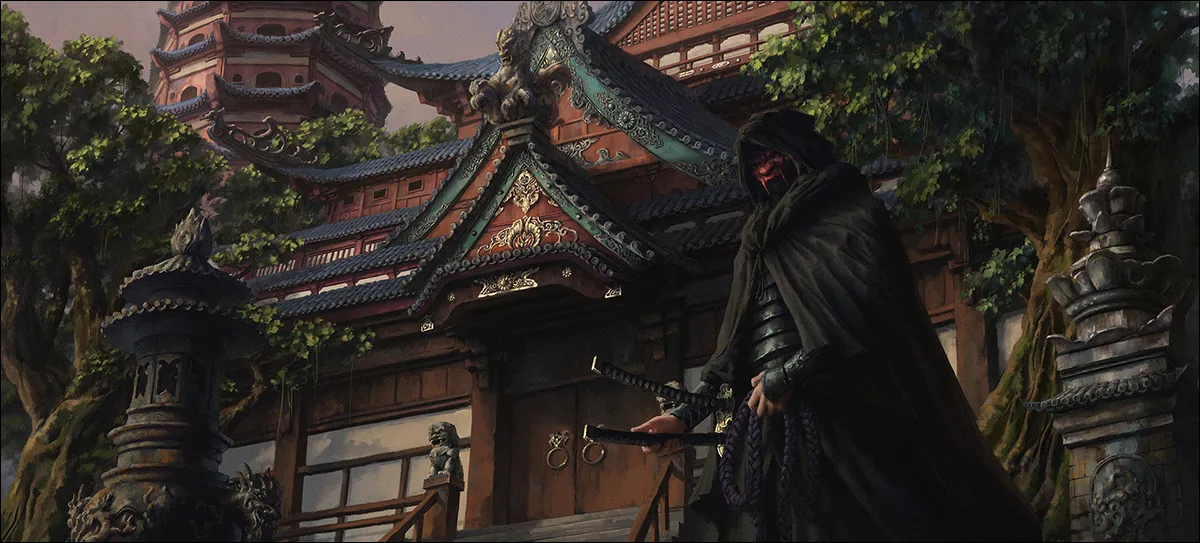
The Imperial family of Nihon was founded about two thousand years ago, in times when the inhabitants of this picturesque land were terrorized by mystical yokai, cruel and arrogant oni and tengu. In this terrible time for the ancient Nihonese, people had no bright hopes for the future — even today could bring them new sorrows or death. Some settlements accepted this state of affairs as the natural course of things and did not try to go against the immovable enemy; others partially or completely relocated to regions less dangerous for life; while a third resisted with all their might, intending to tear their fate from same hands. In the struggle against oni, the ancient Nihonese relied on the sharpness of their swords, the clarity of their senses, and the strength of their bodies, whereas servants of the Nihon temples — monks and miko, for whom spiritual strength was their main weapon — went into battle against yokai. Of course, while this helped individual towns and villages survive today and make it to tomorrow, their efforts had little effect on the overall situation. Understanding that there was only one path to victory against such a formidable opponent, the then-leader of the city of Taiho, Yoshihiro Shoji, made the first attempts to unite the people of fragmented settlements against a common enemy. At first, only a few agreed to joint cooperation, thinking primarily only of their own interests, but after a series of failures, the leader of the organized resistance finally managed to lead the people. Under the leadership of Yoshihiro Shoji, the ancient Nihonese showed great skill and steadfastness of spirit, eventually managing to achieve the peace they so desired. Standing on the bones of demons and the corpses of his compatriots, Yoshihiro Shoji founded the Nihon state and became its first emperor, immortalizing the status of his dynasty in the country as divine.
As a result of this confrontation, a warrior spirit, strict notions of honor and morale, loyalty to the homeland and traditions, and a national idea of their people's exceptionalism became firmly established in the public consciousness of the Nihonese. This led to the fact that subsequently all issues with foreigners were resolved by right of might — ready at any moment to give their lives for the empire, the Nihonese never minced words with their opponents. Woe to those who lose a battle to them. Even greater suffering to those who lose a war to them.
Throughout the next millennium, the Nihonese were relentless and implacable; they did not stop expanding the borders of their empire, defeating new opponents time and again. Numerous states were destroyed and entire peoples exterminated by their hands. Many philosophers of that time criticized the daimyo and the central government, comparing the modern Nihon Empire to the oni — their ancient enemies. Nevertheless, the views of the thinkers remained nothing more than characters on paper.
The aggressive expansion of Nihon continued until the year 360, when the warring people first encountered the Reime armies. For them, this proved to be the first people they could not overcome. By this time, Nihon was exhausted from centuries of wars, while Reime was experiencing an era of prosperity and had seemingly unlimited resources. It is quite possible that if it were not for the skill of the Nihonese in military affairs, they would have lost even then.
One way or another, the stagnation in the Reime-Nihon conflict led to a sharp decline in the influence of the central government and the imperial house. With some periodicity, daimyo began to fight each other, attempting thereby to expand their own influence. During this time, the first ninja began to appear in the service of the daimyo, bringing victories to their employers while remaining in the shadows. All this further weakened Nihon, but despite this, war still came to play a significantly smaller role in Nihonese society; peaceful professions received much more recognition than before, and culture and science received a modest but long-term push toward development.
Nihon after capitulationAfter the signing of the capitulation by Emperor Akihito in 746, the Nihon Empire lost its sovereignty to the Reime Empire. The unprecedented defeat in the war was a completely natural shock for the proud nation of warriors, but it was no surprise to well-informed representatives of authority, for whom it was clear as day — defeating a high-tech, organized, and wealthy superpower seemed impossible for them. For this reason, very many supported the emperor's decision, believing that peace on acceptable terms was a better option than total destruction.
The Imperial family was preserved in the person of Princess Sayuri, people were not deprived of their rights, and jobs were available. In the postwar period, although residents of the central and northern regions of the country lived in poverty, they were not threatened by death from hunger. At the same time, the southern regions developed rapidly, representing a mix of Reime and Nihon cultures. Overall, for the losing side, this was a very favorable peace, especially if one remembers how the Nihonese themselves treated the defeated. Nevertheless, however favorable this peace was, not everyone was satisfied with it.
Opponents of the capitulation were generally warriors living by the spirit of the past — in their value system, defeat was worse than death. Subsequently, members of various resistance groups came to be called "onryo," and they themselves enjoyed an ambiguous reputation among their compatriots — some treated them with support and helped them in every way, while others despised them for their inability to recognize reality. In the opinion of the latter, because of blind pride, the onryo could not start moving forward, which put not only their own lives but also the lives of their compatriots at risk.
NeighborsBeliadThe Kingdom of Beliad served as the founder of many elements of this region's culture. Many musical instruments, such as the violin and piano, appeared here; ballroom dances and many genres of literature originated here. Since ancient times, the inhabitants of this country have been famous for their skill in winemaking and gardening, their paintings and poems. But despite numerous virtues, in matters of internal and external policy, this country always stood in darkness.
The inhabitants of Beliad can be conditionally divided into four categories — the royal family, the aristocracy, the warrior class, and the peasants. Feudals, like the monarch, are allowed to have their own army at their disposal for the protection of their holdings and the maintenance of order within them. The main difference between ordinary soldiers and peasants is that the former possess certain rights — while a peasant was considered the property of the landowner who could treat him as he pleased, the kingdom's warriors were protected from despotic treatment by a number of laws. Because warrior status was hard to earn and easy to lose, soldiers did not contradict the will of their lords — if not for themselves, then for their families. Ultimately, the main purpose of this class's existence was not protection from external threats, but maintaining the power of landowners and the monarch against dissatisfied and angry peasants.
The aristocrats, in turn, were kept in check thanks to the threat from the "Anemon" order of assassins controlled by the royal family. This organization did not exist officially, but those dissatisfied with the king's power knew — "Anemon" would come for their heads if they went against the royal family.
In the seventh century, the reigning king of Beliad, Erebus Many-Faced, founded the first Beliad colony in the south and a few years later moved there permanently. In these years, ship production and maritime trade developed steadily in the country, new expeditions were carried out, and contacts with new neighbors were established.
At the end of his life, planning ahead for the future of his kingdom, Erebus would adopt the Enclesian faith. This was done to appease dissatisfied commoners and avoid a possible war with Tanarsis. He also hoped in this way to secure the kingdom from a potential threat from the empire.
To this day, despite the lost war, Beliad continues to develop economically and culturally. Commoners seek salvation in their Enclesian god, and aristocrats, as before, live in luxury, following the new faith only for show.
Holy See of TanarsisIf one believes what is written in the sacred scriptures of the Enclesian church, the world was once united under the leadership of God. In a world ruled by God, there were no wars or hunger, hatred or inequality; suffering was unknown to people. A man guided by God knew no arrogance, felt no anger or envy, and his mind was not clouded by greed or lust. Everyone lived in bliss, knew no diseases, and was unfamiliar with death. The world was as He had envisioned it — just and devoid of suffering. It was an Ideal World devoid of vice.
This should have continued for eternity, but to the great sorrow of all humanity, God's plans were disrupted by angels who betrayed His trust. Created by His hand and in His image, endowed with will, the angels tempted people and forced them to turn their backs on Him. The angels who disobeyed God committed the first sin and thus turned into hideous demons. The people who followed the primordial demons departed from His commandments and stepped onto the path of sin. Paradise collapsed, death came into the world, and people drowned in misfortune and malice.
Since then, countries founded by mortals — unjust sinners greedy for power — began to appear in the world. Humanity fell into Darkness; paradise was replaced by the Abyss... But even in such a terrible time, there were those who did not lose faith in Him and were guided by simple principles of life — they had to follow the voice of conscience (God) and never think about what others would think of them, for when their mortal shells perish, only what He says about them during Judgment will be important.
Some believers founded the Enclesian Church, which spread over time across the entire continent; its members were engaged in helping others, for example, through education and medicine.
Other, more militant followers of this faith had different intentions. They founded the small state of Tanarsis and set about spreading their teachings. Over time, many nations were converted to the Enclesian faith, some thanks to missionary missions, and some by war. Ultimately, the Holy See had one goal — to unite the world into a single state. In this way, as they believed, Paradise would return to the world.
AlivarThe half-dragons inhabiting Alivar far surpass the ordinary human — their bodies are stronger, they are more powerful, more enduring, can breathe fire and fly. This superiority forced them to look down upon the peoples surrounding them; just as humans treated animals, the Alivarian half-dragons treated people. Nevertheless, unlike animals, humans were well-organized and could put up a fight against the powerful winged creatures. The Reime Empire to some extent forced Alivar to stop its expansion.
Half-dragons are characterized by great arrogance and look upon humans with contempt; however, some cases confirm that if anyone manages to best an Alivarian in a fair fight, they can become very loyal servants.
DreyeriaSince the most ancient times, people possessing a number of differences from their brethren could be found in different corners of Enclesia. Primarily, snow-white hair and sometimes unusually colored eyes caught the eye. Often, this was not the only or most important feature — such people possessed unique abilities such as, for example, rapid regeneration, eidetic memory, or lightning-fast reactions.
Where this caused delight and respect, such people became heroes. Where it caused envy or fear, they were killed. Such people always attracted attention. This peculiarity of the human organism manifested randomly and had no relation to lineage; therefore, preserving it seemed impossible. Nevertheless, some managed to do so, albeit partially. More than a thousand years ago, a certain kingdom in the southeast of the upper region of Enclesia tried to create an invincible army using white-haired people. The result of many years of research and numerous victims was that the child of two test subjects inherited unique traits from their parents. Children retained the external differences of their ancestors but had no unique features. A positive side remained that they still surpassed the ordinary human in everything — this was how they surpassed even their own parents. However... The same subjects never became unconscious warriors of that kingdom. Instead, they tore out their freedom along with the hearts of their overseers. Thus Dreyeria was founded, existing to this day.
Dreyerians differ from the original carriers of "fragments of fate" (in the view of many peoples of Enclesia) or "original sin" (in the view of the Holy See), however, they are always glad to welcome them. As for other humans and non-humans... They are nothing more than dirt to them.
To this day, Dreyeria has powerful mages and warriors at its disposal, alternatives to Reime technologies, and a large number of slaves.
AsteyaA modest but prosperous and just kingdom to the southwest of the empire.
Center of the Enclesian Church (not the Holy See); they follow what is written in the sacred scriptures but try to be flexible. They place honesty above all else. Relations with Tanarsis are shaky, but the alliance is maintained in the interests of both countries.
SerafolA traditional kingdom with a rich history and culture. Citizens of many countries come here to visit many cultural sites, participate in festivals, attend exhibitions, and taste exquisite cuisine.
The Serafol Academy, which accepts students from all over the world, is famous for its successful graduates — wizards, musicians, writers, travelers, politicians, and many others.
AreidA poor state suffering from a bad climate, drought, and crop failure. All inhabitants of this country, from peasant to king, have poor health and are one way or another subject to some diseases. Asteya and Tanarsis have repeatedly tried to help this country, but unsuccessfully. Despite converting to the Enclesian faith 73 years ago, the residents of this country, due to their sad way of life, are in no hurry to believe in God and indulge in sin in every way.
HemSouthern mountainous terrain rich in various resources. People are generally either involved in the process of mining minerals or related to the sphere of trade. They are characterized by cheerfulness and a fondness for alcohol.



 kcfgogbfalgfl