kcfgogbfalgfl

Auto-translated
Since my last mafia game in this setting didn't happen, I took the liberty of deciding its outcome myself.
After the death of the emperor of the Ataraxian Empire, spawn of the abyss spread across the world like a plague and entered the lives of men, bringing nothing but suffering, destruction, and death. Cities and villages vanished from maps under the weight of hellfire; people either died by the thousands or joined the ranks of demons, forever parting with their human essence. At one point, the situation in this confrontation became utterly hopeless; the death of the king of the nine kingdoms marked an absolute rout, and for the next few years, humanity existed as cattle and toys for their demonic masters... But that was not yet the end.
As long as there are people whose will is stronger than any circumstance, humanity will not die. Where legions failed, a few heroes succeeded. Humanity, represented by Ataraxia and other great people, achieved victory over evil in its very heart.
Undoubtedly, the taste of this victory was sweet, but what was the aftertaste? Hundreds of thousands of people are dead, cities and fields are burned; the spawn, though defeated and scattered, still remained a threat that had to be reckoned with. Humanity faced a difficult task. Most people chose the most logical solution in this situation—they tried to restore everything that was lost, while another part, mostly residents of the western part of the continent, decided to seek happiness in the wild lands. This great march, in which a third of the entire western population participated, took several decades, and the deeper the participants pushed into the wild lands, the more uninhabitable this land seemed. The problem was not only numerous issues with climate and soil, but also the local inhabitants: same-less natives devoid of any hospitality, wild predators such as dinosaurs, killer insects, and much more, which in no way allowed people to establish their lives here. But they had already gone so far and there was no way back for them, so they continued to go on. Further, further, and further. And then one fine day their labors and determination were rewarded; the people finally crossed the wild lands and found a beautiful land with a wonderful climate, abundant in resources, independent of other competitors and terrible predators. Then the leaders of the march founded the first five cities and became the founders of their own ruling dynasties—dal Amen, dal Duran, dal Karren, dal Shabet, and dal Tarren. Subsequently, villages and other cities emerged around these cities. The five regions never had conflicts among themselves; they lived in peace and harmony—there was enough land for everyone. This continued for 409 years. Harmony was disrupted by the greed of the ancestral states. Having healed their wounds, the residents of the old world watched with dissatisfaction as their distant relatives prospered. Helligkait, Katarian, Vaironia, and the Children of the Sun united into a confederation with one single goal—to bring their stray children back under their control, along with all their riches. And although the countries of the confederation were hopelessly behind technologically, they still had a huge numerical advantage on their side. The leaders of the confederation did not dare send their legions through the wild lands; instead, the wonders of modern navigation and shipbuilding came to their aid.
The first clashes with the army of the confederation made it clear that individually the young states could not withstand this threat, and therefore all five decided to unite into one state. Thus arose the kingdom of dal Shabet. The Shabets became kings, and all others their vassals. The next half-century were years of bloody and prolonged war, and only now, after 53 years, has its end begun to appear on the horizon.
Meanwhile, the private organization "Silverknight," with the permission of the government, announced the start of an expedition into the wild lands and invites all those who wish to take part in it.
Dal Shabet
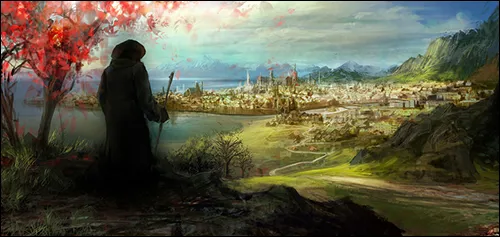
The center of a young but powerful and prosperous kingdom that managed to repel the champions of the Old World. Geographically, it is located further east than all others, due to the fact that this city was the first settlement founded among the five. For the same reason, this metropolis became the first target for the forces of the Confederation. When this happened, the king at the time immediately organized a meeting of all the rulers of the new world and, since the other ruling families were very dependent on the technological innovations of dal Shabet, while concluding an agreement to create a united kingdom to protect the territory from the encroachments of the Confederation, they had to choose them as the ruling dynasty.
The Alissandrian Church. Unlike all other religious currents in the New World, dal Shabet went further and created an organized religion with its own hierarchy and orders. Priests engage in educating the common people and performing various rituals. Silent observers monitor the observance of moral norms established by the church. Rectors hold leadership positions throughout the kingdom. The Cardinal handles political issues, while the Great Priestess handles church matters. She also consecrates knights and crowns rulers.
The Inquisition. An institution of the Alissandrian Church created to fight evil religious currents.
I. Do not associate with tempters (demons) who promise you the fulfillment of your desires and the solution to your problems, for this is a deception, and connection with spawn of the abyss can be cleansed only through death.
II. Do not believe the Liar (Nox), for he will not make you a good person and will send you down a dark path. Renounce him and his darkness; instead, accept the light of the goddess of life.
III. Be wise and do not believe the words of the god of destruction, for there is nothing good in death.
IV. Do not admire the faith of outsiders, for it is not only foreign to you but also deceptive.
Thus, the Inquisition is authorized to execute any demon-worshipper and capture followers of forbidden gods (Anchainabul, Nox, Vasanta, and the old Ataraxian faith) for the purpose of re-education. There is also an unspoken rule to kill followers of the god of death on the spot upon meeting.
The Order of Innocent Sisters. Another institution of the church. Many girls at the age of ten are taken into the ranks of this organization and raised as future healers. They are forbidden from communicating or making acquaintances with anyone other than other sisters.
Academy of Healers.
If you ask children eager to become wizards what magic they want to learn, they will most likely name elemental magic with all its destructiveness and effectiveness, or perhaps reality-control magic or secret magic; dark magic is unlikely, fearing punishment from parents, but very few will name healing magic. And yet, across the kingdom, healers are respected and needed far more than any others, especially in years of war. The art of healing is a very difficult science and requires not only an ability to concentrate but also a kind, sincere heart, which is far from common.
Academy of Reality-Control Magic.
Due to the small number of students, this place would be more correctly called a small club or community rather than an academy. However, one should not be mistaken about the popularity of this place; the number of people wishing to study here is no less than in other academies, and perhaps even more. The main problem is the extremely high difficulty of this science; only a few manage to pass the qualifying tests and continue their studies.
The Great Workshop. It was here that the world saw the first appearance of firearms, which significantly changed the course of military operations. And although this invention overshadows all others, it is, of course, far from the only one.
Historical Archive. Here are kept any records and books that can tell about events of the past as well as famous items; many of them were brought during the great march, others found during archaeological expeditions, some bought from the kingdoms of the Old World.
Khontai (dal Amen)
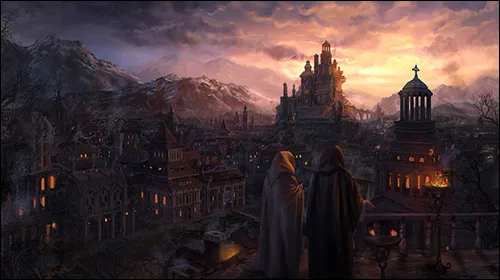
The great march was a big trial for everyone, but it proved especially hard for the children of the sun, a people not used to such hardships and terrible conditions.
Forced to change their approach to life, they began to look at the world more broadly and unlocked their full potential. Over the next four centuries, the Khontai became completely unlike their ancestors; they became much stronger, both physically and spiritually, and value wisdom most of all and strive for understanding of the world. Dal Amen is located in a mountainous area, further north than all others and closest to the northern borders.
Temple of Amrita. For the Khontai, Amrita is the most recognizable and revered figure of their culture and religion. Her temple is located at the peak of the highest mountain in the dal Amen region, several dozen kilometers from the capital.
Grove of Dalla. This beautiful grove was planted by the first settlers of Khontai in honor of the goddess Dalla—mistress of forests and patroness of fertility. Since then, it has become the center around which new parts of the city grew.
Academy of Elemental Magic.
Who would have thought that the most popular magic academy would be in such a peaceful place as dal Amen, on top of a high plateau? However, if you take into account that this magic is the most destructive of all, then perhaps this place is the most appropriate of all.
Dal Tarren
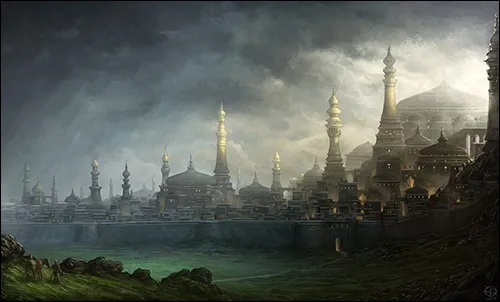
Dal Tarren is a dark spot in the history of the New World, and its residents are in no hurry to change that. And although they cannot be accused of malice, they are not very welcoming or sociable, always preferring action over words. Other nations view them with suspicion, but no one can deny that the deciding factor in the war with the Confederation was precisely the genius of the supreme commander-in-chief of the kingdom's army, who is also the ruler of this region and leader of the ruling dynasty.
Temple of the Father. These people inherited the faith in the god of Thyrian culture and revere him as their own, striving in every way to follow the ideals of their patron.
Temple of Gyurdir.
Academy of Secret Magic.
Dal Duran
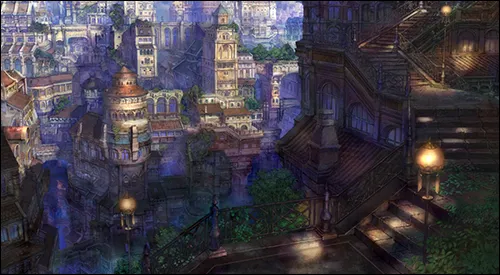
In a sense, dal Duran is a fantasy on the theme of what kind of state would result if Helligkait and Katarian merged into one. On one hand, fashion trends are set here, magnificent paintings are drawn, and enchanting music is written that exists nowhere else. There is no more polite and tactful nation than this. At the same time, a friendly people live here in whom the spirit of chivalry lives and courage is revered.
Temple of Lucian
Temple of the Moon
Temple of the Knight. The creative people of dal Duran draw their inspiration from the Moon, while among others it is customary to revere the Helligkait god of the sun, but there are also those close to the spirit of the Thyrian Knight.
Ataraxian Order. This order was founded by a few emissaries who survived the fall of the empire and the demon invasion. And although other rulers dislike the mere existence of this organization, the ruler of dal Duran gladly accepted these people several centuries ago. They erected a small fortress near the city to be able to replenish supplies or learn new information, but far from the roads so as not to disturb ordinary people. The goals of the order are quite simple: they try to protect ordinary people from supernatural forces, primarily from demons. They accept into their ranks anyone capable of understanding and accepting their ideology and proving useful in their cause. This is the last unit of the order in the whole world; through the efforts of Vasanta, those on the other side of the wild lands were destroyed.
Dal Karen
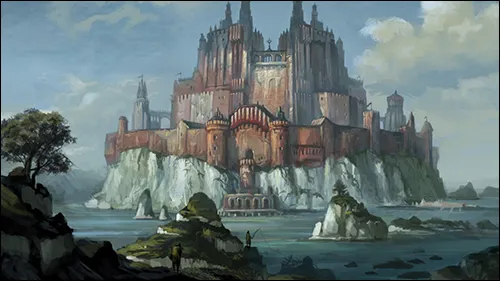
This southern region consists of a group of island cities with a citadel-capital in the center of the archipelago. Local residents are either godless or followers of various gods; they rarely care about anyone but themselves. This is evident not only in personal matters but also on a state scale. For example, in recent years, when it became clear that the Confederation would likely lose the war, the ruler of dal Karen sharply reduced funding for the military campaign and cut the amount of army he provided several times.
Academy of Dark Magic.
A lonely building on a remote island surrounded by a mountain range became home to those who wish to practice once-forbidden techniques of wizardry. In the old world, throughout all recorded history, the Order of Black Ice existed, and even after its fall it rose again several decades later, continuing its activity. And if under its oppression the spread and study of basic magic was very limited, then dark magic was forbidden entirely. In the New World this is not the case, and anyone who wishes can try their hand at this matter, if they manage to become a respected member of this academy.
Nevermore
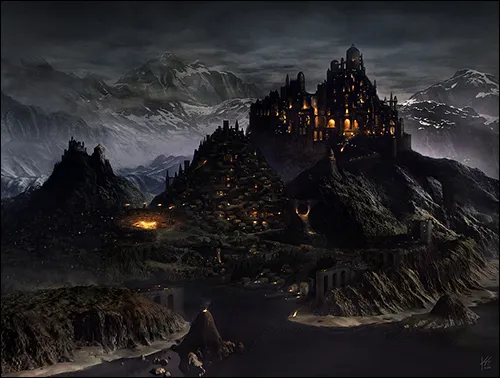
One of the largest cities in the kingdom, not belonging to any of the five regions.
Once this place was a Tarren prison where all criminals were brought, from simple debtors to murderers, women and men, youths and old men. It was erected on the border of Tarren territory in the most inaccessible place. The idea was such: if anyone managed to escape from here, they would not survive anyway, as these lands are dangerous in themselves. This played a cruel joke on the prison masters, as one day the prisoners, instead of attempting an escape, organized a takeover of the prison and succeeded. The most seasoned criminals took leadership positions, and the guards took the place of slaves.
Of course, the government immediately sent an army to retake the prison; here they met their own creation. The prison they themselves had built turned out to be completely impregnable, and no matter how many times the Tarrens tried to take the fortress by storm, the criminals always fought them off. Moreover, they could not be starved out, as the presence of the only port in the region allowed them to rob nearby villages (during this period only dal Shabet and dal Karren actively practiced shipbuilding). The Tarrens did not wish to continue losing soldiers or risk ordinary residents, and therefore they agreed to conclude a treaty with the bandit den. The bandits stop their destructive activity outside the walls of their "city" and pledge to pay taxes; in return, the Tarrens promised to leave them alone and not interfere in their internal affairs. Currently, Nevermore has left the Tarren region and is part of the kingdom as a separate entity.
This is a home for thieves and murderers, pirates and whores, deceivers and simply bold men. Since residents of Nevermore are forbidden from attacking cities of the kingdom, local pirates set out on long voyages and rob cities of the old world. Of course, this infuriates the rulers of the kingdoms, but the king of dal Shabet only shrugs his shoulders. They have a treaty, after all.
Temple of Nox. Even criminals seek divine patronage, and it is quite obvious that Nox found his followers here.
House of Sanexa. Also often called the "temple of Sanexa," actually—a tavern and brothel. The ancestress of demons obviously likes this city full of fun and games, and the residents of Nevermore do not object to her patronage.
Anaquad
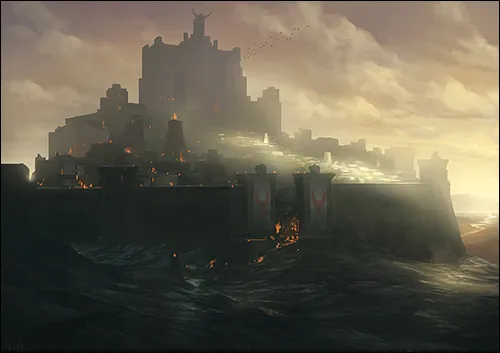
This city is not part of the kingdom; it is located far to the north and serves as a home for people called "cursed" and "demon-born." Black blood flows in their veins, their skin and irises are unnatural shades, and they also possess various physical peculiarities.
As is known, the Lord of the Abyss and his minions, instead of killing people, turned many of them into beings like themselves; and so when the people completed the great march, the consequences of unfinished transformation began to appear in the appearance of many of them. They were neither human nor demon, but in the eyes of their friends and relatives there was only fear and hatred. Under threat of death, they were forced to flee north and no longer cross paths with humans. Currently, the barrier of hostility between humans and the cursed has not diminished, and they are still forbidden entry into cities of the human kingdom. This, however, does not stop many of them from traveling the world and staying in cities while hiding their appearance. The elders, however, warn that the youth risk not only losing their lives but also the possibility of angering the human kings and provoking a war in which the exiles have no chance to win. They themselves do not forbid people from visiting their city, although no one guarantees the actions of hot-headed youth.
All demon-born reach maturity by 10 years; by this time their body is fully formed and character is established. They do not change or age, however, over the next 20-30 years their hearts stop and they die.
Great Statue of Anchainabul.
And although the demon-born do not share the views of the god of death, they still respect their great ancestor.
Temple of Balthazar.
Temple of Xypil.
House of those who speak with nature
Here they learn the art of shamanism.
After the death of the emperor of the Ataraxian Empire, spawn of the abyss spread across the world like a plague and entered the lives of men, bringing nothing but suffering, destruction, and death. Cities and villages vanished from maps under the weight of hellfire; people either died by the thousands or joined the ranks of demons, forever parting with their human essence. At one point, the situation in this confrontation became utterly hopeless; the death of the king of the nine kingdoms marked an absolute rout, and for the next few years, humanity existed as cattle and toys for their demonic masters... But that was not yet the end.
As long as there are people whose will is stronger than any circumstance, humanity will not die. Where legions failed, a few heroes succeeded. Humanity, represented by Ataraxia and other great people, achieved victory over evil in its very heart.
Undoubtedly, the taste of this victory was sweet, but what was the aftertaste? Hundreds of thousands of people are dead, cities and fields are burned; the spawn, though defeated and scattered, still remained a threat that had to be reckoned with. Humanity faced a difficult task. Most people chose the most logical solution in this situation—they tried to restore everything that was lost, while another part, mostly residents of the western part of the continent, decided to seek happiness in the wild lands. This great march, in which a third of the entire western population participated, took several decades, and the deeper the participants pushed into the wild lands, the more uninhabitable this land seemed. The problem was not only numerous issues with climate and soil, but also the local inhabitants: same-less natives devoid of any hospitality, wild predators such as dinosaurs, killer insects, and much more, which in no way allowed people to establish their lives here. But they had already gone so far and there was no way back for them, so they continued to go on. Further, further, and further. And then one fine day their labors and determination were rewarded; the people finally crossed the wild lands and found a beautiful land with a wonderful climate, abundant in resources, independent of other competitors and terrible predators. Then the leaders of the march founded the first five cities and became the founders of their own ruling dynasties—dal Amen, dal Duran, dal Karren, dal Shabet, and dal Tarren. Subsequently, villages and other cities emerged around these cities. The five regions never had conflicts among themselves; they lived in peace and harmony—there was enough land for everyone. This continued for 409 years. Harmony was disrupted by the greed of the ancestral states. Having healed their wounds, the residents of the old world watched with dissatisfaction as their distant relatives prospered. Helligkait, Katarian, Vaironia, and the Children of the Sun united into a confederation with one single goal—to bring their stray children back under their control, along with all their riches. And although the countries of the confederation were hopelessly behind technologically, they still had a huge numerical advantage on their side. The leaders of the confederation did not dare send their legions through the wild lands; instead, the wonders of modern navigation and shipbuilding came to their aid.
The first clashes with the army of the confederation made it clear that individually the young states could not withstand this threat, and therefore all five decided to unite into one state. Thus arose the kingdom of dal Shabet. The Shabets became kings, and all others their vassals. The next half-century were years of bloody and prolonged war, and only now, after 53 years, has its end begun to appear on the horizon.
Meanwhile, the private organization "Silverknight," with the permission of the government, announced the start of an expedition into the wild lands and invites all those who wish to take part in it.
Dal Shabet
The center of a young but powerful and prosperous kingdom that managed to repel the champions of the Old World. Geographically, it is located further east than all others, due to the fact that this city was the first settlement founded among the five. For the same reason, this metropolis became the first target for the forces of the Confederation. When this happened, the king at the time immediately organized a meeting of all the rulers of the new world and, since the other ruling families were very dependent on the technological innovations of dal Shabet, while concluding an agreement to create a united kingdom to protect the territory from the encroachments of the Confederation, they had to choose them as the ruling dynasty.
The Alissandrian Church. Unlike all other religious currents in the New World, dal Shabet went further and created an organized religion with its own hierarchy and orders. Priests engage in educating the common people and performing various rituals. Silent observers monitor the observance of moral norms established by the church. Rectors hold leadership positions throughout the kingdom. The Cardinal handles political issues, while the Great Priestess handles church matters. She also consecrates knights and crowns rulers.
The Inquisition. An institution of the Alissandrian Church created to fight evil religious currents.
I. Do not associate with tempters (demons) who promise you the fulfillment of your desires and the solution to your problems, for this is a deception, and connection with spawn of the abyss can be cleansed only through death.
II. Do not believe the Liar (Nox), for he will not make you a good person and will send you down a dark path. Renounce him and his darkness; instead, accept the light of the goddess of life.
III. Be wise and do not believe the words of the god of destruction, for there is nothing good in death.
IV. Do not admire the faith of outsiders, for it is not only foreign to you but also deceptive.
Thus, the Inquisition is authorized to execute any demon-worshipper and capture followers of forbidden gods (Anchainabul, Nox, Vasanta, and the old Ataraxian faith) for the purpose of re-education. There is also an unspoken rule to kill followers of the god of death on the spot upon meeting.
The Order of Innocent Sisters. Another institution of the church. Many girls at the age of ten are taken into the ranks of this organization and raised as future healers. They are forbidden from communicating or making acquaintances with anyone other than other sisters.
Academy of Healers.
If you ask children eager to become wizards what magic they want to learn, they will most likely name elemental magic with all its destructiveness and effectiveness, or perhaps reality-control magic or secret magic; dark magic is unlikely, fearing punishment from parents, but very few will name healing magic. And yet, across the kingdom, healers are respected and needed far more than any others, especially in years of war. The art of healing is a very difficult science and requires not only an ability to concentrate but also a kind, sincere heart, which is far from common.
Academy of Reality-Control Magic.
Due to the small number of students, this place would be more correctly called a small club or community rather than an academy. However, one should not be mistaken about the popularity of this place; the number of people wishing to study here is no less than in other academies, and perhaps even more. The main problem is the extremely high difficulty of this science; only a few manage to pass the qualifying tests and continue their studies.
The Great Workshop. It was here that the world saw the first appearance of firearms, which significantly changed the course of military operations. And although this invention overshadows all others, it is, of course, far from the only one.
Historical Archive. Here are kept any records and books that can tell about events of the past as well as famous items; many of them were brought during the great march, others found during archaeological expeditions, some bought from the kingdoms of the Old World.
Khontai (dal Amen)
The great march was a big trial for everyone, but it proved especially hard for the children of the sun, a people not used to such hardships and terrible conditions.
Forced to change their approach to life, they began to look at the world more broadly and unlocked their full potential. Over the next four centuries, the Khontai became completely unlike their ancestors; they became much stronger, both physically and spiritually, and value wisdom most of all and strive for understanding of the world. Dal Amen is located in a mountainous area, further north than all others and closest to the northern borders.
Temple of Amrita. For the Khontai, Amrita is the most recognizable and revered figure of their culture and religion. Her temple is located at the peak of the highest mountain in the dal Amen region, several dozen kilometers from the capital.
Grove of Dalla. This beautiful grove was planted by the first settlers of Khontai in honor of the goddess Dalla—mistress of forests and patroness of fertility. Since then, it has become the center around which new parts of the city grew.
Academy of Elemental Magic.
Who would have thought that the most popular magic academy would be in such a peaceful place as dal Amen, on top of a high plateau? However, if you take into account that this magic is the most destructive of all, then perhaps this place is the most appropriate of all.
Dal Tarren
Dal Tarren is a dark spot in the history of the New World, and its residents are in no hurry to change that. And although they cannot be accused of malice, they are not very welcoming or sociable, always preferring action over words. Other nations view them with suspicion, but no one can deny that the deciding factor in the war with the Confederation was precisely the genius of the supreme commander-in-chief of the kingdom's army, who is also the ruler of this region and leader of the ruling dynasty.
Temple of the Father. These people inherited the faith in the god of Thyrian culture and revere him as their own, striving in every way to follow the ideals of their patron.
Temple of Gyurdir.
Academy of Secret Magic.
Dal Duran
In a sense, dal Duran is a fantasy on the theme of what kind of state would result if Helligkait and Katarian merged into one. On one hand, fashion trends are set here, magnificent paintings are drawn, and enchanting music is written that exists nowhere else. There is no more polite and tactful nation than this. At the same time, a friendly people live here in whom the spirit of chivalry lives and courage is revered.
Temple of Lucian
Temple of the Moon
Temple of the Knight. The creative people of dal Duran draw their inspiration from the Moon, while among others it is customary to revere the Helligkait god of the sun, but there are also those close to the spirit of the Thyrian Knight.
Ataraxian Order. This order was founded by a few emissaries who survived the fall of the empire and the demon invasion. And although other rulers dislike the mere existence of this organization, the ruler of dal Duran gladly accepted these people several centuries ago. They erected a small fortress near the city to be able to replenish supplies or learn new information, but far from the roads so as not to disturb ordinary people. The goals of the order are quite simple: they try to protect ordinary people from supernatural forces, primarily from demons. They accept into their ranks anyone capable of understanding and accepting their ideology and proving useful in their cause. This is the last unit of the order in the whole world; through the efforts of Vasanta, those on the other side of the wild lands were destroyed.
Dal Karen
This southern region consists of a group of island cities with a citadel-capital in the center of the archipelago. Local residents are either godless or followers of various gods; they rarely care about anyone but themselves. This is evident not only in personal matters but also on a state scale. For example, in recent years, when it became clear that the Confederation would likely lose the war, the ruler of dal Karen sharply reduced funding for the military campaign and cut the amount of army he provided several times.
Academy of Dark Magic.
A lonely building on a remote island surrounded by a mountain range became home to those who wish to practice once-forbidden techniques of wizardry. In the old world, throughout all recorded history, the Order of Black Ice existed, and even after its fall it rose again several decades later, continuing its activity. And if under its oppression the spread and study of basic magic was very limited, then dark magic was forbidden entirely. In the New World this is not the case, and anyone who wishes can try their hand at this matter, if they manage to become a respected member of this academy.
Nevermore
One of the largest cities in the kingdom, not belonging to any of the five regions.
Once this place was a Tarren prison where all criminals were brought, from simple debtors to murderers, women and men, youths and old men. It was erected on the border of Tarren territory in the most inaccessible place. The idea was such: if anyone managed to escape from here, they would not survive anyway, as these lands are dangerous in themselves. This played a cruel joke on the prison masters, as one day the prisoners, instead of attempting an escape, organized a takeover of the prison and succeeded. The most seasoned criminals took leadership positions, and the guards took the place of slaves.
Of course, the government immediately sent an army to retake the prison; here they met their own creation. The prison they themselves had built turned out to be completely impregnable, and no matter how many times the Tarrens tried to take the fortress by storm, the criminals always fought them off. Moreover, they could not be starved out, as the presence of the only port in the region allowed them to rob nearby villages (during this period only dal Shabet and dal Karren actively practiced shipbuilding). The Tarrens did not wish to continue losing soldiers or risk ordinary residents, and therefore they agreed to conclude a treaty with the bandit den. The bandits stop their destructive activity outside the walls of their "city" and pledge to pay taxes; in return, the Tarrens promised to leave them alone and not interfere in their internal affairs. Currently, Nevermore has left the Tarren region and is part of the kingdom as a separate entity.
This is a home for thieves and murderers, pirates and whores, deceivers and simply bold men. Since residents of Nevermore are forbidden from attacking cities of the kingdom, local pirates set out on long voyages and rob cities of the old world. Of course, this infuriates the rulers of the kingdoms, but the king of dal Shabet only shrugs his shoulders. They have a treaty, after all.
Temple of Nox. Even criminals seek divine patronage, and it is quite obvious that Nox found his followers here.
House of Sanexa. Also often called the "temple of Sanexa," actually—a tavern and brothel. The ancestress of demons obviously likes this city full of fun and games, and the residents of Nevermore do not object to her patronage.
Anaquad
This city is not part of the kingdom; it is located far to the north and serves as a home for people called "cursed" and "demon-born." Black blood flows in their veins, their skin and irises are unnatural shades, and they also possess various physical peculiarities.
As is known, the Lord of the Abyss and his minions, instead of killing people, turned many of them into beings like themselves; and so when the people completed the great march, the consequences of unfinished transformation began to appear in the appearance of many of them. They were neither human nor demon, but in the eyes of their friends and relatives there was only fear and hatred. Under threat of death, they were forced to flee north and no longer cross paths with humans. Currently, the barrier of hostility between humans and the cursed has not diminished, and they are still forbidden entry into cities of the human kingdom. This, however, does not stop many of them from traveling the world and staying in cities while hiding their appearance. The elders, however, warn that the youth risk not only losing their lives but also the possibility of angering the human kings and provoking a war in which the exiles have no chance to win. They themselves do not forbid people from visiting their city, although no one guarantees the actions of hot-headed youth.
All demon-born reach maturity by 10 years; by this time their body is fully formed and character is established. They do not change or age, however, over the next 20-30 years their hearts stop and they die.
Great Statue of Anchainabul.
And although the demon-born do not share the views of the god of death, they still respect their great ancestor.
Temple of Balthazar.
Temple of Xypil.
House of those who speak with nature
Here they learn the art of shamanism.
 Небо
Небо