


 Siverfale


Auto-translated
Immigrants, wrongly executed. But their deaths served as a message to others. That ours is a society that murders the innocent.
This is about these guys.
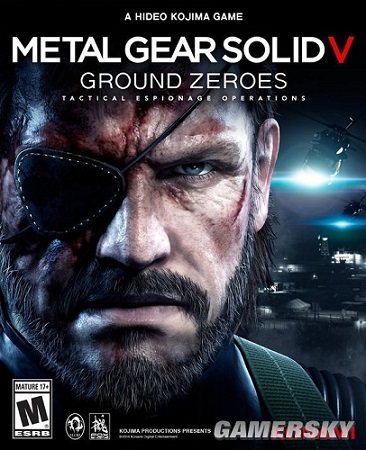
Release year - 2014. We enter the main menu and just exhale - finally! We are in the modern era! Let's say no to ancient fossils with outdated graphics! Yes, how long I've been waiting for this moment. In the menu, there is an option to view the backstory, where Snake is briefly mentioned, then the events of Peace Walker are retold in more detail, and then we are transported to the present. Even simple text blocks are beautifully designed - everywhere there are epigraphs with phrases from the characters, and in the background, there are beautifully processed and significantly improved pictures from the terrible comic. Having enjoyed this beauty, we listen to cassette recordings in the menu, which briefly describe the plot, and there is also an opportunity to listen to the secret diary of one of the heroines from the previous part, which could previously only be obtained by persistent grinding; now we can finally start the game.
And immediately we start watching a video - in principle, this is a common thing for video games. But a video from Kojima, and on such an engine - it's just superb. I must especially note the engine's graphics - it is head and shoulders above some games released in the same year, and in my humble opinion, it surpasses even those games that were released a year later. So, having enjoyed the beautiful and spectacular scene, we move on to the game itself. The scene before it immediately sets the atmosphere - night, heavy rain, gloomy soldiers in poncho-tents - and this atmosphere lasts until the very end of the game. After that, the game itself begins - in the dark, splashing through the mud, trying to avoid the piercing light of huge spotlights or the more modest light of lanterns, we try to save prisoners from the infamous military camp, which housed, among other things, refugees from Cuba. At first, I was surprised by how much they casualized the game, adding some kind of "reflex mode" - a thing that slows down time when an enemy notices you and gives you the opportunity to take him down with an instant headshot. However, soon I remembered that I am no longer playing on an emulator and can no longer save at any convenient moment, but I have to rely on checkpoints - and I began to treat this as a necessity. Although, maybe I'm just clumsy. Another simplification of the game is the ability to mark enemies through binoculars, allowing you to know where they are for the rest of the game once you see an enemy. On the one hand, it seems to oversimplify the game, on the other hand, it turns the binoculars from useless junk into a really useful thing during the game. In addition, there are quite a few "blind" corners in the camp, where you can only see an enemy by bumping into him face to face.
Finally, we left the console corridors and begin to wander through a huge area. Finally, we can no longer, as in Peace Walker, kill all the enemies on the level and run away from it before it becomes a problem. And even more than that - the prisoners can no longer be picked up with an air balloon, which will immediately take them to the base. No, honey, if you want to save a person, be kind enough to carry him on your back, call a helicopter, throw the person there, and pray that the helicopter is not noticed, and if it is noticed, that it is not shot down. In general, the gameplay is just great, and much more complex than Phantom Pain, which was released a year later, in which the reflex mode became twice as long, and the enemies do not see you in the light of day, where the enemies in Ground Zeroes see you at night and in heavy rain. And the plot? After the bland plot of Peace Walker, you are simply amazed by the plot of this game - and no, it is not complex, it is quite simple, but it is emotionally rich, it is filled with darkness, pain, and despair. How did Kojima achieve this, you ask? Very simply, he did not spread the plot in a thin layer of oil over a million hours of gameplay. The whole game takes two to three hours to complete without prior experience and less than an hour if you have already played at least Phantom Pain. Yes, what used to be called a demo version is now called a full-fledged game, and they ask for as much as 600 rubles for it. And to tease the fans, who still have a year to wait for the real game, some collectibles and simple side ops were added - there are four of them, and they take about twenty minutes each, but that's the maximum. This is what kind of contradictory feelings the game evokes - on the one hand, it is wonderful in all aspects, and on the other hand, it is only a demo of a full-fledged game and a scam to get people to give them their money. However, from a commercial point of view, the move is simply brilliant - and not even because this thing is paid, but because its short plot leaves the player in painful anticipation of the next part, seriously, my first thoughts after finishing were - "good thing Phantom Pain has already been released and I can download it right now," I sincerely feel sorry for the people who went through this painful anticipation - and, thereby, played their role in the hype for the upcoming game. In general, I really liked it.
And, of course, I don't want to forget the wonderful song that made me read an article on Wikipedia about Nicola and Bart, and finally find out in honor of whom one of the streets in my city was named.
Where do we go?
Where do we end up when we save the world?
Where do we end up when we save the world?