


 kcfgogbfalgfl
Auto-translated
In Korean, there are only about 48 letters, if I'm not mistaken. I should have started learning it. Japanese kana can be learned in a couple of weeks, but kanji is a real pain. And the difficulty isn't just in the number (there are about 1,800 registered, plus many more), but also in the fact that each hieroglyph has several meanings, and each is read differently – there's kun'yomi and on'yomi reading, the latter being the traditional Chinese reading. After all, it's no secret that the Japanese borrowed a large part of their culture, including architecture and part of their writing system, from the Chinese (well, okay, from the Koreans who borrowed from the Chinese)?
I've somehow managed to learn twenty of them so far. For some reason, I remember these best: sun, fire, water, woman, and... RICE FIELD.
Here they are:

Sun, day.
kun: ひ (hi)
on: nichi
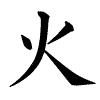
Fire.
kun: ひ (hi)
on: ka

Water.
kun: みす’’ (mizu)
on: sui

Woman.
kun: おんな(onna)
on: jo

And here's the rice field. It can be written both ways, as shown on the left and on the right.
kun: た (ta)
on: den

I've somehow managed to learn twenty of them so far. For some reason, I remember these best: sun, fire, water, woman, and... RICE FIELD.
Here they are:
Sun, day.
kun: ひ (hi)
on: nichi
Fire.
kun: ひ (hi)
on: ka
Water.
kun: みす’’ (mizu)
on: sui
Woman.
kun: おんな(onna)
on: jo
And here's the rice field. It can be written both ways, as shown on the left and on the right.
kun: た (ta)
on: den