Happy Life

Auto-translated
whining on far-off 6
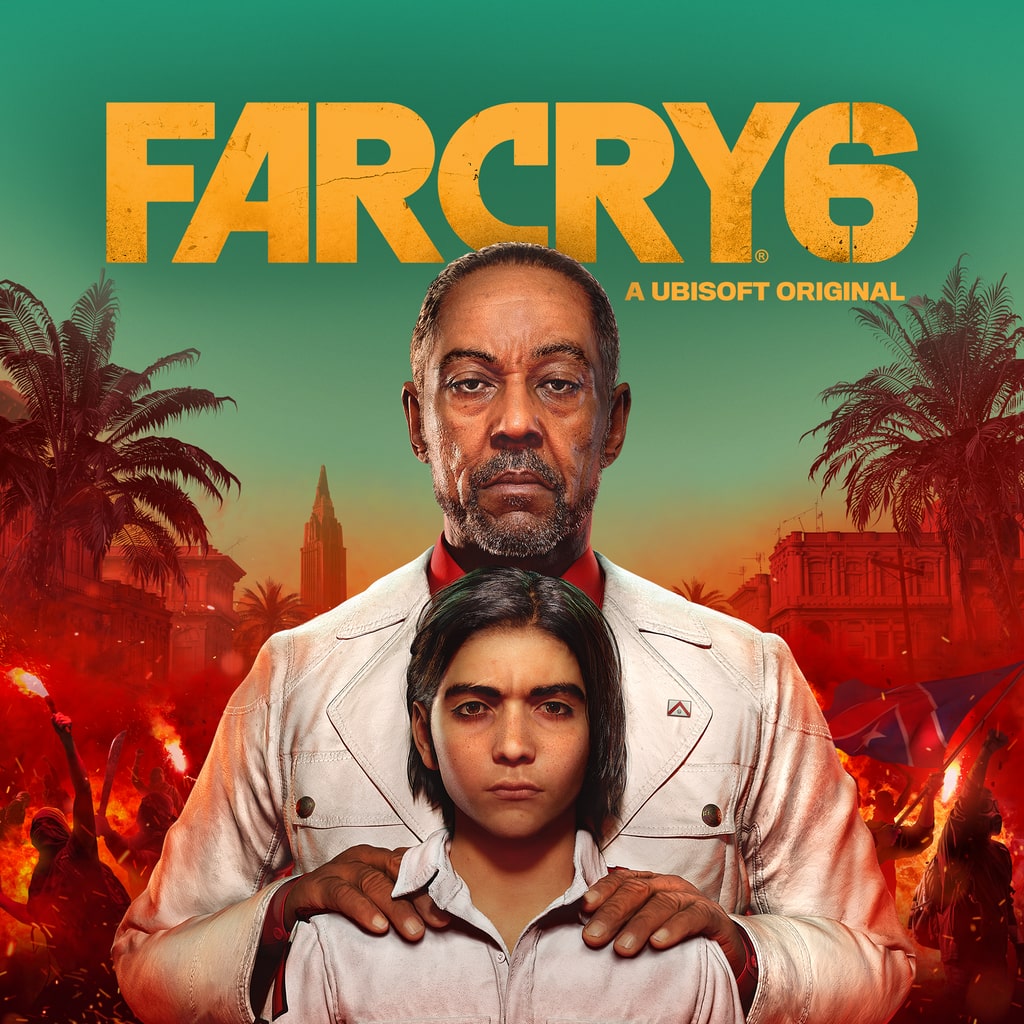
It was a bit tough to get started because the introduction is very stifling, and then there's the Caribbean setting, which means Spanish flavor with its palette, music, names, and accent—one of those things I'm allergic to.
At first, I was put off by the abundance of useless side content. In the sense that before, there were secondary quests of various types, but not that many, and they rewarded you with something more or less substantial or at least tangible. Here, you walk across the map, and every 50 meters you stumble upon a marker for some other mini-side quest that might take a minute to complete and gives you almost nothing in return—well, maybe you can farm a bit of random resource, or a random piece of gear/attachment for a random gun. The same goes for the various types of random collectibles that give nothing. On the plus side, they finally removed the towers that annoyed everyone except me.
Overall, this caused some confusion at first, but then came the realization of freedom—essentially, aside from outposts and checkpoints (outposts on a minimal scale) and AA guns, you don't actually need to do anything beyond the main quests to play comfortably, and even these points aren't strictly mandatory. Outposts and checkpoints are just fast-travel/airdrop points, and considering the distance a wingsuit can carry you, you can cover the entire map having captured only a few bases; AA guns don't matter if you aren't flying planes or helicopters, and even if you are, the whole gun is taken out in five seconds—run up, throw a grenade from 20 steps away, and run back. Plus, if transport is needed, you can call a Roach-car with a whistle at any moment, just like in Cyberpunk.
Regarding the shooting—it's as excellent, juicy, and pleasant as before. Guns and attachments are looted from collectible crates scattered here and there or given for quests, and they serve more of a cosmetic function. I didn't bother much and played through with one starting gun—a semi-automatic rifle with a homemade silencer from the tutorial—and a simple Kalashnikov that I managed to find within the first few hours and used to replace the second tutorial assault rifle; fortunately, with armor-piercing bullets, all enemies, even the toughest ones, go down clearly from one headshot. The only thing I changed on the "three" several times during the game was the grenade launcher/explosive sniper rifle as soon as a new anti-vehicle option became available.
Regarding gear—in this part, perks are tied to it, although they aren't very diverse or impactful on the gameplay—like, plus resistance to a certain type of damage, plus stamina for running, and so on; meanwhile, the perk trees with skill point upgrades from before are gone. I liked this approach because while it was cool to upgrade things before, on the other hand—am I playing D&D or a shooter-sandbox? Why are you locking game elements behind progression? Not to mention that in old parts, the character starts off more stripped down than they should be, as you spend initial ability levels just barely bringing your health and armor up to an average level, crafting those stupid ammo pouches without which you carry one gun with one magazine, and so on. In the end, here, separate and most unusual perks from the final progression levels of old parts are tied to specific gear, but even then they aren't OP or a must-have, just for those who like them; essentially, no one forces you into anything.
The role of vehicles has also been strengthened—you have to fight helicopters constantly and occasionally tanks, and you have the appropriate weaponry for this, and you can easily get a tank or a combat helicopter/plane yourself, and every second jeep has a turret, albeit a useless one. Plus, enemies have automatic turrets, mortars, and so on, much of which you can personally seize. I enjoy all of this—it's quite brisk.
As for the world—it's beautiful, not boringly designed, diverse, with locations thematically divided by terrain and plot concept, featuring land, water, and air, several small towns and a capital; overall, it's surprisingly interesting to be in. Some locations are completely unlike others and provide a special atmosphere. Perhaps the best of the worlds from previous parts so far; it's clear they worked on it very well, although this only starts to become noticeable closer to the middle or second half.
You can also play dominoes with workers or fight in cockfights, or run around as one of the three previous villains in pseudo-plot additional gore missions on maps from those parts.
But where it falls short is when trying to empathize with the story characters. Or rather, that attempt doesn't even happen due to certain narrative features.
From the perspective of world design, the characteristics of the country and the local ecosystem built by the dictator and his sycophants, everything looks quite organic, and not as crazy as in the fifth part, where several thousand rednecks sniffed lilies and set up a branch of "the same horror" on some undefined territory.
The images, motivations, capabilities, and forms of abuse of the local population by the villains are quite clear and explainable here, while the side of the fighters consists of such utterly derailed cliques of degenerates as have never been seen before. And I don't mean "oppressed coarse uneducated workers," but specifically mental and moral degenerates—not all, but about half of the named characters, on the level of Hurk from previous parts or the idiots from 4 who give corresponding quests. It's probably supposed to look like they have hot Latin American blood and were so crushed by the yoke of dictatorship that they went slightly crazy, but they look like cringe TikTokers. Moreover, all this is heavily seasoned with "the agenda," which wasn't in the last part, though not so much pushing something as really just checking a box, purely so game journalists wouldn't complain.
Now I'll try to list from memory the buzzwords from the manual to make it clearer: slavery, Western colonialism (these two are at least organically and well integrated into the plot, so they're forgiven); "light-skinned" privileges (in the context of the local smoked population); a female/female homosexual couple in a side quest, a female/FTM homosexual couple (together with their fat scumbag friend, they are the main clique of degenerates; added as a phenomenon purely to check a box without any influence on the plot, while in terms of conversation, appearance, emotions, and behavior—they are utterly derailed animals), just some important plot homosexual in another location (moreover, against the background of the previous couple, the Overton window is already cracking so much that this one isn't even perceived as something special); I separately chuckled at how after a couple dozen hours, one of the female characters suddenly rolled out a "by the way, I'm vegan" thread, kind of like in that meme with urinals, and an additional chuckle that 15 minutes after this revelation, she was suddenly killed for plot reasons. Well, as for the number of strong women who survived while strong men died—I'll keep quiet about that; it's long been standard practice. It's good that I chose a male character this time; at least one decent sausage fell into the bowl of vareniki. The only thing I can't remember is climate change—but I didn't do all the side quests, maybe there was something somewhere, or maybe the game was just made several years ago when it wasn't as acute on the agenda.
Overall, I got the feeling that the writers really decided to troll and for fun threw together a fanfic taking into account everything currently relevant on Twitter (an extreme organization banned in the RF). Probably because of this, due to the caricatured lightness and comicality, these things weren't nitpicked, but rather caused a smile a few times from the deliberate absurdity of what was happening—as if you're watching some 80s-90s cartoon after school where characters run around, do crazy stuff, an anvil falls on their head, and so on.
Also, upon the very first launch, in addition to the brightness settings common for modern games, the game offers a whole bunch of settings for various disadvantaged people, like colorblindness or voice-over for menu items (you never know, maybe a blind person wants to play).
In other respects, summing up, one can completely ignore the previous section, and if someone liked the previous parts and doesn't mind shooter-sandboxes, then this title is capable of providing a very brisk and engaging experience. They worked well on the mistakes of the previous part and pulled it out of that gloom they dipped into last time, and even moved in the direction of more free gameplay and a significantly cooler world. And I even got used to the Spanish flavor by the end, although I still had to turn off the radio and music in the options.
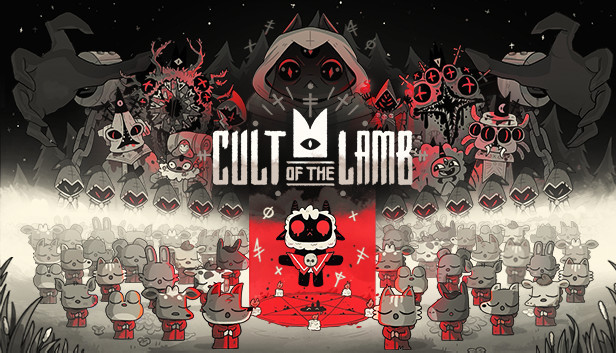
A casual game for housewives. Fart through rolls like in another casual game Aid; in between levels, click around a happy farm—talk to mobs, water flowers, sweep up some crap, chop a bush. I thought it would be more fun given the hype, but no.
The only emotion other than neutral in a positive direction I got was when I named two cultists Arandor and Plesen, and at one point they became friends, and then I almost missed the time limit for a courier quest for Ples; he got offended and became a heretic who confuses workers. After which Arets gave me a task to kill him, I fed same poison to Ples, he died, and Arets was happy and ate a dish made from his corpse.

Dropped it after the boss of the first biome—completely bored.
It was a bit tough to get started because the introduction is very stifling, and then there's the Caribbean setting, which means Spanish flavor with its palette, music, names, and accent—one of those things I'm allergic to.
At first, I was put off by the abundance of useless side content. In the sense that before, there were secondary quests of various types, but not that many, and they rewarded you with something more or less substantial or at least tangible. Here, you walk across the map, and every 50 meters you stumble upon a marker for some other mini-side quest that might take a minute to complete and gives you almost nothing in return—well, maybe you can farm a bit of random resource, or a random piece of gear/attachment for a random gun. The same goes for the various types of random collectibles that give nothing. On the plus side, they finally removed the towers that annoyed everyone except me.
Overall, this caused some confusion at first, but then came the realization of freedom—essentially, aside from outposts and checkpoints (outposts on a minimal scale) and AA guns, you don't actually need to do anything beyond the main quests to play comfortably, and even these points aren't strictly mandatory. Outposts and checkpoints are just fast-travel/airdrop points, and considering the distance a wingsuit can carry you, you can cover the entire map having captured only a few bases; AA guns don't matter if you aren't flying planes or helicopters, and even if you are, the whole gun is taken out in five seconds—run up, throw a grenade from 20 steps away, and run back. Plus, if transport is needed, you can call a Roach-car with a whistle at any moment, just like in Cyberpunk.
Regarding the shooting—it's as excellent, juicy, and pleasant as before. Guns and attachments are looted from collectible crates scattered here and there or given for quests, and they serve more of a cosmetic function. I didn't bother much and played through with one starting gun—a semi-automatic rifle with a homemade silencer from the tutorial—and a simple Kalashnikov that I managed to find within the first few hours and used to replace the second tutorial assault rifle; fortunately, with armor-piercing bullets, all enemies, even the toughest ones, go down clearly from one headshot. The only thing I changed on the "three" several times during the game was the grenade launcher/explosive sniper rifle as soon as a new anti-vehicle option became available.
Regarding gear—in this part, perks are tied to it, although they aren't very diverse or impactful on the gameplay—like, plus resistance to a certain type of damage, plus stamina for running, and so on; meanwhile, the perk trees with skill point upgrades from before are gone. I liked this approach because while it was cool to upgrade things before, on the other hand—am I playing D&D or a shooter-sandbox? Why are you locking game elements behind progression? Not to mention that in old parts, the character starts off more stripped down than they should be, as you spend initial ability levels just barely bringing your health and armor up to an average level, crafting those stupid ammo pouches without which you carry one gun with one magazine, and so on. In the end, here, separate and most unusual perks from the final progression levels of old parts are tied to specific gear, but even then they aren't OP or a must-have, just for those who like them; essentially, no one forces you into anything.
The role of vehicles has also been strengthened—you have to fight helicopters constantly and occasionally tanks, and you have the appropriate weaponry for this, and you can easily get a tank or a combat helicopter/plane yourself, and every second jeep has a turret, albeit a useless one. Plus, enemies have automatic turrets, mortars, and so on, much of which you can personally seize. I enjoy all of this—it's quite brisk.
As for the world—it's beautiful, not boringly designed, diverse, with locations thematically divided by terrain and plot concept, featuring land, water, and air, several small towns and a capital; overall, it's surprisingly interesting to be in. Some locations are completely unlike others and provide a special atmosphere. Perhaps the best of the worlds from previous parts so far; it's clear they worked on it very well, although this only starts to become noticeable closer to the middle or second half.
You can also play dominoes with workers or fight in cockfights, or run around as one of the three previous villains in pseudo-plot additional gore missions on maps from those parts.
But where it falls short is when trying to empathize with the story characters. Or rather, that attempt doesn't even happen due to certain narrative features.
From the perspective of world design, the characteristics of the country and the local ecosystem built by the dictator and his sycophants, everything looks quite organic, and not as crazy as in the fifth part, where several thousand rednecks sniffed lilies and set up a branch of "the same horror" on some undefined territory.
The images, motivations, capabilities, and forms of abuse of the local population by the villains are quite clear and explainable here, while the side of the fighters consists of such utterly derailed cliques of degenerates as have never been seen before. And I don't mean "oppressed coarse uneducated workers," but specifically mental and moral degenerates—not all, but about half of the named characters, on the level of Hurk from previous parts or the idiots from 4 who give corresponding quests. It's probably supposed to look like they have hot Latin American blood and were so crushed by the yoke of dictatorship that they went slightly crazy, but they look like cringe TikTokers. Moreover, all this is heavily seasoned with "the agenda," which wasn't in the last part, though not so much pushing something as really just checking a box, purely so game journalists wouldn't complain.
Now I'll try to list from memory the buzzwords from the manual to make it clearer: slavery, Western colonialism (these two are at least organically and well integrated into the plot, so they're forgiven); "light-skinned" privileges (in the context of the local smoked population); a female/female homosexual couple in a side quest, a female/FTM homosexual couple (together with their fat scumbag friend, they are the main clique of degenerates; added as a phenomenon purely to check a box without any influence on the plot, while in terms of conversation, appearance, emotions, and behavior—they are utterly derailed animals), just some important plot homosexual in another location (moreover, against the background of the previous couple, the Overton window is already cracking so much that this one isn't even perceived as something special); I separately chuckled at how after a couple dozen hours, one of the female characters suddenly rolled out a "by the way, I'm vegan" thread, kind of like in that meme with urinals, and an additional chuckle that 15 minutes after this revelation, she was suddenly killed for plot reasons. Well, as for the number of strong women who survived while strong men died—I'll keep quiet about that; it's long been standard practice. It's good that I chose a male character this time; at least one decent sausage fell into the bowl of vareniki. The only thing I can't remember is climate change—but I didn't do all the side quests, maybe there was something somewhere, or maybe the game was just made several years ago when it wasn't as acute on the agenda.
Overall, I got the feeling that the writers really decided to troll and for fun threw together a fanfic taking into account everything currently relevant on Twitter (an extreme organization banned in the RF). Probably because of this, due to the caricatured lightness and comicality, these things weren't nitpicked, but rather caused a smile a few times from the deliberate absurdity of what was happening—as if you're watching some 80s-90s cartoon after school where characters run around, do crazy stuff, an anvil falls on their head, and so on.
Also, upon the very first launch, in addition to the brightness settings common for modern games, the game offers a whole bunch of settings for various disadvantaged people, like colorblindness or voice-over for menu items (you never know, maybe a blind person wants to play).
In other respects, summing up, one can completely ignore the previous section, and if someone liked the previous parts and doesn't mind shooter-sandboxes, then this title is capable of providing a very brisk and engaging experience. They worked well on the mistakes of the previous part and pulled it out of that gloom they dipped into last time, and even moved in the direction of more free gameplay and a significantly cooler world. And I even got used to the Spanish flavor by the end, although I still had to turn off the radio and music in the options.
A casual game for housewives. Fart through rolls like in another casual game Aid; in between levels, click around a happy farm—talk to mobs, water flowers, sweep up some crap, chop a bush. I thought it would be more fun given the hype, but no.
The only emotion other than neutral in a positive direction I got was when I named two cultists Arandor and Plesen, and at one point they became friends, and then I almost missed the time limit for a courier quest for Ples; he got offended and became a heretic who confuses workers. After which Arets gave me a task to kill him, I fed same poison to Ples, he died, and Arets was happy and ate a dish made from his corpse.
and there was also this moment
Dropped it after the boss of the first biome—completely bored.
My sword, my trusted ally, unphased by my aspect.