


 Siverfale

Auto-translated
Battlefleet Gothic: Armada 2
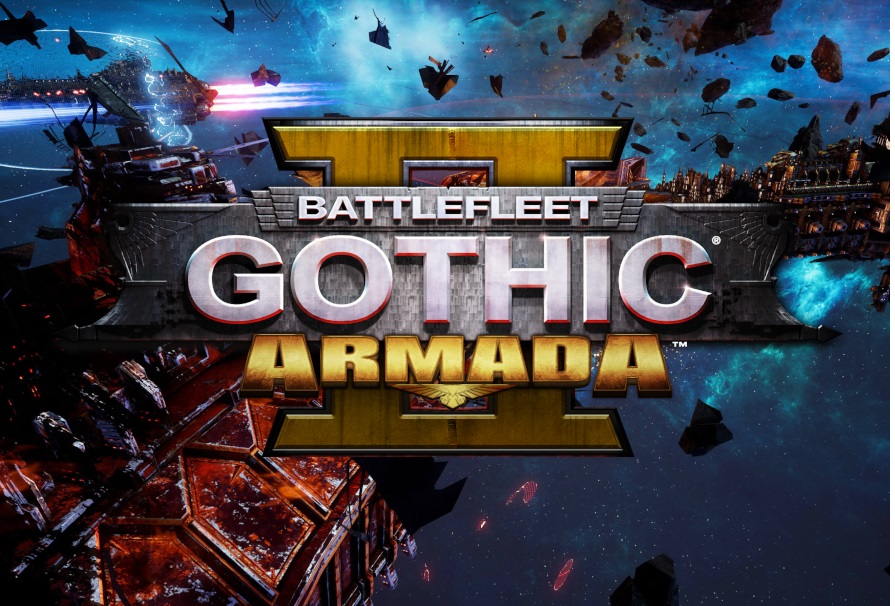
A game about spaceships in the Warhammer 40k setting. Unfortunately, I don't know how to coherently formulate my impressions into a cohesive narrative, so I'll just jump from thought to thought.
The game consists of two parts - strategic and tactical. Add in autoresolve with a crappy result for the player - and we've got almost Total War in space. But don't be scared of that - managing systems here is very simple, and space battles don't suffer from an overabundance of ships, at least in campaign mode. Actually, the strategy is simple - we move ships around systems and defend already captured ones, and also capture those not yet taken, plus a relatively small number of quest battles. Captured systems may have planets with useful bonuses. If you invest money into a planet, it will provide more bonuses. That's basically it. I told you, nothing scary. Now about the tactical part: the game shows us in the prologue/tutorial how to move ships, use active abilities, board enemy ships, and also ram enemy ships with your own. After we learn these basics, it allows us to manage our acquired knowledge freely. It's worth noting that I'm usually quite tactically inept (I hang out on the forum of a strategy game series, yes), yet somewhere around the mid-game I actively used all available ship weapon options - melta torpedoes, fighters, ramming as the situation demanded, and I wasn't above using boarding actions either. By this, I want to emphasize - there are no useless or marginally useful maneuvers in the game; absolutely all tools at the ship's disposal can come in handy. And against some opponents, the proper use of a specific weapon type can easily turn defeat into victory. Which weapons against which enemies? The answer is at this link!
Let me return to the thought I slightly drifted from - after the game tells us about the ships' combat capabilities, it no longer gives any hints on how best to use these abilities. Actually, there's nothing complicated about it - just fight against a certain xenos race once, study the features of their ships, and figure out what would be particularly useful against them. But it was still satisfying to form these conclusions on my own. Now, about the enemies themselves. I'll note that the game has a very smooth learning curve - perhaps even too smooth - first we're just allowed to fly ships around, then we liberate a fairly large sector from the forces of Chaos, who firstly behave extremely passively, and secondly - their ships are essentially the same as the Imperium's, only smeared with blood and shit - and therefore, worse. I started to think the battles in the game would remain boring, but then I was given a couple of battles against the Eldar, and I was surprised at how asymmetrical they felt - as it should be. The first impression was unforgettable - they'd fly in fast, focus fire on one ship, shred it to pieces in seconds, and start flying away. And when I tried using AoE abilities that had worked well before (which, however, don't activate instantly, but only after some time) - the Eldar just elegantly smirked under their elegant helmets at the clumsy mon-keigh, then demonstrated such feats of speed and maneuverability that I didn't bother trying to hit them with those abilities again for a very long time. Then there were Orks, Necrons, and Tyranids - the shock of asymmetry wasn't as strong with them, but overall, they also differ both in their tactics and in the best tactics to counter them.
Despite enjoying the battles, I can't help but note the weakness of the AI. As I wrote above, I'm quite weak at strategy and tactics myself, but here the AI is downright stupid. Perhaps, however, I only noticed this because of the high difficulty, which, as the developers honestly tell us, is expressed only in the AI having more ships with better stats, while I had to find various ways to adapt against a numerically superior enemy. As the strongest AI issues, I'll give just two examples. The first example didn't seem like a problem at first - I saw Ork ships smashing their own escort ships (the tiniest ships in the fleet) before even entering their line of sight - just sweeping them away with their larger ships. I thought this was actually a great way to portray the faction, especially since they do the same thing in their cinematics. When this situation repeated with the Tyranids, I grew wary - after all, the Hive Mind should micromanage its ships more wisely, but on the other hand, the Norn Queens will spawn new ones, maybe it doesn't care. But when the Necrons and Eldar started ramming their own escort ships - that's when I realized the problem is that the AI can't even set proper movement for its ships. The second example is quite extreme, but it only happened once - one of the battle maps was procedurally generated in such a way that the AI broke and just drove its ships in circles around one spot, ignoring the fact that I was shooting them from afar. To be fair, given the number of hours I've played, this is more the exception than the rule.
Nevertheless, despite the criticism of the AI, I want to emphasize again that the battles in this game are very well done. Not only do they (at least on high difficulty) encourage the player to use their entire arsenal wisely, but also in themselves - the combination of visuals, music, and sound makes the process very, very enjoyable. Even after dozens of hours played, when I see an enemy ship explode - I feel something warm in my soul. And I always set the speed to normal to enjoy the explosion process.
Speaking of dozens of hours played. My biggest complaint about this game is that it can easily drag on. I wouldn't rule out that the drawn-out nature was the result of my poor strategic decisions, but still. If I try to pinpoint the main reason for the bloat, at first I blamed the difficulty - especially since the game warns that high difficulty will lead to more invasions - but after thinking it over, I think the reason lies elsewhere. The thing is, the game has optional objectives that lead to permanently destroying a faction in Segmentum Obscurus. And these optional objectives always take place in very large sectors with a high number of star systems. This leads to two factors that prolong the game - firstly, a lot of time is spent capturing every system (though this isn't actually necessary). Secondly, even more time is spent defending all of this. At first, I even liked the second factor to some extent - I had to very carefully manage the placement of fleets in systems (their number is limited), and when I barely managed to defend all my vast holdings, I really felt the Imperium's pain as it's being torn apart from all sides while unable to send forces to all the needed places in time. But over time, this degenerated into a tedious - and, very importantly for me, a working person - very time-consuming routine. You can't rely on autoresolve, as I noted at the very beginning, and the enemy's numerical superiority and improved stats didn't allow me to just crank up max speed, box-select my ships, and send them towards the enemy. On the other hand, on lower difficulty, battles would probably feel overly simple. In short, if you're afraid of burning out on the game - only go for the systems needed for the story. If you're a bit worried but not too much - you can do optional missions, but don't try to capture every system. On the flip side, the optional quest battles are the most interesting - the story ones don't shine in this regard at all.
Now about the story. It's too simple in itself to say much about it, though it's perfectly functional. Some quest battles (not just story ones) have decent moments in terms of the overall Warhammer atmosphere, but nothing more. I really liked the protagonist, even though there's no complexity to him. He's a true servant of the Imperium - energetic and active, loyal and devoted, fearless and unyielding, and also - pious. I highlight this as a separate point because often, even when they show a good loyalist, there's a feeling that he only remembers the Emperor as a checkbox, just to remind everyone whose side he's on. And at first, it seems the protagonist does the same, but then you notice - he remembers the Emperor sincerely, seeking in Him the light and support to overcome the harsh circumstances he's in. It was very pleasant to play as such a great man, on whom our Imperium relies. And one example of bravery strongly coincided with the meta, which also made it memorable. First, my forces routed the enemy in a quest battle. My forces were already slightly depleted after the first battle, but nothing critical. Then a new wave of enemies appeared - I figured they'd show me them, I'd destroy them, and that'd be it, time to rest, especially since the NPCs talked anxiously about it, like "we won't hold out long." But after those enemies came another wave - here the NPCs started outright wailing, and I myself tensed up, as the fleet's strength was waning. Finally, after the second wave came a third wave - the strongest. The NPCs panicked, I thought "surely they won't make me fight these too, they'll probably let me retreat now," but the protagonist just calmly and without raising his voice said - "it is our duty to hold the line and not allow the enemy to approach an Imperial world. With the Emperor in our hearts, we will endure." And I realized that we truly had no choice but to endure and fulfill our duty. And that's exactly what we did. It felt very atmospheric.
Actually, in a sense, I don't even have much experience to speak about the game - because besides the Imperial campaign, there are two more (three with DLC), as well as a skirmish mode where you can play as any race from the campaign, and also some that aren't even in the campaign. And I haven't tried any of that yet, so there's still plenty for me to explore and see.
Brief summary - a good game, but it can easily lead to excessive repetition and time consumption.
A game about spaceships in the Warhammer 40k setting. Unfortunately, I don't know how to coherently formulate my impressions into a cohesive narrative, so I'll just jump from thought to thought.
The game consists of two parts - strategic and tactical. Add in autoresolve with a crappy result for the player - and we've got almost Total War in space. But don't be scared of that - managing systems here is very simple, and space battles don't suffer from an overabundance of ships, at least in campaign mode. Actually, the strategy is simple - we move ships around systems and defend already captured ones, and also capture those not yet taken, plus a relatively small number of quest battles. Captured systems may have planets with useful bonuses. If you invest money into a planet, it will provide more bonuses. That's basically it. I told you, nothing scary. Now about the tactical part: the game shows us in the prologue/tutorial how to move ships, use active abilities, board enemy ships, and also ram enemy ships with your own. After we learn these basics, it allows us to manage our acquired knowledge freely. It's worth noting that I'm usually quite tactically inept (I hang out on the forum of a strategy game series, yes), yet somewhere around the mid-game I actively used all available ship weapon options - melta torpedoes, fighters, ramming as the situation demanded, and I wasn't above using boarding actions either. By this, I want to emphasize - there are no useless or marginally useful maneuvers in the game; absolutely all tools at the ship's disposal can come in handy. And against some opponents, the proper use of a specific weapon type can easily turn defeat into victory. Which weapons against which enemies? The answer is at this link!
Let me return to the thought I slightly drifted from - after the game tells us about the ships' combat capabilities, it no longer gives any hints on how best to use these abilities. Actually, there's nothing complicated about it - just fight against a certain xenos race once, study the features of their ships, and figure out what would be particularly useful against them. But it was still satisfying to form these conclusions on my own. Now, about the enemies themselves. I'll note that the game has a very smooth learning curve - perhaps even too smooth - first we're just allowed to fly ships around, then we liberate a fairly large sector from the forces of Chaos, who firstly behave extremely passively, and secondly - their ships are essentially the same as the Imperium's, only smeared with blood and shit - and therefore, worse. I started to think the battles in the game would remain boring, but then I was given a couple of battles against the Eldar, and I was surprised at how asymmetrical they felt - as it should be. The first impression was unforgettable - they'd fly in fast, focus fire on one ship, shred it to pieces in seconds, and start flying away. And when I tried using AoE abilities that had worked well before (which, however, don't activate instantly, but only after some time) - the Eldar just elegantly smirked under their elegant helmets at the clumsy mon-keigh, then demonstrated such feats of speed and maneuverability that I didn't bother trying to hit them with those abilities again for a very long time. Then there were Orks, Necrons, and Tyranids - the shock of asymmetry wasn't as strong with them, but overall, they also differ both in their tactics and in the best tactics to counter them.
Despite enjoying the battles, I can't help but note the weakness of the AI. As I wrote above, I'm quite weak at strategy and tactics myself, but here the AI is downright stupid. Perhaps, however, I only noticed this because of the high difficulty, which, as the developers honestly tell us, is expressed only in the AI having more ships with better stats, while I had to find various ways to adapt against a numerically superior enemy. As the strongest AI issues, I'll give just two examples. The first example didn't seem like a problem at first - I saw Ork ships smashing their own escort ships (the tiniest ships in the fleet) before even entering their line of sight - just sweeping them away with their larger ships. I thought this was actually a great way to portray the faction, especially since they do the same thing in their cinematics. When this situation repeated with the Tyranids, I grew wary - after all, the Hive Mind should micromanage its ships more wisely, but on the other hand, the Norn Queens will spawn new ones, maybe it doesn't care. But when the Necrons and Eldar started ramming their own escort ships - that's when I realized the problem is that the AI can't even set proper movement for its ships. The second example is quite extreme, but it only happened once - one of the battle maps was procedurally generated in such a way that the AI broke and just drove its ships in circles around one spot, ignoring the fact that I was shooting them from afar. To be fair, given the number of hours I've played, this is more the exception than the rule.
Nevertheless, despite the criticism of the AI, I want to emphasize again that the battles in this game are very well done. Not only do they (at least on high difficulty) encourage the player to use their entire arsenal wisely, but also in themselves - the combination of visuals, music, and sound makes the process very, very enjoyable. Even after dozens of hours played, when I see an enemy ship explode - I feel something warm in my soul. And I always set the speed to normal to enjoy the explosion process.
Speaking of dozens of hours played. My biggest complaint about this game is that it can easily drag on. I wouldn't rule out that the drawn-out nature was the result of my poor strategic decisions, but still. If I try to pinpoint the main reason for the bloat, at first I blamed the difficulty - especially since the game warns that high difficulty will lead to more invasions - but after thinking it over, I think the reason lies elsewhere. The thing is, the game has optional objectives that lead to permanently destroying a faction in Segmentum Obscurus. And these optional objectives always take place in very large sectors with a high number of star systems. This leads to two factors that prolong the game - firstly, a lot of time is spent capturing every system (though this isn't actually necessary). Secondly, even more time is spent defending all of this. At first, I even liked the second factor to some extent - I had to very carefully manage the placement of fleets in systems (their number is limited), and when I barely managed to defend all my vast holdings, I really felt the Imperium's pain as it's being torn apart from all sides while unable to send forces to all the needed places in time. But over time, this degenerated into a tedious - and, very importantly for me, a working person - very time-consuming routine. You can't rely on autoresolve, as I noted at the very beginning, and the enemy's numerical superiority and improved stats didn't allow me to just crank up max speed, box-select my ships, and send them towards the enemy. On the other hand, on lower difficulty, battles would probably feel overly simple. In short, if you're afraid of burning out on the game - only go for the systems needed for the story. If you're a bit worried but not too much - you can do optional missions, but don't try to capture every system. On the flip side, the optional quest battles are the most interesting - the story ones don't shine in this regard at all.
Now about the story. It's too simple in itself to say much about it, though it's perfectly functional. Some quest battles (not just story ones) have decent moments in terms of the overall Warhammer atmosphere, but nothing more. I really liked the protagonist, even though there's no complexity to him. He's a true servant of the Imperium - energetic and active, loyal and devoted, fearless and unyielding, and also - pious. I highlight this as a separate point because often, even when they show a good loyalist, there's a feeling that he only remembers the Emperor as a checkbox, just to remind everyone whose side he's on. And at first, it seems the protagonist does the same, but then you notice - he remembers the Emperor sincerely, seeking in Him the light and support to overcome the harsh circumstances he's in. It was very pleasant to play as such a great man, on whom our Imperium relies. And one example of bravery strongly coincided with the meta, which also made it memorable. First, my forces routed the enemy in a quest battle. My forces were already slightly depleted after the first battle, but nothing critical. Then a new wave of enemies appeared - I figured they'd show me them, I'd destroy them, and that'd be it, time to rest, especially since the NPCs talked anxiously about it, like "we won't hold out long." But after those enemies came another wave - here the NPCs started outright wailing, and I myself tensed up, as the fleet's strength was waning. Finally, after the second wave came a third wave - the strongest. The NPCs panicked, I thought "surely they won't make me fight these too, they'll probably let me retreat now," but the protagonist just calmly and without raising his voice said - "it is our duty to hold the line and not allow the enemy to approach an Imperial world. With the Emperor in our hearts, we will endure." And I realized that we truly had no choice but to endure and fulfill our duty. And that's exactly what we did. It felt very atmospheric.
Actually, in a sense, I don't even have much experience to speak about the game - because besides the Imperial campaign, there are two more (three with DLC), as well as a skirmish mode where you can play as any race from the campaign, and also some that aren't even in the campaign. And I haven't tried any of that yet, so there's still plenty for me to explore and see.
Brief summary - a good game, but it can easily lead to excessive repetition and time consumption.
Where do we go?
Where do we end up when we save the world?
Where do we end up when we save the world?