


 Граф Орлов

Auto-translated
Waldemar Carafa

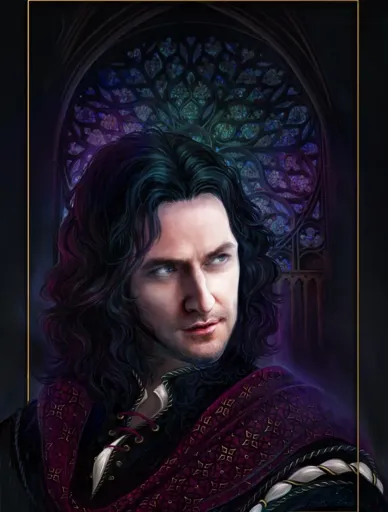
The midday sun found Waldemar, the middle son of the renowned aristocrat Shafir Carafa, in an extremely uncomfortable position. Clad only in his undergarments, he lay upon a purple velvet sofa, feet resting on the backrest and head hanging off the edge. The explanation for such an unusual pose was simple—the aristocrat was dead drunk.
Drunkenness for Waldemar was not a consequence of despondency, a festive pleasure, or a social ritual—it was his everyday state. He drank when he was cheerful and when he was sad, alone and in company, in idleness and in activity. The estate where he resided held almost inexhaustible wine reserves, supplemented by all sorts of brandies that he distilled personally. Waldemar opened his eyes and, without changing position, surveyed the room, squinting with dissatisfaction. The setting was striking—firstly for its terrible mess, and secondly for its luxury. Wine bottles were strewn chaotically across the purple carpet; fortunately, their contents matched the color of the wool. In the far corner stood the landlord's armor set—Waldemar had not worn armor for over five years, but this fact did not stop him from taking pride in the couple of notches left on the yushman plates by a Moenian blade. In another corner was a drinks cabinet, beside which sat a small table where silver and gold goblets were piled in disorder, while a marble bust of Father Carafa seemed displeased with such company, staring grimly but helplessly at the shambles. Finally, opposite the aforementioned sofa, which occupied a good third of the room, was a large fireplace, and above it—an impressive stuffed bird of prey whose eyes, made of large rubies, glittered maliciously in the candlelight, scaring inexperienced concubines half to death and greatly amusing Waldemar.
-- Slaves! Drag your lazy asses in here! -- he shouted and closed his eyes again.
Three slaves appeared, without any particular haste. The first carried breakfast on a tray—a large mug of beer, a generous portion of omelet, and hot roast beef; the second brought clean garments, a razor, and a basin of warm water; the third was burdened only by a sheet of paper.
-- You've arrived... Ehh! – Waldemar, letting out a hearty hiccup, stretched, flexing his strong muscles, and began breakfast without leaving his bed, consuming the meal with a truly aristocratic appetite. Finally deigning to assume a vertical position, he ordered the second to shave him and the third to report the list of tasks.
-- Master... Tonight there is a party in town, at the mansion of Sir K***. Also, you asked to be reminded that within three days, the recruitment of the peasant militia in the estate must be completed, and you have been asking for this reminder for a week now.
-- ***! -- the elitary cursed. -- Fine, remind me tomorrow; today I am busy again.
Father… He has been sitting on the regional high council for six years, endlessly sending all sorts of telegrams to his son, yet he hasn't bothered to visit once, though it's for the best. Knowing Shafir Carafa's difficult temperament, it is better not to see him without extreme necessity. Formally, Waldemar is merely the estate manager, but over these years he has come to consider himself its rightful ruler, especially since the former father's residence was bequeathed to him. The elder brother has long been cozying up at the imperial court, and the younger is running errands for their father in his trade of living merchandise.
Spending the daylight hours on his usual activities—gymnastics, reading, and idle lounging on the sofa, in the evening Waldemar Carafa, a man of obligations, headed accompanied by his retinue to the designated party. The carriage raced swiftly through the dusty and narrow streets of the outskirts, the coachman whipping passersby no less often than the horses without any shame—it was their own fault for not stepping aside for an important personage. Now the middle city greeted Waldemar with the gloomy grayness of stone houses, the noise of craft workshops, brisk traders, and guards standing straight as pins… Waldemar frowned with dissatisfaction: he disliked cities, their turbulent but aimless activity, their dust and dirt, the cramped quarters of the poor, and the high spires of the town hall. Little people scurried about the city as if stung—for what purpose? They bring no great benefit to the lords, nor do they arrange their own lives comfortably. But then came the mansion… In the hall, many times more luxurious than his modest estate, the cream of society from this city and nearby estates had gathered... No, not all of them—Carafa Senior did not honor the gathering with his presence, which greatly pleased his son. Waldemar smiled at those present, displaying dazzlingly white teeth.
-- Greetings to you, gentlemen!
-- Good health to you too, young Waldemar! – Mr. K***, a withered little man of indeterminate age, greeted him and pulled him toward the table, clutching his elbow with sharp claws. -- Please, please!
The evening proceeded as usual. Endless conversations, interrupted by thunderous toasts—in the name of the gods, in the name of the state, in the name of those present—flowed like wine.
-- It is our sacred duty to rule over nations, to bring liberation from the tyranny of the church to Apada! Our mighty warriors fight in the name of the higher law. Let us drink—to today's victory and future greatness!
-- We, the aristocrats, are marked by the gods. We are the conduits of souls, prophets of true existence. The sun glows above us with sacred fire; our gold sparkles with that same fire. Let us drink to that!
And in the same vein, repeating frequently, single drunken shouts rang out here and there, picked up by everyone a second later.
Conversations among separate groups of revelers were permeated with a different mood. Squabbles arose over every trifle—and every time, among faces ready to tear each other's throats out, Waldemar's face flickered.
-- Do you think the war is won by dashing cavalry, youth? Have you read too many fashionable books and judge by them? Arquebuses and linear infantry tactics—that is the future of military science!
-- Bah! A sofa general rushes into battle! He does not ride to battle on a horse, nor even on a chariot—slaves carry him in a palanquin to the front line! The front line, in his understanding, is a couple of kilometers from the site of the battle…
-- Brat! I'll smear you! Do you know how many enemies of the state I have defeated!
-- You only defeat your concubines, and even they can no longer raise your small, tired soldier.
-- Gentlemen, I beg of you…
-- One colleague of mine studied the secret of how to make a human woman conceive from a non-human. This is a breakthrough, I tell you! A new race of ideal slaves, strong, obedient, and clever!
-- It is not slave labor you are thinking of, oh no, Danzas! Everyone here knows about your specific fetishes. Just admit it.
-- He-he… And it's actually true, Danzas!
-- I'll curse you! – the embarrassed sorcerer grumbled discontentedly.
-- Gentlemen! Enough arguing! – the doors swung open, and a flock of semi-naked girls fluttered into the hall. – Look at the chicks I've brought! Come on, dive in, enjoy yourselves, people!
Further events defy any coherent description. Flushed drunken faces, streams of wine, female bodies blended in a mad dance to the accompaniment of lustful moans, dirty curses, drunken laughter, and a musical orchestra. Waldemar remembered pulling the beard of a fat general, with whom he continued to argue even while simultaneously indulging in pleasures with women. The argument ended, however, with a general toast to the victory of Lisliarian arms. He remembered smashing dishes with his saber—someone dared to say they had never seen such luxurious goblets anywhere, whereas the goblets were gilded, and Waldemar used gold ones at his feasts, so he flew into a rage at the injustice. He remembered the terrible howling of an improvised choir—one roared with a bear's bass, the second squeaked like a mouse, the third couldn't utter a few words without belching or hiccuping, and other participants similarly showed no unity in voice, yet seemed to derive very sincere pleasure from singing…
Waldemar woke up in a wretched state. Even his body, accustomed to all kinds of drinks, struggled with such orgies, and now, holding his throbbing head with his hands, he surveyed the hall as a sole surviving soldier surveys yesterday's battlefield. Naked bodies, male and female, lay in heaps, intricately intertwined; overturned dishes and bowls were piled under a table chopped in half, and his saber, the weapon of the crime, was smeared with something red. Waldemar licked the blade: sweet and tart. So, not blood.
-- Hey, slaves! Now, help me… -- Waldemar, roughly pushing away the concubines clinging to him, rose from the floor. – Find my pantaloons, -- he finished.
Yesterday's heroic conquerors of the green serpent slowly rose from the dead, and when Waldemar Carafa was ready to depart, they saw him off in full force, showering him with pleasantries. They hurried to resolve the main question: when and where the next soirée would be held, and at Waldemar's initiative, it was decided to gather at the Carafa estate on Imrud's Day.
Waldemar understood perfectly why these people needed him and why they were so welcoming: it wasn't as boring with him. These sluggish, bloated creatures, endlessly ready to discourse on the same topics, valued entertainment above all else, and if whores and wine could eventually bore anyone, inviting a wild provincial landlord to dinner guaranteed unpredictability and variety for the evening. And visiting such a savage was better than a dozen trips to the theater. As for Waldemar himself, why do this? It seemed there was no reason at all: he had seen these faces many times, heard these conversations many times, and every time afterward he had a terrible headache, and remembering what happened yesterday was frightening. However, did he have any reason to refuse? Did he have other affairs, more interesting and important? No. That is why he is eternally drunk—there is simply nothing else to do. Oh, the boredom!
Such thoughts possessed the landlord on the way home. By noon, still suffering from a headache, he went to recruit soldiers from the villages.
His first village bore the name Unylovo (Gloomtown). Waldemar, mounted and accompanied by six armed riders, immediately ordered the village elder to be called. Time had practically frozen in the settlement: the last time Waldemar had been here was three years ago, and the unsightly, squat houses looked exactly the same; even the same livestock seemed to graze in the same spots, and the elder's face hadn't changed one bit. He gave the master a slow bow and stared at him with an expression of total indifference.
-- Now—line up the men!
-- Uh-huh.
The men lined up, slowly crawling out from everywhere. All of them, as if hand-picked, were sturdy and robust; they passed the roll call without any shortage: neither dead nor fugitives were found. Eighty men were called up from the village; a total of one hundred and fifty were required—not a bad start.
Satisfied with the stable, if not particularly prosperous, condition of Unylovo and the compliance of its residents, Waldemar arrived in Bednyakovo (Poorville) in a good state of mind, which, however, soured at the first sight of the peasants' miserable wooden shacks, sparse livestock, and unplowed fields.
-- Elder! Call the people—it's time to pay the debt to the motherland.
-- Yes! Everything will be ready now!
Gathering the poor villagers proved difficult. Waldemar, surveying the thin recruits in patched clothing, began the roll call.
-- Greg Shovel!
-- Ran away…
-- Mivey Bony!
-- Died…
-- Died? Are you joking, elder?! Twenty… no, twenty-two already, and he died? I'll burn your shacks down right now, and all the dead will appear here if I hear that one more time! Nesham Kirdyk!
-- I…
They managed to scrape together forty militiamen somehow. After threatening the cunning men one last time and thoroughly cursing the elder because his two-year-old orders had still not been carried out, Waldemar continued his journey.
A disgusting road, full of potholes, led the riders to the village of Zlovonyevo-Bezvodnoe (Stink-Waterless), and the name provided an exhaustive characterization of the place. Once, back in Waldemar's grandfather's time, a small but clean stream flowed through the village, but after it dried up, the remaining ravine served as a garbage pit for the entire village. Dead livestock, rotten crops, household waste—all this was dumped by the peasants into the former riverbed, and the stench was now appalling. This village was a real thorn in Waldemar's side; he visited annually, each time digging new wells, which each time dried up, and there were currently two wells in the village. It didn't take long to find the people—half the village was crowded in lines for water.
"Oh, you children of demons! Why don't you agree in advance who goes for water and when, and get to work instead of idling in line?" -- so thought Waldemar, but he was in no mood at all, and he didn't try to teach the peasants how to live.
-- Fall in!
The recruitment process became indecently long, although only thirty people were needed. Soldiers had to run from house to house, dragging some off their bunks, others even pulling them out of barns and stables. Lame, cross-eyed, grimy—these were the worst recruits Waldemar had ever seen. Holding a handkerchief to his nose, he rattled off the roll call and, giving them not a minute to pack—since the locals had nothing to pack anyway—led the future militiamen into a new life. They lingered in Bednyakovo—the waterless ones needed to be washed somehow, and three Poorville men had already slipped away somewhere and replacements had to be found. In Unylovo, the Poorville men nearly fought with the locals over the food given for the journey, even though there was enough for everyone… In short, by the time they reached the city, it had not only grown dark but dawn had broken again, and Waldemar, already falling asleep in the saddle, was very glad that this crowd could be handed over to the captain of the guard and that he didn't have to see his father.
-- What a nightmare of a day… -- he groaned, collapsing onto the sofa. After a day in the saddle, he could not feel his legs at all. – Now get out of here, can't you see the master is not in the mood?
Pushing aside three concubines, Waldemar was about to bring a flask of brandy to his lips, but sleep completely overcame him; the flask slipped from his fingers, and its contents remained as a stain on the sofa.
The awakening was not pleasant.
-- Master? Master, wake up, you have a guest.
-- Mmm?
-- A guest has arrived.
-- Pshlon nh, along with you! I'm sleeping.
-- It is your brother, master.
-- ****! Fine, I'm coming…
Somehow wrapping his robe around himself and sipping the remains of the brandy on the go, Waldemar went to open the door. Why the hell did the youngest need to come at… nine in the evening?
-- Hello, bro… Oh.
Manfred Carafa stood on the threshold. The elder brother.
-- Quite a look… -- Manfred winced, looking at the disheveled Waldemar, who was already overgrown with stubble and wearing a loose robe. -- I may come in, I presume?
-- Uh, yeah, go ahead. Make yourself at home.
When Manfred stepped inside, his face took on an expression that was not just contemptuous; it practically slid to one side, and for a while he just stood there as if paralyzed. Waldemar stared at him no less intently than he stared at the interior decoration of the estate. All the middle brother now remembered about the eldest was that they weren't particularly friendly… and that father always loved him more. Manfred resembled their father more: fair-haired, short, and of slight build, with thin, almost feminine hands. In the years since Waldemar had seen him, he had become even more glamorized: he wore his hair tied in a bun, had perfectly smooth skin, and was dressed in clothes so smooth and shiny that it was painful to look at. Tall and strongly built, with a face weathered from frequent rides and open carriages, Waldemar looked like a savage in comparison.
"Look at him at court… How slippery he's become"
-- M-hm. Well. What a foul smell you have. And who is this? Fine, I'll settle in the guest room for now.
-- Hey, wait! Drink there… Dinner. We'll organize hospitality now!
In response, Waldemar received only an indefinite sigh, which apparently meant that Manfred was not interested in such mundane matters.
Less than a week remained until Imrud's Day. Waldemar was already openly burdened by his brother's company: although the latter did not pester him personally and was generally not very talkative, his presence disrupted the habitual order of things. Manfred paced the estate with his nose in the air, constantly sighing and humming as if perpetually dissatisfied, always scouting or sniffing something out. Generally, his proprietary behavior was irritating, and Waldemar almost beat his brother over a concubine, although the essence of the latter's complaints was very vague—he seemed indifferent to women, as well as to other joys of life… Only one thing was pleasing—he was always going somewhere. Usually to the city, but once Waldemar saw his carriage heading toward the villages. He saw it and let out a spiteful chuckle, for no carriage could travel those roads without risking overturning. Either way, today he had left again at dawn, and Waldemar could finally enjoy relative solitude. He devoted the day to preparing for the upcoming holiday and walked around the entire estate at least five times. He visited the kennels—his fighting dogs, whose breeding he had taken up in his youth, were to fight Moenian hounds for the guests' amusement. A pair of hounds, delivered from the front only yesterday and which cost Waldemar a pretty penny, were kept separately. Seeing the Lisliarian, the dogs, despite their unhealed wounds, growled, baring sharp fangs. Not scary—a couple of days of work, and they could be handled with bare hands. He peeked into the grand hall, ensuring everything was done with appropriate luxury. In the center of the hall was a large sacrificial brazier. At the feast, of course, there would be a priest, and all proper rituals would be performed right here. Waldemar was very pious—at least regarding the material side of religion and rituals. Candlesticks… Gilded, unacceptable. One can only hope that no one thinks to poke them with a knife and check. Finally, on the wall—a huge painting, a full-scale battle canvas: Divine Imrud el Isin, illuminated by golden radiance, overthrows the enemies of the then-Karrag—filthy barbarians embodying the dark kingdom. Waldemar remembered that his father didn't like this painting, nor did his brother. Probably because the thin and short barbarian chief bore some resemblance to both of them… Waldemar smirked. He liked the painting very much. When he was still a teenager, he often dreamed of growing up just as strong and brilliant, heading to the front, and crushing the enemies of the divine emperor. Reality turned out to be not so attractive: constant marches, the inconveniences of camp life, and other vicissitudes of war quickly discouraged the young aristocrat from pursuing a military career. But the thirst for glory didn't disappear; it just subsided, frayed in the idle and drunken life of a provincial landlord, rusted like his old armor, but there was no servant who could wash away the layer of philistinism.
After lunch, Waldemar went for a ride and returned home only after sunset. He didn't find his brother at home, but he did find a telegram from his father.
"Waldemar. Where did you find such wretched recruits? Two dozen had to be rejected entirely; find new ones by the end of the week, regardless of where. Furthermore, you should know that I have rewritten the will. The estate will go to Manfred. For now, you remain the manager. I will leave you all the savings. Shafir Carafa."
-- Slippery bastard! – Waldemar roared, throwing a glass against the wall in anger. Blood pounded in his temples so loudly that he didn't hear the shatter of glass. – For now! For now, damn you to demons! Until my brother sniffs out something else and licks your ass to a shine?!
If he had caught Manfred now, he probably would have hacked him to pieces on the spot, despite all fraternal feelings. But Manfred did not deign to appear, and Waldemar spent the rest of the evening drinking himself into a stupor.
Manfred appeared a couple of days later. Smiling kindly, he explained that their father had asked him to submit a report on the affairs of the estate and assured him that he had no intention of encroaching on the management and would soon return to the capital. Waldemar listened to these speeches, sweet and poisonous, and just waved his hand—it was unpleasant even to argue, like touching a slug. Moreover, the holiday was soon.
Then the day arrived. Waldemar, clean-shaven, in his best velvet doublet, only slightly haggard over the last few days, greets the guests.
-- Glad, very glad to welcome you again, youth, -- Mr. K***, punctual to the point of obsession, arrived with minute precision. – Well, have the girls arrived? I'd like to stretch my legs…
-- Bah! We meet again! – thunders the pot-bellied general. – So, will there be dog fights? I love fights passionately, gladiatorial ones more, but they haven't caught on here yet.
-- Waldemar! Well, how's life? – Munar Esterházy, also a rural landlord, is the only one to shake hands. – Heard Manfred arrived? Where is he?
-- Somewhere… Probably sitting in the study. He is far from our amusements.
-- Well, amusements are one thing, but Imrud's Day is quite another. Or does he not honor the gods either?
-- I don't know, Munar. I just don't know.
The celebration got off to a good start. Dog fights were a great exotic, and the city nobility, watching fur fly in all directions and sand stained with blood, shrieked with delight louder than the dogs. One hound tore the throat of Waldemar's dog, but his favorite, a healthy black male named White Fang, not only mauled his first opponent but also won the second fight, which he entered without any respite. The enthusiastic general declared that he would buy puppies from him at the price of good slaves.
A luxurious dinner with seven courses was served, the musicians played passably, and the dancers put on a performance worthy of the imperial court. Overall, the guests were satisfied; the arriving priest, not forgetting to admire the painting, along with Waldemar, as the organizer of the festivities and adept of the sun god, performed the proper rituals, and everything seemed to be in perfect order, but the host felt very uncomfortable for an unknown reason. Food wouldn't go down his throat, he ate unusually little, but he leaned on the wine even more than usual; as a result, he became heavily intoxicated. The conversation turned to the advantages of country life.
-- The city is… *hic*… like a spider. It catches, holds, and sucks, sucks, -- explosion of laughter. – No, not like that, fools. It sucks the life out of people, whether it's us or the peasants. Here I have—life! Tell me, isn't it true, Munar.
-- Absolutely. Only on one's own land does a person truly live.
-- Oh yes, -- a soft, insinuating, strangely sober voice was heard. Manfred deigned to honor the gathering with his presence. – On one's own land, but is it yours, brother?
-- Mine! Everything is mine! My slaves. My villages, and this house is mine!
-- And is it yours, or our father's?
-- I am his deputy and… *hic*… I am the boss here!
-- Then why are the villages impoverished? Why are your peasants sick?
-- Leave it, boy. We have a holiday here. Better honor the god instead of nitpicking, -- grumbled Mr. K***.
-- God? A good thing. But while Waldemar honors the gods of sun and wine, the economy is perishing… And you believe you have the right to call yourself a landlord, brother? No, you have no right to call yourself a lord!
-- No right?! I have no right to be called a lord?! – Waldemar jumped up from the table in a rage. Someone tried to hold him back, but after being hit on the head with a heavy goblet, abandoned the intention. – And you say this? You have no right to be called even a man, you court lickspittle! Womanly hands!
-- Oh! Insulting an official of the royal court! Know, people, this man is not an aristocrat at all! He is a degenerate, with peasant blood in his veins! His mother was red-haired, while his father, noble Shafir Carafa, was blond, and this one…
-- Out of my house!
-- No. My house. Here is the paper…
No one ever found out what that paper was. Waldemar, staggering desperately, rushed at his brother with a drawn saber. Manfred, either hoping that his drunken brother wouldn't be able to even rise from the table, or relying on protection from the other elitaries, whose sympathies unexpectedly turned toward Waldemar, scrambled in panic around the hall. Waldemar Carafa, wildly swinging his saber, hunted him like a beast, eventually cornering him at the brazier in the center of the hall. The first downward strike—and the frail wrist clutching a dagger hung by a thin strip of skin. The second stabbing blow—pierces through the thin clothes and the soft belly. The limp body falls backward onto the unstable brazier.
-- Brother, you… Killed me? – as if not realizing what had happened, Manfred Carafa breathed his last. His clothes and hair were already catching fire.
-- Fire!
Waldemar, not yet knowing what feelings he ought to experience at the death, turned around. The flames from overturned candles spread to the tablecloths and curtains.
-- Run, gentlemen, run!
Amidst the screams of women, the cursing of men, and Waldemar's half-coherent orders to save property, the revelers left the estate. Collapsing onto the grass, the aristocrats watched with genuine interest as Waldemar Carafa, still clutching the bloody saber, instructed his slaves against the backdrop of the burning building, running in zigzags and waving his arms as if in religious ecstasy.
-- Money! Did you take the money from the cupboard, you blockhead?! And you, what are you doing? Let that damn mare go, she's barely breathing anyway, hold the bay, the bay!.. Why are you hauling those rags?! Save the gold! Stupid peasants!..
The estate was fully engulfed in flames by the time the last rays of sunset faded. There was nothing left to save, and Waldemar, along with everyone else, sat on the grass. With one arm embracing a concubine, the other gripping the hilt of his saber and smiling drunkenly, he seemed to enjoy the spectacle.
-- Burns well. Bright, just like the sun.
-- That's true. I think it turned out to be a good sacrifice for Imrud's Day.
-- Ugh! I'd want a funeral pyre like the one you made for your brother, Waldemar.
-- You know what? The cellar is perfectly fine! Slaves—quickly bring wine for the gentlemen. The evening is just beginning.
-- Brr. How savage.
-- Yes, demons take me, savage! Wild manners of a wild landlord! As if that's not why we came.
-- You had a good holiday, Master Waldemar. Only a pity about the painting. It was a good one… -- so the priest summarized the evening.
Tongues of flame greedily devoured the wood, crackling with pleasure. Waldemar kicked a rolling log and continued the story:
-- Well, basically, that's how I killed my brother and burned the family estate. Sold what I had and went wherever my eyes led me; Mr. K*** arranged a pass for me—he has some relatives there. I don't regret it one bit. Better one good fire than long rotting. And actually, I always wanted something… Like that. I started gathering a team, wanted to go east, but it didn't quite work out.
-- That is a sad story. But you know, it reminds me of a story about a certain hero of antiquity…
Date of birth: November 703
Origin: Lisliar
+10 XP, -3 Faith.
Characteristics:
Strength: 6
Endurance: 6 (+2 +3)
Agility: 4 (+1 +3)
Perception: 7 (+3)
Speed: 4
Intelligence: 5
Spirit: 3(+2)
Faith: 0 (-3)
Charisma: 3 (+2)
Beauty: 2
Alignment:

✦ Imrud, god of the sun.
Character receives additional experience after each victorious battle as well as every time they personally slay an enemy. +2 Endurance, +2 Charisma, +50% Observation, and +35% Accuracy.
Skills:
Elite

Savings
+3500-7500 jewels at start [5]
Concubine
GM-created character subordinate to the player [slave] [3]
Scholar
GM-created character subordinate to the player [slave] [3]
Ruthlessness
Deals double damage to characters whose endurance is lower than theirs [3]
Biologist

Zoologist
Character is trained in riding; they may also attempt to tame wild animals (success depends on species-specific checks) [3]
One-handed weapons

Light Step
1. +2% accuracy for each unit of perception [1]
Lightning Speed
1. +1 additional attack [2]
Inventory:
Yushman
Ornately decorated saber
Carafa family ring
Whip
Flask of brandy
Set of luxury clothing
Set of comfortable clothing
Savings
If possible — horse
The midday sun found Waldemar, the middle son of the renowned aristocrat Shafir Carafa, in an extremely uncomfortable position. Clad only in his undergarments, he lay upon a purple velvet sofa, feet resting on the backrest and head hanging off the edge. The explanation for such an unusual pose was simple—the aristocrat was dead drunk.
Drunkenness for Waldemar was not a consequence of despondency, a festive pleasure, or a social ritual—it was his everyday state. He drank when he was cheerful and when he was sad, alone and in company, in idleness and in activity. The estate where he resided held almost inexhaustible wine reserves, supplemented by all sorts of brandies that he distilled personally. Waldemar opened his eyes and, without changing position, surveyed the room, squinting with dissatisfaction. The setting was striking—firstly for its terrible mess, and secondly for its luxury. Wine bottles were strewn chaotically across the purple carpet; fortunately, their contents matched the color of the wool. In the far corner stood the landlord's armor set—Waldemar had not worn armor for over five years, but this fact did not stop him from taking pride in the couple of notches left on the yushman plates by a Moenian blade. In another corner was a drinks cabinet, beside which sat a small table where silver and gold goblets were piled in disorder, while a marble bust of Father Carafa seemed displeased with such company, staring grimly but helplessly at the shambles. Finally, opposite the aforementioned sofa, which occupied a good third of the room, was a large fireplace, and above it—an impressive stuffed bird of prey whose eyes, made of large rubies, glittered maliciously in the candlelight, scaring inexperienced concubines half to death and greatly amusing Waldemar.
-- Slaves! Drag your lazy asses in here! -- he shouted and closed his eyes again.
Three slaves appeared, without any particular haste. The first carried breakfast on a tray—a large mug of beer, a generous portion of omelet, and hot roast beef; the second brought clean garments, a razor, and a basin of warm water; the third was burdened only by a sheet of paper.
-- You've arrived... Ehh! – Waldemar, letting out a hearty hiccup, stretched, flexing his strong muscles, and began breakfast without leaving his bed, consuming the meal with a truly aristocratic appetite. Finally deigning to assume a vertical position, he ordered the second to shave him and the third to report the list of tasks.
-- Master... Tonight there is a party in town, at the mansion of Sir K***. Also, you asked to be reminded that within three days, the recruitment of the peasant militia in the estate must be completed, and you have been asking for this reminder for a week now.
-- ***! -- the elitary cursed. -- Fine, remind me tomorrow; today I am busy again.
Father… He has been sitting on the regional high council for six years, endlessly sending all sorts of telegrams to his son, yet he hasn't bothered to visit once, though it's for the best. Knowing Shafir Carafa's difficult temperament, it is better not to see him without extreme necessity. Formally, Waldemar is merely the estate manager, but over these years he has come to consider himself its rightful ruler, especially since the former father's residence was bequeathed to him. The elder brother has long been cozying up at the imperial court, and the younger is running errands for their father in his trade of living merchandise.
Spending the daylight hours on his usual activities—gymnastics, reading, and idle lounging on the sofa, in the evening Waldemar Carafa, a man of obligations, headed accompanied by his retinue to the designated party. The carriage raced swiftly through the dusty and narrow streets of the outskirts, the coachman whipping passersby no less often than the horses without any shame—it was their own fault for not stepping aside for an important personage. Now the middle city greeted Waldemar with the gloomy grayness of stone houses, the noise of craft workshops, brisk traders, and guards standing straight as pins… Waldemar frowned with dissatisfaction: he disliked cities, their turbulent but aimless activity, their dust and dirt, the cramped quarters of the poor, and the high spires of the town hall. Little people scurried about the city as if stung—for what purpose? They bring no great benefit to the lords, nor do they arrange their own lives comfortably. But then came the mansion… In the hall, many times more luxurious than his modest estate, the cream of society from this city and nearby estates had gathered... No, not all of them—Carafa Senior did not honor the gathering with his presence, which greatly pleased his son. Waldemar smiled at those present, displaying dazzlingly white teeth.
-- Greetings to you, gentlemen!
-- Good health to you too, young Waldemar! – Mr. K***, a withered little man of indeterminate age, greeted him and pulled him toward the table, clutching his elbow with sharp claws. -- Please, please!
The evening proceeded as usual. Endless conversations, interrupted by thunderous toasts—in the name of the gods, in the name of the state, in the name of those present—flowed like wine.
-- It is our sacred duty to rule over nations, to bring liberation from the tyranny of the church to Apada! Our mighty warriors fight in the name of the higher law. Let us drink—to today's victory and future greatness!
-- We, the aristocrats, are marked by the gods. We are the conduits of souls, prophets of true existence. The sun glows above us with sacred fire; our gold sparkles with that same fire. Let us drink to that!
And in the same vein, repeating frequently, single drunken shouts rang out here and there, picked up by everyone a second later.
Conversations among separate groups of revelers were permeated with a different mood. Squabbles arose over every trifle—and every time, among faces ready to tear each other's throats out, Waldemar's face flickered.
-- Do you think the war is won by dashing cavalry, youth? Have you read too many fashionable books and judge by them? Arquebuses and linear infantry tactics—that is the future of military science!
-- Bah! A sofa general rushes into battle! He does not ride to battle on a horse, nor even on a chariot—slaves carry him in a palanquin to the front line! The front line, in his understanding, is a couple of kilometers from the site of the battle…
-- Brat! I'll smear you! Do you know how many enemies of the state I have defeated!
-- You only defeat your concubines, and even they can no longer raise your small, tired soldier.
-- Gentlemen, I beg of you…
-- One colleague of mine studied the secret of how to make a human woman conceive from a non-human. This is a breakthrough, I tell you! A new race of ideal slaves, strong, obedient, and clever!
-- It is not slave labor you are thinking of, oh no, Danzas! Everyone here knows about your specific fetishes. Just admit it.
-- He-he… And it's actually true, Danzas!
-- I'll curse you! – the embarrassed sorcerer grumbled discontentedly.
-- Gentlemen! Enough arguing! – the doors swung open, and a flock of semi-naked girls fluttered into the hall. – Look at the chicks I've brought! Come on, dive in, enjoy yourselves, people!
Further events defy any coherent description. Flushed drunken faces, streams of wine, female bodies blended in a mad dance to the accompaniment of lustful moans, dirty curses, drunken laughter, and a musical orchestra. Waldemar remembered pulling the beard of a fat general, with whom he continued to argue even while simultaneously indulging in pleasures with women. The argument ended, however, with a general toast to the victory of Lisliarian arms. He remembered smashing dishes with his saber—someone dared to say they had never seen such luxurious goblets anywhere, whereas the goblets were gilded, and Waldemar used gold ones at his feasts, so he flew into a rage at the injustice. He remembered the terrible howling of an improvised choir—one roared with a bear's bass, the second squeaked like a mouse, the third couldn't utter a few words without belching or hiccuping, and other participants similarly showed no unity in voice, yet seemed to derive very sincere pleasure from singing…
Waldemar woke up in a wretched state. Even his body, accustomed to all kinds of drinks, struggled with such orgies, and now, holding his throbbing head with his hands, he surveyed the hall as a sole surviving soldier surveys yesterday's battlefield. Naked bodies, male and female, lay in heaps, intricately intertwined; overturned dishes and bowls were piled under a table chopped in half, and his saber, the weapon of the crime, was smeared with something red. Waldemar licked the blade: sweet and tart. So, not blood.
-- Hey, slaves! Now, help me… -- Waldemar, roughly pushing away the concubines clinging to him, rose from the floor. – Find my pantaloons, -- he finished.
Yesterday's heroic conquerors of the green serpent slowly rose from the dead, and when Waldemar Carafa was ready to depart, they saw him off in full force, showering him with pleasantries. They hurried to resolve the main question: when and where the next soirée would be held, and at Waldemar's initiative, it was decided to gather at the Carafa estate on Imrud's Day.
Waldemar understood perfectly why these people needed him and why they were so welcoming: it wasn't as boring with him. These sluggish, bloated creatures, endlessly ready to discourse on the same topics, valued entertainment above all else, and if whores and wine could eventually bore anyone, inviting a wild provincial landlord to dinner guaranteed unpredictability and variety for the evening. And visiting such a savage was better than a dozen trips to the theater. As for Waldemar himself, why do this? It seemed there was no reason at all: he had seen these faces many times, heard these conversations many times, and every time afterward he had a terrible headache, and remembering what happened yesterday was frightening. However, did he have any reason to refuse? Did he have other affairs, more interesting and important? No. That is why he is eternally drunk—there is simply nothing else to do. Oh, the boredom!
Such thoughts possessed the landlord on the way home. By noon, still suffering from a headache, he went to recruit soldiers from the villages.
His first village bore the name Unylovo (Gloomtown). Waldemar, mounted and accompanied by six armed riders, immediately ordered the village elder to be called. Time had practically frozen in the settlement: the last time Waldemar had been here was three years ago, and the unsightly, squat houses looked exactly the same; even the same livestock seemed to graze in the same spots, and the elder's face hadn't changed one bit. He gave the master a slow bow and stared at him with an expression of total indifference.
-- Now—line up the men!
-- Uh-huh.
The men lined up, slowly crawling out from everywhere. All of them, as if hand-picked, were sturdy and robust; they passed the roll call without any shortage: neither dead nor fugitives were found. Eighty men were called up from the village; a total of one hundred and fifty were required—not a bad start.
Satisfied with the stable, if not particularly prosperous, condition of Unylovo and the compliance of its residents, Waldemar arrived in Bednyakovo (Poorville) in a good state of mind, which, however, soured at the first sight of the peasants' miserable wooden shacks, sparse livestock, and unplowed fields.
-- Elder! Call the people—it's time to pay the debt to the motherland.
-- Yes! Everything will be ready now!
Gathering the poor villagers proved difficult. Waldemar, surveying the thin recruits in patched clothing, began the roll call.
-- Greg Shovel!
-- Ran away…
-- Mivey Bony!
-- Died…
-- Died? Are you joking, elder?! Twenty… no, twenty-two already, and he died? I'll burn your shacks down right now, and all the dead will appear here if I hear that one more time! Nesham Kirdyk!
-- I…
They managed to scrape together forty militiamen somehow. After threatening the cunning men one last time and thoroughly cursing the elder because his two-year-old orders had still not been carried out, Waldemar continued his journey.
A disgusting road, full of potholes, led the riders to the village of Zlovonyevo-Bezvodnoe (Stink-Waterless), and the name provided an exhaustive characterization of the place. Once, back in Waldemar's grandfather's time, a small but clean stream flowed through the village, but after it dried up, the remaining ravine served as a garbage pit for the entire village. Dead livestock, rotten crops, household waste—all this was dumped by the peasants into the former riverbed, and the stench was now appalling. This village was a real thorn in Waldemar's side; he visited annually, each time digging new wells, which each time dried up, and there were currently two wells in the village. It didn't take long to find the people—half the village was crowded in lines for water.
"Oh, you children of demons! Why don't you agree in advance who goes for water and when, and get to work instead of idling in line?" -- so thought Waldemar, but he was in no mood at all, and he didn't try to teach the peasants how to live.
-- Fall in!
The recruitment process became indecently long, although only thirty people were needed. Soldiers had to run from house to house, dragging some off their bunks, others even pulling them out of barns and stables. Lame, cross-eyed, grimy—these were the worst recruits Waldemar had ever seen. Holding a handkerchief to his nose, he rattled off the roll call and, giving them not a minute to pack—since the locals had nothing to pack anyway—led the future militiamen into a new life. They lingered in Bednyakovo—the waterless ones needed to be washed somehow, and three Poorville men had already slipped away somewhere and replacements had to be found. In Unylovo, the Poorville men nearly fought with the locals over the food given for the journey, even though there was enough for everyone… In short, by the time they reached the city, it had not only grown dark but dawn had broken again, and Waldemar, already falling asleep in the saddle, was very glad that this crowd could be handed over to the captain of the guard and that he didn't have to see his father.
-- What a nightmare of a day… -- he groaned, collapsing onto the sofa. After a day in the saddle, he could not feel his legs at all. – Now get out of here, can't you see the master is not in the mood?
Pushing aside three concubines, Waldemar was about to bring a flask of brandy to his lips, but sleep completely overcame him; the flask slipped from his fingers, and its contents remained as a stain on the sofa.
The awakening was not pleasant.
-- Master? Master, wake up, you have a guest.
-- Mmm?
-- A guest has arrived.
-- Pshlon nh, along with you! I'm sleeping.
-- It is your brother, master.
-- ****! Fine, I'm coming…
Somehow wrapping his robe around himself and sipping the remains of the brandy on the go, Waldemar went to open the door. Why the hell did the youngest need to come at… nine in the evening?
-- Hello, bro… Oh.
Manfred Carafa stood on the threshold. The elder brother.
-- Quite a look… -- Manfred winced, looking at the disheveled Waldemar, who was already overgrown with stubble and wearing a loose robe. -- I may come in, I presume?
-- Uh, yeah, go ahead. Make yourself at home.
When Manfred stepped inside, his face took on an expression that was not just contemptuous; it practically slid to one side, and for a while he just stood there as if paralyzed. Waldemar stared at him no less intently than he stared at the interior decoration of the estate. All the middle brother now remembered about the eldest was that they weren't particularly friendly… and that father always loved him more. Manfred resembled their father more: fair-haired, short, and of slight build, with thin, almost feminine hands. In the years since Waldemar had seen him, he had become even more glamorized: he wore his hair tied in a bun, had perfectly smooth skin, and was dressed in clothes so smooth and shiny that it was painful to look at. Tall and strongly built, with a face weathered from frequent rides and open carriages, Waldemar looked like a savage in comparison.
"Look at him at court… How slippery he's become"
-- M-hm. Well. What a foul smell you have. And who is this? Fine, I'll settle in the guest room for now.
-- Hey, wait! Drink there… Dinner. We'll organize hospitality now!
In response, Waldemar received only an indefinite sigh, which apparently meant that Manfred was not interested in such mundane matters.
Less than a week remained until Imrud's Day. Waldemar was already openly burdened by his brother's company: although the latter did not pester him personally and was generally not very talkative, his presence disrupted the habitual order of things. Manfred paced the estate with his nose in the air, constantly sighing and humming as if perpetually dissatisfied, always scouting or sniffing something out. Generally, his proprietary behavior was irritating, and Waldemar almost beat his brother over a concubine, although the essence of the latter's complaints was very vague—he seemed indifferent to women, as well as to other joys of life… Only one thing was pleasing—he was always going somewhere. Usually to the city, but once Waldemar saw his carriage heading toward the villages. He saw it and let out a spiteful chuckle, for no carriage could travel those roads without risking overturning. Either way, today he had left again at dawn, and Waldemar could finally enjoy relative solitude. He devoted the day to preparing for the upcoming holiday and walked around the entire estate at least five times. He visited the kennels—his fighting dogs, whose breeding he had taken up in his youth, were to fight Moenian hounds for the guests' amusement. A pair of hounds, delivered from the front only yesterday and which cost Waldemar a pretty penny, were kept separately. Seeing the Lisliarian, the dogs, despite their unhealed wounds, growled, baring sharp fangs. Not scary—a couple of days of work, and they could be handled with bare hands. He peeked into the grand hall, ensuring everything was done with appropriate luxury. In the center of the hall was a large sacrificial brazier. At the feast, of course, there would be a priest, and all proper rituals would be performed right here. Waldemar was very pious—at least regarding the material side of religion and rituals. Candlesticks… Gilded, unacceptable. One can only hope that no one thinks to poke them with a knife and check. Finally, on the wall—a huge painting, a full-scale battle canvas: Divine Imrud el Isin, illuminated by golden radiance, overthrows the enemies of the then-Karrag—filthy barbarians embodying the dark kingdom. Waldemar remembered that his father didn't like this painting, nor did his brother. Probably because the thin and short barbarian chief bore some resemblance to both of them… Waldemar smirked. He liked the painting very much. When he was still a teenager, he often dreamed of growing up just as strong and brilliant, heading to the front, and crushing the enemies of the divine emperor. Reality turned out to be not so attractive: constant marches, the inconveniences of camp life, and other vicissitudes of war quickly discouraged the young aristocrat from pursuing a military career. But the thirst for glory didn't disappear; it just subsided, frayed in the idle and drunken life of a provincial landlord, rusted like his old armor, but there was no servant who could wash away the layer of philistinism.
After lunch, Waldemar went for a ride and returned home only after sunset. He didn't find his brother at home, but he did find a telegram from his father.
"Waldemar. Where did you find such wretched recruits? Two dozen had to be rejected entirely; find new ones by the end of the week, regardless of where. Furthermore, you should know that I have rewritten the will. The estate will go to Manfred. For now, you remain the manager. I will leave you all the savings. Shafir Carafa."
-- Slippery bastard! – Waldemar roared, throwing a glass against the wall in anger. Blood pounded in his temples so loudly that he didn't hear the shatter of glass. – For now! For now, damn you to demons! Until my brother sniffs out something else and licks your ass to a shine?!
If he had caught Manfred now, he probably would have hacked him to pieces on the spot, despite all fraternal feelings. But Manfred did not deign to appear, and Waldemar spent the rest of the evening drinking himself into a stupor.
Manfred appeared a couple of days later. Smiling kindly, he explained that their father had asked him to submit a report on the affairs of the estate and assured him that he had no intention of encroaching on the management and would soon return to the capital. Waldemar listened to these speeches, sweet and poisonous, and just waved his hand—it was unpleasant even to argue, like touching a slug. Moreover, the holiday was soon.
Then the day arrived. Waldemar, clean-shaven, in his best velvet doublet, only slightly haggard over the last few days, greets the guests.
-- Glad, very glad to welcome you again, youth, -- Mr. K***, punctual to the point of obsession, arrived with minute precision. – Well, have the girls arrived? I'd like to stretch my legs…
-- Bah! We meet again! – thunders the pot-bellied general. – So, will there be dog fights? I love fights passionately, gladiatorial ones more, but they haven't caught on here yet.
-- Waldemar! Well, how's life? – Munar Esterházy, also a rural landlord, is the only one to shake hands. – Heard Manfred arrived? Where is he?
-- Somewhere… Probably sitting in the study. He is far from our amusements.
-- Well, amusements are one thing, but Imrud's Day is quite another. Or does he not honor the gods either?
-- I don't know, Munar. I just don't know.
The celebration got off to a good start. Dog fights were a great exotic, and the city nobility, watching fur fly in all directions and sand stained with blood, shrieked with delight louder than the dogs. One hound tore the throat of Waldemar's dog, but his favorite, a healthy black male named White Fang, not only mauled his first opponent but also won the second fight, which he entered without any respite. The enthusiastic general declared that he would buy puppies from him at the price of good slaves.
A luxurious dinner with seven courses was served, the musicians played passably, and the dancers put on a performance worthy of the imperial court. Overall, the guests were satisfied; the arriving priest, not forgetting to admire the painting, along with Waldemar, as the organizer of the festivities and adept of the sun god, performed the proper rituals, and everything seemed to be in perfect order, but the host felt very uncomfortable for an unknown reason. Food wouldn't go down his throat, he ate unusually little, but he leaned on the wine even more than usual; as a result, he became heavily intoxicated. The conversation turned to the advantages of country life.
-- The city is… *hic*… like a spider. It catches, holds, and sucks, sucks, -- explosion of laughter. – No, not like that, fools. It sucks the life out of people, whether it's us or the peasants. Here I have—life! Tell me, isn't it true, Munar.
-- Absolutely. Only on one's own land does a person truly live.
-- Oh yes, -- a soft, insinuating, strangely sober voice was heard. Manfred deigned to honor the gathering with his presence. – On one's own land, but is it yours, brother?
-- Mine! Everything is mine! My slaves. My villages, and this house is mine!
-- And is it yours, or our father's?
-- I am his deputy and… *hic*… I am the boss here!
-- Then why are the villages impoverished? Why are your peasants sick?
-- Leave it, boy. We have a holiday here. Better honor the god instead of nitpicking, -- grumbled Mr. K***.
-- God? A good thing. But while Waldemar honors the gods of sun and wine, the economy is perishing… And you believe you have the right to call yourself a landlord, brother? No, you have no right to call yourself a lord!
-- No right?! I have no right to be called a lord?! – Waldemar jumped up from the table in a rage. Someone tried to hold him back, but after being hit on the head with a heavy goblet, abandoned the intention. – And you say this? You have no right to be called even a man, you court lickspittle! Womanly hands!
-- Oh! Insulting an official of the royal court! Know, people, this man is not an aristocrat at all! He is a degenerate, with peasant blood in his veins! His mother was red-haired, while his father, noble Shafir Carafa, was blond, and this one…
-- Out of my house!
-- No. My house. Here is the paper…
No one ever found out what that paper was. Waldemar, staggering desperately, rushed at his brother with a drawn saber. Manfred, either hoping that his drunken brother wouldn't be able to even rise from the table, or relying on protection from the other elitaries, whose sympathies unexpectedly turned toward Waldemar, scrambled in panic around the hall. Waldemar Carafa, wildly swinging his saber, hunted him like a beast, eventually cornering him at the brazier in the center of the hall. The first downward strike—and the frail wrist clutching a dagger hung by a thin strip of skin. The second stabbing blow—pierces through the thin clothes and the soft belly. The limp body falls backward onto the unstable brazier.
-- Brother, you… Killed me? – as if not realizing what had happened, Manfred Carafa breathed his last. His clothes and hair were already catching fire.
-- Fire!
Waldemar, not yet knowing what feelings he ought to experience at the death, turned around. The flames from overturned candles spread to the tablecloths and curtains.
-- Run, gentlemen, run!
Amidst the screams of women, the cursing of men, and Waldemar's half-coherent orders to save property, the revelers left the estate. Collapsing onto the grass, the aristocrats watched with genuine interest as Waldemar Carafa, still clutching the bloody saber, instructed his slaves against the backdrop of the burning building, running in zigzags and waving his arms as if in religious ecstasy.
-- Money! Did you take the money from the cupboard, you blockhead?! And you, what are you doing? Let that damn mare go, she's barely breathing anyway, hold the bay, the bay!.. Why are you hauling those rags?! Save the gold! Stupid peasants!..
The estate was fully engulfed in flames by the time the last rays of sunset faded. There was nothing left to save, and Waldemar, along with everyone else, sat on the grass. With one arm embracing a concubine, the other gripping the hilt of his saber and smiling drunkenly, he seemed to enjoy the spectacle.
-- Burns well. Bright, just like the sun.
-- That's true. I think it turned out to be a good sacrifice for Imrud's Day.
-- Ugh! I'd want a funeral pyre like the one you made for your brother, Waldemar.
-- You know what? The cellar is perfectly fine! Slaves—quickly bring wine for the gentlemen. The evening is just beginning.
-- Brr. How savage.
-- Yes, demons take me, savage! Wild manners of a wild landlord! As if that's not why we came.
-- You had a good holiday, Master Waldemar. Only a pity about the painting. It was a good one… -- so the priest summarized the evening.
Tongues of flame greedily devoured the wood, crackling with pleasure. Waldemar kicked a rolling log and continued the story:
-- Well, basically, that's how I killed my brother and burned the family estate. Sold what I had and went wherever my eyes led me; Mr. K*** arranged a pass for me—he has some relatives there. I don't regret it one bit. Better one good fire than long rotting. And actually, I always wanted something… Like that. I started gathering a team, wanted to go east, but it didn't quite work out.
-- That is a sad story. But you know, it reminds me of a story about a certain hero of antiquity…
Date of birth: November 703
Origin: Lisliar
+10 XP, -3 Faith.
Characteristics:
Strength: 6
Endurance: 6 (+2 +3)
Agility: 4 (+1 +3)
Perception: 7 (+3)
Speed: 4
Intelligence: 5
Spirit: 3(+2)
Faith: 0 (-3)
Charisma: 3 (+2)
Beauty: 2
Alignment:
✦ Imrud, god of the sun.
Character receives additional experience after each victorious battle as well as every time they personally slay an enemy. +2 Endurance, +2 Charisma, +50% Observation, and +35% Accuracy.
Skills:
Elite
Savings
+3500-7500 jewels at start [5]
Concubine
GM-created character subordinate to the player [slave] [3]
Scholar
GM-created character subordinate to the player [slave] [3]
Ruthlessness
Deals double damage to characters whose endurance is lower than theirs [3]
Biologist
Zoologist
Character is trained in riding; they may also attempt to tame wild animals (success depends on species-specific checks) [3]
One-handed weapons
Light Step
1. +2% accuracy for each unit of perception [1]
Lightning Speed
1. +1 additional attack [2]
Inventory:
Yushman
Ornately decorated saber
Carafa family ring
Whip
Flask of brandy
Set of luxury clothing
Set of comfortable clothing
Savings
If possible — horse
E si sui vius, er mi grans benananza,
e si ieu muoir, er mi grans deliuriers
e si ieu muoir, er mi grans deliuriers