Happy Life

Auto-translated
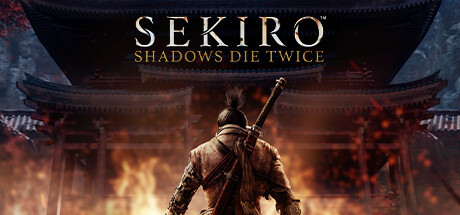
When it was released, I was too lazy to grind, but now I've finished it.
The Souls series' strength lies in its exploration, and in this game, it aligns with the overall pacing and the feeling of controlling the character – a hollow shell with a toothpick, floating through mountains and guts, clumsily rolling around in a can, running out of breath after three seconds of sprinting, and meticulously measuring steps on narrow platforms. At first, it's annoying, but then you get used to it.
Now, remembering how it felt in the Souls games after playing this, I can't help but feel grateful to Sekiro for its movement. The hero runs fast, doesn't get tired, jumps well, and doesn't lose HP when falling from two meters – is this next-gen? The vast majority of locations are open, with many paths to explore, not only horizontally but also vertically. All this freedom, plus stealth kills, is definitely a plus for the game. You're not just walking from one gut to another, from one hall to another, managing stamina; instead, you have an open puzzle before you that you can solve however you want. Want to hack and slash mobs? Want to attack them from rooftops or from behind? Want to wave your hand, collect loot, and jump away? Want to simply walk down the street or move to the side under a cliff? In 99% of cases, you can run away from regular mobs or mini-bosses and regroup. When you get used to it, it becomes very convenient and interesting. This partially negates one of the drawbacks of the Souls series (in my opinion) – when you enter a new location with new enemies, new movesets, and new abilities, and you have to adjust to them and relearn for half an hour, or just tank with Estus, or they are so weak and insignificant that you don't care about them at all. Once, in Sekiro, I ran out of all healing items, and I was already far from the old bonfire, and a new one was about to appear. I didn't want to teleport home to save experience and money and then run back to that place; instead, I went forward as carefully as possible, sometimes fighting, sometimes sneaking, sometimes using the map's features to my advantage. Eventually, I reached the bonfire without dying, looted everything, and killed everyone, and in the process, I incredibly enjoyed the beauty, aesthetics, and lore of that location. In the Souls series, this was almost impossible for me.
In general, free movement and open locations are what was missing. Accordingly, the locations themselves, which in most cases (not always) look "poorer" compared to the Souls series because this isn't typical fantasy, but rather realism, were much more enjoyable to explore and, in a way, were very well-directed. Furthermore, despite the signature melancholic and depressing atmosphere, most of the locations are incredibly beautiful and atmospheric, unlike the Souls series, with its randomly placed biomes. And all of this is cemented by a coherent, atmospheric story with good characters, and you don't need to be a weeb to enjoy it.
The abundance of various gadgets and techniques, at first glance, seems to mock the Souls series directly, but we shouldn't forget that in the Souls series, you have a certain variety of weapons and builds, which somewhat negates this advantage of Sekiro. However, within a single standard playthrough of the Souls series, you will never experience this variety because you will always use one upgraded weapon with its moveset of two and a half hits, while Sekiro gradually offers you an ever-expanding range of options, so I refuse to acknowledge that it negates the advantage.
Otherwise, even the basic combat is quite dynamic. Some die-hard Souls fans criticize Sekiro for "relying too much on deflects," but that's not entirely true. You can't win with pure deflects without aggression because the enemy simply won't lose poise (and you will); not every hit can be deflected, and not every hit is best deflected, and almost every attack can be avoided in several ways. For almost every particularly tough boss fight that I couldn't beat head-on, I found and used several different strategies, including positioning relative to the boss and on the arena as a whole, dynamically changing the focus between aggression and defense several times during the fight, and what I want to see from the boss in the current fight and what I can offer from myself, and all of them were viable, and in the end, I could integrate them with each other or use any one of them separately. And all of this is with the basic tools, and in addition, there are many different abilities and minor things. Of course, you can say that all of this exists in the Souls series, and you would essentially be right. But considering the more dynamic and diverse combat, the depth and interest of the battles in Sekiro increase geometrically. When something kills you, you always understand that it's not the fault of hitboxes, randomness, or bullshit design, except in very rare cases, but rather a lack of your own skill, a failure of strategy, a weakness in assessing the situation, and an inability to react accordingly.
The bosses themselves, being 95% human-like, also play both offensively and defensively; some movesets even have feints, which they transition into from another attack, but not in a cheap way, but honestly. In general, the battles are very aesthetically pleasing. Watching something in the Souls series after Sekiro, observing how a character with a toothpick lazily circles a giant slug or another autistic knight, barely dodging his slow series of three wide attacks and dealing his two weak scratches before the next dodge, is simply funny.
The boss I liked the most was the father. It's a pretty difficult fight, but very interesting and without any bullshit.
***
In conclusion, I completed all the Souls games that I played first, and I dropped two others near the very end, simply because I lost the motivation to finish them. I played Sekiro from start to finish, even all the optional content, because I thought it deserved it both in itself and as part of the "series." I'm very happy that I was in the right mood, remembered, and decided to give it another chance, and it took that chance without hesitation.
My sword, my trusted ally, unphased by my aspect.