
 atlant108

Auto-translated
Interview with Erwan Le Breton on the occasion of the 15th anniversary of the Acid Cave fan site

Source: http://www.acidcave.net/q%26a_with_erwan_le_breton_for_acid_caves_15th_anniversary.html
Translation:
The year 2018 marks not only the 15th anniversary of Acid Cave, but also 15 years since Ubisoft began developing the Might & Magic brand, which means Ubisoft has owned it almost as long as New World Computing did. As usual, this period had many ups and downs, but at the moment it seems we are at the "bottom." We asked a few questions to Erwan Le Breton, Creative Director of the Might & Magic brand at Ubisoft, about the past, present, and future of the series.
Q: Let's start with the bad news right away. Heroes VII received mixed or average reviews, getting a combined score of 67 on Metacritic from critics and a rating of 4.9 based on user reviews. As for sales results and popularity, it certainly wasn't a hit. What went wrong?
A: Simply put, our biggest mistake was releasing the game too early, despite warnings from the community. After many months of interaction with members of the Shadow Council and listening to their comments, we decided to release the game on time, even though all the fans had "turned" the red light.
The game had serious technical bugs, as well as design and art flaws that could have been fixed if we had a few more months for polishing.
In my opinion, Trial by Fire was the best (though not perfect) illustration of what we wanted to achieve for Heroes VII. I proudly presented the game at Gamescom, and I am still grateful to the Limbic team and my colleagues from the M&M team at Ubisoft for their determination and dedication at a time when we had little support and almost no positive emotions.
Nevertheless, our original intention was to make Heroes VII the best of the Heroes, engaging the community and combining the very best from Heroes I to VI.
To be honest, we failed.
Here is my own personal analysis of the reasons for this state of affairs (without pointing fingers - I am also to blame):
• The feature set was not a creative vision - Heroes VII lacked "soul."
• I don't mind reusing art and audio from previous games because it allowed for an increase in development volume, but for various reasons - Heroes VII ended up being less modern and appealing than Heroes VI.
• No matter what we do, we are always in the shadow of Heroes III. We are Ubisoft; we acquired the rights to the brand, we didn't create it... Fighting the nostalgic aura of Heroes III is like tilting at windmills - ultimately, it is useless.
• For a company as large as Ubisoft, turn-based strategies like Heroes are now too expensive in terms of production (due to volume and our overheads) and, at the same time, have too low a sales potential.
Q: If you had a time machine (from the Ancients) or a magic stone of infinite power capable of turning back time, what would you do differently in Heroes VII?
A: I would spend more time and effort finding the game's focus. On developing a breakthrough feature. On creating a superior vision to give the game a clear identity.
I would place greater importance on artistic issues. I know some fans complain that we spend too much money "decorating" our games rather than improving gameplay, but believe me, this is crucial for gaining internal support for a project and positive external reviews, which ensures more trust (and a larger budget and more development time) for the project.
And, of course, I would not have released the game until our beta testers gave the green light.
Q: Might & Magic Showdown turned out to be a short-lived game that set an anti-record in terms of players (maximum 79 concurrent players on the server, but usually 0). Was it a bad idea? Or rather, an unsuccessful experiment?
A: I still believe it was a good idea (the concept of collecting figurines that come to life to fight in an arena or dungeon, a painting workshop...), but it wasn't very well implemented.
Q: We know that Julien Pirou was at one point brought in to create a new Might & Magic game, but the project was canceled. Can you confirm if this game was Dark Messiah 2? Can you tell us what your plans were for this title and why it was canceled?
A: During the release of Heroes VII, we discussed several other Might & Magic projects, including Dark Messiah 2, but also Clash of Heroes 2 and Might & Magic XI. Concepts were proposed by various possible partner studios, all of which were linked to Julien Pirou in one way or another, but unfortunately, none of them received the green light.
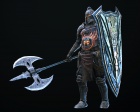

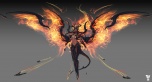
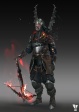
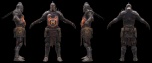
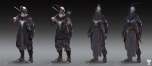
Q: Now that the hardest part is over, let's be more positive :). Might & Magic Elemental Guardians is the latest project of the franchise. Is this a new direction for Might & Magic projects - moving to mobile games for the ever-growing market?
A: That is indeed the current option. Might & Magic is perfect for RPGs and strategies on mobile phones.
Q: Could you tell us what new items we can expect in Elemental Guardians soon?
A: Since it's a "live" game with constant updates, I don't want to interfere with their communication strategy. However, of course, in future updates, you can expect new, original creatures that will enrich the Might & Magic bestiary. Hopefully, some of them will move into PC games one day.
Q: It seems that with Heroes VII we have come very close to completing the known storyline of Ashan, now having stories about almost all eclipses. What would you like to tell next? Perhaps stories from the time of the Seventh Dragon or a tale of what happened after the Dark Messiah? Or maybe it's time to reboot the Might & Magic universe?
A: Honestly, we feel it is time to leave Ashan to rest and work on a new setting. This means that Heroes Dynasty and Elemental Guardians may be the last Ubisoft games set in Ashan.
Nevertheless, these games will live for a few more years, and there is still a possibility of signing a new project that presents strong arguments for using Ashan as its setting, so no official obituary is expected yet.
Q: Was the Might & Magic team disbanded after Heroes VII?
A: After the release of Trial by Fire, the Ubisoft Partners studio was disbanded (as part of a global corporate restructuring unrelated to the failed release of Heroes VII).
Ubisoft Partners controlled the production of various games created by Ubisoft in collaboration with external developers, including many Might & Magic titles (Heroes V-VII, Dark Messiah, Clash of Heroes, M&M X).
Our IP management team for M&M was part of this studio.
Thus, we were all moved to other Ubisoft divisions.
We still have a Might & Magic team at Ubisoft headquarters, in the editorial group, mainly to support our three mobile games (Elemental Guardians, Era of Chaos, Heroes Dynasty).
However, currently, the team is mainly concerned with game content. Marketing and community contacts are separate for each project and are no longer centralized.
Q: Besides you, who else is now working on Might & Magic at Ubisoft? How many people?
A: Me, Julien Pirou (still our lore expert and jack-of-all-trades), Theo Gallego (our game design expert), and Victor Malineau (content manager for mobile games).
We all have other tasks at Ubisoft. Our involvement in Might & Magic is only a part of our working time.
Sometimes we also bring in external experts (such as writers Kurt McClung and Simon MacKenzie).
Q: We got the impression that you "stepped off the stage" before the premiere of Heroes VII, although you were a leader in Heroes VI. Why?
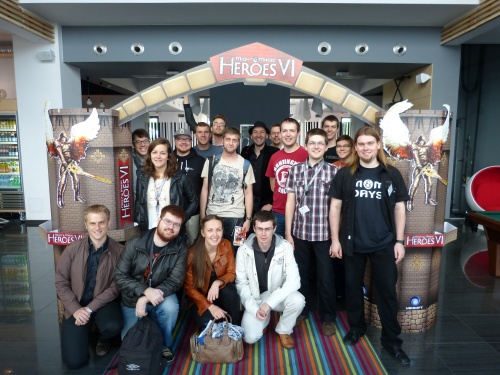
(Fan meeting in Warsaw during Might & Magic Days)
A: It's simple - I was a producer in the case of Heroes VI and Creative Director of Might & Magic in the case of Heroes VII (so I had less influence on the project). I was still a representative of the game, but shared the stage with the "parents" (Ubisoft producers and Limbic developers).
Q: And now the most important question (which you probably won't answer in an interview, but we'll try anyway ;) - are there any plans or chances for Heroes VIII in the foreseeable future?
A: Unfortunately, very few chances in the near future. The base costs for such a game would be too high compared to sales expectations, even with a Metacritic score of 90+ and massive community support. However, the popularity of the IP in China could tip the scales in the right direction.
Q: Any other new Might & Magic projects? What can we expect over the next months and years?
A: Might & Magic remains a core Ubisoft brand associated with medieval fantasy. And although this genre has noticeably lost popularity recently (Lord of the Rings, Game of Thrones, The Witcher, Diablo, Dragon Age, League of Legends... are now behind), it is far from obsolete (Divinity: Original Sin 2, The Elder Scrolls VI, new World of Warcraft expansion...).
Therefore, we continue to promote the franchise as soon as a discussion in the style of "Let's make a game about knights and dragons" happens at Ubisoft.
Q: In Heroes VI, remnants of the Academy faction can be found. For what reason was it eventually cut? What would the campaign have been about if the faction had made it into the game? Perhaps something about Elizabeth?
A: The Academy was planned for the version of the game created by Nival, and initially we wanted to keep it in the version created by Blackhole. It was removed during the creation of the game due to budget and time constraints. The campaign wasn't about Elizabeth, but about Svetlana's granddaughter (born in the Seven Cities and trained in magic), how she fell in love with a djinn and later faced a choice: sacrifice her lover (and gain power and prestige), or save her (and become a hunted rebel). This story was rewritten and became the basis for the Academy campaign in Heroes VII (Fahad and Kalida).
Q: In the earliest stage, Heroes VI was developed by Nival Interactive (the studio that created Heroes V). What caused Nival's work to stop and why did Ubisoft and Nival part ways?
A: The collaboration was terminated because we had creative differences over key elements of the game and because Nival's priorities shifted from Heroes (their flagship title at the time of Heroes V) to online games (they focused on Allods Online, while Heroes VI was a secondary project for them).
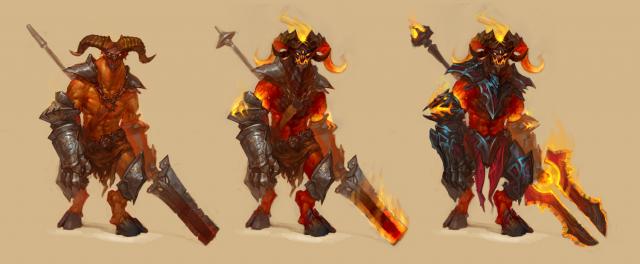
What remained of Nival's vision is the faction reputation system, which evolved into the choice of the path of Tears and Blood, and several concept arts that were used as inspiration or references in other Might & Magic games (specifically, Duel of Champions).
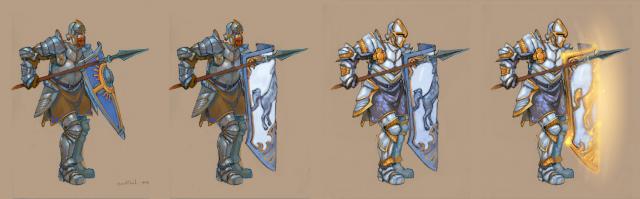
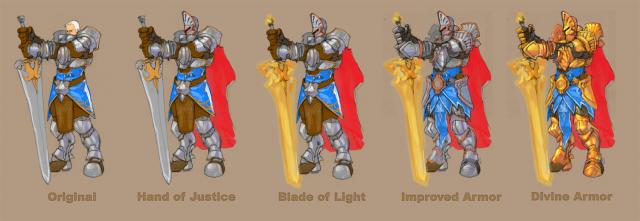
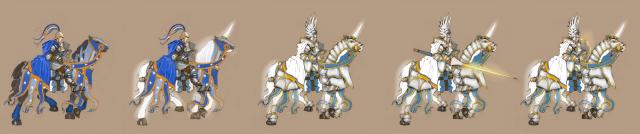
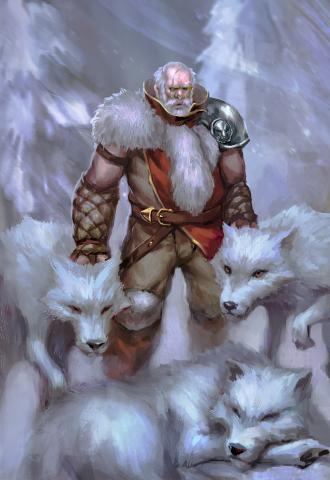
We present previously unpublished artworks created by Nival for Heroes VI, provided by Erwan and Ubisoft (and for comparison, an artwork that was eventually used in Duel of Champions):
Q: Could you tell us a bit more about the canceled games Kingdoms of Might and Magic (not to be confused with Might & Magic: Heroes Kingdoms) and Might & Magic Raiders? What were the storylines of these games?
(about Kingdoms)
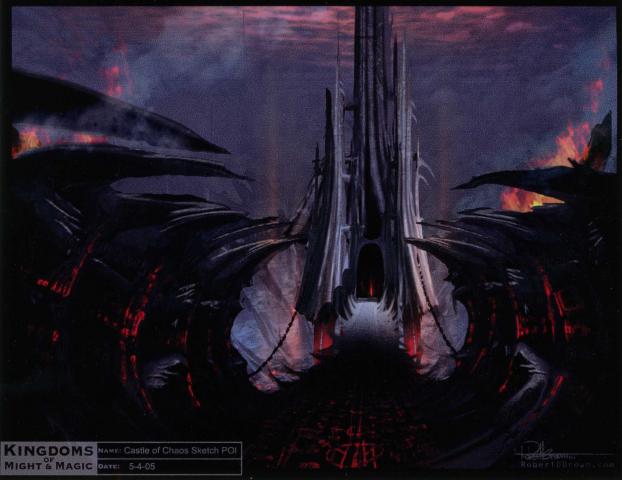
A: The game concept proposed by the now-defunct Wolfpack studio, creators of Shadowbane, was an MMORPG with innovative strategy elements (Realm vs Realm). The game's action was to revolve around the conflict between the kingdom of Order (Haven faction + allied races) and the realm of Chaos (Inferno faction + allied creatures).
Their world was called Axeoth, but it borrowed elements from many Might & Magic settings and mixed them all together, loosely relating them to the lore, mainly borrowing names.
This project did not receive the green light, so we had very little contact with its team. Only a world map and several artworks remain.
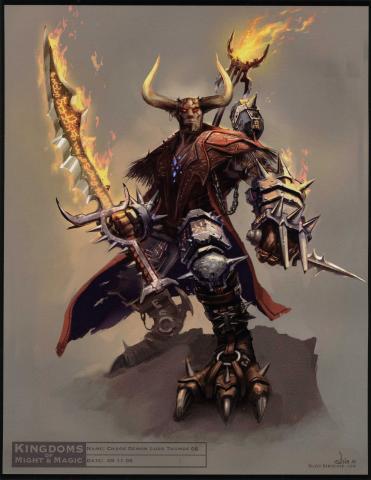
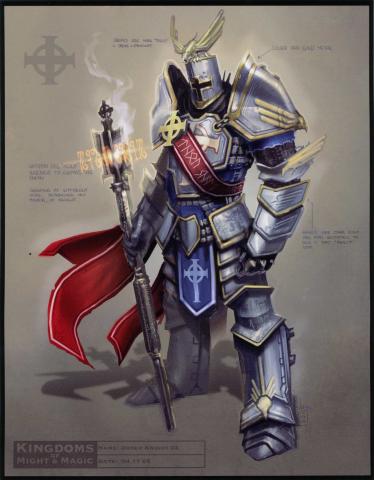
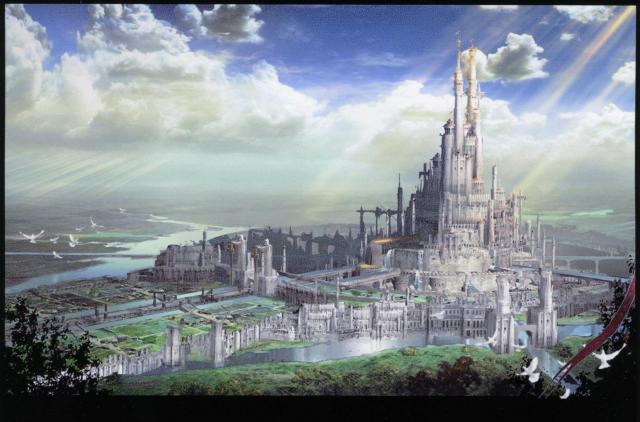
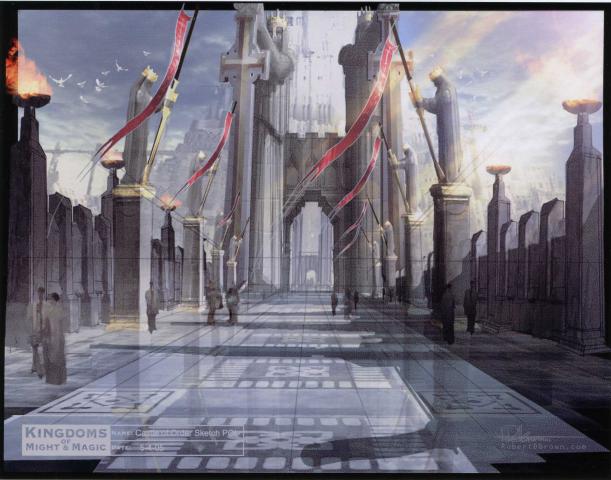
(about Raiders)
A: Part of the lore created for Might & Magic Raiders, the Raiders themselves and their code, Hammer Fall and its Bloodsmiths, eventually found use in Might & Magic X and Heroes VII. Several music tracks created by Roca Chen for Raiders were also used in these games.
Some characters created by Kurt McClung for Raiders also later found new life. For example, two minor NPCs in M&M X, Romuald and Karim, were originally Raiders characters (Romuald was supposed to appear as a street brawler in Hammer Fall). Gloria and Murazel from Heroes VII were important characters in Raiders.
Q: Tell us a bit about how you became the Creative Director of Might & Magic. What were the reasons? Were you happy to get this job or frightened?
A: When Ubisoft began developing Heroes V and Dark Messiah, I was part of the editorial team, and my job was to help developers define and implement their creative ideas. My portfolio included fantasy games (Prince of Persia, Beyond Good & Evil, Myst, The Settlers and... Might & Magic).
The creation of Might & Magic games was controlled by the EMEA Third Parties studio. Its manager, Stéphane Decroix, offered me a job as an associate producer on Dark Messiah while simultaneously working on the Might & Magic franchise (including, in particular, creating the world of Ashan).
During the development of Heroes VI, this "parallel" task became the most important (along with new Might & Magic projects launched in Ubisoft's internal studios: Raiders in Chengdu, Heroes Online in Bluebyte, Duel of Champions in Quebec, etc.).
Therefore, creating a specialized team for the brand became something natural, and I left the producer position to become Creative Director.
I was very excited when I got this job because it was a logical continuation of my work with the franchise, as well as an opportunity to work with people I highly valued.
Sometimes I joke about how I go back in time to talk to myself as a teenager and say: "You know, someday in the future you'll have meetings to determine the colors of dragons, and people will seriously discuss this, and you'll be paid for it" :)
Q: What are the best and worst memories of working on the brand? What are you most proud of and what would you like to forget?
A: My worst memories are related to the release of Heroes VI. I was stressed about the deteriorating relationship between Ubisoft and Black Hole, frustrated by the state of the game at its release and the lack of support for fixing it, saddened by the loss of many valuable colleagues who left Ubisoft to create Amplitude Studios, in conflict with other members of Ubisoft, and also divorced from the mother of my daughters.
Fortunately, while working on Shades of Darkness, the situation definitely improved, and I smiled again.
As for the best moments, there were countless: brainstorming game content elements with the design team, watching them come to life during project development, celebrating game releases, sharing impressions with fans (as well as the press) at public events or Might & Magic conventions.
I am most proud of the relationships I've built over many years with some of the people working on the brand. These relationships are a combination of admiration and true friendship. Without hesitation, I would go to hell with them, knowing that we would definitely find a way back, and we would have amazing stories to tell :).
Q: Why did the games developed after Heroes V and Dark Messiah tell stories from Ashan's past rather than continuing the storyline forward?
A: Simply because we had many cool things to tell about the history of Ashan. Looking back, placing Dark Messiah very late on our world's timeline was a mistake. If I were doing it again, the first released games would be at the beginning of the timeline so that it could be developed further, instead of going backward and exploring the past.
Q: Have you played Heroes VI or Heroes VII recently? What were your impressions?
A: I haven't played Heroes VI and Heroes VII since the release of Trial by Fire. I prefer single-player or campaign walkthroughs in games of this kind, so I don't play duels or multiplayer.
Q: Can you finally reveal the true identity of Kha-Beleth and what is the fate of the six Demon Lords?
A: That is something I would like to keep secret for a while longer. When we announce the official death of Ashan to make room for a new Might & Magic world, I will be ready for an "ask me anything" interview :).
Q: How did the Shantiri Empire appear? Who was their enemy (besides Demons?) And who or what is responsible for its disappearance? Why does no one, including the Demons, remember anything about it?
A: The creation of the Shantiri Empire is described in the Ashan Compendium:
"From the Spirit World, the Dragon gods send visions to their now mortal servants, instructing them in proper service.
This leads to the founding of the Shantiri Empire, which unites all six elder races into a single nation governed by an act of priests, led by nine hierophants (one for each elemental dragon, three for Asha to represent her various aspects).
Through their prayers and sacrifices, the Shantiri hope to restore the power of their gods so that they may one day return.
The Shantiri spread across the world, building titanic cities and temples".
Their enemies were the Demons, but they also had internal conflicts.
What doomed them to oblivion was the Elder Wars between Angels and Faceless.
The power of the Void was unleashed during this conflict, which led not only to the destruction of the empire, but most inhabitants of Ashan forgot about the Shantiri; their memories were erased.
Q: How old is Ashan? Does it exist for millions or only thousands of years?
A: The cosmogony of Ashan is somewhat creationist - there was no big bang, dinosaurs, or Darwin. There were only the demiurgic actions of Asha and the Dragon gods. So tens of thousands of years, not hundreds of millions.
Q: What can you tell us about other continents besides Thallan? And if it was never defined - what would you like to find there?
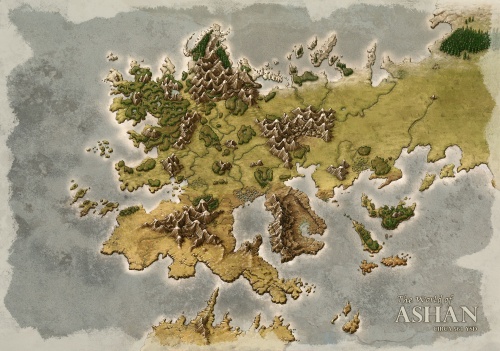
(Thallan and part of the "African" continent to the south)
A: Thallan is located on the Eurasian continent, so we naturally discussed an "African" continent to the South and an "American" one to the West with possibilities for lost Shantiri cities and variations of known creatures (for example, Egyptian-style angels). But we never thought about what exactly could be found there.
Q: Are the various small hints and connections to the previous story universe (from Heroes I-IV and M&M I-IX) just easter eggs or does it mean that the two universes are actually merged? You've probably discussed this many times over the years. What were the arguments for and against such an idea?
A: Julien Pirou fought tooth and nail for many years to link Ashan with other M&M worlds. I was his Nemesis, always refusing ("Ashan is pure fantasy, I don't want science fiction in it!"). Nevertheless, little by little, with subtle strokes, he convinced me to at least hint that maybe...
Q: How many different clans of Dark and Sylvan Elves exist in total? Can you tell us something about those we don't know about?
A: We never made a decision on a final, total number. We wanted to be able to create new clans / kingdoms when necessary.
Q: How large was Ygg-Chall? Some texts suggest it is just one large, ruined city of the Faceless, while others say it is their kingdom.
A: It was their first original kingdom (not just one city).
Q: One of the scenarios in Heroes V mentions Lake Elves - was this another type of Sylvan Elf or perhaps Sea Elves?
A: This was a tribe of Sylvan Elves from Irollan who lived by the lake.
Q: Void Magic. What was known about it in the Shantiri Empire? Was it permitted? Who practiced it (Demons, Faceless, Angels)? Who discovered it?
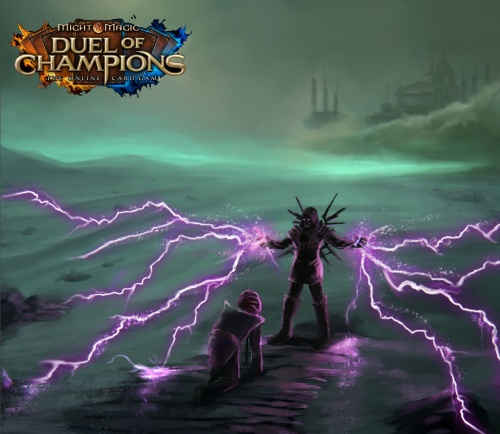
A: Void Magic is one of three aspects of Prime Magic. The most well-known is Order Magic, also known as Arcane Magic, which is taught in magic schools and monasteries of Asha (the Blind Brothers, etc.). The second is Chaos Magic, associated with Urgas and the Demons. And there is also Void Magic, associated with the "Great Nothing" that preceded the Cosmic Egg and the creation of the world.
In the Spirit World, there are still huge expanses of "Void." Like black holes, they are extremely dangerous for an unwary traveler.
However, all souls pass through the Void at the moment of death, separating themselves from the body to remove memories of their mortal life before returning to Asha on the Moon and receiving a new incarnation.
In the days of the Shantiri Empire, powerful sorcerer-priests (whose names and identities are now lost) experimented with Void Magic during the Elder Wars, which led to the almost complete destruction of their civilization.
Many centuries later, Sandro revived Void Magic and was able (somehow) to tame it.
"Void Magic" was never permitted or preferred by any faction (except the Lords of the Void, but they are more like a sect). Dragon Knights relentlessly pursue those who practice it.
Q: What happened to the original Duel of Champions campaign, where the "Herald of the Void" was depicted as a man rather than Gazal, Sandro's accomplice?
A: This is an issue of inconsistent imagery on the Herald of the Void map.
Originally it was supposed to depict Kieran sitting on the Throne of Reconciliation by Gazal's order to become a Knight of Denial.
However, if you compare the maps of Kieran and the Herald of the Void, they will not match exactly. Furthermore, in the DoC story, Kieran is not the Herald of the Void (that's Gazal), so the map should depict Gazal, not Kieran.
Q: The story of Wysloth from Heroes VII actually happened or is it just a legend? Why are there no specific dates in his campaign?
[Thanks to Julien Pirou for answering this question]
A: The idea of the Sylvan campaign in H7 was to place it less within history than others and present it more as a folk tale. This is certainly based on real events (for example, Saabira was definitely a real character), but Lasir twists his own version of events to better convey the lesson he wants to give Ivan. Lasir is in some sense a "marketing expert," and he knows how important it is to tell stories to "sell" something. This also makes him an unreliable narrator :).
To present this point of view, we planned clear comparisons with Homer's Odyssey (on behalf of the campaign itself, as well as in events related to cyclopes, Lotophagi pseudo-Scylla and Charybdis, and Saabira colleague was Circe, a witch who turns people into animals... or in our case: into beastmen...)
We gave the player the opportunity to choose the ending (which heralded Ivan's choices at the end of the game), and we didn't give the campaign an actual date. Its action takes place in "the time of legends."
Nevertheless, the dramatic story of the relationship between Danan and her mother, as well as the fringe symbols appearing during the campaign show that this story happened some time after the Day of Fire Tears, but long before the events of Shades of Darkness.
Q: A Dark Elf Necromancer named Damran appeared in Duel of Champions. What is his story? How did a Dark Elf become a Necromancer?
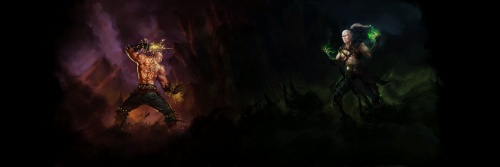
A: Anyone can become a wizard or necromancer.
Damran's story is the story of a rebellious Dark Elf who turned against his clan and Malassa to become a Necromancer, but eventually found the path to "enlightenment" and ultimately became a Dragon Knight.
Q: Do Sea Elves have any special creatures under their command?
A: Yes. Just as Sylvan Elves have Treants, Unicorns and other forest creatures or spirits as allies fighting on their side during war, Sea Elves can count on sea creatures or spirits such as Mermaids, Dragon-Eels or even Leviathans and Krakens (depending on their respective alliance).
Q: And finally: do you have a message for Might & Magic fans for the next 15 years? :)
A: It is very unlikely that I will continue to manage the Might & Magic brand for another 15 years (although... one never knows), but I sincerely hope that I will be among you as one of many fans, and I will be glad if the brand is still alive or perhaps even restored to its former glory when it was considered one of the largest AAA gaming brands in the world associated with medieval fantasy.
Regardless of what happens in the future, I look back with pleasure on my time with the Might & Magic community.
It wasn't always sunny and warm. But even occasional "hate" messages were received with a smile. Some of them were, after all, quite funny. Others justified what they said (if not how they said it). Most of them I kept in a special folder to keep my feet on the ground and remember who we worked for.
Having said all this, I admit that I am a person who sees the glass as half full. And I have experienced so many wonderful moments with the community that in my head, this glass will remain full.
Therefore, I would like to thank all the fans I personally met, those who joined our VIP programs or Shadow Council, those who were active on our forums, those who played our games, and those who sometimes joined our ranks to work side by side with us.
Symbolically, the interview was conducted during the Blood Moon Eclipse in the summer of 2018 Acid Dragon with invaluable help from Rabican, Alamar and Dark Dragon. We would like to thank Erwan Le Breton for the interview and for his many years of support for the Might & Magic community. Regardless of the criticism of his actions (sometimes right, sometimes not) and even occasional toxic reactions from some fans, we can always count on his positive attitude, contact, patience, and enthusiasm.
Thank you!
Source: http://www.acidcave.net/q%26a_with_erwan_le_breton_for_acid_caves_15th_anniversary.html
Translation:
The year 2018 marks not only the 15th anniversary of Acid Cave, but also 15 years since Ubisoft began developing the Might & Magic brand, which means Ubisoft has owned it almost as long as New World Computing did. As usual, this period had many ups and downs, but at the moment it seems we are at the "bottom." We asked a few questions to Erwan Le Breton, Creative Director of the Might & Magic brand at Ubisoft, about the past, present, and future of the series.
Q: Let's start with the bad news right away. Heroes VII received mixed or average reviews, getting a combined score of 67 on Metacritic from critics and a rating of 4.9 based on user reviews. As for sales results and popularity, it certainly wasn't a hit. What went wrong?
A: Simply put, our biggest mistake was releasing the game too early, despite warnings from the community. After many months of interaction with members of the Shadow Council and listening to their comments, we decided to release the game on time, even though all the fans had "turned" the red light.
The game had serious technical bugs, as well as design and art flaws that could have been fixed if we had a few more months for polishing.
In my opinion, Trial by Fire was the best (though not perfect) illustration of what we wanted to achieve for Heroes VII. I proudly presented the game at Gamescom, and I am still grateful to the Limbic team and my colleagues from the M&M team at Ubisoft for their determination and dedication at a time when we had little support and almost no positive emotions.
Nevertheless, our original intention was to make Heroes VII the best of the Heroes, engaging the community and combining the very best from Heroes I to VI.
To be honest, we failed.
Here is my own personal analysis of the reasons for this state of affairs (without pointing fingers - I am also to blame):
• The feature set was not a creative vision - Heroes VII lacked "soul."
• I don't mind reusing art and audio from previous games because it allowed for an increase in development volume, but for various reasons - Heroes VII ended up being less modern and appealing than Heroes VI.
• No matter what we do, we are always in the shadow of Heroes III. We are Ubisoft; we acquired the rights to the brand, we didn't create it... Fighting the nostalgic aura of Heroes III is like tilting at windmills - ultimately, it is useless.
• For a company as large as Ubisoft, turn-based strategies like Heroes are now too expensive in terms of production (due to volume and our overheads) and, at the same time, have too low a sales potential.
Q: If you had a time machine (from the Ancients) or a magic stone of infinite power capable of turning back time, what would you do differently in Heroes VII?
A: I would spend more time and effort finding the game's focus. On developing a breakthrough feature. On creating a superior vision to give the game a clear identity.
I would place greater importance on artistic issues. I know some fans complain that we spend too much money "decorating" our games rather than improving gameplay, but believe me, this is crucial for gaining internal support for a project and positive external reviews, which ensures more trust (and a larger budget and more development time) for the project.
And, of course, I would not have released the game until our beta testers gave the green light.
Q: Might & Magic Showdown turned out to be a short-lived game that set an anti-record in terms of players (maximum 79 concurrent players on the server, but usually 0). Was it a bad idea? Or rather, an unsuccessful experiment?
A: I still believe it was a good idea (the concept of collecting figurines that come to life to fight in an arena or dungeon, a painting workshop...), but it wasn't very well implemented.
Q: We know that Julien Pirou was at one point brought in to create a new Might & Magic game, but the project was canceled. Can you confirm if this game was Dark Messiah 2? Can you tell us what your plans were for this title and why it was canceled?
A: During the release of Heroes VII, we discussed several other Might & Magic projects, including Dark Messiah 2, but also Clash of Heroes 2 and Might & Magic XI. Concepts were proposed by various possible partner studios, all of which were linked to Julien Pirou in one way or another, but unfortunately, none of them received the green light.
Q: Now that the hardest part is over, let's be more positive :). Might & Magic Elemental Guardians is the latest project of the franchise. Is this a new direction for Might & Magic projects - moving to mobile games for the ever-growing market?
A: That is indeed the current option. Might & Magic is perfect for RPGs and strategies on mobile phones.
Q: Could you tell us what new items we can expect in Elemental Guardians soon?
A: Since it's a "live" game with constant updates, I don't want to interfere with their communication strategy. However, of course, in future updates, you can expect new, original creatures that will enrich the Might & Magic bestiary. Hopefully, some of them will move into PC games one day.
Q: It seems that with Heroes VII we have come very close to completing the known storyline of Ashan, now having stories about almost all eclipses. What would you like to tell next? Perhaps stories from the time of the Seventh Dragon or a tale of what happened after the Dark Messiah? Or maybe it's time to reboot the Might & Magic universe?
A: Honestly, we feel it is time to leave Ashan to rest and work on a new setting. This means that Heroes Dynasty and Elemental Guardians may be the last Ubisoft games set in Ashan.
Nevertheless, these games will live for a few more years, and there is still a possibility of signing a new project that presents strong arguments for using Ashan as its setting, so no official obituary is expected yet.
Q: Was the Might & Magic team disbanded after Heroes VII?
A: After the release of Trial by Fire, the Ubisoft Partners studio was disbanded (as part of a global corporate restructuring unrelated to the failed release of Heroes VII).
Ubisoft Partners controlled the production of various games created by Ubisoft in collaboration with external developers, including many Might & Magic titles (Heroes V-VII, Dark Messiah, Clash of Heroes, M&M X).
Our IP management team for M&M was part of this studio.
Thus, we were all moved to other Ubisoft divisions.
We still have a Might & Magic team at Ubisoft headquarters, in the editorial group, mainly to support our three mobile games (Elemental Guardians, Era of Chaos, Heroes Dynasty).
However, currently, the team is mainly concerned with game content. Marketing and community contacts are separate for each project and are no longer centralized.
Q: Besides you, who else is now working on Might & Magic at Ubisoft? How many people?
A: Me, Julien Pirou (still our lore expert and jack-of-all-trades), Theo Gallego (our game design expert), and Victor Malineau (content manager for mobile games).
We all have other tasks at Ubisoft. Our involvement in Might & Magic is only a part of our working time.
Sometimes we also bring in external experts (such as writers Kurt McClung and Simon MacKenzie).
Q: We got the impression that you "stepped off the stage" before the premiere of Heroes VII, although you were a leader in Heroes VI. Why?
(Fan meeting in Warsaw during Might & Magic Days)
A: It's simple - I was a producer in the case of Heroes VI and Creative Director of Might & Magic in the case of Heroes VII (so I had less influence on the project). I was still a representative of the game, but shared the stage with the "parents" (Ubisoft producers and Limbic developers).
Q: And now the most important question (which you probably won't answer in an interview, but we'll try anyway ;) - are there any plans or chances for Heroes VIII in the foreseeable future?
A: Unfortunately, very few chances in the near future. The base costs for such a game would be too high compared to sales expectations, even with a Metacritic score of 90+ and massive community support. However, the popularity of the IP in China could tip the scales in the right direction.
Q: Any other new Might & Magic projects? What can we expect over the next months and years?
A: Might & Magic remains a core Ubisoft brand associated with medieval fantasy. And although this genre has noticeably lost popularity recently (Lord of the Rings, Game of Thrones, The Witcher, Diablo, Dragon Age, League of Legends... are now behind), it is far from obsolete (Divinity: Original Sin 2, The Elder Scrolls VI, new World of Warcraft expansion...).
Therefore, we continue to promote the franchise as soon as a discussion in the style of "Let's make a game about knights and dragons" happens at Ubisoft.
Q: In Heroes VI, remnants of the Academy faction can be found. For what reason was it eventually cut? What would the campaign have been about if the faction had made it into the game? Perhaps something about Elizabeth?
A: The Academy was planned for the version of the game created by Nival, and initially we wanted to keep it in the version created by Blackhole. It was removed during the creation of the game due to budget and time constraints. The campaign wasn't about Elizabeth, but about Svetlana's granddaughter (born in the Seven Cities and trained in magic), how she fell in love with a djinn and later faced a choice: sacrifice her lover (and gain power and prestige), or save her (and become a hunted rebel). This story was rewritten and became the basis for the Academy campaign in Heroes VII (Fahad and Kalida).
Q: In the earliest stage, Heroes VI was developed by Nival Interactive (the studio that created Heroes V). What caused Nival's work to stop and why did Ubisoft and Nival part ways?
A: The collaboration was terminated because we had creative differences over key elements of the game and because Nival's priorities shifted from Heroes (their flagship title at the time of Heroes V) to online games (they focused on Allods Online, while Heroes VI was a secondary project for them).
What remained of Nival's vision is the faction reputation system, which evolved into the choice of the path of Tears and Blood, and several concept arts that were used as inspiration or references in other Might & Magic games (specifically, Duel of Champions).
We present previously unpublished artworks created by Nival for Heroes VI, provided by Erwan and Ubisoft (and for comparison, an artwork that was eventually used in Duel of Champions):
Q: Could you tell us a bit more about the canceled games Kingdoms of Might and Magic (not to be confused with Might & Magic: Heroes Kingdoms) and Might & Magic Raiders? What were the storylines of these games?
(about Kingdoms)
A: The game concept proposed by the now-defunct Wolfpack studio, creators of Shadowbane, was an MMORPG with innovative strategy elements (Realm vs Realm). The game's action was to revolve around the conflict between the kingdom of Order (Haven faction + allied races) and the realm of Chaos (Inferno faction + allied creatures).
Their world was called Axeoth, but it borrowed elements from many Might & Magic settings and mixed them all together, loosely relating them to the lore, mainly borrowing names.
This project did not receive the green light, so we had very little contact with its team. Only a world map and several artworks remain.
(about Raiders)
A: Part of the lore created for Might & Magic Raiders, the Raiders themselves and their code, Hammer Fall and its Bloodsmiths, eventually found use in Might & Magic X and Heroes VII. Several music tracks created by Roca Chen for Raiders were also used in these games.
Some characters created by Kurt McClung for Raiders also later found new life. For example, two minor NPCs in M&M X, Romuald and Karim, were originally Raiders characters (Romuald was supposed to appear as a street brawler in Hammer Fall). Gloria and Murazel from Heroes VII were important characters in Raiders.
Q: Tell us a bit about how you became the Creative Director of Might & Magic. What were the reasons? Were you happy to get this job or frightened?
A: When Ubisoft began developing Heroes V and Dark Messiah, I was part of the editorial team, and my job was to help developers define and implement their creative ideas. My portfolio included fantasy games (Prince of Persia, Beyond Good & Evil, Myst, The Settlers and... Might & Magic).
The creation of Might & Magic games was controlled by the EMEA Third Parties studio. Its manager, Stéphane Decroix, offered me a job as an associate producer on Dark Messiah while simultaneously working on the Might & Magic franchise (including, in particular, creating the world of Ashan).
During the development of Heroes VI, this "parallel" task became the most important (along with new Might & Magic projects launched in Ubisoft's internal studios: Raiders in Chengdu, Heroes Online in Bluebyte, Duel of Champions in Quebec, etc.).
Therefore, creating a specialized team for the brand became something natural, and I left the producer position to become Creative Director.
I was very excited when I got this job because it was a logical continuation of my work with the franchise, as well as an opportunity to work with people I highly valued.
Sometimes I joke about how I go back in time to talk to myself as a teenager and say: "You know, someday in the future you'll have meetings to determine the colors of dragons, and people will seriously discuss this, and you'll be paid for it" :)
Q: What are the best and worst memories of working on the brand? What are you most proud of and what would you like to forget?
A: My worst memories are related to the release of Heroes VI. I was stressed about the deteriorating relationship between Ubisoft and Black Hole, frustrated by the state of the game at its release and the lack of support for fixing it, saddened by the loss of many valuable colleagues who left Ubisoft to create Amplitude Studios, in conflict with other members of Ubisoft, and also divorced from the mother of my daughters.
Fortunately, while working on Shades of Darkness, the situation definitely improved, and I smiled again.
As for the best moments, there were countless: brainstorming game content elements with the design team, watching them come to life during project development, celebrating game releases, sharing impressions with fans (as well as the press) at public events or Might & Magic conventions.
I am most proud of the relationships I've built over many years with some of the people working on the brand. These relationships are a combination of admiration and true friendship. Without hesitation, I would go to hell with them, knowing that we would definitely find a way back, and we would have amazing stories to tell :).
Q: Why did the games developed after Heroes V and Dark Messiah tell stories from Ashan's past rather than continuing the storyline forward?
A: Simply because we had many cool things to tell about the history of Ashan. Looking back, placing Dark Messiah very late on our world's timeline was a mistake. If I were doing it again, the first released games would be at the beginning of the timeline so that it could be developed further, instead of going backward and exploring the past.
Q: Have you played Heroes VI or Heroes VII recently? What were your impressions?
A: I haven't played Heroes VI and Heroes VII since the release of Trial by Fire. I prefer single-player or campaign walkthroughs in games of this kind, so I don't play duels or multiplayer.
Q: Can you finally reveal the true identity of Kha-Beleth and what is the fate of the six Demon Lords?
A: That is something I would like to keep secret for a while longer. When we announce the official death of Ashan to make room for a new Might & Magic world, I will be ready for an "ask me anything" interview :).
Q: How did the Shantiri Empire appear? Who was their enemy (besides Demons?) And who or what is responsible for its disappearance? Why does no one, including the Demons, remember anything about it?
A: The creation of the Shantiri Empire is described in the Ashan Compendium:
"From the Spirit World, the Dragon gods send visions to their now mortal servants, instructing them in proper service.
This leads to the founding of the Shantiri Empire, which unites all six elder races into a single nation governed by an act of priests, led by nine hierophants (one for each elemental dragon, three for Asha to represent her various aspects).
Through their prayers and sacrifices, the Shantiri hope to restore the power of their gods so that they may one day return.
The Shantiri spread across the world, building titanic cities and temples".
Their enemies were the Demons, but they also had internal conflicts.
What doomed them to oblivion was the Elder Wars between Angels and Faceless.
The power of the Void was unleashed during this conflict, which led not only to the destruction of the empire, but most inhabitants of Ashan forgot about the Shantiri; their memories were erased.
Q: How old is Ashan? Does it exist for millions or only thousands of years?
A: The cosmogony of Ashan is somewhat creationist - there was no big bang, dinosaurs, or Darwin. There were only the demiurgic actions of Asha and the Dragon gods. So tens of thousands of years, not hundreds of millions.
Q: What can you tell us about other continents besides Thallan? And if it was never defined - what would you like to find there?
(Thallan and part of the "African" continent to the south)
A: Thallan is located on the Eurasian continent, so we naturally discussed an "African" continent to the South and an "American" one to the West with possibilities for lost Shantiri cities and variations of known creatures (for example, Egyptian-style angels). But we never thought about what exactly could be found there.
Q: Are the various small hints and connections to the previous story universe (from Heroes I-IV and M&M I-IX) just easter eggs or does it mean that the two universes are actually merged? You've probably discussed this many times over the years. What were the arguments for and against such an idea?
A: Julien Pirou fought tooth and nail for many years to link Ashan with other M&M worlds. I was his Nemesis, always refusing ("Ashan is pure fantasy, I don't want science fiction in it!"). Nevertheless, little by little, with subtle strokes, he convinced me to at least hint that maybe...
Q: How many different clans of Dark and Sylvan Elves exist in total? Can you tell us something about those we don't know about?
A: We never made a decision on a final, total number. We wanted to be able to create new clans / kingdoms when necessary.
Q: How large was Ygg-Chall? Some texts suggest it is just one large, ruined city of the Faceless, while others say it is their kingdom.
A: It was their first original kingdom (not just one city).
Q: One of the scenarios in Heroes V mentions Lake Elves - was this another type of Sylvan Elf or perhaps Sea Elves?
A: This was a tribe of Sylvan Elves from Irollan who lived by the lake.
Q: Void Magic. What was known about it in the Shantiri Empire? Was it permitted? Who practiced it (Demons, Faceless, Angels)? Who discovered it?
A: Void Magic is one of three aspects of Prime Magic. The most well-known is Order Magic, also known as Arcane Magic, which is taught in magic schools and monasteries of Asha (the Blind Brothers, etc.). The second is Chaos Magic, associated with Urgas and the Demons. And there is also Void Magic, associated with the "Great Nothing" that preceded the Cosmic Egg and the creation of the world.
In the Spirit World, there are still huge expanses of "Void." Like black holes, they are extremely dangerous for an unwary traveler.
However, all souls pass through the Void at the moment of death, separating themselves from the body to remove memories of their mortal life before returning to Asha on the Moon and receiving a new incarnation.
In the days of the Shantiri Empire, powerful sorcerer-priests (whose names and identities are now lost) experimented with Void Magic during the Elder Wars, which led to the almost complete destruction of their civilization.
Many centuries later, Sandro revived Void Magic and was able (somehow) to tame it.
"Void Magic" was never permitted or preferred by any faction (except the Lords of the Void, but they are more like a sect). Dragon Knights relentlessly pursue those who practice it.
Q: What happened to the original Duel of Champions campaign, where the "Herald of the Void" was depicted as a man rather than Gazal, Sandro's accomplice?
A: This is an issue of inconsistent imagery on the Herald of the Void map.
Originally it was supposed to depict Kieran sitting on the Throne of Reconciliation by Gazal's order to become a Knight of Denial.
However, if you compare the maps of Kieran and the Herald of the Void, they will not match exactly. Furthermore, in the DoC story, Kieran is not the Herald of the Void (that's Gazal), so the map should depict Gazal, not Kieran.
Q: The story of Wysloth from Heroes VII actually happened or is it just a legend? Why are there no specific dates in his campaign?
[Thanks to Julien Pirou for answering this question]
A: The idea of the Sylvan campaign in H7 was to place it less within history than others and present it more as a folk tale. This is certainly based on real events (for example, Saabira was definitely a real character), but Lasir twists his own version of events to better convey the lesson he wants to give Ivan. Lasir is in some sense a "marketing expert," and he knows how important it is to tell stories to "sell" something. This also makes him an unreliable narrator :).
To present this point of view, we planned clear comparisons with Homer's Odyssey (on behalf of the campaign itself, as well as in events related to cyclopes, Lotophagi pseudo-Scylla and Charybdis, and Saabira colleague was Circe, a witch who turns people into animals... or in our case: into beastmen...)
We gave the player the opportunity to choose the ending (which heralded Ivan's choices at the end of the game), and we didn't give the campaign an actual date. Its action takes place in "the time of legends."
Nevertheless, the dramatic story of the relationship between Danan and her mother, as well as the fringe symbols appearing during the campaign show that this story happened some time after the Day of Fire Tears, but long before the events of Shades of Darkness.
Q: A Dark Elf Necromancer named Damran appeared in Duel of Champions. What is his story? How did a Dark Elf become a Necromancer?
A: Anyone can become a wizard or necromancer.
Damran's story is the story of a rebellious Dark Elf who turned against his clan and Malassa to become a Necromancer, but eventually found the path to "enlightenment" and ultimately became a Dragon Knight.
Q: Do Sea Elves have any special creatures under their command?
A: Yes. Just as Sylvan Elves have Treants, Unicorns and other forest creatures or spirits as allies fighting on their side during war, Sea Elves can count on sea creatures or spirits such as Mermaids, Dragon-Eels or even Leviathans and Krakens (depending on their respective alliance).
Q: And finally: do you have a message for Might & Magic fans for the next 15 years? :)
A: It is very unlikely that I will continue to manage the Might & Magic brand for another 15 years (although... one never knows), but I sincerely hope that I will be among you as one of many fans, and I will be glad if the brand is still alive or perhaps even restored to its former glory when it was considered one of the largest AAA gaming brands in the world associated with medieval fantasy.
Regardless of what happens in the future, I look back with pleasure on my time with the Might & Magic community.
It wasn't always sunny and warm. But even occasional "hate" messages were received with a smile. Some of them were, after all, quite funny. Others justified what they said (if not how they said it). Most of them I kept in a special folder to keep my feet on the ground and remember who we worked for.
Having said all this, I admit that I am a person who sees the glass as half full. And I have experienced so many wonderful moments with the community that in my head, this glass will remain full.
Therefore, I would like to thank all the fans I personally met, those who joined our VIP programs or Shadow Council, those who were active on our forums, those who played our games, and those who sometimes joined our ranks to work side by side with us.
Symbolically, the interview was conducted during the Blood Moon Eclipse in the summer of 2018 Acid Dragon with invaluable help from Rabican, Alamar and Dark Dragon. We would like to thank Erwan Le Breton for the interview and for his many years of support for the Might & Magic community. Regardless of the criticism of his actions (sometimes right, sometimes not) and even occasional toxic reactions from some fans, we can always count on his positive attitude, contact, patience, and enthusiasm.
Thank you!