
 atlant108

Auto-translated
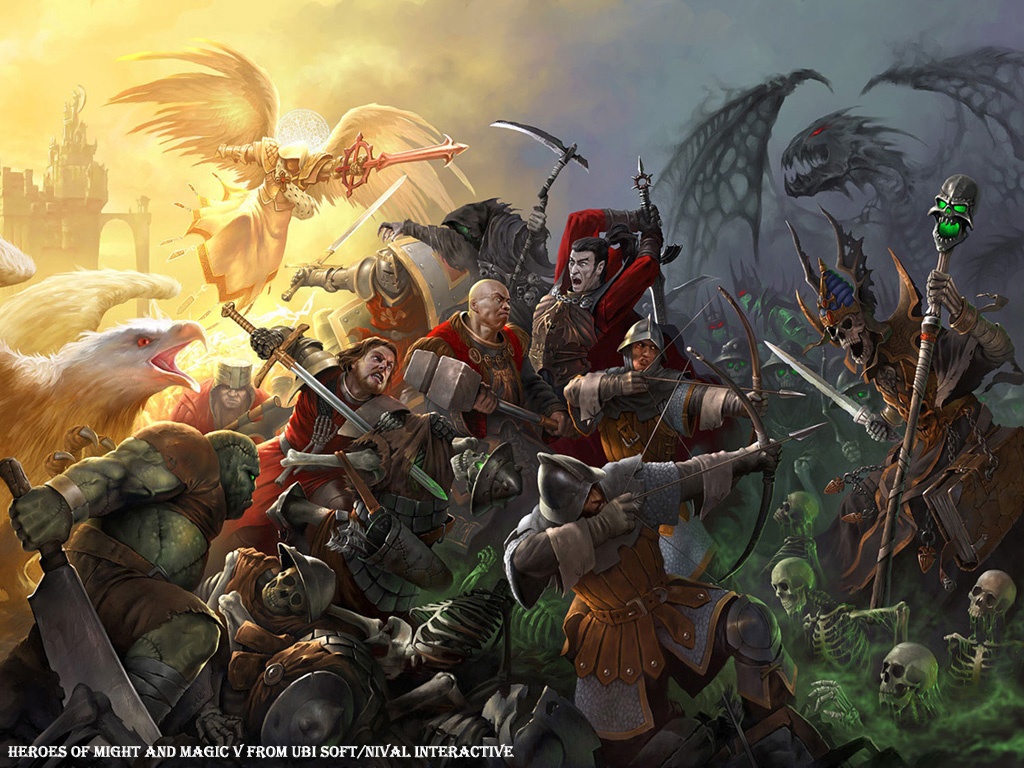
Sometimes a battle scene in a movie or a historical clash inspires the creation of something similar, but in the World of Ashan! Of course, it is difficult to implement all this on your own, but since there are many of us, skilled mapmakers can surely be found. Therefore, I suggest sharing your ideas and suggestions here for creating interesting plots that you would like to see in new scenarios and Campaigns.
I ask that you express your ideas, suggestions, and wishes in a clear and concrete form. Note that your desired plot should be original, interesting, and new—something that makes one want to implement it. For clarity, I will provide an example of a plot that I myself would like to see in a new scenario (campaign).
Added after 21 minutes
Back in the day, I read Vitaly Zykov's novel "The Nameless Slave." It contains a description of a Great Battle between mages, dwarves, and elves on one side, and humans and lizards on the other. I think it's best to post this battle now without changes (it will be clearer). However, when the scenario is being made, adjustments can be made
Added after 2 minutes
So, here we go:
...Tass emitted streams of caressing light. The wind tossed masses of clouds, disturbing the blue of the heavens. There was a ringing silence. Lush grass swayed lazily, mesmerizing the eye with its play of greens. In the distance, gloomy masses of forest loomed dark. Against the backdrop of this peaceful and soul-softening picture, tension and passion gathered drop by drop, threatening with every moment to tip the scales of patience and wash away everything around in an unrestrainable wave of anger and fury. To wash away, burn, trample, tear apart, disincarnate... Two great armies stood on the plain.
There was no equality in terms of numbers. One of the sides was characterized by extreme numerical superiority, but whether it was stronger remained a question.
In the center of one of the armies stood grim stocky bearded warriors – dwarves. Tightly closed shields, a matte glint on insanely expensive armor of smoky steel. An elite thousand of under-mountain warriors made the center practically invulnerable. Not even every magic could break the combat formations of the dwarves. Above the center of the dwarven square towered a signa – a stone fist.
The left wing consisted of heavy infantry. Each had a black shield. No banners or signs; the elite thousand black shield-bearers of the Kingdom of Zelod needed no introduction. The spirit of the detachment lived in the hearts and memories of the soldiers, and it was simply impossible not to recognize the black shield-bearers in battle. Their military glory could only rival the glory of the dwarves. Indeed, they had clashed in battles in times past... The thousand stretched out in a wide arc, truly resembling a wing. The warriors stood three cubits apart, leaving a path for the slender pointed-eared warriors in green armor – elves. Three hundred elven archers were ready to enter the fray. Paths in the neat ranks of men allowed them to retreat behind the backs of armored warriors in case of danger, while the latter could quickly close the ranks. Slightly behind, on small platforms, stood the crews of siege engines. And further to the left froze a half-hundred of stone idols.
A similar situation existed on the right wing – a thousand heavy infantry and three hundred elves. Only here were scarlet shield-bearers – eternal competitors and allies of the blacks on the fields of battle. Instead of stone idols, five hundred heavy cavalry were stationed.
Behind the troops was the Pilm guard. Five hundred of the most experienced veterans were ready to enter the fight at the command of their commanders – five Great True Mages. The mages stood on a wide platform and surveyed the battlefield. The magical aura blinded the eyes of those who could see it; the Astral shuddered from the spells held at the ready. Everyone awaited the signal...
Added after 2 minutes
Against them stood far more modest forces. In the center was heavy cavalry. Light played upon their snow-white garments. Five shock companies prepared for battle. They were backed by a thousand infantrymen, ready to serve as a reliable shield for retreating cavalry or to secure a breakthrough. The left wing, opposite the scarlet shield-bearers, consisted of a motley mass of some people. There was various weaponry, equipment, and uniforms. One felt tempted to call them a rabble. There were no more than three hundred warriors here. Only the gray animal shadows flickering in the human mass were alarming.
On the right wing froze the masses of four-legged lizards, encased in armor and with combat turrets on their backs. There were no more than two hundred beasts. Behind them was a huddled crowd of light cavalry – six hundred mounted two-legged lizards... And on this side, too, they seemed to await a signal, a signal from a dozen riders in clothing as snow-white as the knights'. The faces of most commanders were adorned with slanted almond-shaped eyes – elves; the others had entirely human features. Except for one, with a strange non-human figure hidden by a spacious robe and glowing eyes beneath a deeply drawn hood. The creature stared intently at the enemy position. The Commander! Finally, the creature raised its hand and waved sharply. It began...
Horns sounded, and the mass of living beings came into motion. The giant lizards began a leisurely run first. Perhaps it would have looked comical if they didn't emanate such formidable power. Carefully moving their powerful paws, the creatures gained momentum. With every moment, the speed increased, casting doubt on the very possibility of stopping their furious breakthrough.
The warriors, whom one wanted to carelessly call a rabble, also stirred. Here, the speed of the advance was limited to a brisk walk. The center remained motionless. The point of such an absurd attack was unclear.
One of the mages on the platform sent a command to the regimental sorcerer of the cavalry half-thousand to strike the enemy's left flank. With shouts and whistles, the heavy cavalry began to accelerate. The fate of the wretched three hundred opposing them was predetermined. A much more complex situation was unfolding on the left flank. Elven archers released a hail of arrows, but the armored beasts continued their relentless march completely unharmed. These living fortresses forced the warriors to grip the shafts of their spears and shields tighter. The warriors prepared to die...
At a distance of three hundred cubits, the regimental mages struck in unison. The stream of fire created by them bit into the first three beasts and covered them with a searing sheet of living fire, crushing the protection of shielding spells and seeking gaps in the armor. After a few moments, the death cries of dying animals were heard, and three immobile blazing bonfires remained on the field. But this did not stop the rest. A crash rang out, and a giant globule of fire flew out of the turret of one of the lizards and streaked toward the human line along a shallow trajectory. Vv-v-uu-hh!! An explosion occurred as the charge hit a magical veil. But following the first, others flew, and there was no defense that could hold out under such shelling indefinitely.
At that moment, the cavalry reached its opponent, and clouds of mist enveloped the battlefield. From there came screams, horse neighing, the clang of steel, and the monstrous roaring of nightmare spawns, interspersed with flashes of magical strikes.
– Bastard! – barked one of the mages on the platform. – What kind of creatures did he put there?! Grant, can you dispel the mist?
The mage nodded and shouted some phrase, accompanying each sound with an intricate pass. A gust of wind struck, and the veil of yellowish mist was easily swept aside, torn to shreds in the process. But there was nothing left to look at. The same crowd of warriors ran across the grass, leaving bloody blots of human or horse bodies behind them. Five hundred elite cavalry ceased to exist in a matter of moments. Small groups of knights retreating to their own could no longer be considered an army.
– What in the... – one of the mages began, then immediately exclaimed: – Marhuzes, he managed to hide marhuzes from us!!!
And the panic sounding in the mage's voice did him no honor.
– We'll have to strike ahead of time, – said the bearded mage standing in the center, maintaining stony calmness. – Progius, Savage, let's do it together, Cloak Kali! Grant on defense!
Without bothering to answer, the mages waved their hands in unison, and the air above the running enemy howled in protest. A sheet of Darkness wove itself out of nothing and, hanging for a moment, greedily rushed down in a thousand tongues of dark fire. A multi-voiced howl rose over the place of battle.
Added after 3 minutes
– Something is wrong!!! – Savage screamed. Beads of sweat ran down his face, tension locked his muscles. – We can't hold the spell long! Do you hear me, Ptolemy?!
The mage called Ptolemy nodded. Then he waved his hand, ordering the attacking spell to be dispelled. Before the spell that had gathered a bloody harvest could wither in the boiling air, a waterfall of yellow light crashed onto the field. Ptolemy, who had cast the High Magic spell almost effortlessly, suddenly jerked. A trickle of blood ran down his cheek. The mages standing nearby concentrated and threw all their strength into deflecting the foreign magical strike. The spawn of Ptolemy's magic, left unsupervised, seemed to drift; Power strained for freedom, tearing the bonds of the spell. A moment – and with a soul-rending crash, a flash of hellfire flared on the field. A blast wave passed over the battlefield, knocking over several soldiers but bringing no significant destruction. In the place where three hundred living beings had been, there now darkened a melted crater...
And too late did the humans notice a dozen and a half animal shadows that had managed, by some means unknown to mere mortals, to avoid the monstrous cacophony of frenzied Powers. And then it was already too late to think about anything – the shadows reached the rank of shield-bearers. The only ones who managed to react in any way were the elven archers. But their volley brought no results, and the beasts burst into the crowd of warriors, easily breaking their ranks. Soon it was no longer a military formation, but a crowd of people driven mad by fear, each for himself. The screams of dying people, the roar of marhuzes, and fountains of blood spurting upward told an outside observer exactly where the beasts were located.
– Girkam, just dispel this Seal of Fear! Can't you see?! They are enchanted! – Ptolemy yelled at a thin, ascetic-looking mage.
He tensed up and, waving his magic wand, began to shout the words of a complex spell.
On the left flank, the situation was still controlled, but was also close to critical. Slightly fewer than two hundred lizards reached the infantry line, and now heavy flamethrowers were working there. Screams of people burning alive under streams of dwarven heat were interspersed with the roars of lizards literally being torn to pieces. Animated golems were already working here. Fire had no effect on them, and now the stone figures crushed foreign armor, tore flesh, broke limbs, and overturned huge carcasses. But there were too few golems, and they too suffered losses. The turrets on the lizards' backs turned out to be literally stuffed with all sorts of artifacts, some of which were effective even against golems. What was happening on the flanks now could be called simply – a meat grinder.
Usually restrained and pointedly correct, Lier Ptolemy cursed and ordered the guards led by Mage Diras to destroy the last creatures and take command of the right wing of the army. Though the panic-stricken terror instilled by the creatures had been dispelled by Girkam's spell, the monsters had not ceased to be what they were – ruthless reapers of death. Soldiers standing in reserve ran to meet the dance of death.
– The rest on center defense! – Ptolemy roared and shut his eyes. His consciousness was already floating in the sea of the Astral, pushing aside its layers and weaving the pattern of a spell colossal in its power.
At the same time, the enemy's light cavalry rushed toward the mages' left flank, intended to complete the rout of the broken army. And at that very moment, the Astral shuddered, rivers of Might surged, and the edges of reality trembled. In moments, monstrous winds drove in clouds, and a cloud, crimson in its nightmare power, hung over the battlefield. And green lightning, like pillars, struck the concentration of troops. The spell worked with filigree precision: the lightning struck only the lizard carcasses, leaving those around untouched. Blood boiled, shells and armor burst, and a multi-voiced howl drowned out all sounds. Of the creatures that had broken through the defenses, only deep ruts filled with smoking melt remained – everything that was left of the nightmare spawns of the enemy mages' and engineers' military genius.
But before the detachments could recover from the shock of the impending rout, mounted warriors burst into their ranks. And a bloody slaughter boiled over, but these were ordinary warriors, not living fortresses invulnerable to mortals. One could fight the riders; here, military spirit and training decided everything, and the black shield-bearers lacked neither. They gave the elven archers the much-needed respite, and the latter, gathering around the siege engines that had performed well but were now burning in fire, began shooting the enemy riders. The thick of the battle did not prevent the arrows of the best archers of the four continents from finding their targets... The scales tipped again. On the right flank, the last marhuzes were being finished off, and though it was good if every fifth of those previously standing there survived, they did survive. Now Diras was restoring order, and soon the thinned right flank should be ready for a new battle. The center had not even entered the fight yet.
Added after 1 minute
And at that moment, the enemy delivered the main blow. Again, the disturbed Astral shuddered; from somewhere in its lower layers, hidden by masking spells, a deadly spell broke free. Like a giant wedge, it swept across the field, leaving withered grass and cracked earth behind. And this wedge bit into the combat ranks of the dwarves, sweeping away the mages' deployed defenses as if they weren't there. And the formation collapsed under the blow. Dozens of under-mountain warriors fell dead, even more wounded, some simply thrown dozens of cubits aside. And the White Guard was already gaining speed. Warhorses struck the ground with their hooves in unison, trampling the remains of the grass, spears ready for a ramming strike. Following the cavalry, the enemy's infantry reserve began to move. The threat of rout loomed over the mages' army...
The dwarves saved everyone then. The surviving warriors managed to form ranks and take the blow themselves, bending but delaying the enemy, preventing the heavy cavalry, like a knife, from cutting the army into two parts and initiating its destruction. Dwarves perished, but did not surrender. They died with screams and praises to their clan, not bowing their heads for a moment before the enemy's signa.
It was only later that the mages were able to break the enemy's defense and bind the foreign lord, giving him no opportunity to strike again, losing six of their comrades in the process. It was later that the arriving shield-bearers enclosed the surviving enemy warriors in a ring and began their destruction – they refused to surrender. The dwarves ultimately tipped the scales then, and all fell. Only the signa remained unbowed: the dead hands of the standard-bearer continued to hold it vertically upright.
The enemy did not flee or surrender. With some transcendental ferocity, the enemy warriors rushed toward death. The commanders of the foreign army did not survive either. Deprived of magic, armed only with a giant poleaxe, the commander finally broke through to the remaining great mages... Only to perish by the swords of Girkam and Ptolemy. At the moment of death, the warrior flared with a deathly light and withered away. Only fragments of the shattered poleaxe remained for his conquerors...
I ask that you express your ideas, suggestions, and wishes in a clear and concrete form. Note that your desired plot should be original, interesting, and new—something that makes one want to implement it. For clarity, I will provide an example of a plot that I myself would like to see in a new scenario (campaign).
Added after 21 minutes
Back in the day, I read Vitaly Zykov's novel "The Nameless Slave." It contains a description of a Great Battle between mages, dwarves, and elves on one side, and humans and lizards on the other. I think it's best to post this battle now without changes (it will be clearer). However, when the scenario is being made, adjustments can be made
Added after 2 minutes
So, here we go:
...Tass emitted streams of caressing light. The wind tossed masses of clouds, disturbing the blue of the heavens. There was a ringing silence. Lush grass swayed lazily, mesmerizing the eye with its play of greens. In the distance, gloomy masses of forest loomed dark. Against the backdrop of this peaceful and soul-softening picture, tension and passion gathered drop by drop, threatening with every moment to tip the scales of patience and wash away everything around in an unrestrainable wave of anger and fury. To wash away, burn, trample, tear apart, disincarnate... Two great armies stood on the plain.
There was no equality in terms of numbers. One of the sides was characterized by extreme numerical superiority, but whether it was stronger remained a question.
In the center of one of the armies stood grim stocky bearded warriors – dwarves. Tightly closed shields, a matte glint on insanely expensive armor of smoky steel. An elite thousand of under-mountain warriors made the center practically invulnerable. Not even every magic could break the combat formations of the dwarves. Above the center of the dwarven square towered a signa – a stone fist.
The left wing consisted of heavy infantry. Each had a black shield. No banners or signs; the elite thousand black shield-bearers of the Kingdom of Zelod needed no introduction. The spirit of the detachment lived in the hearts and memories of the soldiers, and it was simply impossible not to recognize the black shield-bearers in battle. Their military glory could only rival the glory of the dwarves. Indeed, they had clashed in battles in times past... The thousand stretched out in a wide arc, truly resembling a wing. The warriors stood three cubits apart, leaving a path for the slender pointed-eared warriors in green armor – elves. Three hundred elven archers were ready to enter the fray. Paths in the neat ranks of men allowed them to retreat behind the backs of armored warriors in case of danger, while the latter could quickly close the ranks. Slightly behind, on small platforms, stood the crews of siege engines. And further to the left froze a half-hundred of stone idols.
A similar situation existed on the right wing – a thousand heavy infantry and three hundred elves. Only here were scarlet shield-bearers – eternal competitors and allies of the blacks on the fields of battle. Instead of stone idols, five hundred heavy cavalry were stationed.
Behind the troops was the Pilm guard. Five hundred of the most experienced veterans were ready to enter the fight at the command of their commanders – five Great True Mages. The mages stood on a wide platform and surveyed the battlefield. The magical aura blinded the eyes of those who could see it; the Astral shuddered from the spells held at the ready. Everyone awaited the signal...
Added after 2 minutes
Against them stood far more modest forces. In the center was heavy cavalry. Light played upon their snow-white garments. Five shock companies prepared for battle. They were backed by a thousand infantrymen, ready to serve as a reliable shield for retreating cavalry or to secure a breakthrough. The left wing, opposite the scarlet shield-bearers, consisted of a motley mass of some people. There was various weaponry, equipment, and uniforms. One felt tempted to call them a rabble. There were no more than three hundred warriors here. Only the gray animal shadows flickering in the human mass were alarming.
On the right wing froze the masses of four-legged lizards, encased in armor and with combat turrets on their backs. There were no more than two hundred beasts. Behind them was a huddled crowd of light cavalry – six hundred mounted two-legged lizards... And on this side, too, they seemed to await a signal, a signal from a dozen riders in clothing as snow-white as the knights'. The faces of most commanders were adorned with slanted almond-shaped eyes – elves; the others had entirely human features. Except for one, with a strange non-human figure hidden by a spacious robe and glowing eyes beneath a deeply drawn hood. The creature stared intently at the enemy position. The Commander! Finally, the creature raised its hand and waved sharply. It began...
Horns sounded, and the mass of living beings came into motion. The giant lizards began a leisurely run first. Perhaps it would have looked comical if they didn't emanate such formidable power. Carefully moving their powerful paws, the creatures gained momentum. With every moment, the speed increased, casting doubt on the very possibility of stopping their furious breakthrough.
The warriors, whom one wanted to carelessly call a rabble, also stirred. Here, the speed of the advance was limited to a brisk walk. The center remained motionless. The point of such an absurd attack was unclear.
One of the mages on the platform sent a command to the regimental sorcerer of the cavalry half-thousand to strike the enemy's left flank. With shouts and whistles, the heavy cavalry began to accelerate. The fate of the wretched three hundred opposing them was predetermined. A much more complex situation was unfolding on the left flank. Elven archers released a hail of arrows, but the armored beasts continued their relentless march completely unharmed. These living fortresses forced the warriors to grip the shafts of their spears and shields tighter. The warriors prepared to die...
At a distance of three hundred cubits, the regimental mages struck in unison. The stream of fire created by them bit into the first three beasts and covered them with a searing sheet of living fire, crushing the protection of shielding spells and seeking gaps in the armor. After a few moments, the death cries of dying animals were heard, and three immobile blazing bonfires remained on the field. But this did not stop the rest. A crash rang out, and a giant globule of fire flew out of the turret of one of the lizards and streaked toward the human line along a shallow trajectory. Vv-v-uu-hh!! An explosion occurred as the charge hit a magical veil. But following the first, others flew, and there was no defense that could hold out under such shelling indefinitely.
At that moment, the cavalry reached its opponent, and clouds of mist enveloped the battlefield. From there came screams, horse neighing, the clang of steel, and the monstrous roaring of nightmare spawns, interspersed with flashes of magical strikes.
– Bastard! – barked one of the mages on the platform. – What kind of creatures did he put there?! Grant, can you dispel the mist?
The mage nodded and shouted some phrase, accompanying each sound with an intricate pass. A gust of wind struck, and the veil of yellowish mist was easily swept aside, torn to shreds in the process. But there was nothing left to look at. The same crowd of warriors ran across the grass, leaving bloody blots of human or horse bodies behind them. Five hundred elite cavalry ceased to exist in a matter of moments. Small groups of knights retreating to their own could no longer be considered an army.
– What in the... – one of the mages began, then immediately exclaimed: – Marhuzes, he managed to hide marhuzes from us!!!
And the panic sounding in the mage's voice did him no honor.
– We'll have to strike ahead of time, – said the bearded mage standing in the center, maintaining stony calmness. – Progius, Savage, let's do it together, Cloak Kali! Grant on defense!
Without bothering to answer, the mages waved their hands in unison, and the air above the running enemy howled in protest. A sheet of Darkness wove itself out of nothing and, hanging for a moment, greedily rushed down in a thousand tongues of dark fire. A multi-voiced howl rose over the place of battle.
Added after 3 minutes
– Something is wrong!!! – Savage screamed. Beads of sweat ran down his face, tension locked his muscles. – We can't hold the spell long! Do you hear me, Ptolemy?!
The mage called Ptolemy nodded. Then he waved his hand, ordering the attacking spell to be dispelled. Before the spell that had gathered a bloody harvest could wither in the boiling air, a waterfall of yellow light crashed onto the field. Ptolemy, who had cast the High Magic spell almost effortlessly, suddenly jerked. A trickle of blood ran down his cheek. The mages standing nearby concentrated and threw all their strength into deflecting the foreign magical strike. The spawn of Ptolemy's magic, left unsupervised, seemed to drift; Power strained for freedom, tearing the bonds of the spell. A moment – and with a soul-rending crash, a flash of hellfire flared on the field. A blast wave passed over the battlefield, knocking over several soldiers but bringing no significant destruction. In the place where three hundred living beings had been, there now darkened a melted crater...
And too late did the humans notice a dozen and a half animal shadows that had managed, by some means unknown to mere mortals, to avoid the monstrous cacophony of frenzied Powers. And then it was already too late to think about anything – the shadows reached the rank of shield-bearers. The only ones who managed to react in any way were the elven archers. But their volley brought no results, and the beasts burst into the crowd of warriors, easily breaking their ranks. Soon it was no longer a military formation, but a crowd of people driven mad by fear, each for himself. The screams of dying people, the roar of marhuzes, and fountains of blood spurting upward told an outside observer exactly where the beasts were located.
– Girkam, just dispel this Seal of Fear! Can't you see?! They are enchanted! – Ptolemy yelled at a thin, ascetic-looking mage.
He tensed up and, waving his magic wand, began to shout the words of a complex spell.
On the left flank, the situation was still controlled, but was also close to critical. Slightly fewer than two hundred lizards reached the infantry line, and now heavy flamethrowers were working there. Screams of people burning alive under streams of dwarven heat were interspersed with the roars of lizards literally being torn to pieces. Animated golems were already working here. Fire had no effect on them, and now the stone figures crushed foreign armor, tore flesh, broke limbs, and overturned huge carcasses. But there were too few golems, and they too suffered losses. The turrets on the lizards' backs turned out to be literally stuffed with all sorts of artifacts, some of which were effective even against golems. What was happening on the flanks now could be called simply – a meat grinder.
Usually restrained and pointedly correct, Lier Ptolemy cursed and ordered the guards led by Mage Diras to destroy the last creatures and take command of the right wing of the army. Though the panic-stricken terror instilled by the creatures had been dispelled by Girkam's spell, the monsters had not ceased to be what they were – ruthless reapers of death. Soldiers standing in reserve ran to meet the dance of death.
– The rest on center defense! – Ptolemy roared and shut his eyes. His consciousness was already floating in the sea of the Astral, pushing aside its layers and weaving the pattern of a spell colossal in its power.
At the same time, the enemy's light cavalry rushed toward the mages' left flank, intended to complete the rout of the broken army. And at that very moment, the Astral shuddered, rivers of Might surged, and the edges of reality trembled. In moments, monstrous winds drove in clouds, and a cloud, crimson in its nightmare power, hung over the battlefield. And green lightning, like pillars, struck the concentration of troops. The spell worked with filigree precision: the lightning struck only the lizard carcasses, leaving those around untouched. Blood boiled, shells and armor burst, and a multi-voiced howl drowned out all sounds. Of the creatures that had broken through the defenses, only deep ruts filled with smoking melt remained – everything that was left of the nightmare spawns of the enemy mages' and engineers' military genius.
But before the detachments could recover from the shock of the impending rout, mounted warriors burst into their ranks. And a bloody slaughter boiled over, but these were ordinary warriors, not living fortresses invulnerable to mortals. One could fight the riders; here, military spirit and training decided everything, and the black shield-bearers lacked neither. They gave the elven archers the much-needed respite, and the latter, gathering around the siege engines that had performed well but were now burning in fire, began shooting the enemy riders. The thick of the battle did not prevent the arrows of the best archers of the four continents from finding their targets... The scales tipped again. On the right flank, the last marhuzes were being finished off, and though it was good if every fifth of those previously standing there survived, they did survive. Now Diras was restoring order, and soon the thinned right flank should be ready for a new battle. The center had not even entered the fight yet.
Added after 1 minute
And at that moment, the enemy delivered the main blow. Again, the disturbed Astral shuddered; from somewhere in its lower layers, hidden by masking spells, a deadly spell broke free. Like a giant wedge, it swept across the field, leaving withered grass and cracked earth behind. And this wedge bit into the combat ranks of the dwarves, sweeping away the mages' deployed defenses as if they weren't there. And the formation collapsed under the blow. Dozens of under-mountain warriors fell dead, even more wounded, some simply thrown dozens of cubits aside. And the White Guard was already gaining speed. Warhorses struck the ground with their hooves in unison, trampling the remains of the grass, spears ready for a ramming strike. Following the cavalry, the enemy's infantry reserve began to move. The threat of rout loomed over the mages' army...
The dwarves saved everyone then. The surviving warriors managed to form ranks and take the blow themselves, bending but delaying the enemy, preventing the heavy cavalry, like a knife, from cutting the army into two parts and initiating its destruction. Dwarves perished, but did not surrender. They died with screams and praises to their clan, not bowing their heads for a moment before the enemy's signa.
It was only later that the mages were able to break the enemy's defense and bind the foreign lord, giving him no opportunity to strike again, losing six of their comrades in the process. It was later that the arriving shield-bearers enclosed the surviving enemy warriors in a ring and began their destruction – they refused to surrender. The dwarves ultimately tipped the scales then, and all fell. Only the signa remained unbowed: the dead hands of the standard-bearer continued to hold it vertically upright.
The enemy did not flee or surrender. With some transcendental ferocity, the enemy warriors rushed toward death. The commanders of the foreign army did not survive either. Deprived of magic, armed only with a giant poleaxe, the commander finally broke through to the remaining great mages... Only to perish by the swords of Girkam and Ptolemy. At the moment of death, the warrior flared with a deathly light and withered away. Only fragments of the shattered poleaxe remained for his conquerors...